


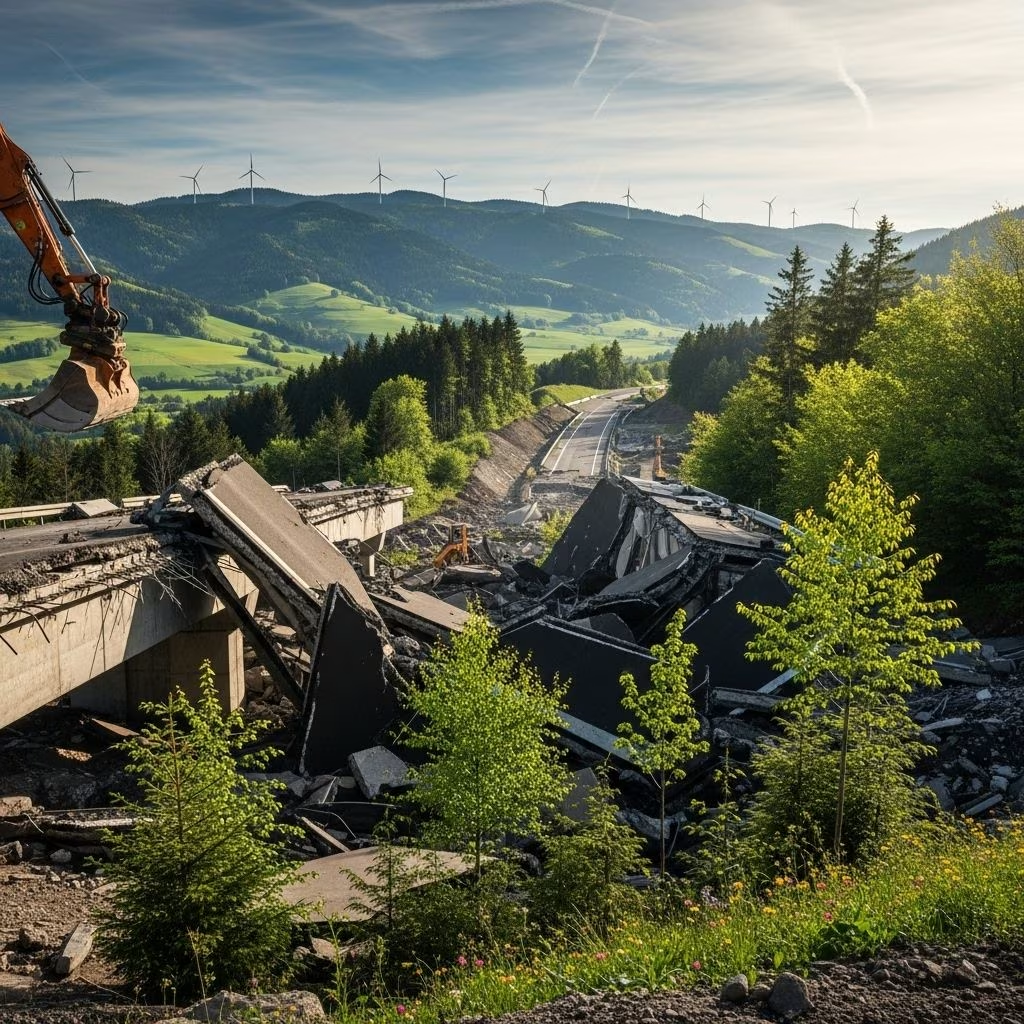
Austria Cancels Major Highway Projects to Address Climate Change
In a landmark policy move, Austria has halted several high-profile highway projects, most notably the planned Lobau Tunnel beneath Vienna’s protected Lobau wetlands. This decision signals a nationwide shift towards sustainable transport and a deepened commitment to tackling climate change, prioritizing the preservation of natural landscapes over traditional infrastructure development.
The Political and Environmental Backdrop
The decision to cancel these projects did not happen in isolation. Austria’s government, currently a coalition between the People’s Party and the Green Party, merged the ministries for environment and transport into a single department headed by Minister for Climate Action Leonore Gewessler, a member of the Green Party. The government’s legislative program for 2020-2024 emphasizes responsibility for climate action, mirroring growing societal demands to reduce carbon emissions and protect Austria’s unique natural environments.
Of particular focus was the Lobau Tunnel, an 8-kilometer underground road that would have passed directly under the Lobau, a protected section of the Danube Floodplain National Park and a unique ecological habitat. The project had been planned for nearly two decades, facing years of scrutiny and criticism from environmental organizations.
Why Austria Halted Highway Expansion Plans
Minister Gewessler cited a comprehensive reevaluation of the national highway construction program. The review concluded that expanding road capacity would worsen traffic congestion, increase land consumption, and undermine Austria’s climate commitments under the Paris Agreement. Building more highways, in the view of the climate action ministry, would inevitably lead to more traffic and higher emissions, directly counteracting the country’s efforts to cut greenhouse gases.
- Land Consumption: New highways contribute to urban sprawl and the irreversible loss of arable land and natural habitats.
- Traffic Induction: Expanding road infrastructure is likely to induce demand rather than relieve it, leading to even more vehicle use.
- National Park Protection: The Lobau Tunnel threatened the delicate ecosystem of Vienna’s largest nature reserve, home to many rare species.
- Alignment With Climate Goals: Austria is committed to reducing emissions and investing in sustainable mobility solutions.
The Cancelled Highway Projects: A Closer Look
The announcement covered the halting of eight major highway initiatives, representing a fundamental shift in transport investment priorities:
- The Lobau Tunnel: Planned to connect Vienna’s outer ring and relieve city congestion, fiercely opposed by environmental groups.
- Other regional highway extensions and upgrades, mostly aimed at boosting connectivity and freight capacity.
- Projects through ecologically sensitive or legally protected zones.
While the Lobau Tunnel’s cancellation dominated headlines, the broader suspension marks a new phase for Austria’s national infrastructure planning, with future investments likely to focus on rail, public transit, and active mobility solutions.
Reactions: Political, Public, and Industry Perspectives
The decision spurred intense debate and mixed reactions from various sectors:
| Stakeholder | Reaction | Key Arguments |
|---|---|---|
| Local Politicians (e.g., Vienna’s Mayor Ludwig) | Strong opposition | Argued the move threatens regional mobility, economic development, and citizen quality of life. Called process non-transparent and promised to explore legal action. |
| Industrial and Commerce Federations | Critical | Warned against bottlenecks and claimed halting projects threatens economic competitiveness and logistics efficiency. |
| Environmental NGOs (e.g., Greenpeace) | Supportive | Declared this the ‘starting signal for a genuine traffic turnaround’, securing unique habitats and putting Austria at the forefront of climate policy. |
The Lobau Tunnel: Symbolism and Controversy
The core of the controversy revolved around the Lobau Tunnel project. For nearly 20 years, it was promoted as a congestion solution for Vienna’s eastern suburbs and as a vital artery for freight and private vehicles. However, repeated environmental reviews highlighted substantial risks to the Danube National Park and questioned whether it would indeed resolve underlying transport issues.
- The National Park is recognized for its biodiversity, rare flora and fauna, and essential water filtration functions.
- Environmentalists contended that the tunnel would irreparably alter groundwater flows and destroy habitats.
- The political split was stark: traditional parties saw the tunnel as critical for economic growth, while Greens and activists saw it as incompatible with Austria’s climate and ecological goals.
Broader Implications for Austrian Transport and Climate Policy
The cancellation represents more than the mere stopping of a construction project—it is a shift in values and priorities for one of Europe’s most developed economies. Austria’s move is framed by three overlapping challenges:
- Decarbonizing Mobility: Road transport is a significant contributor to Austria’s emissions. By halting highway expansion, the government reorients toward low-carbon mobility—rail, public transport, cycling, and walking.
- Legal and Constitutional Complexities: Austria’s climate-related constitutional provisions had historically been interpreted narrowly, with courts limiting the legal basis for environmental litigation. The coalition’s executive decision bypassed these limitations, but set a precedent that may be contested in court.
- Public Division: With strong opinions on both sides, the long-term success of Austria’s new direction will depend on public buy-in and the availability of effective alternative transport infrastructure.
Challenges in Executing a Traffic Turnaround
Not all aspects of traffic management can be addressed by simply cancelling new highway projects. Existing bottlenecks, vital freight corridors, and aging infrastructure must be maintained and, where necessary, upgraded. The example of the congested Brenner Pass and the Lueg Bridge replacement in Tyrol illustrates that long-distance and Alpine transit demand complex solutions, blending environmental concerns with practical infrastructure needs.
- Some routes, like the Brenner Base Tunnel, aim to shift freight from road to rail, reducing emissions and congestion simultaneously.
- Old bridges and highways must be rebuilt to current safety and capacity standards, even as new roads are deprioritized.
- Balancing economic needs with climate commitments is an ongoing challenge for the Austrian government.
International Context: Austria in the European Landscape
Austria’s move is one of the strongest rejections of car-centric policy in the European Union. While some countries continue to expand highway networks, Austria’s Green-influenced approach places it at the forefront of a climate-driven mobility revolution. The decision could inspire similar debates in other EU states facing pressure to meet ambitious climate targets.
Potential Influence on Other Countries
- Encourages re-examination of the relationship between transport policy and climate action.
- Sets a legal and policy precedent for using executive authority to prioritize environmental protection.
- May shape funding criteria for pan-European infrastructure, such as through the EU’s Green Deal framework.
Next Steps: Ensuring Equitable and Sustainable Mobility
Halting highway expansions alone does not guarantee more sustainable movement. The Austrian government has signaled intentions to:
- Substantially invest in rail infrastructure, especially for freight and suburban commuters.
- Expand public transportation networks for urban and rural populations alike.
- Promote active transport, such as cycling and walking, through safe infrastructure and incentives.
- Deliver robust regional planning to protect green spaces while supporting sustainable economic growth.
Questions and Controversies: Legal Battles and Future Projects
The road ahead remains fraught with legal and political uncertainties. Local governments and economic lobby groups have suggested potential legal challenges to the minister’s authority and the decision-making process. Courts may be asked to rule on the limits of executive power in the context of constitutionally protected economic rights and obligations for sustainability.
In addition, debate continues around how to maintain and improve existing infrastructure while avoiding further environmental damage. This tension will likely shape Austrian—and possibly European—mobility policy for years to come.
Frequently Asked Questions (FAQs)
Q: Why did Austria cancel the Lobau Tunnel and other highway projects?
A: The projects were cancelled to reduce emissions, protect national parks, and meet Austria’s climate commitments by shifting priorities from road expansion to sustainable mobility like rail and public transportation.
Q: Who made the decision to halt highway construction?
A: The Austrian Minister for Climate Action, Leonore Gewessler, under the coalition government combining the People’s Party and the Green Party, was responsible for the decision after a national review of infrastructure projects.
Q: How have local leaders and industry reacted to the cancellation?
A: Leaders like Vienna’s mayor and business federations strongly opposed the move, citing risks to economic growth, mobility, and traffic flow, while environmental groups celebrated it as a victory for climate and biodiversity.
Q: What alternatives will Austria invest in instead of new highways?
A: The government plans to boost investment in rail infrastructure, expand public transport, and promote active mobility such as cycling and walking, aiming for a holistic and sustainable approach to transportation.
Q: Will these policies impact Austria’s economic competitiveness?
A: Critics argue it may hinder logistics and regional development, but the government asserts that a shift to sustainable infrastructure is essential for long-term competitiveness and resilience in the face of climate change.
Conclusion: A Turning Point for Austria’s Green Transition
Austria’s cancellation of its most contentious highway projects is emblematic of a broader paradigm shift where environmental and climate considerations trump traditional measures of mobility and economic growth. The success of this approach will depend on the government’s ability to deliver on alternative transport promises, balance local and national interests, and navigate legal challenges in the pursuit of a sustainable future.
References
- https://www.lachmayer.eu/wp-content/uploads/2023/02/Austrias-Struggle-to-Respond-to-Climate-Change.pdf
- https://www.planetizen.com/news/2021/12/115554-austria-halts-eight-highway-projects-fight-climate-change
- https://www.youtube.com/watch?v=s3WUmAUFKPk
- https://www.globalhighways.com/news/austrias-challenging-highway-bridge-replacement
- https://www.snowheads.com/ski-forum/viewtopic.php?t=165428


