China’s Historic Yangtze River Drought: Unveiling a National Crisis
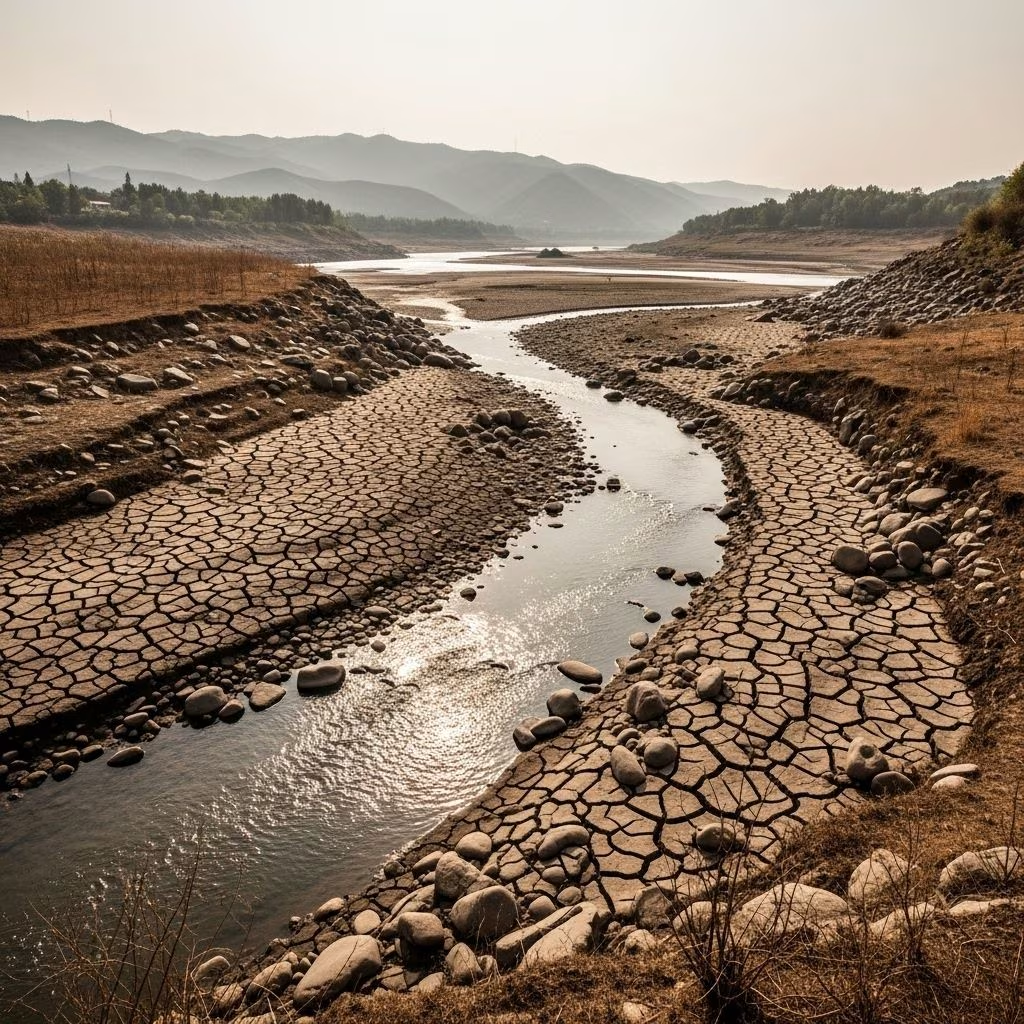
China’s Yangtze River—the lifeline for a third of the country’s population and a key artery of Asian industry—has reached record-low water levels as a result of extreme and persistent drought. The ongoing crisis is exposing not just vulnerable ecosystems and drying landscapes but also the ripple effects on agriculture, global supply chains, and energy generation. This article delves into the underlying causes, regional impacts, challenges for communities, government responses, and the urgent environmental lessons highlighted by this unprecedented event.
Main Causes: Why Is the Yangtze Drying Up?
The collapse of water levels in the Yangtze River is the outcome of multiple, interlocking factors:
- Severe Drought: From late January 2025 into the summer, large portions of China have experienced exceptionally low rainfall with some provinces receiving only a fraction of their usual precipitation. Rainfall deficits reached as much as 80% in some areas, notably southern Jiangxi, eastern Hunan, and parts of Guangdong and Guangxi.
- Extreme Heat: Record-breaking temperatures have accompanied the drought. National averages soared above historical norms, with provinces like Henan, Anhui, and Hubei clocking their highest May temperatures since 1961.
- Climate Change: Over the past decades, climate change has increased the frequency and severity of hydrological droughts in the Yangtze basin. Extreme events such as the 2022 drought are expected to become more common.
- Human Activity and Reservoir Management: Major reservoirs upstream—including the Three Gorges—have altered the river’s seasonal flow. Rapid reservoir storage after the summer flood season has advanced the start of dry periods downstream and intensified low water conditions.
The Yangtze River: China’s Water Artery
The Yangtze River is Asia’s longest river and the world’s third, stretching over 6,300 kilometers from the Tibetan Plateau to the East China Sea. It is the primary source of drinking water, irrigation, hydropower, and industry for regions accounting for nearly 600 million people. Key cities—including Chongqing, Wuhan, Nanjing, and Shanghai—depend on its flow.
Why the Yangtze Matters
- Water Supply: Feeds farms, cities, and factories across 19 provinces.
- Hydropower Generation: Home to the world’s largest hydropower station—the Three Gorges Dam.
- Shipping and Trade: One of the busiest inland waterways for cargo and transportation.
- Ecological Diversity: Supports unique wetlands, lakes, and countless endangered species, including the Yangtze finless porpoise.
How Bad Is the Drought? The Severity in Facts and Figures
- 90% of Jiangxi province experienced extreme fire risk and severe drought by late January 2025.
- Rainfall has been up to 80% below average in some areas; across the affected regions, precipitation fell to its lowest level since 2012.
- The 2022 drought was cited as the most severe in the Yangtze basin in nearly 70 years; 2025 conditions have continued the prolonged water crisis.
- Persistent rainfall deficits extend not just in the Yangtze, but to adjacent river basins including the Yellow River.
Table: Rainfall Deficit Levels in Major Yangtze-Affected Provinces (Jan–May 2025)
| Province | Rainfall vs. Historic Avg. | Drought Severity |
|---|---|---|
| Jiangxi | -80% | Extreme |
| Hunan | -60% | Severe |
| Anhui | -30% | High |
| Guangdong | -50% | Extreme, Localized |
| Henan | -30% | High |
| Sichuan | -25% | Severe |
Impacts: Effects on People, Ecosystems, and Industry
1. Agriculture and Food Security
- Crops at Risk: Drought struck just as grain crops entered critical growth stages. Reduced irrigation threatens yields of rice, wheat, and other staples.
- Water Scarcity for Livestock: Many areas lack reliable water for cattle and poultry, risking livestock health and farmer livelihoods.
2. Power Generation Challenges
- Reduced Hydropower Output: With river levels dropping, hydroelectric stations have less water to generate electricity. China’s grid has faced even greater summer supply pressures as a result.
- Increased Carbon Emissions: Shortfalls in clean hydroelectricity often push authorities back toward fossil fuel plants, potentially reversing some gains in emissions reductions.
3. Shipping and Industry Disruption
- Navigation Hindered: The Yangtze’s low flow has forced the halting or reduction of freight along key shipping lanes, slowing the movement of raw materials and finished goods.
- Manufacturing Strain: Factories along the river, especially in electronics and automobiles, suffered from water rationing and disrupted logistics.
4. Ecological Crisis
- Lake and Wetland Drying: Major connected lakes, notably Poyang and Dongting, have shrunk dramatically, further stressing biodiversity.
- Fish Kills: Dropping water levels and higher temperatures have triggered mass fish deaths and threatened sensitive aquatic species.
- Vegetation Decline: Satellite analysis shows widespread negative impact on land vegetation, aggravating erosion and diminishing habitat quality.
Communities on the Brink: The Human Cost
Rural villages and city dwellers alike face profound change:
- Drinking Water Shortages: Many towns in severely-affected regions are rationing municipal water, relying on emergency shipments or trucked-in supplies.
- Farmer Hardship: Crop failures threaten livelihoods, increasing rural poverty and food insecurity.
- Increased Fire Risk: The combination of parched land and heat has left large swathes vulnerable to wildfires.
Government and Local Response: Strategies and Tools
Chinese authorities at all levels have mobilized a multi-pronged approach:
- Water Diversion Programs: Emergency transfers from reservoirs and connecting rivers to supply critical urban and agricultural areas.
- Drought-Resilient Crops: Farmers are incentivized to switch to more drought-tolerant varieties where possible.
- Cloud Seeding: Intensified efforts to induce artificial rainfall through cloud seeding in dry regions.
- Infrastructure Upgrades: Accelerated construction of new water supply lines, storage tanks, and irrigation systems.
- Power and Water Rationing: Rotating supply restrictions implemented to preserve water levels for the most vital needs.
Long-Term Concerns: A Future of Water Insecurity?
Experts warn that hydrological drought in the Yangtze Basin is likely to worsen over time without systemic changes. The interaction of climate change, intensified industrial activity, and ongoing population growth demands urgent adaptation strategies.
Key Lessons for Sustainable Water Management
- Climate Adaptation: Robust climate adaptation policies are needed, combining infrastructure, regulations, and ecological restoration.
- Reservoir and Riverbed Management: More flexible and responsive management of existing dams and riverbed modifications can help buffer downstream droughts.
- Wetland and Lake Restoration: Rehabilitating connected wetlands—such as Dongting and Poyang—can improve the region’s natural water ‘sponge’ function.
- Strengthened Monitoring: Investment in real-time hydrological and meteorological data is critical for timely response.
Frequently Asked Questions (FAQs)
What caused the current Yangtze River drought?
The ongoing drought is the result of record-low rainfall due to persistent high-pressure systems, coupled with extreme heat and the compounded effects of climate change. Human alterations to river flow also play a significant role.
How does the drought affect China’s economy?
The Yangtze is central to Chinese agriculture, energy, and industry; reduced water disrupts harvests, hydroelectric power, and the movement of goods, resulting in far-reaching consequences for food prices and industrial production.
Has the Yangtze experienced droughts like this before?
2022 marked the worst drought in 70 years, with similar severity now repeating in 2025. Historic data indicate more frequent and intense droughts in recent decades.
What is being done to help affected communities?
Local and national authorities are providing emergency water deliveries, promoting drought-resistant farming, and using weather modification techniques, while also accelerating long-term water infrastructure improvements.
What are the greatest environmental risks?
The greatest risks are ecological collapse in wetlands and lakes, mass fish deaths, endangered species loss, declining forests, and heightening fire hazards.
References
- Proof Point: Drought in the Yangtze River Basin (ISCIENCES, 2025).
- China battles drought to ensure stable summer harvest (People’s Daily, 2025).
- Hydrological drought in the lower reaches of the Yangtze River (China): a 70-year data analysis (Frontiers in Marine Science, 2025).
- East Asia: Deficits continue in NW China, Yangtze River Basin (ISCIENCES, 2025).
References
- https://www.isciences.com/blog/2025/04/04/proof-point-drought-in-the-yangtze-river-basin
- https://en.people.cn/n3/2025/0530/c90000-20321832.html
- https://www.frontiersin.org/journals/marine-science/articles/10.3389/fmars.2025.1534674/full
- https://www.isciences.com/blog/2025/04/23/east-asia-deficits-continue-in-nw-china-yangtze-river-basin
- https://www.sixthtone.com/news/1017317/china-braces-for-summer-of-northern-floods-and-southern-droughts
- https://agupubs.onlinelibrary.wiley.com/doi/full/10.1029/2024EA003972
- https://pubmed.ncbi.nlm.nih.gov/40753660/