Golden Wonders: Incredible Animals with a Midas Touch
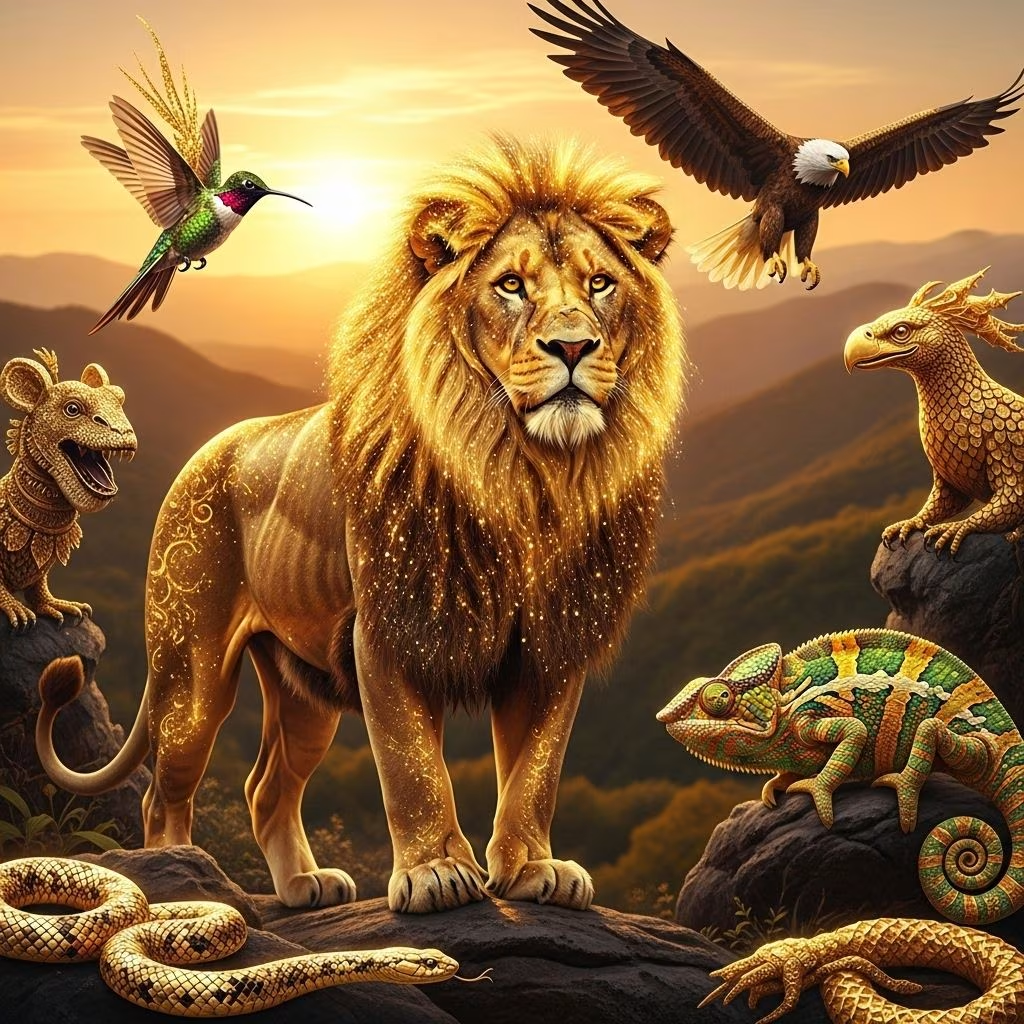
Since ancient times, the myth of King Midas has shaped how we perceive gold—not only as a symbol of wealth but as an emblem of beauty and power. The story of King Midas, a figure from Greek mythology granted the ability to turn anything he touched into gold, continues to inspire awe at natural phenomena that mimic this golden sheen. In the animal kingdom, evolution has produced myriad species bedecked in shades of gold, copper, and yellow, each shining as if touched by Midas himself.
From dazzling insects to gleaming reptiles and radiant mammals, discover how these golden-hued animals come to possess such remarkable coloration, why it matters, and what lessons the myth of Midas offers for appreciating real wonders of the natural world.
Contents
- A Myth for the Ages: The Origin of the Golden Touch
- How Animals Get Their Golden Color
- Gleaming Insects: Nature’s Living Treasures
- Birds of Splendor: Feathers that Dazzle
- Shimmering Reptiles and Amphibians
- Mammals in Gold
- Liquid Gold: Fish Glinting in the Sun
- Conservation: Golden Treasures in Peril
- Frequently Asked Questions
A Myth for the Ages: The Origin of the Golden Touch
The idea of the “Midas touch” comes from Greek mythology, where King Midas was granted a wish by the god Dionysus. As a reward for his hospitality, Midas asked that everything he touched turn to gold. At first, he delighted in his newfound power—turning roses, branches, and all he touched into glittering gold. But soon, the gift revealed itself as a curse, for he could not eat, drink, or embrace loved ones without turning them into lifeless statues of wealth.
The myth serves as a moral lesson about greed and the importance of appreciating life’s true riches. Today, when we observe golden animals in nature, we are reminded that natural beauty often eclipses even the most coveted treasures.
How Animals Get Their Golden Color
Golden coloration in animals arises from diverse sources:
- Pigments: Carotenoids and pteridines produce yellow to red hues, absorbed through diet or produced biochemically.
- Structural Coloration: Microscopic structures refract and reflect light, creating metallic gold or iridescence seen in many insects and fish.
- Mimicry and Camouflage: Gold can disguise or warn. Bright colors might serve to deter predators, attract mates, or blend into sun-dappled habitats.
These adaptations not only serve striking appearances but often have practical roles in survival and reproduction.
Gleaming Insects: Nature’s Living Treasures
Some of the most flamboyantly “Midas-touched” creatures are insects, masters of iridescence and metallic hues. Their colors serve as communication, deterrence, or camouflage.
The Golden Tortoise Beetle (Charidotella sexpunctata)
This North and Central American beetle boasts brilliant gold—a natural mirror. The reflective shell comes from layered cuticle structures refracting light. When threatened, the golden hue dims as fluids are retracted from the cuticle, revealing red and brown patches.
The Golden Scarab (Chrysina aurigans)
Native to Central American forests, these beetles shimmer with a metallic gold so bright they’ve been coveted by humans for centuries. Their luminous color is not from pigment but microscopic grooves in the shell, manipulating light to astonishing effect.
Golden Silk Orb-Weaver (Nephila spp.)
Although not an insect, this large spider produces golden-colored silk, the origin of its name. The silk’s unique hue likely helps camouflage webs amid dappled sunlight and perhaps attracts prey.
Other Notable Golden Arthropods
- Golden Jumping Spider: Species like Chrysilla lauta sport a dazzling metallic carapace, used for display and deterrence.
- Golden Carpenter Ant: Camponotus sericeus is cloaked in golden velvet thanks to dense, bristly hairs.
Birds of Splendor: Feathers that Dazzle
Feathered creatures have long been associated with the color gold, representing brilliance, energy, and the sun itself. Golden feathers often attract mates or signal health and status.
The Golden Pheasant (Chrysolophus pictus)
Endemic to China but popular in aviaries worldwide, this species displays an unforgettable golden crest flowing over a scarlet body and iridescent plumage. Males flaunt these hues in elaborate courtship displays.
Golden Oriole (Oriolus oriolus)
A Eurasian songbird cloaked in radiant yellow-gold feathers, offset by black wings. These birds migrate thousands of kilometers each year, flashing gold as they move between Europe and Africa.
Other Notable Golden Birds
- Golden Eagle: Aquila chrysaetos gets its name from the lustrous golden feathers on its head and neck.
- Golden-crowned Kinglet: The crown of this North American songbird glows like a jewel among needles and leaves.
Shimmering Reptiles and Amphibians
Golden scales and even occasional shimmering skin are seen in some reptiles and amphibians. These shades may aid in camouflage, signaling, or temperature regulation.
Golden Poison Dart Frog (Phyllobates terribilis)
This tiny Colombian amphibian is both beautiful and deadly. Its brilliant yellow-gold skin is a stark warning of potent toxicity. Indigenous people once used the frog’s toxins to tip their blowgun darts.
Golden Thread Turtle (Mauremys sinensis)
Found in East Asia, this freshwater turtle is named for the delicate gold stripes that adorn its neck and limbs, providing both camouflage and a dazzling effect.
Golden Flying Snake (Chrysopelea ornata)
This slender tree-dweller from South and Southeast Asia glistens with green, yellow, and golden patterns. It can glide between trees, its coloration marking its aerial acrobatics.
Mammals in Gold
Golden mammals are rarer than their feathered or scaled cousins, yet some species shine beautifully—often for camouflage or social signaling.
Golden Lion Tamarin (Leontopithecus rosalia)
The lush rainforests of Brazil are home to this critically endangered primate. Named for its magnificent golden-orange mane, the golden lion tamarin uses its coloration to blend among the fruit, flowers, and sun-spotted leaves of its habitat. Intense conservation efforts have helped stabilize some populations.
Golden Retriever
Though a domesticated breed rather than a wild animal, the golden retriever’s distinctive coat—a range from pale cream to rusty gold—makes it one of the world’s most recognizable dogs. The golden coloration was selectively bred for aesthetics and visibility in the field.
Golden Jackal (Canis aureus)
Although not as luminous as some other entries, this medium-sized canid of Africa and Eurasia has a thick, golden-brown coat that offers both camouflage in grasslands and a certain subtle shimmer in the sun.
Liquid Gold: Fish Glinting in the Sun
Sunlight and water are a perfect combination for shimmering displays. Golden colors help some fish communicate, attract mates, or hide from predators.
Goldfish (Carassius auratus)
Perhaps the world’s most famous golden animal, the domesticated goldfish was bred in China over a thousand years ago from wild carp. Generations of selective breeding enhanced dazzling orange-gold hues, creating dozens of varieties prized for their beauty.
Golden Arowana (Scleropages formosus)
This Southeast Asian fish is revered across cultures as a symbol of luck, wealth, and prosperity. Naturally radiant metallic gold scales shimmer in the water—a prize among aquarium enthusiasts often compared in worth to real gold.
Golden Trevally (Gnathanodon speciosus)
Native to tropical Indo-Pacific waters, golden trevallies display a glowing yellow-gold hue and are famous for their speed and agility.
Conservation: Golden Treasures in Peril
Many “golden” species face mounting threats from habitat destruction, over-collection, and climate change. Their beauty and rarity can make them targets for the pet trade and collectors.
- Golden Lion Tamarin: Endangered mainly due to deforestation in the Atlantic rainforest. Conservation projects focus on reforestation and population recovery.
- Golden Arrowana: Overfished and vulnerable due to high demand in the aquarium trade.
- Golden Poison Dart Frog: Habitat loss and illegal capture have placed tremendous pressure on wild populations.
The allure of gold, both mythical and real, reminds us of the need to protect these living treasures for future generations. Their intrinsic value far exceeds their coloration—they are keystone species, ecosystem engineers, or simply irreplaceable jewels of biodiversity.
Frequently Asked Questions (FAQs)
Q: Why do some animals have such vivid golden colors?
A: Golden colors can serve various adaptive functions, including camouflage among sunlit foliage, warning predators of toxicity, attracting mates, or signaling fitness. Sometimes metallic hues are a byproduct of the structure of hairs, scales, or feathers rather than actual pigment.
Q: Is the golden color always an advantage in nature?
A: Not always. While golden hues can help animals blend into certain environments or ward off predators, they may also make them more visible and vulnerable to other threats, such as poaching or human collection.
Q: Are any golden animals involved in myths or cultural symbolism?
A: Yes. Cultures worldwide revere gold-colored animals as symbols of wealth, good fortune, or divinity. The story of King Midas is only the beginning; golden eagles, lions, and fish feature prominently in folklore, religion, and heraldry.
Q: How can I help protect endangered golden species?
A: Support conservation organizations, learn about habitat preservation, and avoid products or pets sourced from wild-caught golden species. Advocate for policies that protect critical ecosystems where these animals live.
Further Reading
- “King Midas and the Golden Touch” – Greek mythology and its moral lessons
- Adaptation and evolutionary biology of animal coloration
- Conservation efforts for golden lion tamarins and other endangered species
Let these radiant creatures inspire not only admiration but action—for their survival is the true gold standard of a thriving planet.
References
- https://en.wikipedia.org/wiki/Midas
- https://historycooperative.org/king-midas/
- https://www.greekmyths-greekmythology.com/myth-king-midas-gold/
- https://pressbooks.pub/iagtm/chapter/story-king-midas-and-the-golden-touch/
- https://answersingenesis.org/animals/natures-midas-touch/
- https://thepenngazette.com/beyond-the-golden-touch/