


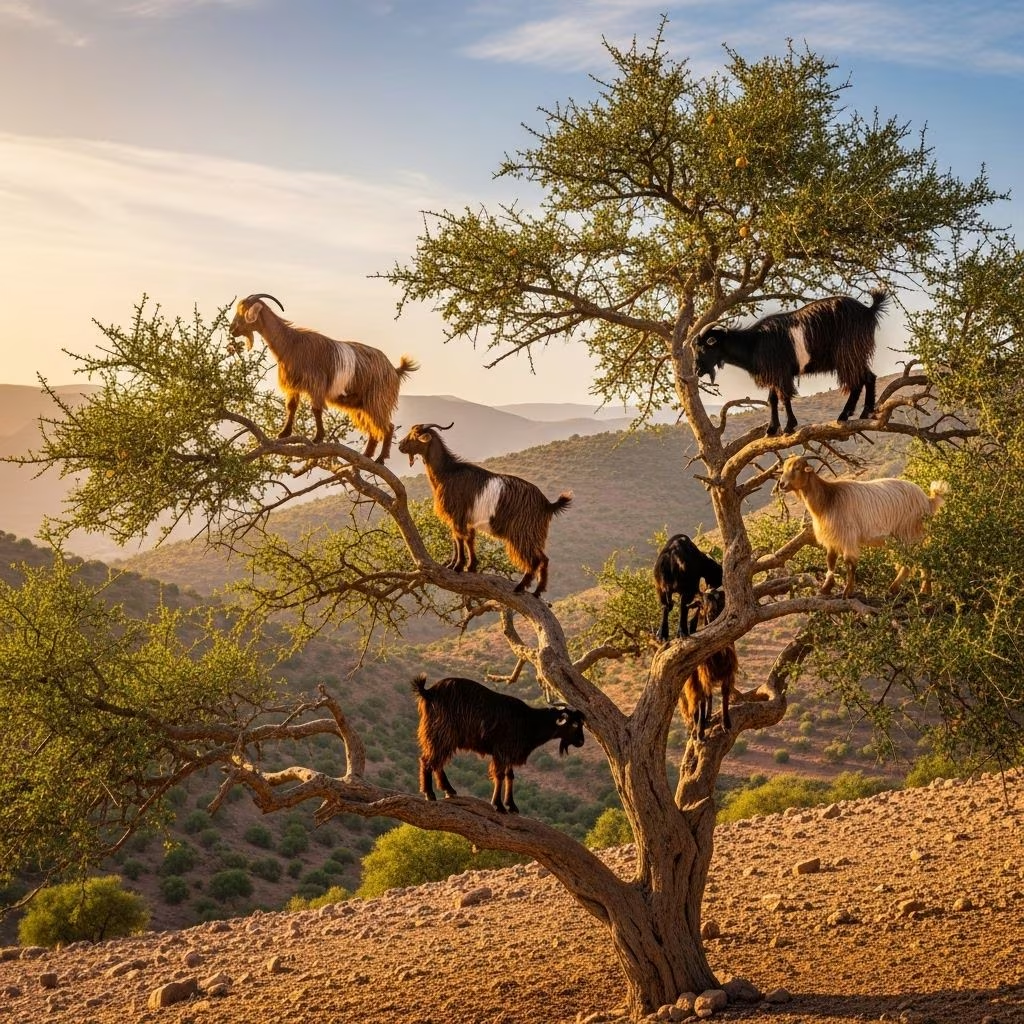
The Fascinating World of Morocco’s Tree-Climbing Goats
Morocco’s arid southwest landscape is home to a truly captivating curiosity: goats perched high up in the thorny branches of argan trees. What seems at first like an improbable sight is in fact a blend of animal instinct, ecological adaptation, and rural tradition. This article reveals how goats learn to climb trees, their crucial role in seed dispersal, and how this seemingly quirky habit has rippled outward into local economies and environmental debates.
Why Do Goats Climb Trees?
Goats are renowned for their climbing ability. Across the world, they have been seen scaling cliffs and rocky ledgestheir sturdy, split hooves and innate agility allow them to reach places inaccessible to most other animals. In southwestern Morocco, specifically regions around Agadir, Essaouira, and Taroudant, goats have put this skill to new use by climbing argan trees to satiate their hunger during dry seasons.
- Argan trees (Argania spinosa) are native to Morocco’s semi-arid regions and bear a pulpy, olive-like fruit that goats find irresistible.
- Drought and scarcity have made pastures less available, pushing goats to seek food in the tree canopy when ground forage runs out.
- Goats can climb as high as 30 feet, balancing on thin branches in their search for fruit.
This remarkable adaptation enables goat herds to thrive despite Morocco’s persistent droughts, turning tree-climbing into both survival strategy and spectacle.
From Necessity to Attraction: The Story Behind the Goats in Argan Trees
The origins of tree-climbing goats in Morocco are rooted in local agricultural challenges. Drought conditions, compounded by economic pressures such as market disruptions and pandemic-related isolation, have driven farmers to creative solutions for both livestock survival and income.
- Farmers began encouraging their goats to climb argan trees by placing food and building small platforms among the branches.
- Training young goats to climb takes about six months of repetitive conditioning and herder guidance.
- As tourism resumed, local entrepreneurs realized that tree-perched goats attracted wide-eyed visitors who were eager to pay for photos and memorable experiences.
Today, the sight of goats standing amid argan branches is more than mere happenstance: it is a staged—but authentic—blend of tradition and economic ingenuity.
How Do Goats Climb Trees? Anatomy and Instinct
Goats possess a suite of physical adaptations that make them exceptional climbers, whether scaling rocky cliffs or argan trees. These mechanisms allow them to ascend and balance in places where few other animals dare.
- Cloven hooves (split hooves) enable precise gripping and stable balancing on narrow branches.
- Strong, flexible legs let goats launch themselves upwards and maintain balance even at precarious heights.
- Low center of gravity makes it easier for goats, including kids, to stay upright on uneven surfaces.
- Experience gained through herder encouragement and repeated training helps the animals become comfortable climbing into trees.
Onlookers marvel at their agility and fearlessness—attributes that have become synonymous with Morocco’s indomitable goats.
The Ecological Impact: Goats and Argan Seed Dispersal
This extraordinary relationship between goats and argan trees isn’t simply a one-way transaction of food for sustenance. Goats play a surprising role in perpetuating the argan forests through their behaviors.
- Argan fruits have a hard, inner seed (nut) surrounded by pulpy flesh. Goats adore the fruit but want nothing to do with the seed.
- Unlike many animals that spread seeds by passing them through their digestive systems (endozoochory), Moroccan goats often spit out the seeds after chewing their cud, delivering clean seeds far from the parent tree.
- This method of seed dispersal can help argan seedlings establish themselves in new locations, potentially aiding forest regeneration.
- Researchers have found that sheep, deer, and even fallow deer exhibit this behavior, suggesting the spit-based method may be ecologically important for large-seeded plants in similar habitats.
A table summarizing traditional seed dispersal versus goat-mediated seed dispersal:
| Method of Seed Dispersal | Example Species | Mechanism | Ecological Effect |
|---|---|---|---|
| Endozoochory (digestive passage) | Birds, smaller mammals | Seeds pass through digestive tract and are excreted | High dispersal range; seeds sometimes scarified for germination |
| Spitting during rumination | Moroccan goats, sheep, deer | Seeds chewed, spat out clean and intact far from parent plant | Ensures large seeds are dispersed and ready to germinate |
This newly appreciated mechanism adds a layer of complexity to how animals help maintain plant populations, especially in challenging environments.
Argan Oil: From Seed to Cosmetic Gold
The argan tree is lauded not solely for its role in goat ecology, but also for its global economic importance. Argan oil, extracted from the nuts spat—or sometimes excreted—by goats, has become both a culinary delicacy and a cosmetic sensation.
- Argan oil is valued for its rich antioxidants and high vitamin E content, making it a sought-after ingredient in hair and skin care products.
- Locally, oil extraction provides income and employment for rural families in Morocco.
- Tourist fascination with tree-climbing goats has indirectly fueled wider international awareness of argan oil’s virtues.
- Sustainability challenges persist, as increased demand threatens overharvesting of argan fruits and encroachment on traditional grazing lands.
The partnership between goat and tree thus extends from local fields to global markets, illustrating the interconnectedness of nature and culture.
Tourism: Spectacle, Welfare, and Controversy
Tree-climbing goats have become one of Morocco’s top photo opportunities, bringing crucial revenue to hard-pressed rural communities. Yet, this phenomenon is not without controversy.
- Farmers may position goats in trees specifically for tourist enjoyment, building platforms and encouraging goats to remain for long periods.
- Visitors passing through regions like Essaouira or along roads between Essaouira and Marrakech are likely to encounter staged goat appearances.
- Some tourists and animal advocates express concern for the goats’ welfare, questioning whether remaining in trees for extended periods is stressful, especially during hot or drought-stricken conditions.
- The environmental impact of concentrating goats in small groves for spectacle may contribute to over-browsing and damage to the trees themselves.
As the lines between tradition, necessity, and entertainment blur, broader discussions on sustainability and ethical ecotourism emerge—for farmers, herders, and travelers alike.
Where and When to See Tree-Climbing Goats in Morocco
If you’re eager to witness this remarkable sight firsthand, southwestern Morocco offers several prime locations:
- Essaouira: An Atlantic port renowned for its argan groves and colorful culture.
- Agadir: A bustling city at the edge of the argan forest belt.
- Taroudant: A vibrant market town known for its rural landscapes.
Along the famous 100-mile road from Essaouira to Marrakech, travelers often pause to photograph goat-laden trees and support local farmers. Peak viewing is during late autumn and winter, when ground forage is scarce and argan fruit is ripe.
Frequently Asked Questions (FAQ)
Q: Why do goats climb argan trees?
A: Goats climb argan trees primarily to reach the pulpy fruit, which is a favorite food, especially during dry seasons when ground-level forage is scarce.
Q: How do goats avoid falling from the branches?
A: Goats’ split hooves, strong legs, and low center of gravity allow them to grip and balance even on narrow or precarious branches.
Q: What is the ecological benefit of goats climbing trees?
A: By climbing and feeding on argan fruits, goats disperse seeds by spitting them out, which helps argan seedlings to grow far from the parent tree—an important process for forest renewal.
Q: Is there any controversy over this practice?
A: Yes, some animal welfare advocates raise concerns about goat health and tree damage, especially when goats are staged in trees for tourists over long periods.
Q: Where can I see tree-climbing goats in Morocco?
A: The best locations are southwest Morocco around Essaouira, Agadir, and Taroudant—especially along the route between Essaouira and Marrakech.
The Marvel of Nature and Culture
The spectacle of Morocco’s tree-climbing goats embodies the interplay of adaptation, ecology, tradition, and innovation. For centuries, argan trees and the animals that climb them have shaped rural livelihoods and local ecosystems in southwestern Morocco. Today, they offer a living tableau of resilience—for farmers, herders, creatures, and visitors alike. By appreciating both the natural ingenuity and the social context, travelers and environmentalists can better understand the delicate balance that sustains both livelihoods and landscapes.
References
- https://esa.org/esablog/2017/05/24/tree-climbing-goats-disperse-seeds-by-spitting/
- https://mossandfog.com/the-remarkable-tree-climbing-goats-of-morocco/
- https://bylandersea.com/2022/10/seeing-goats-in-argan-trees-in-morocco/
- https://www.atlasobscura.com/articles/morocco-argan-oil-trees-spitting-goats


