Native, Endemic, and Indigenous Species: Definitions and Differences
When considering the diversity of life on our planet, we often hear terms like native, endemic, and indigenous species. These categories play a vital role in ecology, conservation, and environmental studies, yet their distinctions can be subtle and sometimes misunderstood. Understanding what sets these types of species apart helps us appreciate the intricate balance of ecosystems and the urgency of protecting biodiversity worldwide.
What Is a Native Species?
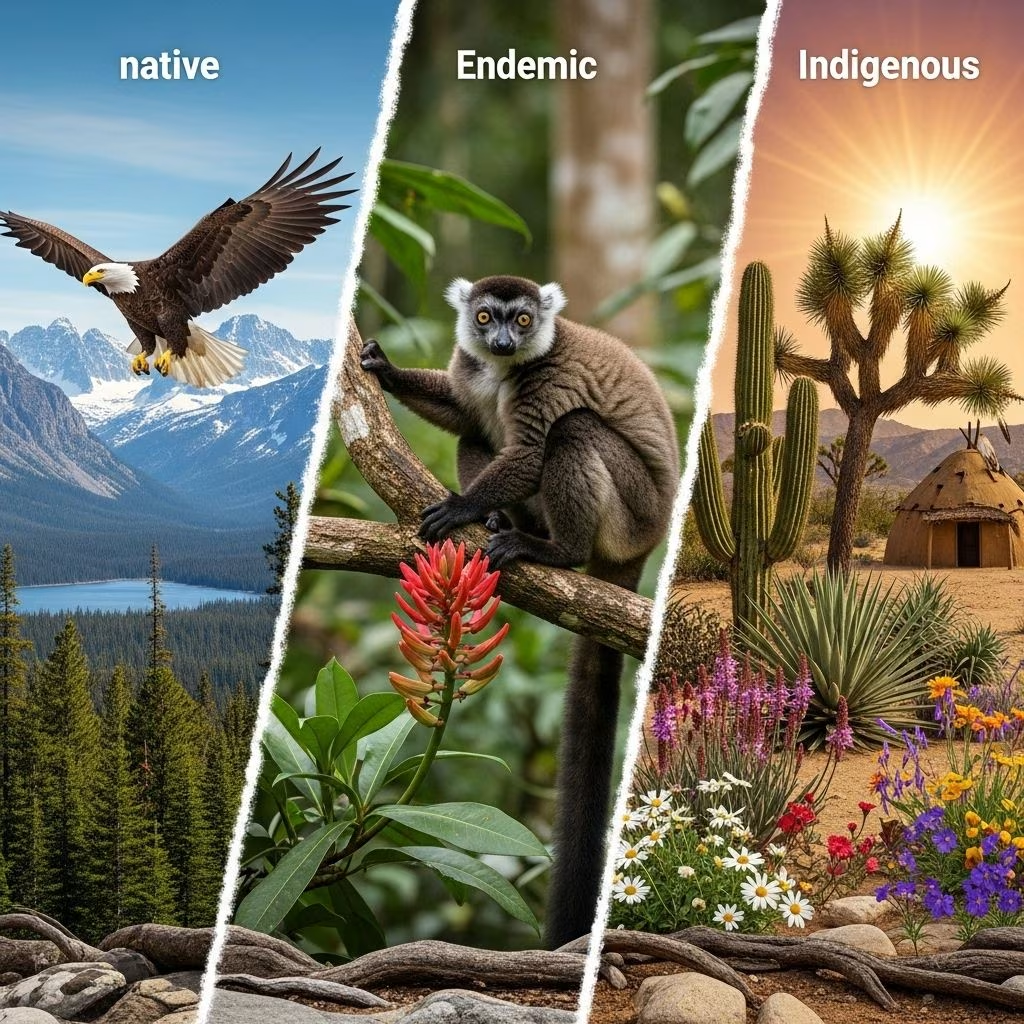
A native species is one that occurs naturally in a particular region, habitat, or ecosystem, without human introduction. These species evolved and adapted to the local conditions over time through natural processes. Native species can be found across broad geographic ranges or restricted to specific areas, contributing to the area’s biodiversity and ecological function.
- A native plant or animal is present because nature—rather than human interference—brought it there.
- Native species can be widespread; for example, the Koala is native to much of Australia.
- The Joshua Tree is native to the Southwest American desert.
Unlike introduced (or non-native) species, natives co-evolved with their environment and other local species, maintaining ecological relationships essential for a healthy ecosystem.
Native vs. Non-Native Species
| Characteristic | Native Species | Non-Native Species |
|---|---|---|
| Origin | Evolved or arrived naturally in the local region | Introduced by human activity from other regions |
| Role in Ecosystem | Integrated with local food webs and ecological processes | May disrupt local ecology; can be harmless or harmful |
| Biodiversity Impact | Memory of local evolutionary history and adaptation | May reduce native biodiversity or become invasive |
What Is an Indigenous Species?
The term indigenous species is frequently used interchangeably with native species, but often refers to organisms that are native to a very specific, localized area within a region. While all indigenous species are native, not all natives are indigenous.
- Indigenous: Occur naturally and are unique to a local area, such as a coastline, mountain, or valley.
- The term “indigenous” emphasizes adaptation to, and origin within, a smaller ecosystem.
- An indigenous species may also be present elsewhere but is unmistakably local to its region of origin.
For instance, a certain plant might be indigenous to the coastal area of Seattle, even though it can be found in scattered locations elsewhere.
What Is an Endemic Species?
An endemic species takes localization to the extreme: it is native exclusively to a specific, geographically restricted area and found nowhere else in the world. Endemic species often evolve in isolation in unique environments, such as islands or highly specialized habitats.
- Endemic: Native and restricted to one location or habitat, such as an island or country.
- Endemic species are not just locally adapted—they exist only in their native area and nowhere else.
- Because of their limited range, endemics are especially vulnerable to extinction.
Some classic examples of endemic species include:
- The Galápagos mockingbird, found only on the Galápagos Islands.
- The haha plant (Cyanea calycina), a rare shrub endemic to Hawaii.
- The Columbia torrent salamander (Rhyacotriton kezeri), found only in the Pacific Northwest USA.
- The Iʻiwi bird, endemic to Hawaii.
Endemic vs. Native vs. Indigenous: Key Differences
| Term | Geographic Scope | Ecological Role | Extinction Risk |
|---|---|---|---|
| Native | Naturally present; broad or localized areas | Integral to ecosystem functions | Generally low (unless population declines) |
| Indigenous | Localized, specific region within broader native range | May contribute unique traits to micro-ecosystems | Can be at risk if their local area is threatened |
| Endemic | Restricted and unique to one location | Often critical to ecosystem uniqueness and biodiversity | High risk, especially due to habitat loss |
Why Do These Distinctions Matter?
Understanding the difference between native, endemic, and indigenous species is crucial for conservation, ecological restoration, and policy-making. Here’s why:
- Biodiversity hot spots are often defined by their wealth of endemic species, which contribute to global diversity.
- Conservation efforts target endemic species because their extinction would mean global loss, not just local disappearance.
- Restoration projects require use of native and indigenous species to rebuild healthy, balanced ecosystems.
- Introducing non-native species—even if closely related—can disrupt local food webs and lead to invasive populations.
Examples: Hawaii and the Galápagos Islands
Isolated ecosystems like Hawaii and the Galápagos Islands illustrate the difference between native and endemic species:
- About 90% of Hawaii’s land-based native species are also endemic, meaning they are found nowhere else on Earth.
- The Iʻiwi bird and many Hawaiian flowers are both native and endemic to the islands.
- The Galápagos mockingbird is endemic to the Galápagos archipelago, a hotspot of evolutionary uniqueness.
These areas demonstrate how isolation can drive the evolution of unique species—making them conservation priorities.
Human Influence: Non-Native and Invasive Species
Species can also be categorized by their relationship to human activity. Non-native species (sometimes called alien or exotic) occur outside their natural range due to deliberate or accidental introduction by humans. Some non-native species become invasive, outcompeting native wildlife and changing local ecosystems.
- Non-native: Introduced by humans, may be harmless or disruptive.
- Invasive: Non-native species that spread rapidly and damage native ecosystems.
- Native species may become invasive outside their natural range; careful selection is necessary for biodiversity-friendly gardens.
- Check regulations before planting unfamiliar species, especially if they’re from sensitive habitats or protected by law.
Choosing Plants for Restoration and Wildlife Gardens
Planting native, indigenous, or endemic species can boost local biodiversity and provide food and habitat for local wildlife. However, the choice of species should balance ecological benefit and the risk of introducing potentially invasive organisms.
- Endemic species are ideal for maintaining biodiversity—protect them whenever possible.
- If endemics aren’t available, seek indigenous plants from local nurseries or council programs.
- Native plants from the broader region are the next best option, but check for invasive potential if grown outside their original range.
- Councils, native garden nurseries, and local experts are excellent resources for species selection and conservation advice.
Challenges and Threats to Native and Endemic Species
- Habitat loss: The biggest threat to endemic and indigenous species, as their restricted range makes them vulnerable.
- Climate change: Shifting temperatures and weather can disrupt the delicate balance endemic species depend on.
- Invasive species: Non-native organisms can outcompete, prey upon, or otherwise endanger natives and endemics.
- Overharvesting and exploitation: Some species are threatened by collection, hunting, or commercial use.
Protecting endemic and indigenous species is central to global conservation efforts. Their loss can mean the disappearance of knowledge, genetic diversity, and unique ecological functions.
Frequently Asked Questions (FAQs)
Q: Can a species be native to more than one region?
A: Yes. Native species can be present in multiple regions as long as they arrived and settled without human intervention.
Q: What makes a species ‘indigenous’ rather than just ‘native’?
A: Indigenous species are often native to a more specific, localized area within a broader region, highlighting their adaptation to a particular ecosystem.
Q: Why are endemic species at greater risk of extinction?
A: Because endemic species exist only in one location, any disruption—habitat loss, climate change, invasive species—can endanger their entire global population.
Q: How do non-native species become invasive?
A: Some non-native species thrive in new environments, where they can outcompete local species, spread rapidly, and disrupt natural ecological relationships.
Q: Should I plant endemic or indigenous species in my garden?
A: Planting locally-adapted endemic or indigenous species supports biodiversity and ecosystem health, but always check with local council or conservation authorities to ensure species protection and prevent the introduction of potential invaders.
Key Takeaways
- Native species occur naturally in a region and are integral to its ecology.
- Indigenous species are native to a specific local area and offer specialized adaptations.
- Endemic species are unique to one location—and their conservation is crucial as their loss is global.
- Non-native and invasive species pose challenges to ecological balance, underscoring the importance of thoughtful restoration and habitat management.
- Conserving endemic and indigenous species maintains biodiversity, ecological function, and a connection to natural heritage.
References
- https://www.geographyrealm.com/endemic-native-non-native-and-invasive-species/
- https://sustainabilitycubed.com/endemic-vs-native/
- https://www.worldatlas.com/articles/what-is-the-difference-between-a-native-an-indigenous-and-an-endemic-species.html
- https://www.lovebigisland.com/quick-and-remarkable-facts-about-hawaii/endemic-species-hawaii/
- http://therightblue.blogspot.com/2008/09/what-is-difference-between-endemic-and.html
- https://forum.inaturalist.org/t/native-vs-endemic-on-inat/43954
- https://www.ps.org.au/articles/native-endemic-and-introduced-what-do-they-all-mean
- http://blog.growingillawarranatives.org/2020/12/plant-theory-whats-difference-between.html