


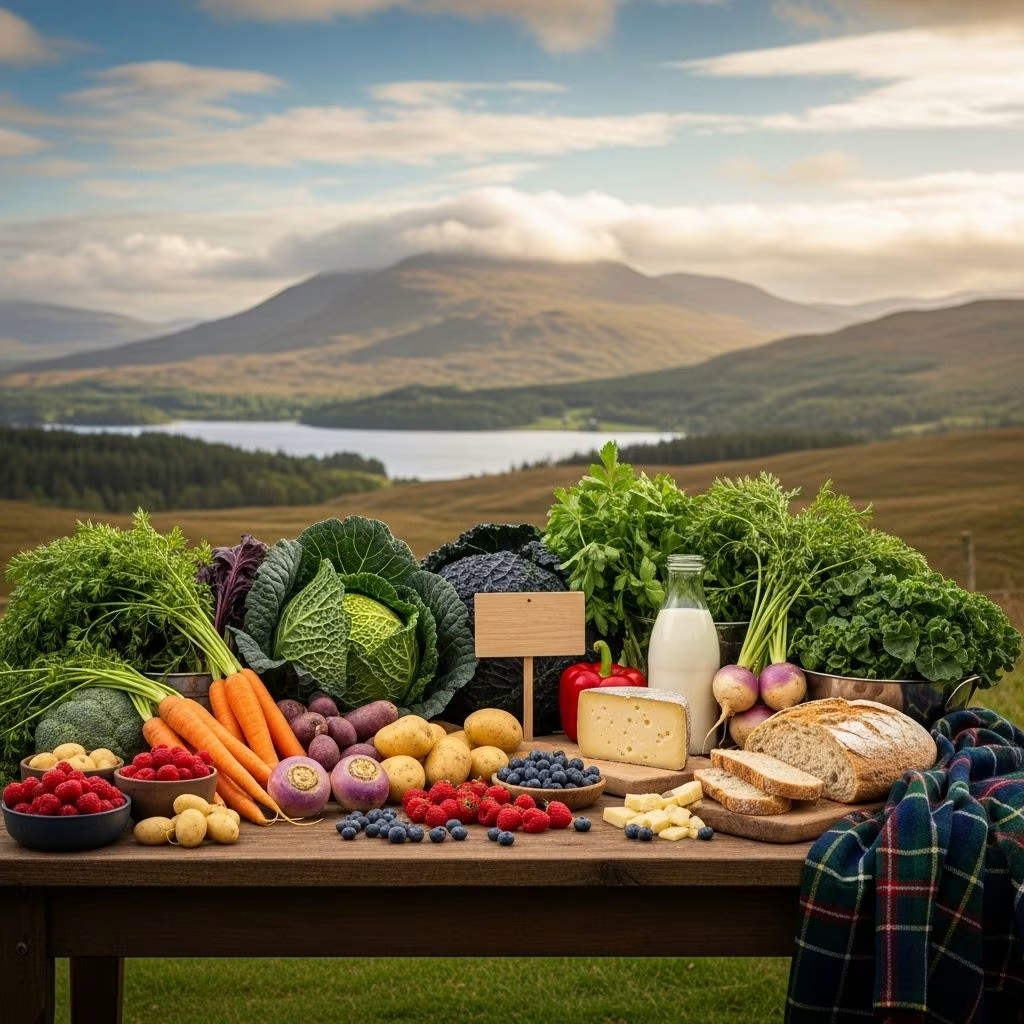
Scotland’s Ambitious Pursuit of a Good Food Nation
Scotland is embarking on a comprehensive transformation of its food system. With the introduction of the Good Food Nation (Scotland) Act 2022 and the subsequent launch of the first national Good Food Nation Plan, the country has made clear its intent to build a future where food policy serves the health, environmental, and social needs of its people. This article examines Scotland’s journey toward becoming a Good Food Nation, exploring the legislative context, the vision for change, key priorities, ongoing challenges, and the impact on communities, producers, and the wider ecosystem.
The Roots of Scotland’s Good Food Nation Vision
The concept of a Good Food Nation in Scotland is not new. For decades, campaigners, charities, producers, and public health advocates have sought system-level reforms that would embed principles of sustainability, health, and social justice at the heart of national food policy. The passing of the Good Food Nation (Scotland) Act in June 2022 was a landmark victory for these groups, finally giving legislative force to a holistic and joined-up approach to food.
The Act was shaped by years of consultation, prompting robust scrutiny and amendments by the Scottish Parliament. Central to the Act is the mandate for a national Good Food Nation Plan, establishing clear food outcomes, mechanisms for measurement, and requirements for both the national government and local authorities to take coordinated actions toward these aims.
The Legislative Framework: The Good Food Nation (Scotland) Act
Passed in 2022, the Act binds Scotland’s government to create an integrated policy landscape for food. Some of its most important features include:
- Framework legislation: Unlike previous piecemeal efforts, the Act provides a structure for systematic change.
- Statutory planning: Scottish Ministers are required to produce, consult on, and periodically review a national plan as well as ensure coordinated local plans.
- Parliamentary and public scrutiny: Any draft of the national plan must be laid before the Parliament for 60 days, allowing time for consultation, feedback, and amendments before adoption.
- Defined Outcomes and Metrics: The Act requires the setting of outcomes, goals, and tangible metrics to monitor progress.
This legislative framework establishes a legal duty for government to pursue health, sustainability, and fairness in the food system, not as isolated programs, but as a national priority embedded across multiple sectors.
What Is a Good Food Nation?
At its most basic, the vision is for a Scotland in which “people from every walk of life take pride and pleasure in, and benefit from, the food they produce, buy, cook, serve, and eat each day”. The aspiration goes beyond nutrition to include:
- Environmental sustainability and food security
- Integration with public health and education
- Better support for local food economies and producers
- Reducing food poverty and ensuring food justice
- Celebrating Scotland’s diverse food culture and heritage
Core Outcomes and National Priorities in the Plan
Published for parliamentary scrutiny in June 2025, the first National Good Food Nation Plan organizes government ambitions and existing commitments around several core themes:
- Healthier Diets: Reducing obesity and chronic illness through better food environments and education.
- Sustainable Food Production: Supporting farmers, fishers, and processors to adopt practices that protect the environment, biodiversity, and climate.
- Access and Fairness: Tackling food insecurity and ensuring everyone can afford and enjoy nutritious foods.
- Economic Prosperity: Building a resilient local food economy and safeguarding jobs.
- Culture and Learning: Promoting food skills, pride in Scottish food heritage, and shared knowledge.
Strategic investments announced in parallel—such as dedicated funds for food processing and marketing, new support schemes for sustainable farming, and efforts to encourage new entrants onto public land—show that financial resources are being aligned with these priorities.
Table: Summary of Scotland’s Good Food Nation Plan Core Outcomes
| Outcome Area | Key Focus | Measurement Metric |
|---|---|---|
| Health | Reduce diet-related disease | Obesity rates, hospital admissions for diet-related illness |
| Sustainability | Lower food sector emissions, protect resources | Carbon footprint, biodiversity indicators |
| Fairness | Secure access to good food for all | Rate of food insecurity, Healthy Start uptake |
| Economy | Grow local jobs and food businesses | Local sourcing, job creation in food sector |
| Culture & Learning | Encourage pride, food skills, heritage | Participation in food activities, cultural events |
Shifting to a ‘Food Systems’ Approach
A critical innovation is the move away from disjointed, sector-by-sector policymaking toward a systems perspective that recognizes the complex links between production, consumption, health, climate, and fairness. The National Good Food Nation Plan is being hailed as a bold step in tackling these interconnections head-on.
This approach aims to:
- Address the root causes of food system problems, not just their symptoms.
- Promote collaboration between agriculture, environment, business, education, and health sectors.
- Ensure policies are mutually reinforcing rather than conflicting or duplicative.
The Role of Local Authorities and Communities
The Plan recognizes that food is local as much as national. Local government has an essential role in implementation, from supporting allotments and community gardens to shaping procurement of public meals and facilitating local food enterprises. The 2025 scrutiny process includes dedicated attention to how local plans and feedback will be integrated, ensuring that the needs of urban, rural, and island communities are factored into national policy.
Examples of ongoing and future local initiatives include:
- Expanding growing spaces and green infrastructure in urban centers
- Supporting community-led food hubs and pantries
- Embedding food education in schools and youth programs
- Encouraging partnership between public health teams, businesses, and civil society
Food Security, Fairness, and Tackling Food Poverty
Central to Scotland’s vision is confronting the stark inequalities that have left too many people without regular access to adequate, nutritious food. The Good Food Nation Plan positions food insecurity as a systemic issue demanding government leadership and partnership with charities and local organizations.
- Extending free school meals and healthy breakfast programs for children at risk
- Developing dignity-centered food support (like cash-first schemes and food pantries)
- Strategies for affordable healthy food in all communities—not just affluent ones
This focus is informed by the lessons of the COVID-19 pandemic, which exposed the fragility of food access and the inadequacy of emergency food aid alone to address chronic poverty.
Supporting Scotland’s Food Producers and Businesses
Scotland’s food system is deeply tied to its economic fortunes, national identity, and environment. The Plan features support measures for farmers, fishers, and processors, including:
- Incentives for sustainable agricultural practices that conserve soil, water, and biodiversity
- Market opportunities for local and regional food businesses
- Recognition of fishing and seafood sectors as integral to the nation’s food infrastructure
Consultations with stakeholders highlight both enthusiasm for an ‘aspirational’ strategy and calls for concrete support to ensure small producers and rural communities can thrive amidst transition.
Challenges and Criticisms: Moving from Aspiration to Action
While the publication of the first Good Food Nation Plan has been widely welcomed, critical voices have pointed out areas needing further development:
- Lack of ambitious new policies on public health and diet improvement
- Concerns that commitments are vague, lacking detailed actions and timelines
- Insufficient focus on environmental protection and climate action, according to some campaigners
- The need for robust systems of monitoring, reporting, and accountability
The Scottish Government has responded that the Plan is just the first generation of a long-term systems shift—that regular updates, parliamentary scrutiny, and public engagement will be key to embedding and improving policies over time.
Opportunities Ahead: Building on Momentum
Scotland’s ongoing food transformation creates opportunities to:
- Harness food as a lever for “wellbeing economy” development
- Champion Indigenous knowledge and diversity in Scottish food culture
- Show leadership in the UK and internationally for integrated food system change
Investment in food supply chains—from farm to fork—can help address rural depopulation, climate resilience, and community empowerment while driving innovation.
Frequently Asked Questions (FAQs)
Q: What is the Good Food Nation (Scotland) Act?
A: The Good Food Nation (Scotland) Act 2022 is framework legislation that requires the Scottish Government to develop national and local plans to coordinate food policy for health, sustainability, and social justice.
Q: What are the main goals of Scotland’s Good Food Nation Plan?
A: The main goals are to improve health outcomes, build sustainable food production, ensure fairness and reduce food insecurity, support a thriving local economy, and promote Scotland’s food heritage.
Q: How will local communities benefit?
A: Local communities should see expanded food education, support for community-scale growing and food enterprises, more affordable healthy food options, and targeted action on food poverty, especially in vulnerable areas.
Q: What role do food producers and the fishing industry play?
A: Producers, farmers, and the seafood sector are central to the plan’s ambition, with supports to encourage sustainable practices, bolster local economies, and integrate these sectors’ voices into future policy design.
Q: What are the main challenges so far?
A: The main challenges include delivering on aspirational goals, ensuring strong, accountable implementation, and balancing competing needs for health, sustainability, economic development, and fairness.
Conclusion: A Pivotal Step on a Long Journey
The launch of Scotland’s first National Good Food Nation Plan is a landmark step toward an integrated food system that values people, planet, and prosperity together. While much work remains to turn vision into lasting change, the framework established by the Act—and the transparent, consultative process supporting it—offers a replicable model for other nations facing the challenges of the modern food system. Stakeholders and citizens alike have the chance to make their voices heard as Scotland shapes the next chapter in its food future.
References
- https://foodfoundation.org.uk/news/five-key-takeaways-scotlands-new-food-policy-plans
- https://www.parliament.scot/~/media/committ/11028/PublicPaper1
- https://www.sustainweb.org/blogs/jul25-good-food-nation-plan-fails-to-impress/
- https://fishingnews.co.uk/news/good-food-nation-plan-could-be-welcome-step-forward-for-scottish-seafood/
- https://www.gov.scot/publications/proposed-national-good-food-nation-plan/pages/6/
- https://www.gov.scot/publications/proposed-national-good-food-nation-plan/
- https://spice-spotlight.scot/2025/09/01/next-steps-towards-a-good-food-nation-do-we-have-the-right-plan/
- https://www.nfus.org.uk/news/blog/why-scotlands-good-food-nation-plan-lacks-the-urgency-and-clarity-needed-to-deliver-meaningful-chang
- https://www.communityfoodandhealth.org.uk/2025/our-views-about-good-food-nation/
- https://foodcoalition.scot/wp-content/uploads/2025/02/national-good-food-nation-plan.pdf


