


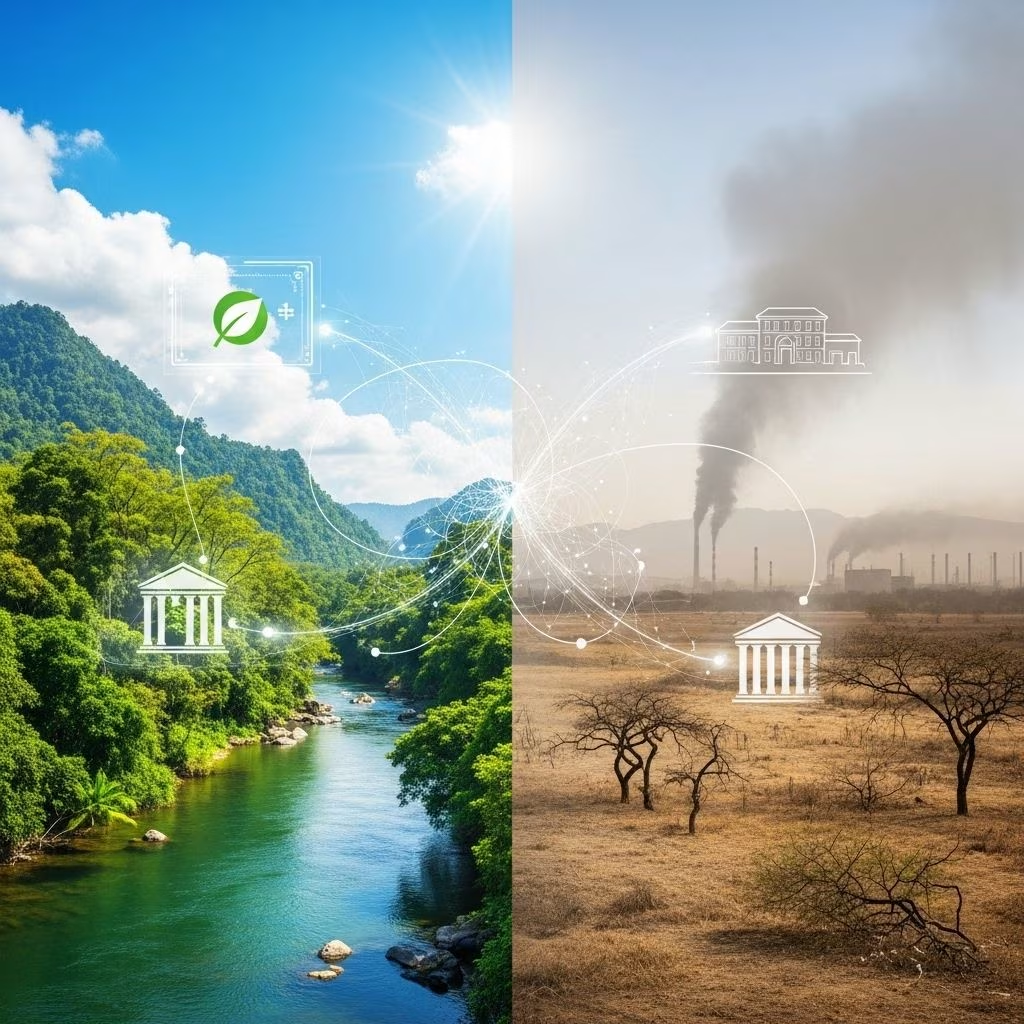
How Your Banking Choices Impact Climate Change
Every swipe of your debit card, automated bill payment, or savings account deposit might feel disconnected from the climate crisis. Yet, the financial world plays a pivotal—sometimes hidden—role in both fueling and fighting climate change. Whether consciously or not, your choice of bank and its lending activity could contribute to fossil fuel development, deforestation, and the acceleration of global warming. This article explores how the global banking sector’s investments affect the environment, why individual choices matter, and what you can do to help drive positive change.
Understanding the Far-Reaching Impact of Banks
Banks are more than just institutions that safeguard your money or provide loans—they’re powerful engines that drive global investment. These days, the mainstream banking sector is under increasing scrutiny for its deep ties to industries that contribute to climate change. Here’s why your banking habits deserve a closer look:
- Investment Decisions: Banks fund major infrastructure projects, including fossil fuel extraction, pipelines, and deforestation-related enterprises.
- Global Leverage: The top global banks control trillions in assets, giving them outsized influence on the direction of the global economy—and its environmental footprint.
- Individual Choices Add Up: Where you deposit your money and which banks you trust with your funds enables their lending decisions, for better or for worse.
How Banks Are Connected to Fossil Fuels
The banking sector provides critical capital for oil, coal, and gas companies. These relationships can be hidden in plain sight, embedded in mortgage providers, savings accounts, and credit cards you use every day. Even as the world races to replace fossil fuels with renewable energy, many banks continue to support the carbon-intensive status quo.
Key Facts About Bank Fossil Fuel Financing
- Since the Paris Agreement in 2015, the world’s biggest banks have financed fossil fuel companies with nearly $4 trillion in loans and underwriting.
- Just thirty-five banks are responsible for the lion’s share of fossil fuel financing, dominating the headlines and environmental reports from NGOs.
- Despite public commitments to climate action, many leading banks maintain or increase funding for new oil and gas fields, coal plants, and pipelines.
| Bank | Headquarters | Estimated Fossil Fuel Financing (USD, 2016–2021) |
|---|---|---|
| JPMorgan Chase | USA | $314 billion |
| Citi | USA | $253 billion |
| Wells Fargo | USA | $198 billion |
| Bank of America | USA | $198 billion |
These figures illustrate the scale of the problem. Efforts to move away from fossil fuel banking are growing, but fossil fuel funding remains entrenched in the global financial system.
Why Your Money Matters: Banking as Climate Action
While individual consumer choices about energy use, transportation, or recycling are well-discussed in sustainability circles, shifting your banking habits is an often overlooked but high-impact climate measure. Personal bank accounts, retirement funds, and investments together form a collective flow of money that either supports or undermines a green transition.
Personal Banking, Collective Consequences
- Each dollar in your account is multiplied through bank lending and investment activities.
- Banks aggregate consumer deposits and use the funds to finance businesses and projects, including energy infrastructure.
- Redirecting your accounts to greener banks can shift capital away from fossil fuels toward clean energy and ethical initiatives.
How to Find Out Where Your Bank Stands
If you aren’t sure whether your money is supporting climate solutions or climate problems, you’re not alone. Banks’ environmental policies can be hard to find and even harder to interpret. Here’s how you can investigate your own bank’s practices:
- Check Transparency Reports: Look for your bank’s published environmental or sustainability reports for details on their lending and investment activity.
- Independent Rankings: NGOs and advocacy groups regularly publish rankings of banks by their climate and fossil fuel financing records. The annual Banking on Climate Chaos report is a detailed source.
- Ask Direct Questions: Reach out to your current bank and ask if they fund fossil fuels and what steps they’re taking to decarbonize their loan portfolio.
- Look for Labels: Some banks pursue green certifications or membership in sustainability alliances, though scrutinizing the authenticity and scope of such labels is important.
Banks Respond to Consumer and Regulatory Pressure
As public awareness of climate-linked finance grows, banks are facing increased scrutiny from consumers, governments, and shareholders. Many are beginning to set climate-related targets, issue green bonds, and market themselves as climate leaders. Transparency and accountability remain major challenges:
- Banks often set net zero targets decades into the future, with little short-term accountability.
- Some create green products—like eco-friendly credit cards or green mortgages—while maintaining conventional fossil fuel investments with other client funds.
- Regulatory bodies and investors are starting to demand greater disclosure about climate risks in bank portfolios.
Notable Trends in Green Banking
- Green Bonds: Used to raise money for renewable energy and climate-friendly projects.
- Natural Capital Accounting: Increasingly factored into lending decisions, valuing ecosystem services and biodiversity.
- Climate Risk Disclosure: Required by some governments and regulators, driving transparency about potential financial losses from climate change.
Moving Toward More Ethical and Sustainable Banking
So what can consumers do to make their banking habits part of the climate solution, rather than the problem? Individual choices, amplified collectively, can force banks to realign their lending and investment strategies.
- Switch to a Green Bank: Consider financial institutions with explicit policies against fossil fuel financing and proactive investment in climate solutions.
- Support Credit Unions: Member-owned credit unions often have greater community orientation and are less likely to fund fossil extraction industries.
- Increase Shareholder Activism: Use your voice and votes to pressure your bank to disclose climate risks and adopt stronger decarbonization policies.
- Divest from Fossil Fuels: If you have retirement accounts or mutual funds, seek options that divest from fossil fuel holdings.
Checklist: How to Make Your Bank Account Greener
- Research your current bank’s climate policies and track record.
- Ask whether your deposits are used to finance fossil fuels or deforestation.
- Switch to a bank or credit union with strong environmental commitments.
- Move retirement and investment accounts into green funds or options that exclude fossil fuel companies.
- Ask your employer to offer direct deposit to a green financial institution.
- Share your actions on social media to inspire others and engage your bank’s customer support or social media channels to voice your concerns.
Frequently Asked Questions (FAQs)
Q: How do I know if my bank is funding fossil fuels?
A: Independent reports like Banking on Climate Chaos rank banks by their fossil fuel financing. Most major banks also publish sustainability reports disclosing their practices.
Q: Is switching banks really effective in changing corporate behavior?
A: While one individual account is small, when thousands shift their banking, banks pay attention. Widespread consumer pressure has already led some banks to change their climate funding policies.
Q: Are online-only banks more sustainable?
A: Not by default. Many digital banks partner with larger institutions, so check whether your online bank or its parent company has a public climate policy and supports green investments.
Q: What is a green bond?
A: Green bonds are financial instruments issued by banks or companies specifically to raise funds for renewable energy, energy efficiency, or other environmental projects.
Q: Are credit unions always a better choice than banks?
A: Credit unions are not-for-profit and tend to have a local, community focus. However, it’s still essential to examine each credit union’s specific lending and investment policies for climate alignment.
Looking Ahead: The Future of Banking and Climate Action
As climate change redefines risk, value, and opportunity in the financial world, consumers have unprecedented influence. The collective weight of everyday financial routines can help rewrite the story of banking, turning an industry once synonymous with fossil fuels into a partner for a sustainable future.
- Banks, central banks, and regulators are increasingly integrating climate and nature-related risks into their assessments and mandates.
- The pressure for change comes from all directions: grassroots activism, regulatory requirements, and a growing understanding of natural capital as fundamental to economic well-being.
- Whether you’re an individual saver or a large-scale investor, your choice of where—and how—to bank can send a powerful message.
Don’t underestimate the climate impact of your bank account. Thoughtful choices—by you and millions of others—can help shape the direction of our planet’s future.
References
- https://trellis.net/article/how-climate-change-and-natural-capital-are-changing-banking/
- https://www.meniga.com/resources/going-green-the-climate-change-opportunity-in-banking/
- https://www.ngfs.net/sites/default/files/medias/documents/central_banking_and_supervision_in_the_biosphere.pdf
- https://www.ecb.europa.eu/press/key/date/2024/html/ecb.sp240906~54436f6891.en.html
- https://jamiewheal.substack.com/p/climate-change-is-a-really-bad-idea
- https://www.treehuggerpod.com/episodes/ecological-memory


