


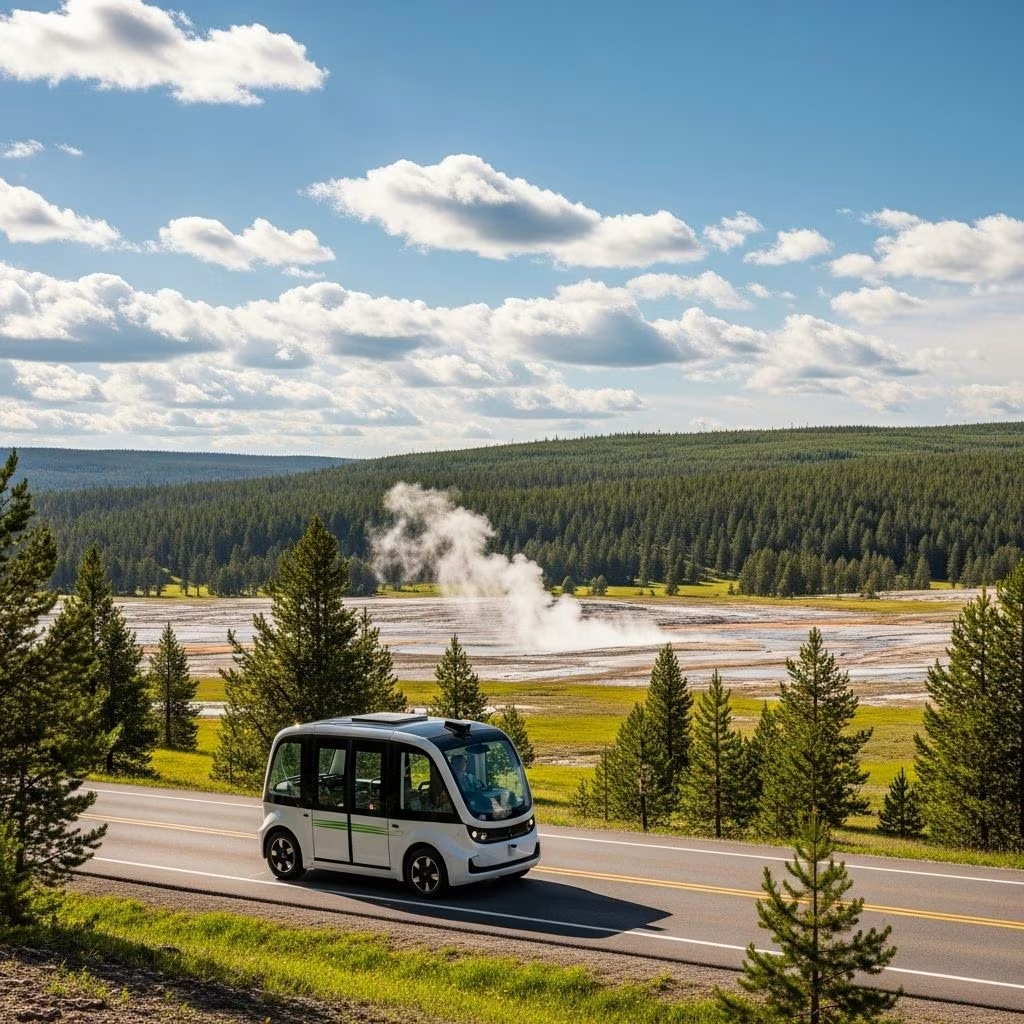
Yellowstone National Park Pilots Electric Autonomous Shuttles
Yellowstone National Park, renowned for its breathtaking landscapes and rich ecological diversity, made headlines by launching a pilot program for electric autonomous shuttles. This innovative project marks a significant stride toward reimagining transportation within one of the United States’ busiest and most remote national parks, focusing on sustainability, access, and the future of mobility in natural environments.
As visitation numbers continue to rise, Yellowstone is actively seeking solutions to improve the efficiency of its transit network while minimizing environmental impacts. The electric shuttle pilot addresses these needs directly, potentially setting the stage for broader adoption of clean mobility systems in protected lands nationwide.
Background: Why Yellowstone for Electric Shuttle Testing?
In 2019, Yellowstone ranked as the sixth most visited national park in the country, with over 4 million guests. The park faces ongoing challenges with congestion, emissions, and accessibility, particularly during the busy summer months. As part of the broader National Park Service (NPS) commitment to sustainability and innovation, Yellowstone was selected for this pilot due to its popularity and remote location.
The pilot program’s role is twofold: gauge the feasibility of autonomous, electric public transit in a national park setting and collect data to inform future transportation planning—potentially impacting how visitors move through similar natural sites across America.
The Electric Shuttle Pilot: Technology and Routes
The pilot featured two eight-passenger, cube-shaped, low-speed electric shuttles named “Olli”—manufactured by Local Motors and operated by Beep Inc.. These shuttles, nicknamed TEDDY (The Electric Driverless Demonstration in Yellowstone), utilized advanced technologies, including 12 360-degree cameras, high-voltage batteries, and 3D-printed frames.
Key details of the pilot include:
- Two Dedicated Routes: The shuttles ran on defined loops within Canyon Village, linking the campground, visitor services, eateries, and nearby lodges.
- Route Distances: The Lodge route spanned 1.5 miles, while the Campground route was nearly 2 miles with four stops, enhancing connectivity and reducing the need for personal vehicles within the busy village core.
- Free Rides: Shuttle service was complimentary for visitors during the pilot window over the peak summer months.
- Operator Presence: Although designed for autonomous operation, an attendant remained onboard for monitoring, passenger assistance, and to maintain pandemic safety protocols.
- Data Collection: Surveys and performance data were gathered throughout the program to assess ridership, visitor experience, and technical reliability.
Partner Organizations and Deployment Rationale
The project required collaboration among several stakeholders:
- National Park Service (NPS): Oversaw the pilot, integrated it into the broader Visitor Use Management Program, and established sustainability benchmarks.
- Beep Inc.: Provided operational expertise in autonomous shuttle mobility, having matched requirements set forth in a competitive bid process.
- Local Motors: Built the Olli vehicles, leveraging cutting-edge 3D printing and automotive technologies.
- Department of Transportation Volpe National Transportation Systems Center: Supported research, technology validation, and data analysis for program outcomes.
Yellowstone’s pilot helps NPS assess emerging mobility systems, shaping policies and guiding infrastructure investments needed to support next-generation transit.
How Automated Shuttles Work: Safety and Monitoring
The electric shuttles relied on a sophisticated array of 360-degree cameras, lidar sensors, and onboard AI to navigate set routes within the park. Although their speeds stayed low (to ensure safety and compatibility with foot traffic), these vehicles represented a leap toward driverless mobility
Key safety measures included:
- Onboard Attendant: Each shuttle carried a trained operator to supervise journeys, assist riders, and maintain health protocols.
- Comprehensive Sensor Coverage: Autonomous driving systems provided real-time monitoring, obstacle detection, and navigation within mixed-use areas.
- Park Employee Training: Staff received preparation to facilitate shuttle stops, guide boarding, and ensure smooth passenger flows.
Environmental and Sustainability Goals
One of the most compelling aspects of the project is its alignment with Yellowstone’s sustainability objectives. Park Superintendent Cam Sholly explained that the shuttles could help achieve long-standing goals for reducing greenhouse gas emissions, promoting alternative transportation, and protecting the region’s delicate ecology.
Major anticipated environmental benefits:
- Lower Emissions: The battery-electric design of the shuttles helps eliminate tailpipe pollution, supporting cleaner air within the park’s microclimates.
- Reduced Vehicle Congestion: By providing an attractive alternative, electric shuttles could decrease reliance on private autos, reducing traffic jams (known as “bear jams”) and parking bottlenecks.
- Enhanced Wildlife Safety: Fewer cars mean less disturbance and reduced risk of wildlife-vehicle collisions.
As visitation increases year over year, these sustainability efforts become ever more vital for ensuring Yellowstone’s landscapes remain healthy and accessible for generations to come.
Visitor Experience: Convenience and Accessibility
Beyond environmental factors, the pilot aimed to enhance the visitor experience. Many park guests found the prospect of leaving the car behind appealing, especially given the stress caused by crowded parking lots, vehicle backups near popular attractions, and long walks from campgrounds to key facilities.
Improvements include:
- Efficient Mobility: Frequent shuttle service allows guests to move quickly between campsites, lodges, and visitor centers without waiting for parking spots.
- Universal Design: Electric shuttles can be easily modified for ADA compliance, providing greater access for guests with mobility challenges.
- Cost-Free Rides: Removing fare barriers ensures equal access across demographics during the pilot window.
Limitations and Future Opportunities
Though promising, the pilot was limited in geographic scope, serving the Canyon Village area only, and operated for a finite period in summer. Park officials openly acknowledged that moving large numbers of tourists across Yellowstone’s vast network would, in the short term, require much more capacity than the small autonomous fleet could provide.
Among the key areas for future exploration:
- Scaling the Network: Expanding beyond short, central routes to longer loops could improve overall access and ease park-wide congestion.
- Technology Maturation: As autonomous vehicle systems perform reliably, more complex deployments—including mixed traffic conditions—may be viable.
- Performance Metrics: Data from surveys and technical assessment will inform adaptation and growth.
Comparing Shuttle Operational Features
| Feature | Canyon Village Pilot | Traditional Park Shuttles |
|---|---|---|
| Propulsion | Electric, zero-emission | Diesel or gasoline |
| Autonomy | Level 4 (supervised, autonomous) | Manual driving |
| Route Length | 1.5 – 2 miles | Variable, often longer |
| Passenger Capacity | 8 passengers per shuttle | Up to 40-50 passengers |
| Operator | Attendant onboard | Driver required |
| Emission Profile | Zero tailpipe emissions | Pollutant emissions |
Frequently Asked Questions (FAQ)
Q: Are the Yellowstone electric shuttles fully driverless?
A: While designed for autonomous operation, each shuttle had a trained attendant onboard for safety and passenger assistance during the pilot period.
Q: How large is the area covered by the electric shuttle pilot?
A: The pilot shuttles operated in Canyon Village only, connecting campgrounds, lodges, and visitor services across routes ranging from 1.5 to almost 2 miles.
Q: What technology do the shuttles use to navigate safely?
A: Each vehicle is equipped with 12 360-degree cameras, lidar sensors, and onboard artificial intelligence for safe operation and obstacle detection.
Q: Why did Yellowstone choose electric, autonomous vehicles?
A: Electric shuttles help achieve sustainability and accessibility goals, reduce emissions, lower congestion, and enhance the visitor experience in a high-impact setting.
Q: Could this shuttle system expand in the future?
A: The National Park Service is analyzing data from the pilot with a view toward broader implementation if the technology and infrastructure prove to be effective and reliable.
Looking Ahead: Implications Beyond Yellowstone
The impact of Yellowstone’s shuttle pilot reaches far beyond its borders. By participating in the pilot and collecting valuable operational data, the NPS and its partners are laying the foundation for smarter, cleaner transit in parks everywhere.
Lessons learned will help policymakers, technology providers, and park managers make informed decisions about system design, infrastructure investment, and public engagement. With continued innovation, autonomous electric shuttles could play a major role in helping national parks balance visitor demand with sustainability—and serve as inspiration for mobility projects in other environmentally sensitive regions.
Conclusion
Yellowstone National Park’s test of electric autonomous shuttles marks a forward-looking leap for public lands management, visitor experience, and environmental protection. While initial results are limited to small loops and modest ridership, the project opens new conversations about smart mobility in America’s treasured landscapes.
- It demonstrates that cutting-edge technology can be harnessed for cleaner, greener, and more efficient park operations.
- It offers lessons that will inform future investment and planning—not just for Yellowstone, but for protected areas everywhere.
- It reinforces Yellowstone’s role as a leader in the sustainable stewardship of America’s natural heritage.
As emerging transportation technologies continue to evolve and find new applications, Yellowstone’s pilot stands as both a milestone and a roadmap for a sustainable future in national parks.
References
- https://www.ktvq.com/news/local-news/automated-shuttle-service-set-to-start-at-yellowstone-national-park-this-summer
- https://www.npca.org/articles/2933-a-driverless-drive-in-the-park
- https://highways.dot.gov/federal-lands/innovation-research/nps-automated-shuttles
- https://ridebeep.com/locations/yellowstone
- https://www.ksl.com/article/50184132/yellowstone-national-park-unveils-automated-electric-cars
- https://www.youtube.com/watch?v=8WbDXkPedb0
- https://www.nps.gov/yell/getinvolved/fleet.htm
- https://www.assemblymag.com/articles/96000-yellowstone-national-park-to-debut-autonomous-shuttles
- https://www.yellowstonenationalparklodges.com/connect/yellowstone-hot-spot/ev-travel-in-yellowstone/
- https://www.globalfleet.com/fr/technology-and-innovation/north-america/news/yellowstone-park-beep-partner-provide-autonomous


