


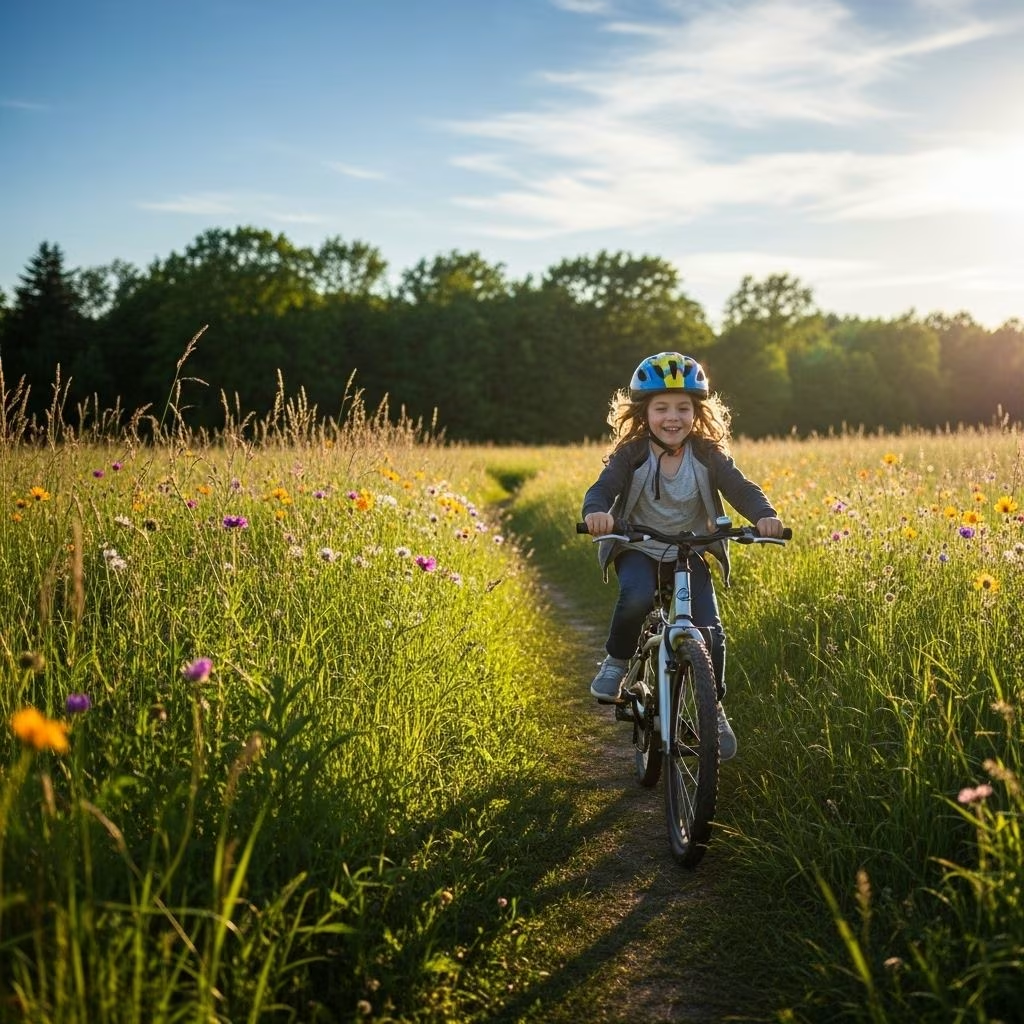
Free-Range Kids: Empowering Independence in a Fearful World
Free-Range Kids by Lenore Skenazy has become a foundational text for parents and educators navigating the crosscurrents of modern anxiety and the need to foster real-world independence in children. In its expanded second edition, the book brings new research, stories, and practical advice tailored to the worries of today’s parents—from online safety to rising childhood anxiety—while reaffirming the importance of letting kids experience the world with gradually increasing freedom.
What Is Free-Range Parenting?
Rooted in the principle of providing age-appropriate independence, free-range parenting asks adults to recognize when to step back and let children challenge themselves and learn from real experiences. Skenazy’s book became a cultural touchstone after her 2008 column describing her decision to let her 9-year-old ride the New York subway alone triggered international debate and spurred a movement toward trust and autonomy in childhood development.
- Gradual Increase in Freedom: Children are given more responsibility as they demonstrate readiness, without direct or constant parental supervision.
- Rejection of Fear-Based Parenting: The book highlights how exaggerated fears—from crime statistics to social pressures—lead to overprotection that often does more harm than good.
- Support for Both Parents and Educators: The updated edition provides scenarios and exercises for use both at home and in schools, broadening its impact.
The Evolution of Free-Range Kids: What’s New in the Expanded Second Edition?
The second edition, released in June 2021, is tailored for a new generation facing distinct challenges:
- New Chapters on Anxiety and Technology: Addressing anxiety epidemics and the complex role of technology in children’s lives, with actionable advice for digital-age parenting.
- Expanded Insights from Global Cultures: The book examines how other societies routinely trust children with greater independence, offering counterpoints to U.S. norms.
- Fresh Stories and Research: New statistics, real-world family accounts, and updated expert interviews engage readers with both facts and humor.
- Exercises and Worksheets: End-of-chapter “Going Free Range” exercises help parents implement small but meaningful steps toward independence.
Why Is the Book Still So Relevant?
Lenore Skenazy speaks directly to the climate of parental fear that has been amplified by 24/7 media coverage and a competitive parenting culture. Through relatable stories—sometimes tongue-in-cheek, sometimes deeply earnest—she demonstrates that resilience is built through experience rather than protection from all possible risks. Her approach reassures parents and teachers that allowing kids space actually prepares them better for the real challenges of adulthood.
From Controversy to Movement: The Impact of Free-Range Kids
The initial Free-Range Kids column was met with a storm of outrage and support, igniting national conversations around child safety, surveillance, and personal responsibility.
- The book has been featured in major outlets such as The New York Times, The Wall Street Journal, The New Yorker, and television appearances including Dr. Phil and The Daily Show.
- Thousands of parents shared their own stories—some inspired, others appalled—fueling a broader “Let Grow” movement for independence.
- The result is a gradual but steady mainstreaming of free-range principles, with some states introducing or advocating for laws supporting reasonable childhood independence.
Key Topics and Takeaways from the Second Edition
Commandments of Free-Range Parenting
The book is organized around a series of “commandments”—18 in total—each exploring a core theme or challenge. Some representative commandments include:
- Know When to Worry: Distinguishes between real risks and manufactured panic, empowering parents to focus their concern productively.
- Ignore the Blamers: Addresses societal judgment and how to withstand the criticism that comes with parenting differently.
- Trust Strangers: Debunks the myth of “stranger danger” by referencing real statistics and the rarity of random harm, especially compared to risks inside the home.
- Trust Your Kids: Encourages listening to children’s voices about their own readiness—building confidence for both generations.
- Let Play Point the Way: Explores how unstructured play helps children discover passions and sometimes even career paths.
Modern Parenting Pressures and Myths
Skenazy scrutinizes the profound fears plaguing modern parents, with recurring themes including:
- Media-Fueled Anxieties: How sensational news coverage distorts our perception of risk, convincing parents that the world is far more dangerous than it actually is.
- Judgment Culture: The rise of “parent shaming”—in real life and online—discourages independent choices.
- The Dangers of Overprotection: Over-sheltered kids may develop heightened anxiety, fear of failure, or lack essential coping skills.
International Perspectives: Learning from Other Cultures
The book highlights practices from countries where children are encouraged to take public transport, run errands, or spend hours unsupervised at playgrounds. Skenazy contrasts these “let them try” attitudes with America’s more cautious norms to show different outcomes in childhood resilience and community trust.
Research, Humor, and Real-Life Examples
One hallmark of Free-Range Kids is Skenazy’s balance of reliable research and relatable narrative. The expanded edition features:
- Expert Opinions: Interviews with psychologists, educators, and policymakers.
- Statistics and Studies: Evidence that the world is not as perilous for children as media suggests, and that stranger abduction is extraordinarily rare.
- “Real World” Vignettes: Short parent submissions at the end of each chapter illustrate success—and challenge—stories from the free-range movement.
- Humor with a Purpose: Skenazy uses wit to deflate irrational fears, making her argument accessible and persuasive even when addressing serious topics.
Expanded Guidance for Schools and Communities
This second edition speaks not only to parents, but also to teachers, principals, and anyone invested in youth development:
- Letting Go in Schools: The book discusses how educators can allow more student autonomy without sacrificing safety, and what happens when they do—the result is often increased creativity, independence, and problem-solving ability.
- Community-Based Approaches: Skenazy describes legislative and nonprofit initiatives, like “Let Grow,” aimed at reshaping cultural and institutional norms.
- The Free-Range Kids Card: An inventive tool that reassures both adults and children in public, signaling that the child has parental permission to be out independently.
How to Start Going Free Range: Practical Strategies
Each chapter in Free-Range Kids ends with real-world exercises and “homework” for parents eager to gradually build their children’s independence:
- Start small: Let your child walk the dog or run a short errand nearby, building comfort and competence over time.
- Talk about risks realistically: Use data and honest conversation rather than hype or horror stories.
- Model resourceful behavior: Demonstrate healthy risk-taking and problem-solving in everyday life.
- Connect with other parents: Find community support—both virtual and local—for navigating criticism and sharing successes.
Let Grow: Expanding the Free-Range Vision
The nonprofit Let Grow, founded by Skenazy alongside Dr. Peter Gray, Daniel Shuchman, and Professor Jonathan Haidt, offers programs, advocacy, and research to help families and schools embrace independence building. Their mission: “step back, so kids can step up.” Programmable initiatives and downloadable resources further reduce barriers for those ready to try free-range approaches.
Critical Reception
The expanded edition has received broad acclaim for its blend of humor, practical advice, and its gentle challenge to prevailing assumptions about children’s safety and competence. Notable reviews include:
- “It’s laugh-out-loud funny. Plus, Lenore and I share a big belief: Kids can do so much more than our fearful culture thinks they can.” —Amy Chua, author of Battle Hymn of the Tiger Mother
- “A bubbly but potent corrective for the irrational fears that drive so many parents crazy.” —Dr. Robert Needlman, co-author of Dr. Spock’s Baby and Child Care
- “When we trust kids with some more independence, they knock our socks off with their creativity, resourcefulness, and brilliance.” —Dr. Michael Hynes, superintendent
Sample Table: Myths vs. Realities in Childhood Safety
| Myth | Reality |
|---|---|
| “Stranger danger is a top child safety threat.” | Most harm to children comes from people they know; stranger abduction is extremely rare. |
| “More supervision always ensures better outcomes.” | Overprotective oversight can stifle independence, resilience, and self-confidence. |
| “If you give kids freedom, you’re a neglectful parent.” | Structured, age-appropriate independence nurtures problem-solving and responsibility. |
Frequently Asked Questions (FAQs)
Q: What prompted Lenore Skenazy to write Free-Range Kids?
A: In 2008, Skenazy wrote a widely discussed column about letting her 9-year-old ride the subway alone, which fueled both controversy and curiosity about overparenting. The response inspired her to launch the Free-Range Kids movement and later write the book.
Q: How does the book suggest dealing with backlash from other parents?
A: Skenazy advises focusing on your own child’s growth and well-being, building a support network of like-minded parents, and embracing humor when criticisms arise. One of the commandments is explicitly about “ignoring the blamers”.
Q: Does the book address new threats, like online safety?
A: Yes. The expanded edition covers how parents can navigate digital risks rationally, coach digital citizenship, and avoid tech-based panic while still preparing kids for real online challenges.
Q: Who else can benefit from reading this book besides parents?
A: Teachers, school administrators, policymakers, and communities focused on child development will find actionable insights, as the second edition includes school programs and advocacy resources.
Q: What are some first “free-range” steps families can take?
A: Start by letting children do small tasks unsupervised, like playing in the yard, running a brief errand, or traveling short distances with friends. Use these experiences to build trust and communication.
Conclusion: Embracing a Braver, Happier Childhood
In a world saturated by warnings and “worst-case” thinking, Free-Range Kids offers both a rallying cry and a commonsense guide for adults ready to nurture self-reliant, resilient, and joyful children. The second edition meets the anxieties of our age with humor, research, and practical wisdom, showing that stepping back is sometimes the most courageous—and loving—act of all.
References
- https://psychiatryresource.com/bookreviews/free-range-kids-review
- https://thelearningcounsel.com/articles/industry-news/updated-and-expanded-second-edition-free-range-kids-provides-all-new-insights-parents-and/
- https://www.powells.com/book/free-range-kids-how-parents-teachers-can-let-go-let-grow-9781119782148
- https://letgrow.org/updated-expanded-second-edition-of-free-range-kids-to-be-published-tomorrow-provides-all-new-insights-for-parents-and-educators/
- https://www.freerangekids.com/book/
- https://www.wiley.com/en-us/Free-Range+Kids:+How+Parents+and+Teachers+Can+Let+Go+and+Let+Grow,+2nd+Edition-p-9781119782148
- https://parentotheca.com/2025/05/31/free-range-kids-by-lenore-skenazy-book-summary-notes-and-quotes/


