


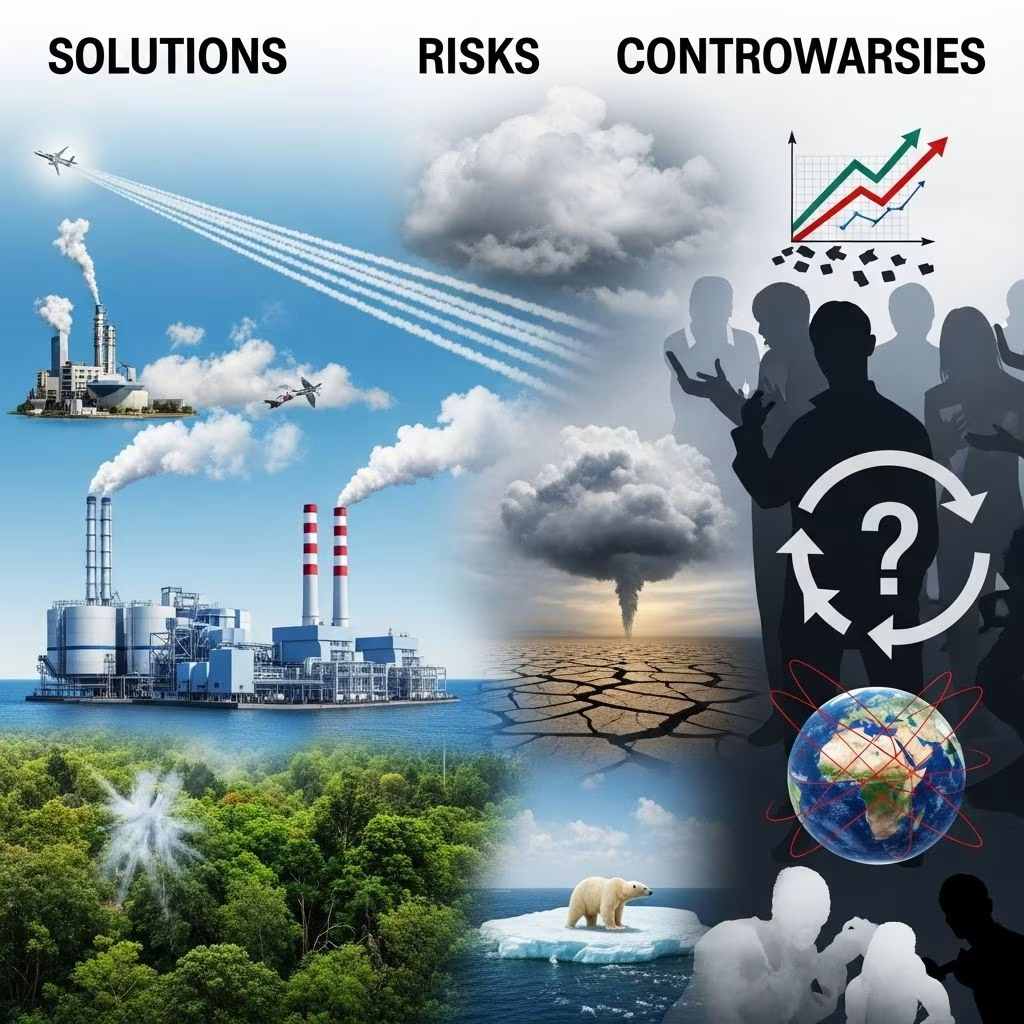
What Is Geoengineering?
Geoengineering refers to the deliberate, large-scale intervention in Earth’s natural systems—atmosphere, oceans, and soils—intended to counteract some of the effects of human-caused climate change. These efforts are designed either to address the root causes of global warming or to temporarily mask its symptoms, but they do not provide a complete solution to the climate crisis.
Typically, geoengineering is categorized into two approaches:
- Carbon Dioxide Removal (CDR): Techniques that aim to extract carbon dioxide from the atmosphere.
- Solar Radiation Modification (SRM): Methods that seek to reflect or manage incoming solar energy to reduce warming.
Some authors also include large-scale interventions such as those that affect the melting rates of polar ice or deliberate changes in weather patterns, though these are more closely related to weather modification than strict geoengineering.
Categories and Key Technologies of Geoengineering
Carbon Dioxide Removal (CDR)
CDR is focused on removing greenhouse gases from the atmosphere, directly targeting the driving force behind climate change. Common technologies include:
- Afforestation and Reforestation: Planting trees to absorb CO2.
- Bioenergy with Carbon Capture and Storage (BECCS): Growing biomass, burning it to generate energy, and capturing the carbon emissions for storage underground.
- Direct Air Capture: Using chemical processes in machines to directly filter CO2 from ambient air.
- Ocean Fertilization: Seeding oceans with nutrients (often iron) to promote plankton blooms, which uptake CO2 as they grow and later sink.
- Biochar Production: Creating charcoal from organic matter and burying it to lock away carbon.
Solar Radiation Modification (SRM)
SRM includes approaches that aim to reflect more sunlight away from the Earth or allow more heat to escape back into space, potentially providing a rapid but temporary reduction in global temperatures. Notable SRM techniques include:
- Stratospheric Aerosol Injection: Dispersing reflective particles, such as sulfates, into the upper atmosphere to mimic cooling effects seen after volcanic eruptions.
- Marine Cloud Brightening: Spraying fine sea water into clouds to make them whiter and more reflective.
- Ground-Level Albedo Enhancement: Painting surfaces white or planting reflective crops to increase the Earth’s reflectivity.
- Space-Based Reflectors: Deploying giant mirrors or sunshades in orbit to deflect a portion of sunlight.
- Ice Cover Modification: Artificially enhancing the reflectivity of ice sheets or slowing polar melting.
| Feature | CDR | SRM |
|---|---|---|
| Primary Goal | Remove greenhouse gases | Reflect solar energy to cool planet |
| Duration of Effect | Long-term, permanent with successful implementation | Temporary, reversible but not a root solution |
| Main Risks | Land-use change, ecosystem disruption, technological feasibility | Unintended climate effects, uneven impacts, governance issues |
| Examples | Afforestation, direct air capture, ocean fertilization | Stratospheric aerosols, cloud whitening, orbital reflectors |
Geoengineering in Practice: Status and Feasibility
Many geoengineering technologies remain in the realm of theory or small-scale experimentation. No large-scale deployment has occurred due to uncertainties, risks, and governance challenges. Some methods such as reforestation are established and considered low-risk but are not up to the scale required to counteract global emissions.
More experimental technologies—such as stratospheric aerosol injection or space-based reflectors—face economic, technical, and political hurdles. Direct air capture, though technologically demonstrable, is currently costly and energy intensive.
Potential Benefits and Intended Outcomes
- Potential to lower global temperatures quickly (SRM)
- Long-term reduction of atmospheric CO2 and mitigation of ocean acidification (CDR)
- Buffering some impacts if emissions reduction efforts lag
- Possible reduction in frequency or severity of climate-related disasters
However, these benefits are largely hypothetical, dependent on deployment effectiveness, governance, and avoidance of unintended consequences.
Risks and Controversies Surrounding Geoengineering
Environmental Risks
- Ecosystem Disruption: Large-scale CDR may impact forests, land, oceans, and biodiversity.
- Unintended Climatic Consequences: SRM may alter rainfall patterns, monsoons, or ozone concentrations.
- Pollution: Techniques like aerosol injection could affect atmospheric and human health.
- Irreversibility: Some interventions may cause lasting changes or unpredictable feedbacks.
Political and Social Risks
- Unequal Impacts: Climate modification could benefit some regions and harm others.
- Global Governance: No international framework exists to regulate deployment or manage cross-border effects.
- Technocratic Control: Decision-making could concentrate power among scientists or governments.
- Public Distrust: Lack of transparency and engagement can provoke opposition.
Ethical and Philosophical Debates
- Moral Hazard: The promise of geoengineering may weaken the motivation for essential emissions reduction.
- Playing God: Concerns over humans exerting excessive control over natural systems.
- Intergenerational Equity: Present actions may have unpredictable consequences for future generations.
Alternatives and Complementary Approaches
Geoengineering is not generally accepted as a substitute for mitigation—reducing emissions at their source—or adaptation, which focuses on adjusting to changing climate conditions. The consensus among most scientific and environmental organizations is that emissions reduction must remain the primary strategy. Geoengineering at best is considered a possible adjunct or emergency option, not a replacement for real climate action.
Governance and Oversight
Geoengineering raises significant governance challenges, including the need for international cooperation, transparent research, and mechanisms to manage risks. Several scientific bodies, including the Royal Society and the US National Academies, have published reports recommending strict regulatory oversight, open public engagement, and further research into both the technical and societal implications.
- International regulations: Needed to address cross-border risks and unintended global effects.
- Public dialogue: Essential for legitimizing research and ensuring diverse perspectives are heard.
- Transparency: Ongoing, open critique and information sharing is key.
Frequently Asked Questions (FAQs)
Q: What is the goal of geoengineering?
A: To intervene in Earth’s systems (atmosphere, oceans, soils) on a large scale in order to counteract human-caused climate change effects.
Q: What are the main types of geoengineering?
A: Carbon Dioxide Removal (CDR), which extracts greenhouse gases, and Solar Radiation Modification (SRM), which reflects sunlight or heat away from the planet.
Q: Are any geoengineering techniques currently in use?
A: No geoengineering technique has been implemented at scale; most remain experimental or hypothetical.
Q: What are the biggest risks?
A: Ecosystem disruption, unpredictable climatic side effects, unequal regional impacts, and moral hazards undermining emissions reduction efforts.
Q: Is geoengineering a substitute for cutting emissions?
A: No. Most experts emphasize the need for strong reductions in greenhouse gas emissions as the fundamental response to climate change.
Key Takeaways
- Geoengineering involves large-scale interventions in Earth’s natural systems to mitigate climate change.
- It is divided into carbon dioxide removal and solar radiation modification.
- Potential benefits exist, but the risks, uncertainties, and ethical issues are significant.
- No major geoengineering technique is ready or proven for global deployment.
- Governance, oversight, and public engagement are essential to evaluate future implementation.
How to Learn More
- Explore reputable scientific publications like those from the Royal Society and US National Academies.
- Consult interdisciplinary reviews that include perspectives from environmental science, law, and social science.
- Follow ongoing research and debate through climate policy organizations and international forums.
References
- https://www.geoengineeringmonitor.org/what-is-geoengineering
- https://en.wikipedia.org/wiki/Geoengineering
- https://www.britannica.com/science/geoengineering
- https://www.edf.org/geoengineering
- https://www.ciel.org/issue/geoengineering/
- https://royalsociety.org/news-resources/publications/2009/geoengineering-climate/
- https://core.verisk.com/Insights/Emerging-Issues/Articles/2024/January/Week-2/An-Introduction-to-Geoengineering
- https://education.cfr.org/learn/reading/what-geoengineering
- https://www.masterclass.com/articles/geoengineering-explained


