Dove Launches Landmark Forest Restoration Project in North Sumatra
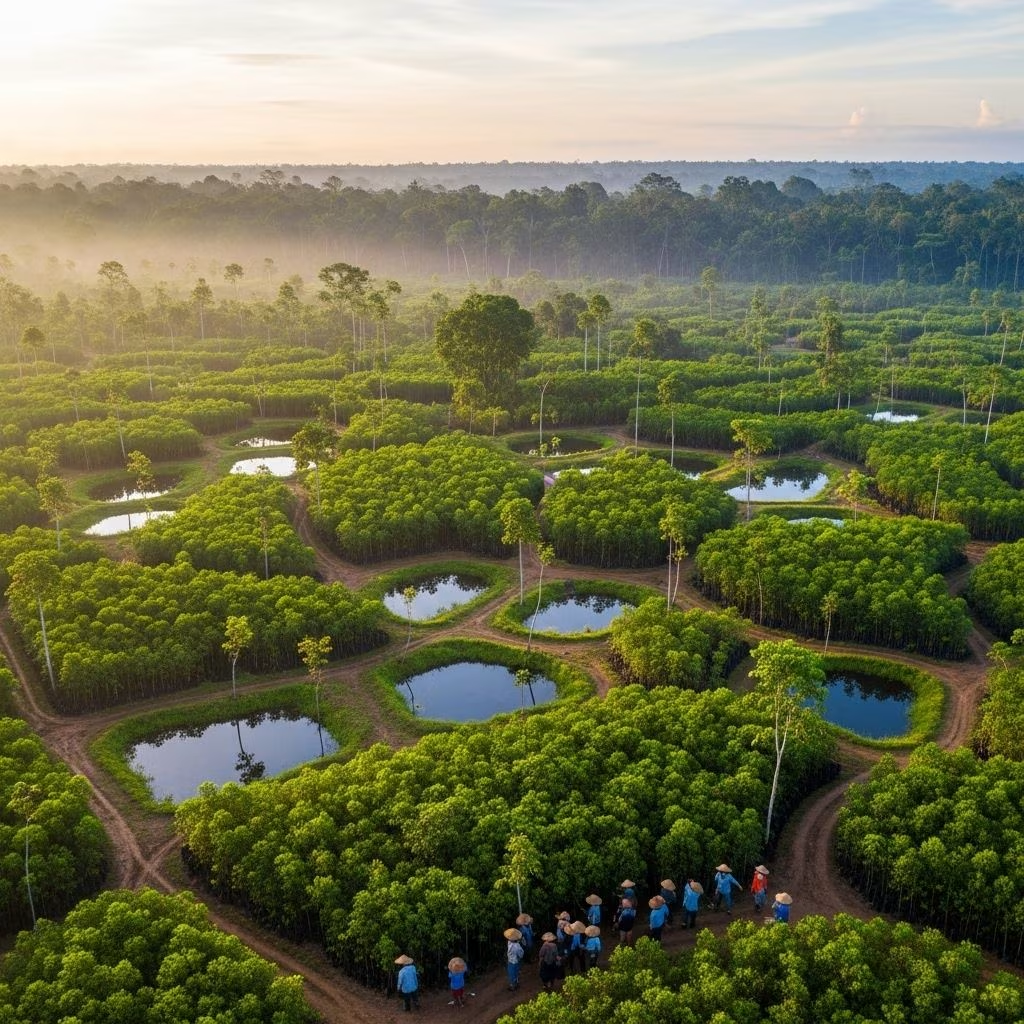
Dove, a global leader in personal care and beauty, has initiated one of the world’s most ambitious restoration efforts by announcing a project to restore 20,000 hectares of forest in North Sumatra, Indonesia. In close partnership with Conservation International and with support from the Indonesian Ministry of Environment and Forestry, this five-year undertaking marks a transformative moment in corporate environmental responsibility and sustainable supply chains.
This initiative stands as a defining action for the United Nations Decade on Ecosystem Restoration, aligning with global ambitions to reverse years of habitat loss, help counter climate change, and empower local communities.
A New Standard for Corporate Conservation
Recognized as the first major initiative of Unilever’s €1 billion Climate & Nature Fund, the Dove Forest Restoration Project is both strategic and symbolic. Estimated at a value of €8.5 million, the program targets restoration and long-term protection of crucial forest landscapes in the districts of South Tapanuli and Mandailing Natal—regions known for their high biodiversity and critical habitats.
- Project Scale: 20,000 hectares, approximately double the size of Paris and the equivalent of planting more than 3 million trees.
- Duration: Five years, with a phased approach to maximize ecological recovery and community participation.
- Main Partners: Dove, Conservation International, and the Ministry of Environment and Forestry (MoEF) of Indonesia.
As climate action intensifies, Dove’s leadership is an industry signal that environmental stewardship is integral to the reputation and sustainability of global brands.
Project Objectives: Beyond Planting Trees
The vision of the Dove Forest Restoration Project encompasses much more than tree-planting. The comprehensive approach includes:
- Restoring Degraded Forests: Rehabilitating land affected by deforestation and unsustainable land use.
- Safeguarding Endangered Species: Protecting habitats of iconic and threatened animals, such as the Sumatran Tiger, Sunda Pangolin, Sumatran Clouded Leopard, and Malayan Tapir.
- Empowering Local Communities: Improving livelihoods and supporting the economic and social well-being of more than 16,000 people in the region.
- Ensuring Sustainable Resource Management: Promoting long-term practices that balance environmental and community needs.
Quantifiable Climate Impact
The project is designed with measurable environmental returns, vital for demonstrating accountability and real-world benefits:
- CO2 Capture: Over 300,000 tons of CO2 expected to be removed from the atmosphere during the project period.
- Emission Abatement: Avoidance of more than 200,000 tons of CO2-equivalent emissions, as assessed according to Indonesia’s robust carbon policies.
| Impact Area | Estimated Outcome | Timeframe |
|---|---|---|
| Forest restored | 20,000 hectares | 5 years |
| CO2 captured | >300,000 tons | Project duration |
| CO2 emissions avoided | >200,000 tons | Project duration |
| People benefiting | >16,000 | Ongoing |
Restoring Biodiversity Hotspot: Why North Sumatra?
The geographic focus in North Sumatra is no accident. The restored area is part of Indonesia’s critically endangered tropical rainforest, recognized globally as a biodiversity hotspot. Home to some of the rarest and most threatened wildlife, including the Sumatran Tiger and Sunda Pangolin, these forests are vital not only to regional ecology but to the world’s natural heritage.
Key ecological considerations include:
- Preserving endemic species and unique genetic reservoirs
- Maintaining water catchment integrity and preventing floods or droughts downstream
- Reducing forest fragmentation, which is a core threat to wildlife mobility and reproduction
Elevating Community and Social Benefits
The project’s social design is as significant as its environmental ambitions. By prioritizing the well-being of over 16,000 local people, Dove and its partners aim for a model where communities become co-beneficiaries and active stewards of restoration efforts.
- Access to forest-based resources and opportunities for diversified livelihoods
- Training and participation in sustainable forest management
- Enhanced resilience against environmental shocks, supporting food and water security
This approach recognizes the core principle that environmental resilience is inseparable from social and economic justice.
Transparency, Monitoring, and Global Accountability
To ensure that ambitious commitments translate into verifiable results, Dove’s initiative will be monitored and evaluated in accordance with Indonesia’s carbon accounting standards, utilizing advanced satellite imagery and field validation. Collaboration with Conservation International means that independent scientific expertise guides program evaluation and adjustment.
- Regular progress reports and community feedback mechanisms
- Transparent publication of key milestones and carbon savings
- Openness to peer review and international audit for accountability
Alignment with Global Sustainability Agendas
The Dove Forest Restoration Project is also the flagship for Unilever’s Positive Beauty ambition, which targets protection and regeneration of 1.5 million hectares of land, forests, and oceans by 2030. This area surpasses the total land needed to supply renewable ingredients for Unilever’s beauty and personal care ranges.
Commitment to Deforestation-Free Supply Chains
In parallel with the forest restoration project, Dove reaffirms its goal of a deforestation-free supply chain by 2023 and net-zero emissions from its product portfolio by 2039. These supply-chain reforms represent a broader industry shift, linking consumer product purchasing to the health of global ecosystems.
- Sourcing raw materials sustainably, with verified traceability
- Preferring operations that enhance rather than diminish ecosystem services
- Educating consumers on the positive climate impacts of sustainability-minded purchasing
Leadership Voices: Why This Project Matters
Alessandro Manfredi, Global Executive Vice President of Dove, states: “Can we really celebrate beauty if it comes at the cost of the planet? The answer is no. We must demand action and care that goes further, both from ourselves and from the beauty industry at large.”
Sunny Jain, President, Beauty & Personal Care at Unilever, adds: “Climate change is one of the biggest threats facing our world. That’s why it’s so important for Dove – one of the largest beauty brands in the world – to take meaningful and decisive action. The Dove Forest Restoration Project is also the first step in Unilever’s Positive Beauty commitment.”
Frequently Asked Questions (FAQ)
Q: What is the total area being restored in the Dove Forest Restoration Project?
A: Dove is restoring 20,000 hectares of rainforest in North Sumatra, Indonesia, which is roughly double the size of Paris and equivalent to planting over 3 million trees.
Q: Who are the key partners involved?
A: The project is a partnership between Dove, Conservation International, and Indonesia’s Ministry of Environment and Forestry, with support from Unilever’s Climate & Nature Fund.
Q: How does the project help fight climate change?
A: By capturing more than 300,000 tons of CO2 and avoiding over 200,000 tons of emissions through restoration, the project directly supports climate mitigation targets.
Q: How will the initiative support local communities?
A: Over 16,000 people will benefit from improved livelihoods, training in sustainable practices, and greater access to restored forest resources.
Q: What is the duration of the program and how is its impact measured?
A: The project is set for 5 years, with transparent monitoring using satellite technology and impact reporting aligned to Indonesia’s carbon policy frameworks.
Further Implications and a Global Call to Action
Dove’s forest restoration efforts form a blueprint for how brands can respond to calls for radical corporate sustainability. By integrating social impact, biodiversity protection, climate change action, and supply chain ethics, such projects move beyond public commitments and offer measurable, real-world results.
Combined with global frameworks like the United Nations Decade on Ecosystem Restoration, this project demonstrates what can be achieved when brands, NGOs, governments, and local communities work together for the common good. Its success or failure will likely influence future industry investments in nature-based climate solutions globally.
References
- https://www.climateaction.org/news/dove-launches-8.5-million-forest-restoration-project
- https://worldaerosols.com/news/dove-announces-major-forest-restoration-project/
- https://www.globalcosmeticsnews.com/unilevers-dove-launches-forest-restoration-project-in-fight-against-climate-change/
- https://sustainablebrands.com/read/dove-and-conservation-international-announce-8-5-million-forest-restoration-project-to-accelerate-fight-against-climate-change
- https://www.prnewswire.com/news-releases/dove-and-conservation-international-announce-8-5-million-forest-restoration-project-to-accelerate-fight-against-climate-change-301304745.html
- https://modernaesthetics.com/news/dove-gives-back-with-the-dove-forest-restoration-project/2473113/
- https://www.livekindly.com/dove-restore-forest-twice-size-paris/
- https://www.gcimagazine.com/brands-products/news/news/21861955/unilevers-dove-forest-restoration-project-launches
- https://marketingreport.one/brand-and-sustainability/dove-announces-%E2%82%AC8.5-million-forest-restoration-project.html
- https://www.esgtoday.com/dove-launches-forest-restoration-and-protection-initiative/