


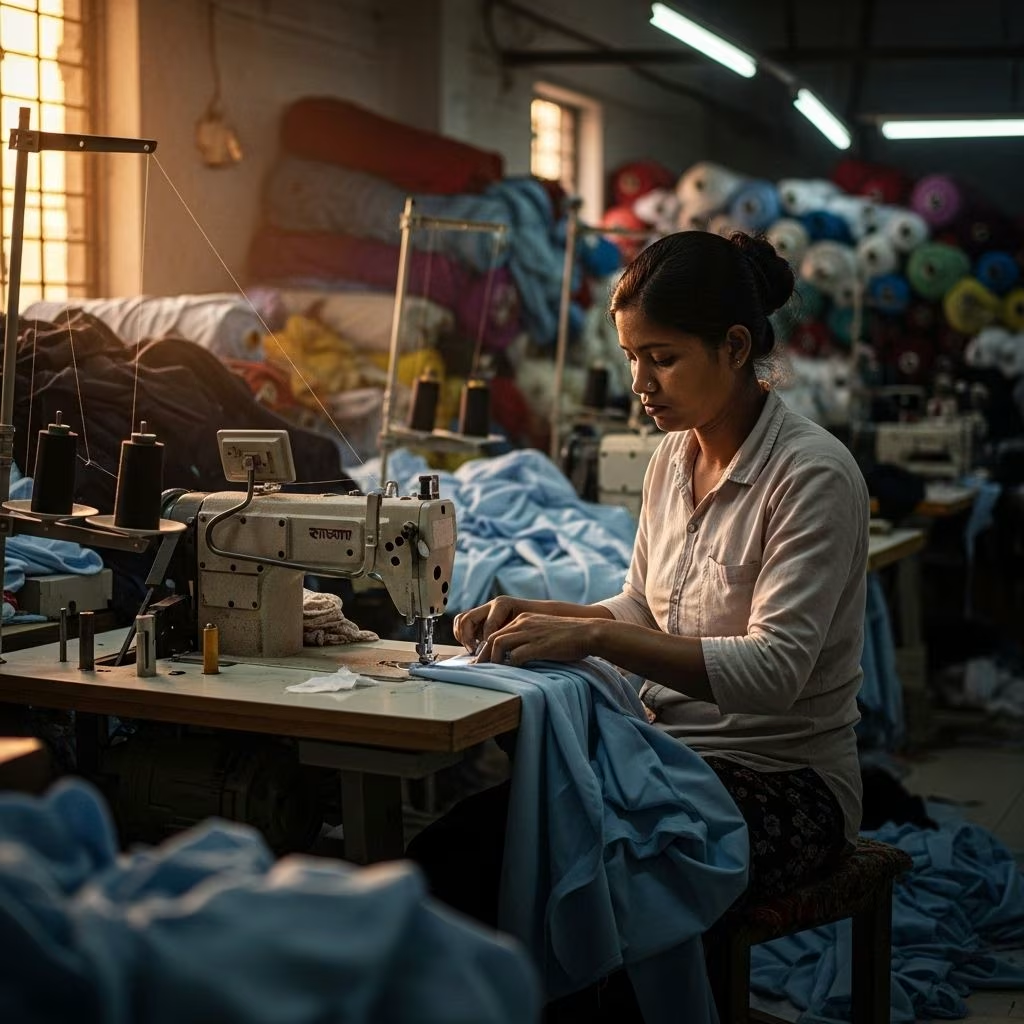
The Bangladesh Accord: A Lifeline for Garment Worker Safety
In the aftermath of the catastrophic Rana Plaza factory collapse in 2013, which claimed the lives of 1,134 Bangladeshi garment workers and injured thousands more, a groundbreaking agreement emerged: the Bangladesh Accord on Fire and Building Safety. This binding agreement between global apparel brands, Bangladeshi manufacturers, and international unions was created to address the systemic safety failures plaguing Bangladesh’s massive ready-made garment sector.
For nearly a decade, the Accord has functioned as an essential safety net for over two million workers, primarily women, in more than 1,600 factories. But now, as the agreement nears its expiration, the future of garment worker safety in Bangladesh hangs in the balance.
Why the Bangladesh Accord Was Essential
- Legally binding commitments: Unlike previous efforts based merely on voluntary corporate codes of conduct, the Accord was legally enforceable, holding brands accountable for improving and maintaining factory safety.
- Independent inspections: The Accord set a new precedent by requiring independent safety inspections of garment factories, public disclosure of findings, and robust remediation plans.
- Transparency: More than 2,500 factories underwent inspections; results and progress reports were published openly, ensuring accountability to both workers and consumers.
- Worker empowerment: Workers gained direct channels for reporting safety grievances, with over 700 complaints effectively resolved.
- Life-saving impact: The Accord led to detection of over 140,000 safety hazards—93% of which were reportedly remedied—and played a decisive role in preventing mass casualties in the years since its inception.
How the Accord Changed the Industry
Before 2013, Bangladesh’s garment industry was notorious for unsafe working conditions. The Rana Plaza tragedy galvanized the world, compelling global brands and unions to act. The Accord’s legally binding model resulted in tangible, measurable change:
- Created over 1,300 factory-level Safety Committees to foster ongoing monitoring and dialogue.
- Investigated and fixed more than 93% of initial safety issues identified during comprehensive inspections.
- Blacklisted some 300 factories deemed too dangerous, ensuring that the most at-risk workers were prioritized.
- Set an international standard that inspired both imitation and controversy: U.S. brands formed their own, less robust Alliance, which expired in 2018, leaving the Accord as the industry’s most credible safety framework.
The Looming Expiration: Why Now?
After several extensions, the Bangladesh Accord was set to expire on August 31, 2021. The scheduled expiration date sparked global concern among labor unions, NGOs, and advocacy organizations. Many warned that the unfinished work of transforming Bangladesh’s factories and the ongoing presence of safety risks made the Accord’s continued existence critical.
There was also intense debate about whether Bangladeshi regulatory bodies had the capacity to fully take over the Accord’s roles in inspection and remediation. Studies and union statements highlighted persistent gaps in local oversight and a “shocking unreadiness” to manage factory safety at scale.
What Is at Stake?
- If the Accord lapses, future efforts toward worker safety would likely revert to voluntary, unenforceable industry programs. These have historically failed to prevent mass disasters.
- Over two million workers could lose their most reliable safety mechanism, as local enforcement agencies remain under-resourced and vulnerable to industry pressure.
- Hundreds of factories may still require further renovations or periodic monitoring to maintain new safety standards.
Brands, Responsibilities, and Global Ramifications
The Accord originally drew signatories from almost 200 apparel brands, including heavyweights such as H&M, Inditex, and UNIQLO. However, some major American brands, like Walmart and Gap, chose not to join and instead formed their own, less stringent Alliance for Bangladesh Worker Safety, which did not achieve the same results and expired years earlier.
Ongoing negotiations to renew and expand the legally-binding safety model have been fraught with conflict. Some brands resist binding commitments and prefer industry-written codes of conduct—seen by critics as largely symbolic and lacking true accountability. As sales fluctuated during the global pandemic, many brands abruptly canceled orders from Bangladeshi suppliers, worsening the fragile financial state of factories and workers who are still reportedly owed hundreds of millions of dollars for previously manufactured garments.
Progress and Persistent Challenges
The Accord’s legacy includes dramatic improvements, but experts and labor leaders caution that the transformation is incomplete. Statistics underline lingering dangers:
- Safety-related reports and minor incidents in factories remain routine, underscoring the ongoing risks faced by workers.
- Local agencies, without the Accord’s oversight, struggle with insufficient capacity and are ill-equipped to enforce high standards for fire and building safety.
- The COVID-19 pandemic has compounded economic and safety pressures. Factory shutdowns, mass layoffs, and order cancellations hit workers and factories hard, pushing many back into poverty and making remediation investments even harder for factory owners to fund.
What Comes After the Accord?
To sustain hard-won progress, unions and labor advocates urged the continuation of a binding international agreement, preferably expanded to cover other garment-producing countries with similar risks. Proposals included creating a new or extended accord with clear enforcement mechanisms, independent factory investigations, and transparent reporting requirements for participating brands.
In June 2020, some technical functions of the Accord transitioned to a new local body, the Ready-Made-Garment Sustainability Council (RSC), with the intention that RSC would carry forward inspection and remediation programs. However, critics emphasize that RSC was never meant to replace the Accord’s binding obligations for brands and the power of external oversight.
- Brand Obligations: Even as the RSC began operations, brands were still legally liable under the Accord until its expiration.
- Need for Broader Coverage: Expanding the binding safety model beyond Bangladesh, to garment-producing hubs worldwide, remains a demand of worker advocates.
- Future Negotiations: Ongoing talks aim to agree on a successor agreement with unions, brands, and NGO participation. The outcome remains uncertain—and vital.
Worker Voices and Global Solidarity
Union leaders and workers, many of whom survived the Rana Plaza disaster or its aftermath, warn that failure to renew and enforce the Accord would be catastrophic for the world’s most vulnerable garment workers. Their core demands include:
- Mandatory, binding safety commitments from brands sourcing from Bangladesh and other garment-producing countries.
- International pressure on brands to sign renewed agreements and uphold equitable, sustainable purchasing practices.
- Transparent and accessible grievance mechanisms for workers and their representatives.
- Independent monitoring—not industry self-policing—to guarantee authentic safety progress.
- Global consumer solidarity to pressure brands and governments for lasting reform.
Comparing Factory Safety Mechanisms
| Agreement/Initiative | Binding on Brands | Independent Inspections | Transparency | Scope |
|---|---|---|---|---|
| Bangladesh Accord | Yes | Yes | Full public disclosure | 1,600+ factories, 2M workers |
| Alliance for Bangladesh Worker Safety | No (voluntary) | Limited | Partial | Mostly U.S. brands, expired in 2018 |
| RSC (Ready-Made-Garment Sustainability Council) | No (Not an agreement) | Yes (continuation) | Believed less robust | Operational, intended to continue safety work |
| National Government Agencies | No | Not standardized | Low | Aspirational national system, limited capacity |
Global Campaigns and Advocacy Efforts
In response to the Accord’s impending expiration, organizations such as the Clean Clothes Campaign, UNI Global Union, IndustriALL Global Union, and numerous grassroots worker groups have intensified their advocacy. They urge citizens and consumers to demand that brands sign a new binding agreement and to hold those who resist accountable through public campaigns and legal pressure.
- Public letter campaigns target key brand CEOs and European Commissioners.
- Educational resources inform the public about the direct link between cheap clothing, brand responsibility, and human lives.
- Social media actions rally global support under hashtags like #ProtectProgress.
The Broader Context: Industry and Human Rights Risks
The fashion supply chain is one of the world’s largest and most complex, with Bangladesh as its second-largest garment exporter. The country’s 4 million garment workers—primarily women—face daily risks that extend beyond physical safety, including wage theft, lack of social protections, and economic precarity. Since COVID-19, pervasive order cancellations and supply chain disruptions have placed even greater pressure on both the industry and its most vulnerable members.
International frameworks like the United Nations Guiding Principles on Business and Human Rights emphasize the responsibility of global brands to respect, protect, and remedy human rights abuses within their supply chains. The expiration of the Bangladesh Accord is widely viewed as a definitive test of whether these responsibilities will be fulfilled or forsaken for convenience.
Frequently Asked Questions (FAQs)
Q: What was the purpose of the Bangladesh Accord?
A: The Accord was designed to make the garment factories safe by establishing binding obligations on brands, mandating independent inspections, and ensuring transparent remediation of fire and building safety hazards.
Q: Why can’t voluntary codes of conduct replace the Accord?
A: Voluntary codes historically failed to prevent major tragedies, as they lack enforceability and external oversight—making it easy for brands to evade responsibility.
Q: What risks do garment workers face after the Accord expires?
A: Without a binding safety framework, workers may be exposed to worsening safety conditions, fewer channels for grievances, and increased vulnerability to factory disasters.
Q: What is the RSC, and is it enough?
A: The Ready-Made-Garment Sustainability Council (RSC) is a local initiative to continue factory inspections but lacks the Accord’s brand obligations and binding power. Labor advocates believe RSC cannot fully replace the Accord.
Q: How can consumers help protect Bangladeshi garment workers?
A: Consumers can urge brands to sign binding safety agreements, support advocacy organizations, and demand credible commitments to safer, more ethical fashion supply chains.
Conclusion: The Road Forward
The Bangladesh Accord’s expiration is more than just a procedural ending—it is a pivotal moment that will decide whether the fashion industry continues to protect its most vulnerable workers or returns to a perilous status quo. It is a test for brands, consumers, governments, and global civil society to prioritize human lives above all else in the relentless pursuit of cheap labor and fast fashion.
References
- https://www.industriall-union.org/global-unions-the-accord-must-continue-in-bangladesh-until-the-government-is-truly-able-to-ensure
- https://remake.world/stories/news/the-bangladesh-accord-is-set-to-expire-on-may-31-heres-why-that-would-be-catastrophic/
- https://www.business-humanrights.org/en/latest-news/bangladesh-accord-due-to-expire-on-aug-31-raises-questions-about-future-safety-of-workers/
- https://www.fashionrevolution.org/bangladesh-accord-an-urgent-call-to-action-to-protectprogress/
- https://www.workersrights.org/our-work/binding-safety-accords/
- https://internationalaccord.org/wp-content/uploads/2023/11/CSSP-Bangladesh-Agreement_public-version.pdf
- https://internationalaccord.org/read-the-international-accord-bangladesh-safety-program-and-pakistan-accord-agreements/
- https://www.industriall-union.org/the-work-to-keep-garment-factories-safe-must-continue


