


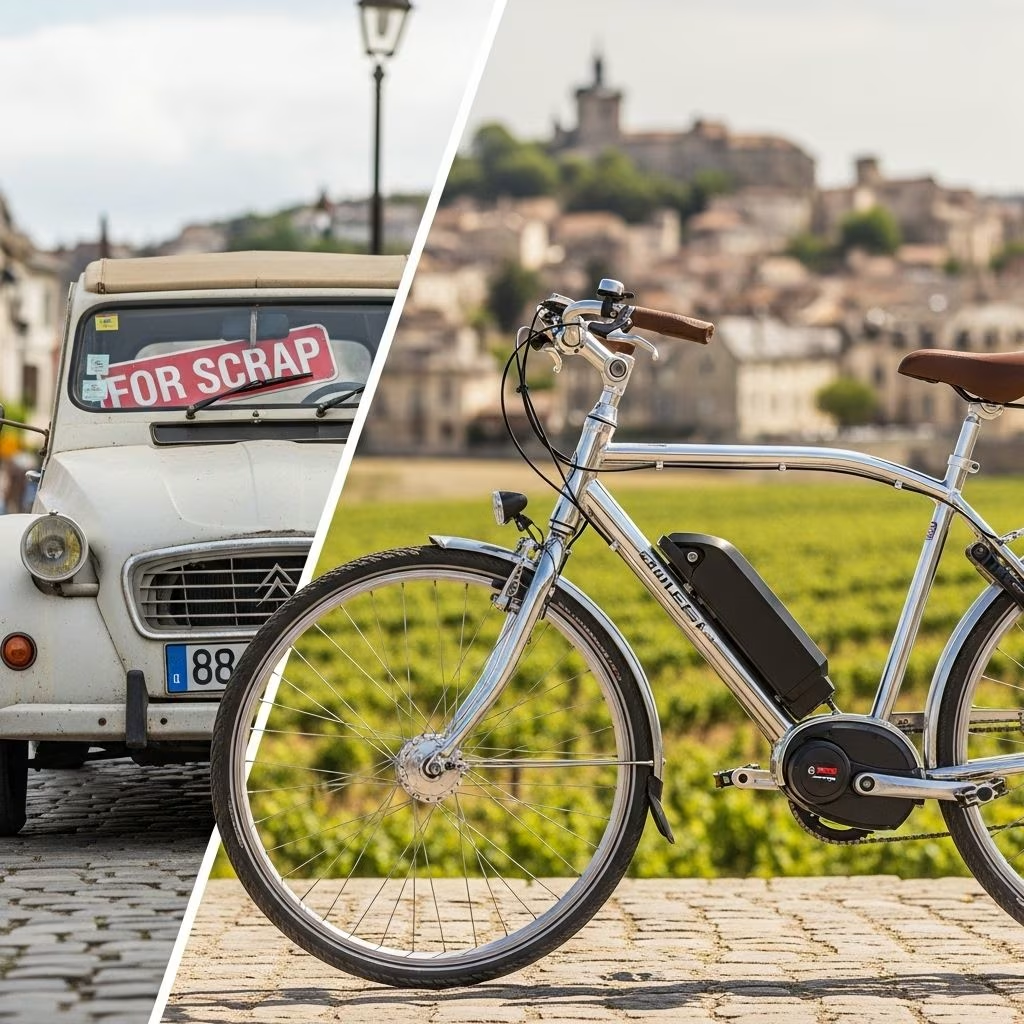
France Launches an Ambitious ‘e-Bikes for Clunkers’ Program
In a pioneering move to combat urban pollution and cut greenhouse gas emissions, the French government approved a national incentive scheme enabling citizens to trade in old, heavily-polluting cars for generous grants towards the purchase of electric bikes. This ‘scrappage scheme’ is one of Europe’s boldest attempts to reshape everyday mobility and encourage sustainable transport alternatives in the 21st century.
A Cultural Turning Point in Urban Mobility
On April 9, following considerable advocacy from cycling organizations such as the Fédération Française des Usagers De La Bicyclette (FUB), lawmakers in the National Assembly voted in favor of the inclusion of electric and cargo bikes in France’s official vehicle scrappage initiatives. Owners of polluting cars can now receive grants of up to €2,500 toward the purchase of a new electric bicycle—effectively treating these eco-friendly vehicles as direct replacements for local, short-distance car journeys.
French Minister of the Ecological Transition, Barbara Pompili, called this a “cultural turning point,” highlighting the policy’s aim to both reshape urban roadspace and facilitate a modal shift away from cars toward lower-carbon transport.
How the e-Bike for Clunkers Scheme Works
The French scrappage scheme ties its most generous incentives to the scrapping of high-emission vehicles and rewarding users who opt for cycling as a new daily mode of transportation. Here’s how the program is structured:
- Eligibility: Car owners must scrap a qualifying old vehicle to access the maximum incentive.
- Grant Amount: The scheme offers up to €2,500 for individuals trading in their polluting car for an e-bike or a cargo bike, depending on income levels and location.
- Eligible Vehicles: The scrapped vehicle must be a passenger car (M1) or a light commercial vehicle/van (N1), registered in France and first registered prior to January 1, 2011 for diesel or January 1, 2006 for petrol or other fuels. The owner must have possessed the vehicle for at least a year, and it must not be loan-collateral or classified as damaged.
- Application Process: The scrapped car must be delivered to an approved vehicle destruction center within three months before or six months after the e-bike purchase. Applications for the bonus are filed through the national Agency for Services and Payments (ASP).
- Additional Urban Incentives: Lower-income individuals in low-emission zones are eligible for the full grant, while others receive proportionally adjusted bonuses. In Paris, for example, local subsidies can reach up to €500 on top of national offers.
Table: Overview of France’s E-Bike Scrappage Incentive (2024–2025)
| Criteria | Details |
|---|---|
| Maximum national incentive | €2,500 (for scrapping a polluting car) |
| Base e-bike subsidy (no scrapping) | Up to €400 (national); varied local schemes may offer more |
| Income-based adjustment | Higher grants for lower-income individuals and those in low-emission zones |
| Vehicle eligibility | Passenger car (pre-2011 diesel / pre-2006 petrol) owned 1+ years, not pledged or damaged |
| Deadline for application | Within 6 months after e-bike purchase (final purchase no later than Feb 15, 2025) |
| Local incentives | Additional grants in select cities like Paris, Lyon, Toulouse |
Policy Objectives: Cleaning Air and Transforming Cities
The principal aim of this initiative is to address the environmental and public health crises stemming from motor vehicle pollution. With road traffic long dominating urban landscapes, the French government set an ambitious target of cutting greenhouse gas emissions by 40% from 1990 levels by 2030. This incentivization scheme reflects a broader climate bill—designed not only to phase out the most polluting vehicles but also to foster the widespread adoption of active, emission-free transport.
- Air Quality: Fossil fuel-powered cars are major contributors to urban particulates, nitrogen oxides, and carbon dioxide. Encouraging e-bikes directly reduces such emissions, helping cities comply with European air quality directives.
- Urban Congestion: Swapping cars for bicycles frees up street space, resulting in less noise, less traffic, and more room for pedestrian and green areas.
- Social Inclusion: Lower-income residents, often most dependent on older vehicles, gain improved access to clean mobility through the grant, lowering the barriers to e-bike ownership.
- Public Health: Greater cycling uptake contributes to healthier populations through increased physical activity and cleaner air.
A Surge in E-Bike Demand
France has witnessed a sharp growth in e-bike sales in recent years, with one in five bicycles sold now electric. These bikes have proven particularly effective for everyday trips traditionally undertaken by car—such as urban commutes, shopping, and school runs. Cargo e-bikes, in particular, enable families to replace even more car journeys, such as transporting children or groceries.
Eligibility, Application Details, and Deadlines
The incentive’s operation is governed by detailed rules to ensure it targets the intended population and achieves its environmental objectives:
- Eligible Applicants: Any adult legally domiciled in France with a reference tax income per share less than or equal to €15,400, or those with officially recognized disabilities.
- Vehicles Eligible for Scrappage: The car or van must meet all requirements specified earlier regarding registration, ownership, and fuel type.
- Deadline: The final date to purchase an eligible electric bike is February 15, 2025. All paperwork for the incentive must be filed within six months of purchase. After this cutoff, only local (city or regional) aid packages will remain in force.
- Submission Process: Applications are completed online at the official Agency for Services and Payments (ASP) portal, accompanied by documentary evidence of both the new bike purchase and the approved vehicle scrappage.
The End of the National Incentives: What Changes After 2025?
As of February 15, 2025, France’s national-level e-bike bonus (“Bonus Vélo”) and the “Prime à la Conversion” are officially terminated for new purchases. This marks a significant policy shift, justified by the government as reflecting the now-mature state of the e-bike market. Going forward, funding will be redirected to wider ecological actions—including mass home energy renovations and enhancements to public transport infrastructure.
- Transition Period: Purchases made and applications filed prior to the deadline remain eligible under the previous scheme.
- Continued City/Regional Aid: After the national program’s withdrawal, many local and regional authorities retain their own e-bike subsidy programs. Major cities such as Paris, Lyon, Toulouse, Nantes, and Strasbourg continue to provide financial assistance for e-bike buyers.
Why End the Incentive?
The government cited e-bike popularity and cost declines as evidence that the market can now sustain itself without such broad direct subsidies. Critics argue, however, that removing these grants could disproportionately impact low-income households and freelance workers (such as couriers) who relied on the financial support to upgrade their mobility options. The issue has sparked debate in the French parliament, with some calling for a revision or targeted extension of the scheme for the most disadvantaged groups.
Regional and Local Aid: The New Frontier for E-Bike Funding
Although the national bonus is ending, city and regional grants remain a valuable support system for e-bike adopters. For example:
- Île-de-France: Coordinated by Île-de-France Mobilités, this region offers substantial assistance for electric bicycle purchases, maintaining incentives through local funds.
- Paris: The Paris local government provides up to €500 toward e-bike or folding pedal bike purchases for city residents, on top of any national or regional incentives.
- Other Major Cities: Metropolitan areas such as Lyon, Toulouse, Nantes, and Strasbourg have implemented their own bonus channels, sometimes focusing on specific groups or sustainable cargo bike options.
The Broader Impact: Bicycles as Tools for Urban Transformation
The scrappage-for-e-bike scheme is part of a wider shift in both attitudes and infrastructure investment across France:
- Active Mobility Increase: By removing financial barriers, more households can consider cycling for everyday transport, breaking long-standing car-dependency.
- Supporting New Users: The scheme encourages first-time adult cyclists, families, and vulnerable groups by making electric bikes accessible and affordable.
- Reshaping Urban Space: Cities are investing in protected cycle tracks, bike parking, and traffic calming to accommodate the growing demand for safe cycling infrastructure.
- Environmental Leadership: France’s leadership may serve as a blueprint for other countries seeking to cut emissions and promote clean mobility at a national scale.
The Numbers Behind E-Bike Adoption
- Over 500,000 e-bikes were sold in France in 2023, up from just 100,000 in 2015.
- Cargo e-bike sales, in particular, have seen a triple-digit percentage increase, reflecting new possibilities for car replacement among families and businesses alike.
- Urban cycling rates have doubled or even tripled in several large French cities since the onset of generous financial incentives and pandemic-driven investments in pop-up bike lanes.
Frequently Asked Questions (FAQs)
Q: Who is eligible for the maximum scrappage bonus?
A: Any adult residing in France with a reference tax income ≤ €15,400, or those with disabilities, who trades in an eligible old car or van and meets all scheme criteria.
Q: How much can I get for scrapping my old car for an e-bike?
A: The national scheme allows up to €2,500, with some local authorities providing additional grants. Income and location impact the final sum.
Q: Will there still be e-bike subsidies after February 15, 2025?
A: After this date, only city and regional subsidies will be available. The national bonus program is discontinued for new purchases, but local bonuses may remain generous depending on your location.
Q: Can I apply if I bought my e-bike before scrapping my car?
A: The scrapped car must be delivered to an approved facility within the qualifying window (up to 3 months before or 6 months after the e-bike invoice date). All documentation must match the scheme’s requirements.
Q: What kind of bikes qualify for the scheme?
A: The incentive applies to new electrically-assisted bicycles (standard or cargo), with some variations for folding bikes. Consult your local program for precise details.
Conclusion: France’s Model for a Low-Carbon Transport Future
France’s innovative e-bike scrappage scheme signals a fundamental change in how governments can tackle pollution and congestion while promoting healthier, climate-friendly cities. While the national scheme is winding down in 2025, the legacy of these incentives will continue to shape mobility habits, infrastructure development, and public policy for years to come.
References
- https://www.ecf.com/en/news/electric-bikes-to-replace-polluting-cars-france-introduces-innovative-scrappage-scheme/
- https://www.lvr-cycles.com/en/content/40-help-with-purchasing-an-electric-bike-in-2025-complete-guide-to-benefiting-from-aid-bonuses-and-subsidies
- https://de.fafreesebike.com/blogs/knowledge/aide-velo-electrique-2025-your-complete-guide-to-local-subsidies
- https://electrek.co/2022/08/22/france-paying-car-drivers-switch-electric-bike/
- https://www.service-public.fr/particuliers/actualites/A17058?lang=en
- https://legendebikes.com/en-eu/blogs/news/electric-bike-aid-france-2025
- https://galiancycles.com/en/blogs/news/aides-velo-electrique-en-2025
- https://www.cittimagazine.co.uk/news/cycling/electric-bikes-to-replace-polluting-cars-after-france-introduces-scrappage-scheme.html
- https://www.ternbicycles.com/en/explore/more-from-tern/2024-2025-e-bike-incentive-programs-europe
- https://www.service-public.fr/particuliers/vosdroits/F37167/0_1_0?lang=en


