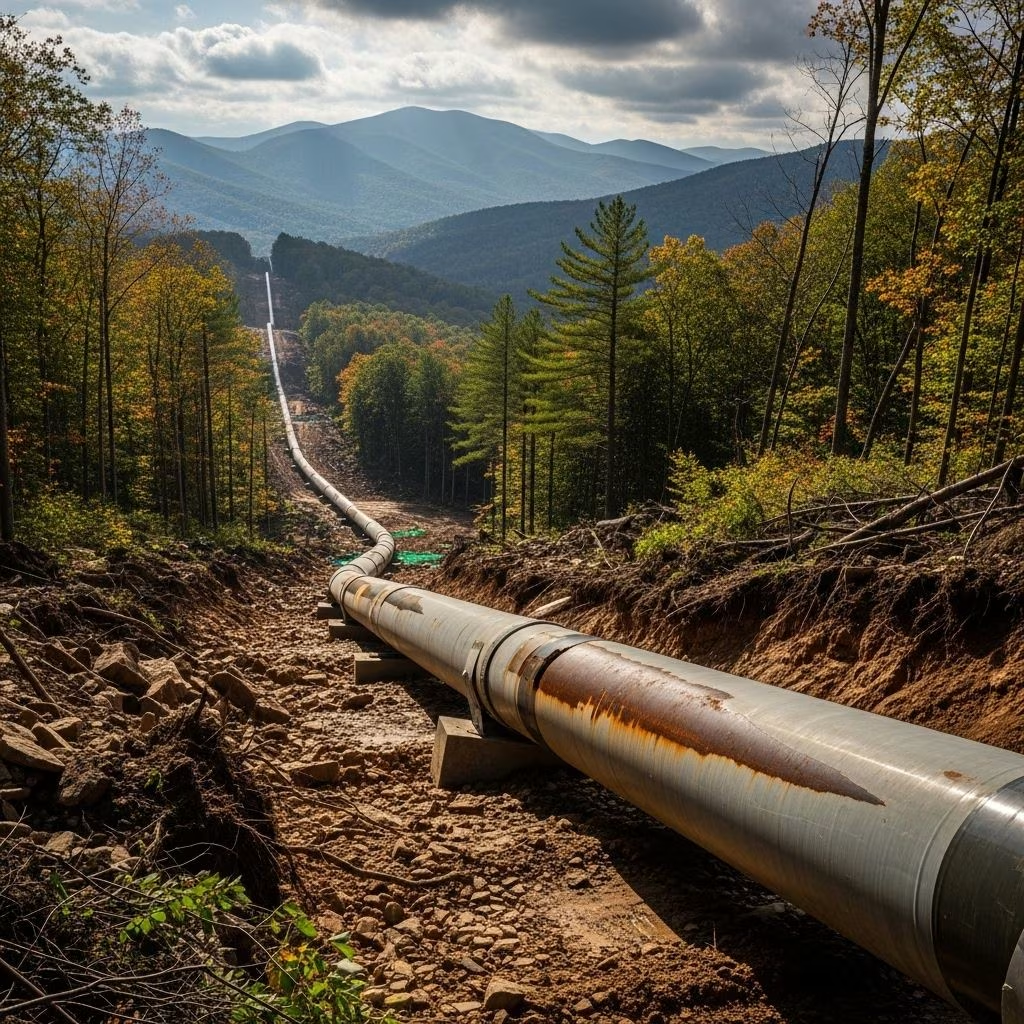
What’s Next for the Problematic Mountain Valley Pipeline?
The Mountain Valley Pipeline (MVP) is one of the most contested energy infrastructure projects in the United States, attracting widespread attention due to its environmental, legal, and social impacts. As it officially enters into service, the debate is now focused on its future — from regulatory battles and environmental concerns to possible expansions and implications for communities along its path.
Background: Understanding the Mountain Valley Pipeline
The Mountain Valley Pipeline is a 303-mile, 42-inch-diameter interstate natural gas pipeline running from northwestern West Virginia to southern Virginia. Finished and operational as of June 2024, the project transports up to 2 billion cubic feet of natural gas daily from the Marcellus and Utica shale formations, serving markets in the Mid- and South Atlantic regions.
The pipeline’s construction took almost seven years, riddled with legal challenges, environmental protests, and frequent delays. The MVP’s development consortium includes EQT Corp., NextEra Energy, Consolidated Edison, AltaGas, and RGC Resources, with EQT as the lead stakeholder and operator.
The pipeline has three compressor stations (Wetzel, Braxton, and Fayette Counties in West Virginia) and connects to Transcontinental Gas Pipeline Company’s Zone 5 compressor station 165 in Pittsylvania County, Virginia.
Timeline of Development and Key Milestones
- 2014–2017: Planning and regulatory applications initiated, Certificate of Convenience and Necessity from FERC awarded in October 2017.
- 2018: Construction begins, facing immediate challenges from environmental groups and property owners.
- 2022: Political negotiations initiated to ease regulatory barriers for the project. Senator Joe Manchin’s legislative efforts linked to the Inflation Reduction Act, sparking protests and ultimately unsuccessful.
- June 2023: U.S. Congress passes the Fiscal Responsibility Act, requiring expedited federal permitting. Remaining permits must be issued by June 24, 2023.
- June 14, 2024: FERC gives approval, MVP begins commercial operations, gas starts flowing.
- 2025: Application filed for the Southgate Extension into North Carolina.
The Pipeline’s Route and Technical Specifications
The MVP stretches across West Virginia and Virginia:
- Length: 303 miles
- Diameter: 42 inches
- Capacity: 2 billion cubic feet/day (approx. 200 TWh/year)
- Easement: Approx. 50 feet permanent, 125 feet temporary during construction
- Compressor Stations: Three in West Virginia counties
- Extension: Proposed 75-mile Southgate extension into North Carolina
The gas delivered originates from the prolific Marcellus and Utica shale formations, making the pipeline a critical artery for fracked gas in Appalachia.
Environmental Advocacy: Persistent Opposition and Concerns
From inception, the MVP faced sustained opposition rooted in fears for the region’s forests, waterways, wildlife, and contribution to climate change. Key environmental and social concerns include:
- Lands and Habitats: The pipeline’s construction required clearing forests and crossing sensitive waterways, sparking fears about erosion, habitat loss, and water quality.
- Protected Species: Numerous protected and endangered species exist in the pipeline corridor, raising issues about compliance with federal wildlife regulations.
- Climate Change: Critics argue MVP locks in greater fossil fuel dependence and greenhouse gas emissions, undermining state and national climate goals.
- Eminent Domain: The legal seizure of private lands for pipeline use generated high-profile property rights disputes.
- Environmental Justice: Some permits were denied based on state environmental justice laws, due to disproportionate impact on marginalized communities.
- Regulatory Lapses: Advocacy organizations allege lapses in enforcement and environmental compliance throughout construction.
Legal Battles and Direct Action
- Environmental groups initiated numerous lawsuits, challenging state and federal permits, and demanding rigorous environmental review.
- Direct actions ranged from property blockades and tree sits to protests at construction sites and government buildings.
- In September 2022, Indigenous leaders and allies led protests in Washington, D.C., raising environmental justice concerns over legislative attempts to fast-track the project.
Political Showdown: Federal Intervention and Legislative Maneuvering
The MVP became a flashpoint in American energy policy, with lawmakers and the White House weighing in:
- Senator Joe Manchin’s Role: Manchin (West Virginia) negotiated with Democratic leadership to ensure the pipeline’s completion by tying regulatory reform to support for the Inflation Reduction Act. His proposed bill would have bypassed legal challenges and required federal agencies to secure all necessary permits for MVP’s completion, triggering backlash and ultimately withdrawal.
- Fiscal Responsibility Act: In June 2023, this act was signed into law, requiring rapid federal permit issuance for MVP. This gave the pipeline developers a blanket for remaining regulatory hurdles.
Economic Arguments and Utility Demand
Supporters, particularly within the natural gas industry and regional utilities, framed the MVP as a solution to:
- Employment: The pipeline created thousands of construction jobs, though many were transient.
- Reliable Energy Supply: Local officials and utilities cited the need for stable, low-cost natural gas for electricity generation and home heating, especially as Virginia’s data center growth drives surging power demand.
- Regional Growth: MVP is expected to boost economic activity, particularly in energy-intensive sectors.
- Cleaner Fuel: Some stakeholders highlight natural gas as cleaner than coal or oil, though environmentalists dispute meaningful climate benefits.
For pipeline backers: “This project will provide additional takeaway from Appalachia into Virginia to serve the Southeast markets, unleashing reliable, low cost, low emissions natural gas into a region that is seeing significant demand growth.” — Toby Rice, EQT CEO
Mountain Valley Pipeline Expansion: The ‘MVP Boost’ Proposal
Just days after initial operation, MVP developers publicly discussed an ambitious expansion plan: the MVP Boost. This proposal aims to increase the pipeline’s daily capacity by 25%, raising it from 2 billion to approximately 2.5 billion cubic feet per day.
- Technical Approach: Higher throughput would be achieved by increasing pipeline pressure and constructing a new compressor station near the Montgomery-Roanoke County line in Virginia.
- Projected Timeline: Pending regulatory approval, MVP Boost could begin service around 2029.
- Primary Markets: The extra gas would mainly serve electric utilities and the burgeoning data center industry in Northern Virginia, where projected electricity demand could triple by 2040 if data center growth remains unconstrained.
- Investor Momentum: EQT has already started ordering key equipment, banking on what it calls “strong project momentum.”
Expansion Table: Current vs. Proposed
| Parameter | Current MVP | MVP Boost Proposal |
|---|---|---|
| Capacity | 2 billion cu ft/day | 2.5 billion cu ft/day |
| Compressor Stations | 3 (Wetzel, Braxton, Fayette WV) | +1 proposed (Montgomery/Roanoke VA) |
| Projected Operation | 2024 | 2029 (pending approvals) |
| Primary Regions Served | Mid- & South Atlantic, VA | Southeast, Northern VA data centers |
Regulatory and Local Challenges to Expansion
Despite MVP Boost’s “momentum,” major regulatory and community hurdles remain:
- Federal Approval: The proposal must be formally filed with the Federal Energy Regulatory Commission (FERC) and undergo review.
- State & Local Oversight: The Virginia Department of Environmental Quality and affected county governments will scrutinize plans for expansion and any new compressor stations.
- Community Opposition: The same groups who challenged the original pipeline are expected to mobilize against expansion, citing increased emissions, noise, and local environmental impacts.
Environmental Justice and Indigenous Rights
As the MVP saga unfolds, one of its starkest battlegrounds is the intersection of energy development, environmental justice, and Indigenous sovereignty. Advocacy efforts continue to highlight:
- Disproportionate Impact: Marginalized communities bear excessive risks related to pollution, land loss, and environmental degradation.
- Indigenous Leadership: Indigenous peoples have spearheaded protests, arguing that pipeline approvals violate treaties and threaten communities and sacred lands.
- Policy Influence: Legislative efforts to bypass regulatory review are seen as setting dangerous precedents for other pipeline and infrastructure projects nationwide.
Future Outlook: What’s Next?
The Mountain Valley Pipeline’s journey is anything but settled. Key upcoming developments include:
- MVP Boost regulatory review and potential litigation.
- Expansion into North Carolina via the Southgate Extension, recently filed as a formal application.
- Heightened local activism in response to ongoing and proposed pipeline growth.
- State and federal policy debates over the role of natural gas infrastructure in energy transition.
Regardless of one’s stance, MVP illustrates the complex trade-offs, regional politics, and high stakes in America’s evolving energy landscape.
Frequently Asked Questions (FAQs)
Q: Why is the Mountain Valley Pipeline considered controversial?
A: The MVP is controversial due to its impacts on local ecosystems, use of eminent domain, challenges from Indigenous and environmental groups, and the risks posed to protected species and waterways along its route .
Q: What is the MVP Boost proposal?
A: MVP Boost is a proposed expansion to increase the pipeline’s capacity by 25%, adding a new compressor station and serving growing energy demands, especially from electric utilities and Virginia’s booming data center sector .
Q: How was the pipeline ultimately approved despite years of opposition?
A: Congressional action under the Fiscal Responsibility Act in 2023 expedited all outstanding federal permits, overriding the repeated legal and regulatory challenges .
Q: What environmental concerns are associated with pipeline expansion?
A: Concerns include increased greenhouse gas emissions, local air and noise pollution from compressor stations, risk to water resources, habitat destruction, and amplified environmental justice issues .
Q: What future energy trends affect the MVP’s relevance?
A: Surging electric demand, driven especially by the rapid growth of data centers in Northern Virginia, ensures future natural gas infrastructure remains tightly debated. Policy, technology, and local activism will determine next steps for MVP and similar projects .
References
- https://www.pipeline-journal.net/news/mountain-valley-pipeline-considers-expansion-amid-rising-energy-demands
- https://en.wikipedia.org/wiki/Mountain_Valley_Pipeline
- https://cardinalnews.org/2025/07/25/mountain-valley-pipeline-weighs-possible-expansion-new-virginia-compressor-station/
- https://mountainvalleypipeline.info
- https://wvpublic.org/story/energy-environment/mountain-valley-pipeline-proposal-would-increase-pressure-add-gas/
- https://mountainvalleypipeline.info/news-info/
- https://www.deq.nc.gov/news/key-issues/natural-gas-pipeline-projects/mountain-valley-pipeline
- https://www.federalregister.gov/documents/2025/07/09/2025-12759/mountain-valley-pipeline-llc-notice-of-schedule-for-the-preparation-of-an-environmental-assessment
- https://www.ferc.gov/mvp-southgate-amendment-project