


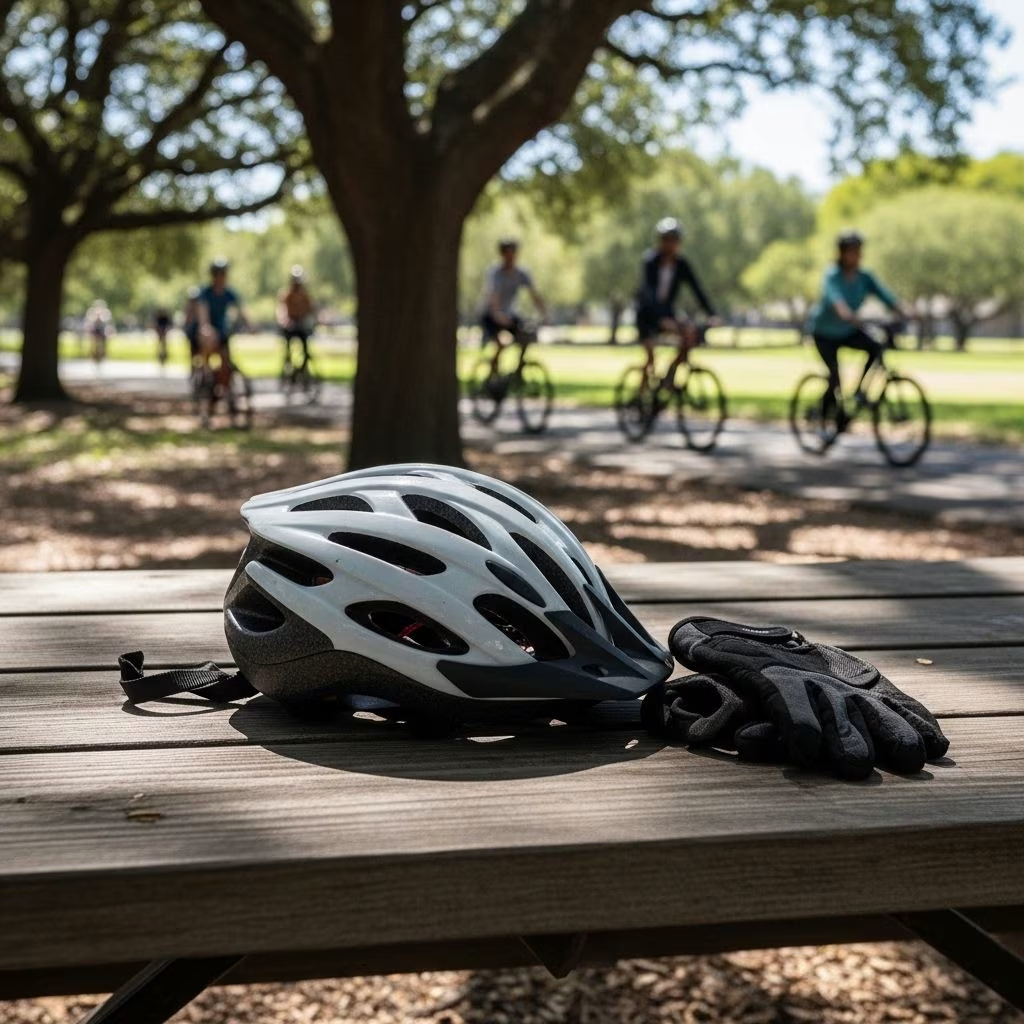
The Real Problem with the NTSB’s Mandatory Bike Helmet Recommendation
Bicycle safety is a growing concern as more people ride for commuting, exercise, and recreation. In 2019, the National Transportation Safety Board (NTSB) released its first comprehensive study on bicyclist safety in nearly five decades. While the organization made many recommendations, one in particular—urging mandatory helmet laws for cyclists of all ages—sparked immediate debate among advocates, researchers, and everyday riders.
Understanding the NTSB’s Study and Recommendations
The NTSB convened experts to assess bicycle safety in response to rising cyclist fatalities in the U.S. The resulting report covered a range of strategies:
- Recommending states enact all-ages bicycle helmet laws
- Calling for separated and protected bike lanes wherever possible
- Encouraging technological upgrades such as vehicle detection systems that can recognize cyclists
- Proposing visibility improvements for bicycles and riders
- Requesting better data collection on bicycle use and crashes
However, the board’s eleventh-hour addition—a call for statewide mandatory helmet laws—overshadowed many of the report’s positive infrastructure proposals. This single recommendation became the lightning rod for criticism and debate from the cycling community and safety experts alike.
Mandatory Helmet Laws: The NTSB’s Controversial Step
Helmet laws, according to the NTSB’s rationale, are intended to mitigate the severity of head injuries by increasing helmet use among riders. The board cited data showing that helmets significantly reduce the risk of serious head injury in the event of a crash. No U.S. state currently mandates helmet use for adults, though some localities require helmets for children or, in rare cases, for all ages.
Board member Jennifer Homendy defended the position, stating, “Our goal is zero injuries, zero deaths.” But the emphasis on helmet mandates was met with sharp criticism from advocacy groups and researchers who argue that focusing on individual behavior misses the broader context of roadway safety.
Arguments in Favor of Helmet Laws
- Helmets can reduce the severity of head injuries, which are a leading cause of fatal outcomes in bicycle crashes.
- Studies, particularly in places like Canada, suggest that universal helmet laws (including adults) increase helmet use rates.
- Wearing a helmet is a low-cost, accessible precaution for many riders.
The Opposition: Why Mandating Helmets May Backfire
- Deters cycling participation: Mandatory helmet laws have been shown to reduce overall ridership, as some people find the requirement inconvenient, expensive, or intimidating .
- Safety in numbers effect: Less cycling can lead to more danger for those who do ride, as higher ridership correlates with safer conditions per person due to increased driver awareness.
- Does not prevent crashes: Helmets can reduce injury severity, but don’t address the main sources of danger—vehicle speed, distracted driving, unsafe road designs, and lack of protected spaces.
- Unintended consequences: Enforcement of helmet laws can be inequitable, disproportionately affecting marginalized communities and leading to discretionary policing and fines .
- Victim-blaming: Emphasis on helmets can subtly place responsibility for crashes on cyclists rather than on drivers or road designers.
The Broader Context: Cycling Safety and Real Solutions
The U.S. transportation safety landscape differs significantly from countries where cycling is widespread and safe. Dutch, Danish, and German cities achieve low cyclist injury and fatality rates without helmet laws, largely because they focus on:
- Comprehensive, protected bike networks
- Street designs that slow down vehicle traffic
- Consistent separation of cyclists from motor vehicles
- Robust public policies supporting active transportation
What the NTSB Also Recommended
Despite the controversy, the NTSB’s report included several constructive recommendations:
- Improving infrastructure: A call for more separated bicycle lanes, intersection safety treatments, and protected paths.
- Integrating technology: Suggesting that new cars be evaluated for their ability to detect and prevent crashes involving bicyclists.
- Increasing visibility: Encouraging research into better bicycle and rider reflectivity and visibility standards.
- Better data: Urging more accurate and comprehensive collection of cycling activity and crash data to guide policy.
Advocacy groups, including the League of American Bicyclists and PeopleForBikes, praised these suggestions. They argue such measures would directly address the causes of most bicycle crashes: street and driver design, not rider error or lack of protection.
Helmet Law Efficacy: Evidence and Open Questions
| Argument | Supporting Evidence | Critique |
|---|---|---|
| Helmets reduce injury severity | Numerous studies (including U.S. and Canadian data) show lower rates of serious head injury among helmet users in crashes | Not all crashes are head-related; overall injury rates can remain high, and helmets do little in high-speed vehicle collisions |
| Helmet laws increase helmet use | Research indicates all-ages helmet laws raise helmet-wearing rates, notably among children | These laws can dissuade new cyclists, reducing ridership (‘safety in numbers’ effect) |
| Mandatory laws ensure safety | In theory, universal helmet use could lower the national burden of head injuries | Laws are often poorly enforced or may disproportionately target certain communities; infrastructure improvements have a broader proven impact |
Unintended Outcomes: Equity and Enforcement Concerns
One of the less discussed, but crucial, consequences of helmet laws is their impact on equity:
- Inequitable enforcement: Studies have documented that Black and Latino cyclists are more likely to be cited for helmet violations than White cyclists .
- Barrier to access: Mandatory helmet laws can discourage low-income riders or those who use bike share systems, where helmets aren’t always readily available.
- Active transportation setback: For cities working to increase walking, biking, and rolling, cumbersome helmet laws can undo years of public health progress.
As the National Association of City Transportation Officials (NACTO) has noted, “while bike helmets can be protective, bike helmet laws are not.”
What’s Actually Working: How Cities Make Cycling Safer
Urban areas that have successfully improved cycling safety share several key strategies:
- Protected and separated infrastructure: Dedicated lanes, physical barriers, and traffic-calmed streets are the best predictors of cyclist safety.
- Comprehensive safety policies: Programs targeting distracted driving, excessive speed, and traffic violence address root causes of cyclist injuries and deaths.
- Culture shift: Framing cycling as normal, safe, and enjoyable—without stigmatizing or over-regulating riders—encourages more people to try biking.
International Perspective
Most countries with the world’s safest cycling environments do not require bike helmets for adults, yet have far lower cyclist fatalities per capita compared to the United States. For example, in the Netherlands, only about 3% of adults wear helmets, but protected networks and car-free zones make cycling safe for people of all ages.
Bike Advocacy: Priorities for the Road Ahead
Leading cycling advocates have issued their own vision for safer streets:
- Design streets for people first. Physically separating cars and bikes, lowering speed limits, and building protected intersections should be the foundation of safety policy.
- Encourage, don’t punish. Promote helmet use through education and free or subsidized helmet distribution, not criminalization or fines.
- Champion equitable policies. Ensure enforcement doesn’t disproportionately impact marginalized or low-income communities.
- Enable data-driven policy. Invest in better tracking of ridership, crash causes, and equity outcomes to refine future lawmaking.
Groups such as the League of American Bicyclists, PeopleForBikes, and Better Bike Share Partnership continue to communicate these priorities at the federal, state, and local levels.
FAQs: Frequently Asked Questions about Mandatory Bike Helmet Laws
Q: Do mandatory helmet laws make cycling safer?
A: Evidence shows helmet use can reduce injury severity in a crash, but mandatory helmet laws can drive down rates of cycling and may not target the leading cause of crashes or deaths: motor vehicle collisions and poor infrastructure.
Q: What are the downsides of mandatory helmet laws?
A: Downsides include reducing overall bike use, discouraging healthy and climate-friendly transportation, creating barriers for equity, and potential for over-policing or discriminatory enforcement.
Q: How do U.S. helmet laws compare internationally?
A: The U.S. has limited helmet mandates compared to some places like Australia or Canada, but countries with the safest cycling records (Netherlands, Denmark, Germany) achieve that through safer streets, not helmet laws for adults.
Q: Should I wear a helmet when I ride?
A: Wearing a helmet can reduce your risk of head injury and is generally encouraged, but voluntary use paired with safe infrastructure is the approach favored by most advocacy experts.
Q: What’s the best way to make cycling safer in the U.S.?
A: The consensus among researchers and advocates is to prioritize building protected infrastructure, slowing traffic, and making drivers accountable, while promoting—but not requiring—helmet use.
Key Takeaways
- The NTSB’s call for mandatory helmet laws has sparked important debate on how best to protect cyclists.
- Research and global practice suggest that prioritizing infrastructure and street design delivers the greatest gains in cycling safety.
- Helmet laws alone cannot address the larger systemic issues that put cyclists at risk.
- Policies must center on reducing dangers at the source while promoting cycling as a safe, equitable, and accessible transportation choice for all.
References
- https://www.smartcitiesdive.com/news/ntsb-recommends-mandatory-helmet-laws-protected-bike-lanes/566675/
- https://www.peopleforbikes.org/news/bike-rider-safety-thoughts-on-ntsb-recommendations
- https://www.cbsnews.com/sacramento/news/ntsb-helmets-bicyclists/
- https://www.youtube.com/watch?v=xF_LWEXuKeU
- https://www.nhtsa.gov/book/countermeasures-that-work/bicycle-safety/countermeasures/legislation-and-licensing/universal
- https://nacto.org/latest/helmet-laws/


