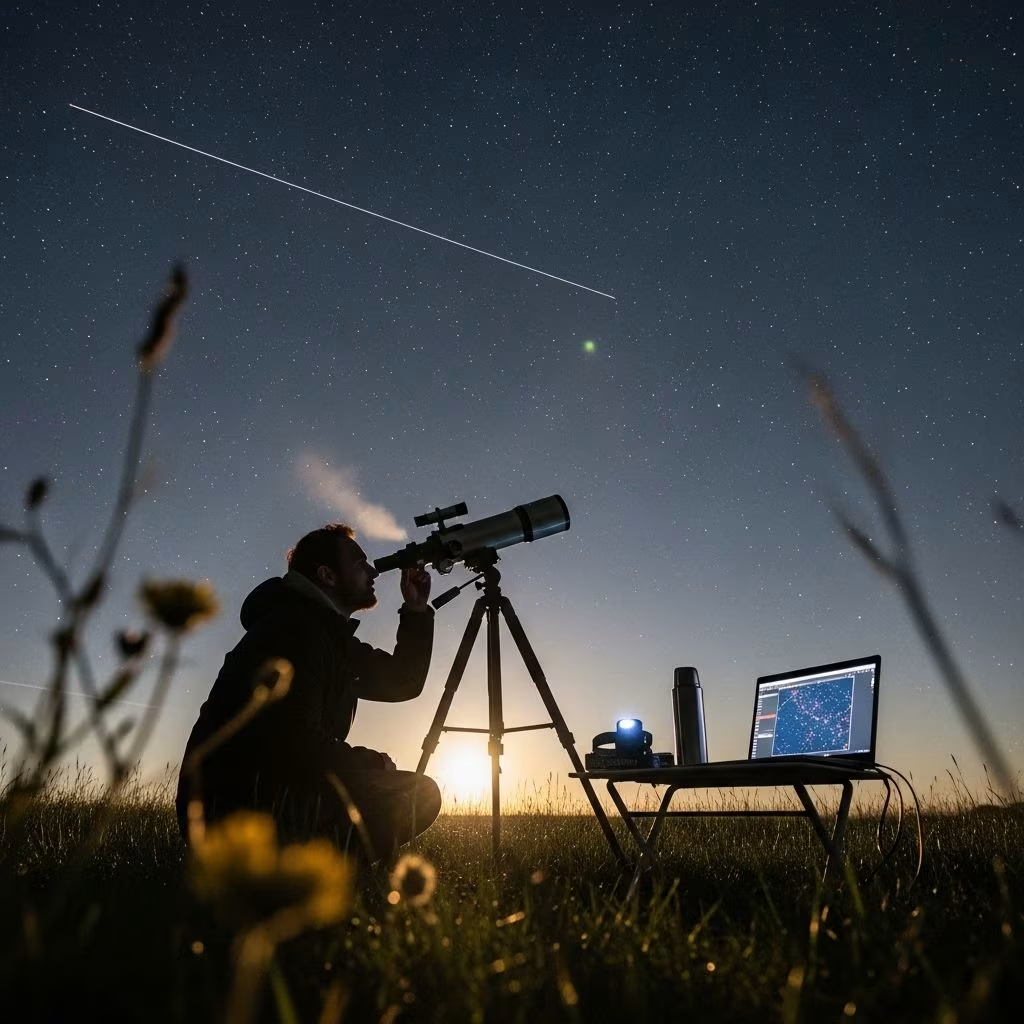
How to Spot a Satellite: Tools and Tips for Satellite Tracking
Every night, hundreds of satellites silently traverse the sky above us, reflecting sunlight as they orbit Earth. Satellite spotting is a rewarding hobby that connects onlookers to space science, technology, and the universe’s ongoing story. Whether you want to see the unmistakable passage of the International Space Station or catch fleeting glimpses of mysterious, classified satellites, modern tools and helpful apps are making sky-watching easier than ever before. This comprehensive guide explores how to spot satellites, the technology that makes it possible, and the very best satellite-tracking resources available today.
Understanding Satellites: What Are You Seeing?
Before grabbing your binoculars, it’s worth understanding what satellites look like when seen from the ground and why they intrigue so many sky-watchers. Unlike airplanes, satellites generally appear as steady, bright points of light gliding across the stars, unblinking and often moving in a straight line from one horizon to the other. They range in brightness and speed depending on their altitude, size, and orientation to the Sun.
- International Space Station (ISS): The brightest and largest human-made object in orbit. Its orangish-white glow can rival Jupiter and Venus.
- Starlink Satellites: Known for “satellite trains”—visible chains of points lighting up soon after deployment, causing both awe and occasional concern among star-gazers.
- Iridium Flares: Previously caused dramatic flashes due to Iridium satellite antennas. Most have been replaced, but the term stuck for sudden satellite glints.
- Spy and Communication Satellites: Often less bright and trickier to identify; still, many can be tracked with published orbital data.
To the naked eye, satellites never blink or change colors like airplanes. Their movement is constant—a clue that distinguishes them from meteorites (which streak quickly and vanish) and stars (which stay still).
Why Satellites Are Visible at Night
Satellites are most visible around dusk and dawn because their orbits keep them in sunlight while surface observers are in darkness. The Sun’s rays illuminate solar panels and hulls, causing satellites to reflect light toward the earthbound observer.
- Best viewing times: 30–90 minutes after sunset or before sunrise.
- Reason: Satellite orbits place them high enough to catch sunlight even as the sky below is dark.
- Limitations: Satellites passing directly overhead disappear instantaneously into Earth’s shadow or re-emerge unexpectedly from it.
How to Spot a Satellite Without Any Tools
Begin with the basics. Even without advanced technology, anyone can spot satellites by paying close attention to a few skywatching fundamentals:
- Choose a Clear Night: The fewer clouds and less light pollution, the better. Rural areas or elevated locations improve chances.
- Scan the Sky: Look up 45–70 degrees from the horizon, and use wide, slow sweeps with your eyes.
- Watch for Steady Motion: Satellites glide at a constant pace, unblinking, and cross large sections of sky in just a few minutes.
- Note Timing: Dusk and dawn are optimal, and certain satellites are brighter and more visible at specific times, depending on their orbits.
Best Free Websites to Identify and Track Satellites
Several robust online platforms make satellite spotting accessible and accurate. They update in real-time, often allowing users to set their location for customized sky predictions.
-
Heavens-Above
Description: A comprehensive satellite tracking website known for real-time, location-based prediction charts and interactive sky maps.
- Visualizes satellite passes, including ISS and Starlink.
- Displays brightness, trajectory, and flare predictions.
- Also covers the Hubble Space Telescope and various observable satellites.
- User interface is straightforward; can be used without registration.
-
N2YO.com
Description: Offers live maps and up-to-the-moment tracking of thousands of satellites overhead. Its search function makes identifying high-interest spacecraft easier.
- Real-time satellite position updates on interactive maps.
- Lists satellites currently overhead—customized to any location worldwide.
- Has an alert feature for upcoming visible passes.
-
Satflare
Description: Specializes in real-time visualizations and offers 3D tracking of satellites, the ISS, and even the Chinese Space Station.
- Covers Starlink satellite constellations and upcoming launches.
- Features prediction tables and world maps with orbital paths.
- Integrates user reports for crowd-sourced accuracy.
Top Apps for Satellite Spotting
Mobile apps have expanded access to the night sky, enabling observers to receive instant notifications about visible passes, see AR overlays, and access customized predictions. Here are some of the leading choices:
-
ISS Tracker (iOS/Android)
Features: Sends real-time push notifications for when the ISS will be overhead. Provides location-based timing and direction, with map visualizations.
-
SkyView (iOS/Android)
Features: Combines satellite data with a planetarium interface and augmented reality. Just point your phone at the sky to identify satellites (and stars, planets, constellations).
-
GoSatWatch (iOS)
Features: Known for rich features and custom alerts. Animates satellite orbits and shows field-of-view from chosen locations.
-
Satellite AR (Android)
Features: Uses augmented reality overlays to show current satellites as you move your phone, making sky tracking intuitive.
Finding the International Space Station (ISS)
The International Space Station is typically the brightest and easiest satellite to spot. Its predictable orbits mean you can plan sightings down to the minute and direction, making it a favorite for beginners.
- Visibility: The ISS surpasses all other satellites in naked-eye brightness (sometimes outshining Jupiter or Venus).
- Tracking:
- Heavens-Above and Spot the Station (by NASA) are the most reliable online resources.
- Most satellite apps offer real-time ISS alerts as a core feature.
- What You’ll Need:
- Clear skies and an unobstructed view to the horizon.
- Time. ISS passes rarely last more than 5 minutes per sighting.
- Observation Tips: The ISS always appears as a non-blinking point of white light, moving steadily; it never changes direction, and often vanishes as it enters Earth’s shadow.
Starlink Satellites: Why Are They So Noticeable?
Starlink satellites, the brainchild of SpaceX, often draw public attention due to their visibility. Shortly after deployment, they appear as bright pearl-like chains—”satellite trains”—marching across the night sky. These formations are most visible within days of launch, especially at dusk or dawn.
- Over Time: Starlink satellites gradually disperse into their designed orbits, growing dimmer and harder to see individually.
- Tracking: Heavens-Above, Satflare, and dedicated Starlink apps (like Find Starlink) allow users to predict these unique sighting events.
- Impact: The spectacle inspires curiosity and sometimes concern among astronomers due to their brightness and potential interference in astronomical observations.
Advanced Satellite Tracking Techniques
Dedicated satellite observers employ a blend of online resources, sky charts, and even amateur radio techniques. For those interested in satellite watching as a more technical pursuit, consider:
- Orbital Elements: “TLE” (Two-Line Elements) data published by agencies and tracking communities provides the precise information satellite apps and platforms use to predict passes.
- Amateur Radio (Ham) Tracking: Some satellites transmit beacons or communicate directly with radio users. Listening in or tracking radio signals can reveal satellite locations even when they aren’t visible.
- Custom Sky Charts: Websites like Heavens-Above let users generate sky charts and orbital tracks tailored to their exact location and sighting window.
- Manual Timing: Use a stopwatch or phone timer while observing—record how long a satellite remains visible in your field of view for future research or fun comparisons.
Satellite Tracking Table: Comparing Top Tools
| Tool | Platform | Real-Time Tracking | Custom Alerts | Augmented Reality |
|---|---|---|---|---|
| Heavens-Above | Web, Android | Yes | No | No |
| N2YO.com | Web | Yes | Yes | No |
| Satflare | Web | Yes | Yes | No |
| ISS Tracker | iOS, Android | Yes | Yes | No |
| Satelite AR | Android | Yes | No | Yes |
| SkyView | iOS, Android | No | No | Yes |
Frequently Asked Questions (FAQs)
Q: How can I tell if I’m looking at a satellite?
A: Satellites appear as bright, moving points of light. They move steadily across the sky, do not blink or change color, and are usually visible for a few minutes. Unlike airplanes, satellites don’t have flashing lights and do not leave trails like meteors.
Q: What is the best time of night to see satellites?
A: The best times are just after sunset and just before sunrise, when the observer’s location is in darkness but the satellite is still illuminated by the Sun. This window is known as “twilight.”
Q: Do I need a telescope to see satellites?
A: No telescope is required for most large, visible satellites like the ISS and Starlink chains. However, a basic pair of binoculars can help track fainter objects, especially when sky conditions are excellent.
Q: Are there privacy or security concerns in observing satellites?
A: Observing satellites in the sky is perfectly legal and safe. However, details about some satellites, particularly military ones, are not always public for security reasons; still, dedicated hobbyists often track even these with impressive accuracy.
Tips for Success: Get the Most from Satellite Spotting
- Start Simple: Begin with ISS sightings, which are frequent, predictable, and spectacular.
- Stay Notified: Enable notifications in satellite-tracking apps so you never miss an overhead pass, especially rare or bright ones.
- Join a Community: Online forums and local astronomy clubs often coordinate viewing parties and share tips on current satellite events.
- Keep a Journal: Note dates, times, brightness, and paths—tracking your own observations is both fun and informative!
- Experiment: Try catching satellite flares, Starlink trains, or multiple satellites in a single session for variety and added challenge.
Final Thoughts
Satellites crisscross the night sky every hour of every night—a testament to humanity’s technological reach and our enduring curiosity about the universe. Modern satellite tracking platforms, intuitive mobile applications, and a little dedication can unlock countless moments of wonder for anyone willing to look up. Get started today, and you’ll join a worldwide community of observers watching Earth’s orbit in real time.
References
- https://www.frontiersin.org/journals/forests-and-global-change/articles/10.3389/ffgc.2024.1495544/full
- https://pmc.ncbi.nlm.nih.gov/articles/PMC7765503/
- https://arxiv.org/abs/2507.01502
- https://www.tandfonline.com/doi/full/10.1080/10095020.2023.2299146
- https://upcommons.upc.edu/bitstreams/03ffced5-6201-4057-9e30-81fe957a3b2a/download