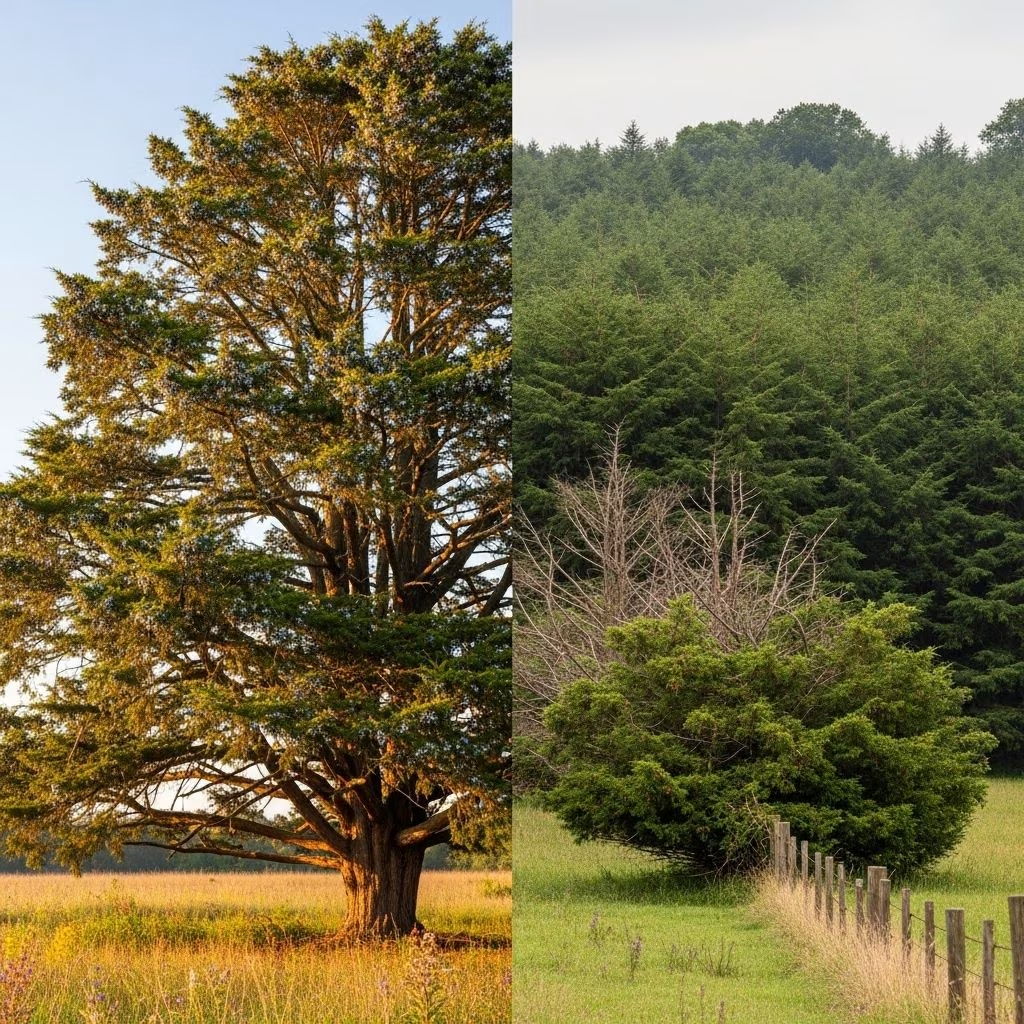
Forests are an irreplaceable part of our planet’s ecosystem, providing habitat for countless species, absorbing carbon dioxide, regulating the global climate, and supporting the livelihoods of millions of people. However, deforestation—the large-scale removal of forest cover—threatens all these benefits. Halting deforestation is a critical step toward achieving sustainability, combatting climate change, and preserving biodiversity for future generations.
Why Stopping Deforestation Matters
Deforestation causes far-reaching environmental, social, and economic impacts:
- Loss of Biodiversity: Forests are home to over 80% of terrestrial animal and plant species. Destroying forests can push countless species toward extinction.
- Climate Change: Trees absorb carbon dioxide, acting as carbon sinks. Their removal releases massive amounts of CO2, accelerating global warming.
- Disruption of Water Cycles: Forests regulate local and global water cycles, reducing the risk of floods, droughts, and soil erosion.
- Impact on Indigenous Peoples: Many forest-dependent communities lose their homes, livelihoods, and cultural heritage when forests are cleared.
Taking action to prevent deforestation is urgent. Here are ten proven strategies that governments, businesses, communities, and individuals can implement to save forests around the world.
1. Enforce Stronger Forest Protection Laws
Strong and well-enforced laws are essential to controlling illegal logging and large-scale forest clearance. Key legal approaches include:
- Establishing Protected Areas: Designating national parks, reserves, and conservation areas helps set boundaries where deforestation is prohibited.
- Improved Monitoring: Using satellite technology, drones, and on-ground patrols to detect and prevent illegal activities in real-time.
- Penalties and Accountability: Prosecuting illegal loggers and holding companies responsible for unauthorized forest destruction create disincentives for breaking laws.
Governments must work to close loopholes, strengthen oversight agencies, and support enforcement with adequate resources. International agreements, like the Convention on Biological Diversity and REDD+ initiatives, can reinforce national efforts.
2. Promote Sustainable Forest Management
Not all forest use is destructive. Sustainable forestry aims to harvest timber and other resources in ways that maintain ecosystem health and productivity:
- Selective Logging: Only mature trees are harvested, preserving canopy cover and biodiversity.
- Certification Systems: Programs like Forest Stewardship Council (FSC) set rigorous environmental and social standards for forest products.
- Community-Based Forestry: Local and Indigenous management often results in lower deforestation rates and better long-term stewardship.
A shift to sustainable management allows forests to regenerate while providing economic benefits.
3. Encourage Responsible Consumption and Supply Chains
Consumer demand for products like timber, beef, palm oil, soy, and paper is one of the largest drivers of deforestation worldwide. Solutions involve:
- Choosing Certified Products: Look for FSC-certified wood and paper, and sustainable palm oil labels (like RSPO certification).
- Reducing Meat and Dairy Consumption: The livestock sector is a major cause of forest conversion, particularly in South America.
- Supporting Transparent Supply Chains: Companies should trace raw materials and publicly commit to zero-deforestation policies.
Informed choices, from individuals and companies, help shift markets toward products that do not contribute to forest destruction.
4. Restore Damaged Forests and Support Reforestation
Forest restoration is essential to repairing ecosystems, absorbing carbon, and regaining lost biodiversity:
- Natural Regeneration: Allowing forests to regrow on their own is often the most cost-effective and biodiverse approach.
- Active Reforestation: Planting native tree species in degraded or cleared areas accelerates recovery.
- Agroforestry: Integrating trees into agricultural landscapes combines food production with forest conservation.
Global pledges, such as the Bonn Challenge, aim to restore hundreds of millions of hectares by 2030. Restoration projects must respect native ecosystems and local communities.
5. Support Indigenous Peoples and Local Communities
Indigenous peoples and local communities have managed forests sustainably for generations. Recognizing and protecting their rights is vital for preventing deforestation:
- Land Tenure Security: Legal recognition of Indigenous territories ensures long-term forest protection.
- Traditional Knowledge: Empowering local management often leads to better conservation outcomes than external interventions.
- Participation in Decision-Making: Involving communities in forest policy and management ensures solutions are inclusive and effective.
Studies repeatedly show that rates of deforestation are lower in areas where Indigenous rights are recognized and enforced.
6. Address Agricultural Expansion and Promote Sustainable Agriculture
Agriculture is the leading cause of deforestation worldwide, especially as land is cleared for crops and livestock. Sustainable solutions include:
- Yield Improvement: Increasing productivity on existing farmland reduces the need to clear more forests.
- No-Deforestation Pledges: Agribusinesses can commit to sourcing only from suppliers that do not destroy forests.
- Eco-friendly Practices: Techniques such as agroecology, intercropping, and integrated pest management minimize environmental impact.
Balancing food production with forest conservation is essential for long-term planetary health.
7. Reduce Forest Fragmentation and Create Ecological Corridors
When forests are broken into isolated patches, wildlife can no longer move freely, and ecosystems decline. Protection strategies involve:
- Establishing Wildlife Corridors: Linking fragmented habitats enables species migration, genetic diversity, and resilience.
- Buffer Zones: Surrounding core forests with less intensive-use areas helps shield them from edge effects and degradation.
Integrated landscape planning is needed to maintain whole, functioning ecosystems that can adapt to a changing climate.
8. Curb Infrastructure Development in Forested Areas
Roads, dams, and industrial projects can open up remote forests to exploitation and fragmentation. Alternatives include:
- Environmental Impact Assessments: Rigorous analysis ensures new projects avoid high conservation value forests.
- Alternative Locations: Development can focus on already degraded lands instead of clearing new forests.
- Green Infrastructure: Investment in projects like wildlife overpasses and underpasses maintains ecosystem connectivity.
Government planning and oversight are required to balance infrastructure needs with conservation goals.
9. Leverage Financial Incentives and Policy Tools
Economic and policy measures can support forest conservation by making standing forests more valuable than cleared land:
- Payments for Ecosystem Services (PES): Landowners receive compensation for conserving forests that provide clean water, carbon sequestration, or wildlife habitat.
- Carbon Markets: Forest preservation and restoration can generate carbon credits under international climate agreements.
- Subsidy Reform: Governments can redirect subsidies away from deforestation-driving industries toward sustainable alternatives.
Incentivizing conservation aligns environmental goals with economic interests.
10. Educate and Mobilize Public Support
Public awareness and engagement drive broader change by:
- Advocacy and Activism: Grassroots campaigns and environmental organizations pressure governments and businesses to improve practices.
- Consumer Education: Informing individuals on how their purchases impact forests leads to more sustainable choices.
- School and Community Programs: Teaching the value of forests in curricula helps foster a culture of stewardship.
Collective action—amplified by media, art, and storytelling—makes protecting forests a societal priority and generates lasting results.
Quick Reference Table: Key Strategies to Halt Deforestation
| Strategy | Core Action |
|---|---|
| Strong Laws | Protect forests through policy, enforcement, and legal recognition. |
| Sustainable Management | Harvest forest resources responsibly. |
| Responsible Consumption | Choose products from deforestation-free sources. |
| Restoration | Replant and regenerate forest land. |
| Support Indigenous Peoples | Secure land rights and integrate traditional knowledge. |
| Sustainable Agriculture | Increase yields and reduce new land clearing. |
| Connectivity | Create wildlife corridors and buffer zones. |
| Limit Infrastructure | Avoid and minimize impact in forests. |
| Financial Incentives | Reward conservation, reform harmful subsidies. |
| Education &Mobilization | Raise awareness, inspire action. |
Frequently Asked Questions (FAQs)
What is the main cause of deforestation globally?
The main cause of deforestation is agricultural expansion. This includes both crop production, such as soy and palm oil, and livestock grazing for beef, which are responsible for the majority of tropical deforestation.
How does deforestation impact climate change?
Deforestation releases vast amounts of stored carbon dioxide when trees are cut and burned, significantly contributing to greenhouse gas emissions and global warming. Forest loss also decreases the planet’s future ability to absorb CO2.
Can reforestation make up for all the forests we have lost?
While reforestation helps restore degraded land and improves carbon capture, it cannot fully replace the rich biodiversity and complex ecosystems of ancient forests. Preventing further deforestation is much more effective than replanting alone.
How can individuals help fight deforestation?
Individuals can choose sustainable products, reduce meat and paper consumption, support conservation groups, educate others, and pressure businesses and governments to adopt forest-friendly policies.
Why is Indigenous land protection crucial to stopping deforestation?
Indigenous-managed lands often have lower deforestation rates and stronger biodiversity. Supporting Indigenous rights ensures locally-driven, long-lasting stewardship of forests and respects cultural and historical connections to the land.
Additional Resources for Further Exploration
- Global Forest Watch – Forest monitoring and satellite data
- Forest Stewardship Council (FSC) – Certification for sustainable forest products
- Rainforest Alliance – Advocacy, consumer guides, and conservation resources
- United Nations REDD+ Programme – Policies for Reducing Emissions from Deforestation and Degradation
- Local and Indigenous organizations – Region-specific advocacy and stewardship programs
Every effort counts. By supporting the strategies outlined above, we can help halt deforestation, secure the future of our forests, and ensure a healthier planet for the generations to come.
References
- https://www.streetsheet.org/how-i-became-a-tree-hugger-sfs-urban-canopy-crisis/
- https://www.brightvibes.com/the-origin-of-tree-huggers-the-brave-men-and-women-who-gave-their-lives-to-protect-our-trees/
- https://wagingnonviolence.org/2012/01/embracing-tree-huggers-the-powerful-roots-of-environmental-protection/
- https://unschools.co/why-care-about-deforestation/
- https://www.patagonia.com/stories/the-original-tree-huggers/story-71575.html