Italy’s Bold Move for Sustainable Urban Mobility
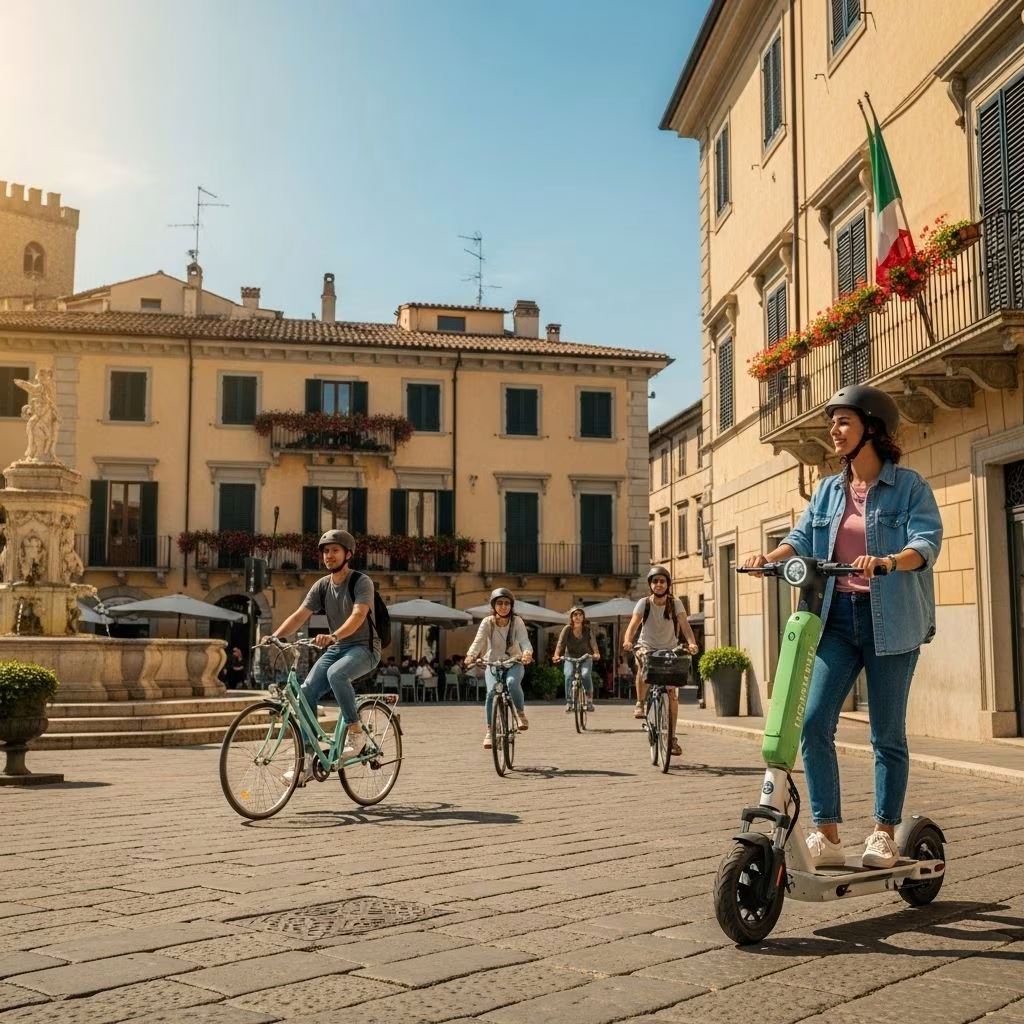
Italy, a nation famed for its stylish cities and vibrant urban cultures, has taken a bold step towards greener mobility. To combat mounting urban pollution and modernize its transport infrastructure, the Italian government introduced a significant incentive: a €500 subsidy for the purchase of bicycles, electric scooters, and other forms of eco-friendly personal transport. This initiative is aimed squarely at reducing city congestion, improving air quality, and encouraging citizens to transition away from fossil fuel-dependent vehicles.
The Ecobonus Initiative: What Is It?
The program, branded as Ecobonus, is a government-funded initiative designed to make eco-friendly transportation options more accessible and appealing to the general population. Beginning March 18, 2025, Italians can apply for this subsidy to offset the cost of qualifying electric bikes, e-scooters, and related two-wheeled vehicles. A total allocation of €30 million has been earmarked for these incentives in 2025, reflecting the growing governmental commitment to sustainable development and emission reduction strategies.
- Launch date: March 18, 2025
- Total funds for 2025: €30 million
- Application window: Until December 31, 2025, or until funds run out
- How to apply: Through the official government platform
Who Can Benefit? Understanding Eligibility
The Ecobonus targets a wide array of potential buyers by encompassing several categories of cycles and motorcycles. Eligibility is extended to new electric and hybrid vehicles across the full “L category,” including:
- L1e: Mopeds (max speed 45 km/h)
- L2e: Three-wheeled mopeds
- L3e: Motorcycles (speed exceeding 45 km/h)
- L4e: Motorcycles with sidecar
- L5e: Three-wheeled motorcycles
- L6e: Light quadricycles
- L7e: Heavy quadricycles
This ensures that a broad spectrum of urban commuters — from casual riders to regular city dwellers—can benefit from the scheme.
How Does the Subsidy Work?
The mechanics of the Ecobonus are structured to reward two types of purchases:
- With scrapping: If you dispose of an older vehicle (Euro 0 to Euro 3 standards), you are eligible for up to 40% off the cost of a new electric or hybrid vehicle, capped at €4,000.
- Without scrapping: If you purchase without scrapping, the incentive is 30% of the new vehicle’s price, with a maximum of €3,000.
For hybrid vehicles emitting between 21 and 120g CO2/km, an incentive of 20% up to €2,500 is available with scrapping. Dealers facilitate the process by reserving subsidies on behalf of their customers using the government portal.
| Purchase Type | Incentive % | Maximum Subsidy (€) |
|---|---|---|
| With scrapping (electric/hybrid) | 40% | €4,000 |
| Without scrapping (electric/hybrid) | 30% | €3,000 |
| With scrapping (hybrid, emissions 21–120g CO2/km) | 20% | €2,500 |
Regional Variations and Additional Local Programs
While the Ecobonus is national, some Italian regions run supplementary incentive schemes. Lombardy, for instance, offers up to €3,500 for transitioning to low-emission vehicles, valid from April 3 to October 31, 2025, subject to available funds. Friuli-Venezia Giulia provides direct aid up to €300 (about 30% of an e-bike’s cost). These regional differences reflect local governments’ willingness to complement the national strategy for clean mobility.
- Lombardy: Up to €3,500 for low-emission vehicle purchases with scrapping
- Friuli-Venezia Giulia: Up to €300 for e-bike purchases
Other European nations also run similar subsidy programs, but Italy’s Ecobonus is notable for its focus on both two-wheeled vehicles and broader mobility options.
Why Focus on Bicycles and E-Scooters?
Bicycles and electric scooters have become symbols of clean, affordable, and versatile urban transportation. Italy’s government recognized their potential to significantly reduce vehicular emissions in dense city centers.
- Health benefits: Promotes physical activity and improves public health
- Lower emissions: Directly reduces carbon dioxide and pollutant output
- Congestion relief: Frees up road and parking space, speeding up urban traffic
- Cost savings: Reduces long-term transportation costs for citizens
The initiative leverages proven strategies from cities worldwide, using financial incentives to accelerate the adoption of greener modes of transport.
Environmental and Economic Impacts
The expected benefits of the subsidy program are both immediate and far-reaching. By accelerating the uptake of clean vehicles, the Ecobonus aims to:
- Cut urban air pollution
- Decrease greenhouse gas emissions
- Promote cycling and active lifestyles
- Stimulate green industry growth
- Encourage the development of supporting infrastructure, such as bike lanes and charging stations
In turn, this leads to a more attractive urban environment and supports Italy’s commitments under the Paris Agreement and European Green Deal.
Challenges Faced by the Ecobonus Program
Despite its advantages, Italy’s Ecobonus and similar subsidies in Europe face several challenges:
- Limited awareness: Not all potential buyers are aware of the scheme
- Short application window: The incentives are available only until funds are exhausted or until the end of the year
- Regional disparities: Not all Italian regions offer equal access or complementary programs
- Dealer participation: Successful implementation depends on participation and transparency at points of sale
How To Apply: Step by Step Guide
Applying for Italy’s Ecobonus is meant to be straightforward, relying on both consumer initiative and dealer involvement. Here’s a typical process for claiming the incentive:
- Choose your eligible electric bicycle, e-scooter, or other qualifying vehicle.
- Visit a registered dealer participating in the Ecobonus scheme.
- The dealer books your subsidy using the ministry’s online portal.
- Complete your purchase and provide any necessary documentation (proof of payment, ID, vehicle details).
- If you are scrapping an old vehicle, submit evidence of de-registration.
- Receive the discount directly on the vehicle’s purchase price.
If you are unsure about eligibility or procedures, the government’s dedicated site and local authorities provide guidance.
Italy vs. Europe: A Regional Comparison
| Country/Region | Subsidy Type | Typical Max Subsidy (€) |
|---|---|---|
| Italy (national Ecobonus) | Bicycles & E-scooters | Up to €3,000/€4,000 (with scrapping) |
| Italy (Friuli-Venezia Giulia) | E-bikes | Up to €300 |
| France (local) | Bicycles/E-bikes | €400–€600+ |
| Germany (BAFA) | Cargo bikes | Up to €3,500 |
| Spain (regional) | Bikes/E-bikes | €600–€700 |
| Belgium | Commuter tax + city | €50–€500 |
| Austria | Cargo bike grants | Up to €1,000 |
Italy’s €500 Ecobonus stands out for its generous eligibility criteria and direct discount approach, encouraging broader market penetration.
Driving Urban Transformation: Expected Outcomes
- Greater adoption: A rising share of daily trips made by bicycle or e-scooter
- Better air quality: Especially in metropolitan centers
- Public support: Higher approval ratings for green policies and urban renewal
- Infrastructure upgrades: Investment in safe cycling lanes and e-scooter docking stations
- Industry innovation: Acceleration of new mobility solution development by Italian manufacturers
The Ecobonus forms part of Italy’s long-term plan to transform its urban mobility landscape.
Addressing Urban Mobility Challenges
Italy’s subsidies also respond to several specific urban mobility challenges, including:
- Heavy congestion: Especially during rush hours in major cities like Rome, Milan, and Naples
- Poor air quality: Exacerbated by high population density and legacy vehicle fleets
- Lack of cycling infrastructure: Historically limited beyond touristic routes
By incentivizing clean vehicles, Italy aspires not only to immediate improvements but also to a sustainable shift in transport culture.
Frequently Asked Questions (FAQs)
Q: Who is eligible for the Italian Ecobonus?
A: Any Italian resident purchasing a new electric bike, e-scooter, or other qualifying vehicle from a registered dealer may apply, subject to funds and category restrictions.
Q: Do I need to scrap an old vehicle to get the highest subsidy?
A: Yes, scrapping an eligible older vehicle qualifies you for the 40% discount up to €4,000, while purchasing without scrapping still provides a substantial 30% incentive.
Q: Can the incentive be combined with regional programs?
A: In some regions, local incentives may complement the national Ecobonus. It is advisable to check local regulations for possible cumulative benefits.
Q: Is there a limit to how many incentives I can claim?
A: Subsidies are awarded per purchase, within the annual allocation and program rules. Once funds are exhausted, no further applications are accepted until the following year.
Q: What happens if funds run out before December 31?
A: Applications are processed on a first-come, first-served basis until funds expire. Those not processed in time must wait until a new allocation is made.
Conclusion: Italy’s Path Towards Cleaner Cities
Italy’s €500 bicycle and e-scooter Ecobonus is more than just a financial incentive — it is a strategic policy for shaping a modern, healthy, and environmentally responsible urban future. By encouraging sustainable choices through targeted subsidies, the government has empowered citizens and businesses alike to join the green mobility revolution, pushing Italian cities toward a cleaner and brighter tomorrow.
References
- https://www.epaddock.it/en/ecobonus-2025-dal-18-marzo-sono-disponibili-gli-incentivi-per-moto-e-scooter-elettrici/
- https://urban-mobility-observatory.transport.ec.europa.eu/news-events/news/ecobonus-cycles-and-motorcycles-italy-eu30-million-available-18-march-2025-2025-04-10_en
- https://fluencebike.com/e-bike-subsidies-europe-2025/
- https://engwe.com/blogs/news/european-electric-bike-subsidy
- https://mobilityportal.eu/new-incentives-italy-lombardy/
- https://www.ternbicycles.com/en/explore/more-from-tern/2024-2025-e-bike-incentive-programs-europe
- https://legendebikes.com/en-fr/pages/ebike-subsidies
- https://www.transportenvironment.org/articles/bicycle-subsidies
- https://engwe-bikes-eu.com/blogs/news/how-to-get-a-free-e-bike