Vienna Shows How Cities Don’t Have to Cater to Cars
As cities globally grapple with congestion, pollution, and declining quality of life, Vienna stands out as a beacon for sustainable, people-focused urban transformation. Through innovative planning, strong political direction, and a commitment to equitable public space, the Austrian capital is proving that prioritizing pedestrians, cyclists, and public transit can create a flourishing city that doesn’t rely on catering to car traffic.
Why Vienna Chose to Rethink Its Streets
Urbanization is a global megatrend, pressuring cities to rethink how precious public space is allocated. Vienna’s historic center – the First District, ringed by the iconic Ringstraße and home to over 16,000 residents – captures this struggle. Nearly two-thirds of road space had been reserved for cars, even as the city’s population and affluence expanded. Vienna’s planners recognized that continuing to favor cars would mean more vehicle trips and a degraded city experience for everyone. Moving away from a car-centric model became a central goal in Vienna’s development strategies, notably in the city’s latest 10-year plan, STEP 2025.
The STEP 2025 Urban Mobility Plan: A Vision for Sustainable Growth
Adopted in 2014, STEP 2025 sets clear targets: by 2025, private cars should account for only 20% of trips, down from 27%, with 73% to be covered by walking, cycling, and public transport. This transformation rests on guiding principles:
- Securing top-quality life for all residents while minimizing resource use
- Creating attractive, accessible public spaces and green zones
- Promoting self-management, inclusivity, and participatory planning
- Committing to climate neutrality and vast reductions in urban CO₂ emissions
Crucially, STEP 2025 takes a broad, consultative approach, involving residents, scientists, politicians, and businesses in shaping Vienna’s future.
Big Changes in Mobility: Putting the “Umlweltverbund” First
Vienna’s pursuit of sustainable travel revolves around the Umlweltverbund, or “environmental alliance”: walking, cycling, and public transit. With the majority already using these modes, the challenge was to expand their share while making them more pleasant and convenient than driving. Strategies included:
- Reallocating road space from cars to pedestrians, cyclists, and transit
- Introducing 30 km/h zones citywide to calm traffic and improve safety
- Establishing shared spaces that blend different users rather than prioritizing vehicles
- Expanding green areas for recreation and relaxation
- Implementing “strolling zones” with equal rights for all modes
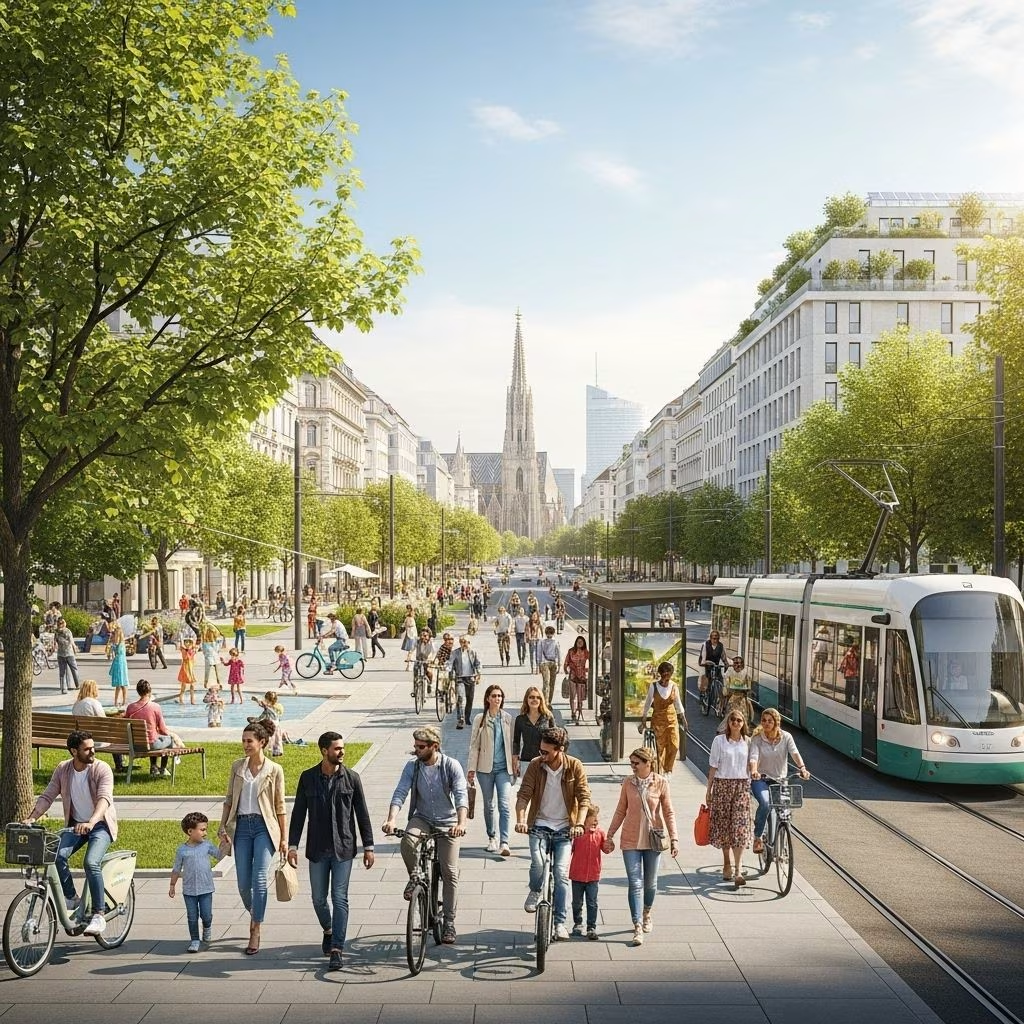
In practice, this means transforming busy roads into vibrant, social spaces. Residential areas are seeing more car-free zones, with the aim not just to restrict driving, but to reimagine streets for people rather than vehicles.
Smart City Wien: Innovating for Climate and Quality of Life
In tandem with STEP 2025, Vienna’s Smart City Wien Framework Strategy lays out long-term goals through 2050. These include:
- Reducing per capita CO₂ emissions from 3.1 tons to just 1 ton
- Phasing out conventional motor vehicles for all city-operated fleets by 2025
- Linking sustainability to the city’s full range of living environments
- Promoting innovation in mobility, energy, and resource use
- Focusing all communication on city dwellers’ experiences, not just new technologies
All municipal vehicles, from garbage trucks to emergency fleets, are shifting to electric power, making city operations a showcase for zero-emissions transport.
The Car-Free Inner City Initiative: From Vision to Reality
In the First District, Deputy Mayor Brigitte Hebein has led plans to create a “car-free inner city”. Covering nearly 2.9 square kilometers, this initiative was designed to drastically cut car traffic without totally banning vehicles. Instead, only vehicles with special permits – such as those needed by residents, businesses, and delivery drivers – would still be allowed, governed by a list of sixteen exception categories.
The move mirrors similar efforts in European cities to reclaim historic centers for people, though in Vienna’s case, it’s notable for the thorough public debate and an emphasis on balancing the needs of residents, businesses, and visitors. The plan’s rollout has involved ongoing political negotiation and consultation with various stakeholders to ensure the changes would be effective and equitable.
Stakeholder Impacts of a Car-Free Center
- Traffic Patterns: Substantial decline in inner-city car journeys, leading to quieter, safer, and more pleasant public spaces.
- Local Residents: Improved air quality, more access to green and recreational zones, safer walking and cycling. Residents with valid needs – such as physical disabilities or business logistics – are protected through permit exceptions.
- Businesses: Adjustments for delivery logistics, but increased foot traffic and potential for stronger local commerce. Experience from similar zones in Europe suggests businesses often benefit after initial adjustment.
- Visitors and Tourists: An enhanced experience, with easier navigation by foot, bike, or transit, and more lively public squares and streets.
Public Transport: Affordable, Efficient, and Integrated
The backbone of Vienna’s car-light mobility is its renowned public transport system. The city operates an extensive and affordable network:
- An annual pass costs only €365 – a symbolic €1 per day for unlimited travel
- Integration with bike-sharing and other rental schemes
- Smart traffic lights that prioritize buses and trams
This approach ensures alternatives to driving are not just available, but enticing for everyone. Vienna’s robust investment means even those living in outer districts have reliable, frequent access to the center, making the city’s modal shift achievable.
Active Travel: Why Walking and Cycling are Winning
Vienna amplifies active travel through expansive infrastructure and targeted campaigns:
- Bicycle network connecting every major district
- Bike-sharing systems in operation for over 15 years, becoming a primary mode for many residents
- Promotion of walking, hiking, and discovering neighborhoods by foot
- Seasonal initiatives like “cool streets” with added greenery, fountains, and spray showers for pedestrian comfort
One in three Vienna journeys is made on foot or by bicycle, a result of deliberate planning that puts active travel at the forefront of urban life.
Equitable Streets and Public Spaces
Beyond just mobility, Vienna is redefining what public space can be:
- Transforming car-dominated roads into recreational, mixed-use public plazas
- Introducing “shared spaces” and “strolling zones” that offer equal priority to walkers, cyclists, and transit riders
- Expanding green spaces and parks accessible to all residents
- Low-traffic initiatives for residential neighborhoods
Street design is not only about transit efficiency but also about livability, mental well-being, and social inclusion.
Policy Innovation and Participatory Planning
Vienna’s achievements rest on deep civic participation. Plans are:
- Drafted in wide consultation with citizens, businesses, and academics
- Shaped via citizen councils representing diverse ages, backgrounds, and needs
- Reviewed for impact on equity, accessibility, and social inclusion
This participatory model ensures that the policies are resilient and responsive to changing urban needs, while building public trust.
Behavioral Change: Putting People at the Heart of Mobility
Technical innovation is paired with strong communication and behavior change campaigns. Vienna’s message is clear: urban travel is a journey of discovery, focused on human experience, not just getting from A to B. To encourage more walking and cycling:
- City campaigns emphasize the enjoyment and exploration found in non-car travel
- Smart City Unit organizes walking, biking, and hiking tours that reveal the city’s hidden gems
- Car-free events and pop-up initiatives transform streets into vibrant social venues
The result is a city where movement is social, engaging, and accessible, reinforcing a virtuous cycle of falling car dependency.
Outcomes: What Vienna’s Approach Achieves
| Metric | Prior to STEP 2025 | STEP 2025 Target | Current Status (2020s) |
|---|---|---|---|
| Car mode share | 27% | 20% (by 2025) | Trending toward target due to strong policies |
| Public/active modes share | 73% | 80% | Steadily increasing |
| Annual CO₂ emissions per person | 3.1 tons | 1 ton (by 2050) | Ongoing reduction, with full municipal electrification by 2025 |
| Municipal vehicle electrification | Partial (ICE vehicles common) | Full by 2025 | Most city fleets already electric |
Frequently Asked Questions (FAQs)
Q: Is Vienna completely banning private cars from its center?
No, Vienna’s “car-free” initiative grants exceptions for residents, businesses, and others with valid needs, using a permit system to balance access with reduced congestion.
Q: How does Vienna ensure public transport is a viable alternative to driving?
Vienna offers one of the world’s most affordable, comprehensive transit systems, with an annual pass costing €365. Frequent, reliable service covers all major districts, ensuring accessibility for everyone.
Q: What impact does reducing car traffic have on local businesses?
While businesses must adjust delivery logistics, experience from Vienna and similar European cities shows that increased foot traffic and public space often boost local commerce once changes are implemented.
Q: What are ‘strolling zones’ and ‘shared spaces’?
These are areas where pedestrians, cyclists, and vehicles have equal priority, designed to calm traffic and create vibrant environments for social interaction.
Q: How is behavioral change encouraged?
Vienna uses proactive campaigns and events to reframe movement as a pleasurable discovery, promotes non-car travel through incentives, and connects people with the city’s natural and cultural assets by walking and biking.
Lessons for Other Cities
Vienna’s success demonstrates that:
- Urban transformation is possible at scale when policy targets are ambitious, participatory, and sustained
- Public and active travel can thrive with investment, smart pricing, and supportive urban design
- Reimagined streets enrich social and commercial life, advancing sustainability and inclusivity
- Equitable, people-first cities must continually balance access, quality of life, and resource use
As cities worldwide face climate, quality of life, and health challenges, Vienna’s trajectory offers hope and guidance for building urban futures that do not cater to cars, but to people.
References
- https://jerom-theunissen.format.com/vienna
- https://accilium.com/en/a-car-free-inner-city-implications-on-locals-and-businesses/
- https://digitalcommons.chapman.edu/cgi/viewcontent.cgi?article=1225&context=localgovernmentreconsidered
- https://govinsider.asia/intl-en/article/vienna-a-city-in-the-fast-lane-of-the-smart-mobility-revolution-ina-homeier
- https://news.medill.northwestern.edu/chicago/viennas-public-transit-works-for-the-environment-but-not-for-everyone/
- https://eurocities.eu/latest/viennas-vision-for-automated-mobility/
- https://www.wypr.org/2025-06-15/could-this-city-be-the-model-for-how-to-tackle-the-housing-crisis-and-climate-change
- https://citychangers.org/the-case-for-car-free/
- https://smartcity.wien.gv.at/en/car-free-living/