


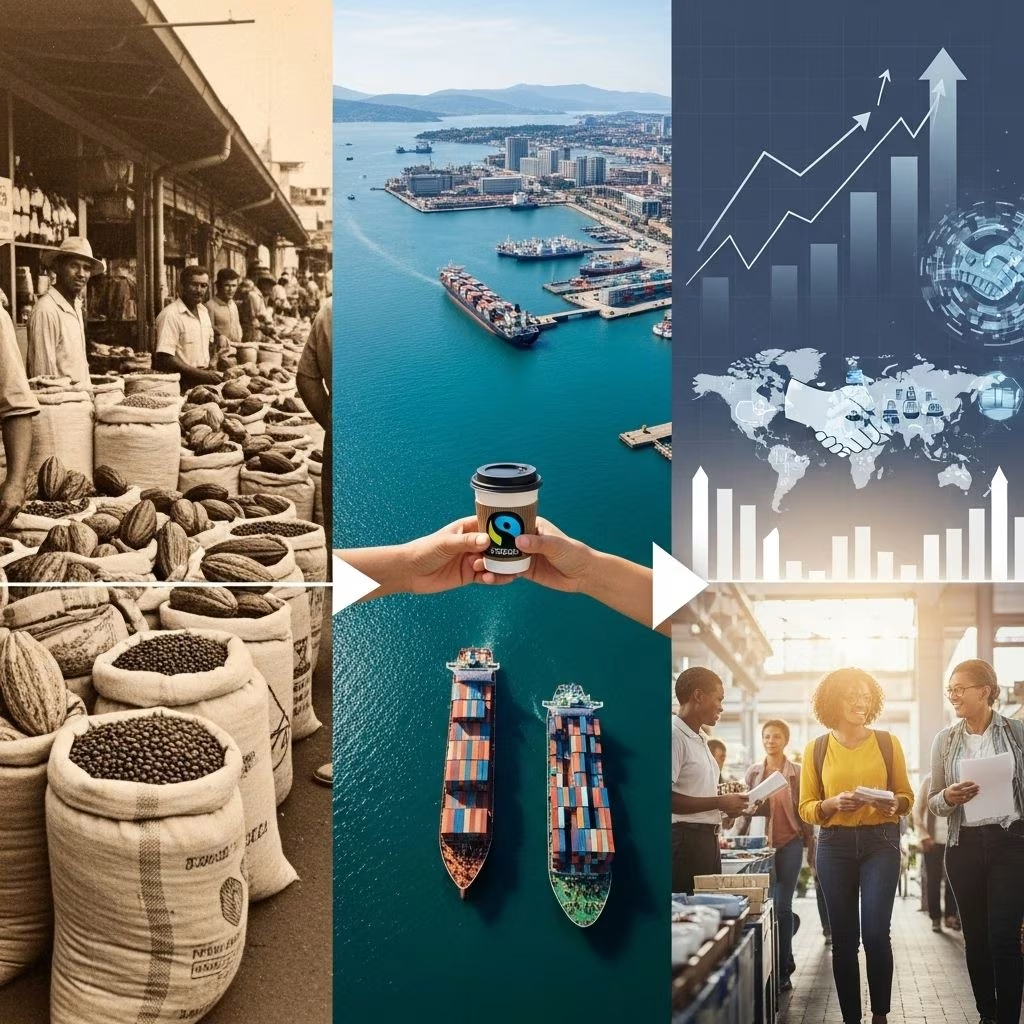
Fair Trade: From Its Origins to Modern Challenges and Future Prospects
Fair trade is widely recognized as one of the most influential consumer-driven movements of the past century. What began as a grassroots effort to improve the livelihoods of disadvantaged producers has now grown into an international standard, reshaping global supply chains and raising awareness about ethical consumerism. Nevertheless, fair trade’s triumphs are tempered by growing debate around its effectiveness and future role. This article offers a comprehensive overview of fair trade’s beginnings, impact, criticisms, and the complex landscape it faces in modern markets.
Introduction to Fair Trade
Fair trade is a social movement and market approach designed to provide better trading conditions and promote sustainability for farmers, artisans, and workers in developing countries. At its heart, fair trade seeks to empower marginalized producers, offering them a fair price, stable market access, and support for community development.
The movement has gained popularity as consumers increasingly demand products that are not only high-quality but also ethically sourced. Coffee, chocolate, bananas, and cotton, among other items, have become symbolic commodities in the global fair trade marketplace.
Origins and Evolution of Fair Trade
Fair trade’s roots can be traced to the post-World War II era, when faith-based groups and grassroots organizations began creating direct trade links with producers in the Global South. Early efforts focused on handicrafts—such as woven baskets and textiles—sold in churches and local markets to raise awareness and generate income for disadvantaged communities.
- 1940s-1950s: Humanitarian concern fuels the creation of alternative trade organizations (ATOs).
- 1960s-1970s: The movement expands, with a focus on “trade not aid”; Oxfam and Ten Thousand Villages play key roles.
- 1980s-1990s: Fair trade enters mainstream retail; certification and labeling systems flourish, led by organizations like Fairtrade International (FLO).
- 2000s-Present: Fair trade becomes a global phenomenon, transforming a range of industries from agriculture to fashion and beauty.
Core Principles and Practices
The foundation of fair trade is built upon several key principles. These are designed to help producers escape poverty cycles, foster community well-being, and ensure environmental responsibility:
- Fair Payment: Producers receive a minimum guaranteed price and, in many cases, a premium to invest in community projects.
- Direct Trade: Buyers strive to minimize intermediaries, ensuring more proceeds go directly to producers.
- Democratic Organization: Cooperatives and worker associations manage decision-making and profit distribution.
- Environmental Sustainability: Production is ecologically friendly, discouraging harmful practices and promoting organic and regenerative methods.
- No Child or Forced Labor: Strict oversight ensures labor rights and dignity for all workers.
- Capacity Building: Investment in producer education and infrastructure strengthens community resilience.
Many fair trade organizations also stress transparent supply chains, gender equity, and respect for cultural heritage in their standards.
Impact on Producers and Communities
Fair trade’s influence is most apparent in rural regions across Africa, Latin America, and Asia, where smallholder farmers and artisans face market volatility and limited bargaining power. The movement’s interventions have resulted in:
- Improved Earnings: By providing stable, fair prices, producers often enjoy greater financial security.
- Community Development: Premiums fund schools, clinics, infrastructure, and gender empowerment initiatives.
- Better Working Conditions: Enhanced safety, health, and labor rights benefit workers, especially in agriculture.
- Ecological Gains: Many fair trade-certified farms adopt organic methods and invest in long-term soil health and biodiversity.
Case studies of coffee cooperatives in Latin America or cacao farmers in West Africa illustrate not only increased household incomes but also broader social benefits—from improved education to democratic self-governance.
The Rise of Certification and Labeling
One of the most transformative developments in fair trade history has been the emergence of third-party certification systems. These ensure that products meet rigorous standards and give consumers confidence that their purchases truly support ethical practices.
| Certification Organization | Key Features | Notable Sectors |
|---|---|---|
| Fairtrade International (FLO) | Global standards; minimum price; development premium | Coffee, tea, chocolate, fruit, cotton |
| Fair Trade USA | US-based; broad coverage; independent auditing | Agriculture, seafood, apparel |
| World Fair Trade Organization (WFTO) | Focus on small producers, crafts, and advocacy | Handicrafts, textiles, food products |
| Rainforest Alliance (sometimes overlaps) | Environmental and social standards; wildlife conservation | Coffee, cocoa, bananas, tea |
These labels have become familiar fixtures in grocery stores and coffee shops. However, the proliferation of competing certifications, each with distinct criteria, has led to confusion among consumers and accusations of “greenwashing”—where brands seek ethical credibility without substantial practices.
Criticisms and Controversies
While fair trade has achieved significant progress in transforming global supply chains, the movement is not without controversy. Experts, activists, and producers themselves have raised several concerns:
- Effectiveness: Studies indicate that not all certified producers see meaningful improvements in livelihood, and benefits can be unevenly distributed.
- Certification Costs: The expense and administrative complexity of certification can exclude the smallest or poorest producers.
- Market Limitations: Premium pricing can prevent widespread adoption, while oversaturated markets dilute impact.
- Labor Rights Issues: Incidents of labor abuse and inadequate enforcement have led some critics to question the reliability of certifications.
- Corporate Involvement: The entry of multinational brands has further complicated the sector, with some accused of using fair trade labels for marketing while maintaining exploitative practices elsewhere.
Recent reports have also examined cases where so-called “fair trade” certified plantations were found violating labor rights, sparking debate over the integrity and oversight of major certifying bodies.
The Future of Fair Trade
The ongoing evolution of fair trade faces both promise and peril. Rapid globalization, technological innovation, and changing consumer habits continue to reshape the movement. Some observers argue that the rise of direct trade and small-batch artisanal production—circumventing large certification systems—will create new opportunities and challenges for ethical sourcing.
At the same time, fair trade advocates stress the importance of adapting standards to better serve small producers, improving transparency, and integrating new forms of social and environmental accountability. Emerging sectors such as sustainable fashion and digital technology are also likely to play key roles.
Ultimately, the survival and success of fair trade will depend on its ability to deliver real benefits for producers and communities—while maintaining the trust and engagement of a new generation of consumers.
Frequently Asked Questions (FAQs)
Q: What is the difference between fair trade and regular trade?
A: Fair trade ensures minimum prices, direct relationships, and investment in social and environmental welfare, whereas regular trade often prioritizes low costs and profits, with less concern for producer welfare.
Q: What products are typically fair trade certified?
A: Common fair trade items include coffee, chocolate, tea, bananas, sugar, cotton, handicrafts, and increasingly, clothing and cosmetics.
Q: How can consumers identify fair trade products?
A: Look for certification seals from Fairtrade International, Fair Trade USA, WFTO, or other recognized bodies on packaging and product displays.
Q: Does fair trade guarantee better wages for all producers?
A: While fair trade often leads to improved incomes, the impact may vary by region, product, and market conditions. Certification does not always ensure equivalent benefits for every participant.
Q: Is fair trade always environmentally sustainable?
A: Most fair trade standards promote environmentally-friendly practices and stewardship, but sustainability levels can vary between organizations and products.
Conclusion
The fair trade movement has catalyzed a revolution in consumer awareness and business ethics. By championing the rights of producers and communities, it has created pathways to justice and sustainability, even as it grapples with significant internal and external challenges. As fair trade enters a new era, its capacity for innovation, adaptation, and accountability will determine its place in shaping a more equitable global economy.
References
- https://successfullysustainable.com/eco-friendly-gifts-for-the-tree-hugger-in-your-life/
- https://fairworldproject.org/news/in-the-news/
- https://imveloltd.co.uk/7-best-sustainability-blogs-you-should-sign-up-for/
- https://chicagofairtrade.org/fair-trade-resources/read/
- https://www.patagonia.com/stories/the-original-tree-huggers/story-71575.html


