How to Identify Elm Trees: A Comprehensive Guide
Elm trees have long provided shade and character to landscapes across North America, Europe, and Asia. With over 30 recognized species worldwide, this guide will help you confidently distinguish elms from other trees by outlining their prominent features, growth habits, and notable species. Whether you are a dedicated naturalist, a homeowner, or a city planner, learning to identify these trees can foster appreciation—and aid in their preservation amid environmental threats like Dutch elm disease.
Key Characteristics for Identifying Elms
While there are differences among various elm species, most share several unmistakable traits. Correct identification relies on careful observation of several features:
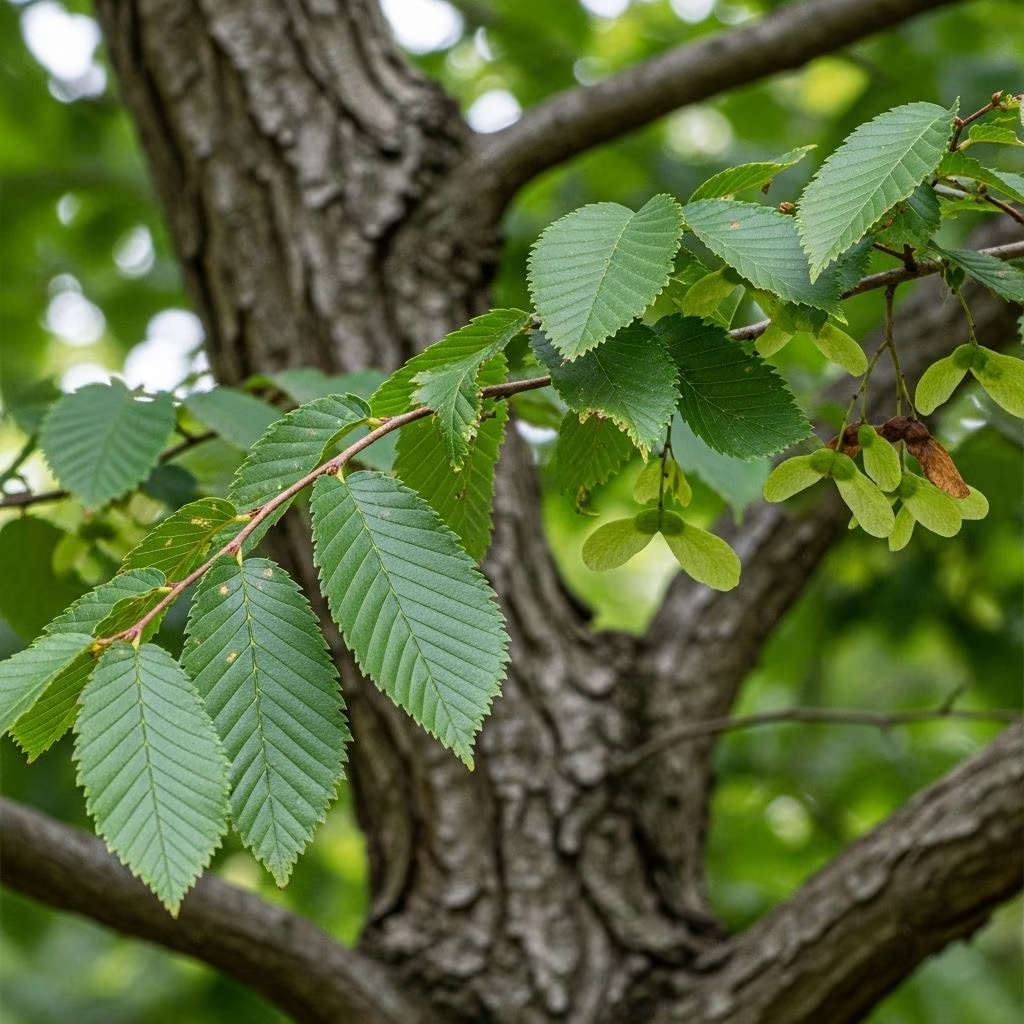
- Leaves: Elm leaves are usually oval or oblong, featuring jagged (serrated) edges and a pointed tip. The leaf base is typically asymmetrical. Leaf arrangement alternates along the stem, and many species have smooth leaf surfaces above and slightly fuzzy undersides.
- Bark: The bark is generally rough and deeply furrowed, exhibiting a gray to grayish-brown color, except for a few species like the European white elm, whose bark remains smooth into maturity.
- Shape: Elms often develop a classic vase-like or fountain-like shape, especially in open environments. This graceful habit makes them distinct street and lawn trees.
- Trunk: Elm trunks commonly split low to the ground, forming multiple large branches that arch outward and then downward, creating a weeping effect in full maturity.
- Height & Spread: Depending on variety, mature elms usually reach 18–35 meters (60–115 feet) in height, with widths ranging from 9–18 meters (30–59 feet) or broader.
- Roots: Elm roots are often visible at the base of the tree and can spread widely, providing a sturdy anchor but sometimes disrupting sidewalks and lawns.
- Flowers & Seeds: Elm flowers are generally small, clustered, and inconspicuous but can aid identification when in bloom. Seeds called samaras are flat, round or oval, and encased in a thin, papery wing.
Common Traits Table
| Characteristic | Typical Elm Traits | Notable Species Variations |
|---|---|---|
| Leaf Shape | Oval, pointed tip, serrated edge, asymmetrical base | English elm: smaller, rounded; White elm: more veins |
| Bark Texture | Rough, deeply furrowed Gray-brown | European white elm: smooth bark; Siberian elm: can shed bark revealing orange/green layers |
| Growth Habit | Vase-shaped, branching low on trunk | Some hybrids less symmetrical |
| Height | 18–35 meters (60–115 feet) | American elm: up to 39 m (128 ft) |
| Notable Features | Alternate leaf arrangement, visible roots, winged seeds |
Step-by-Step Elm Identification
1. Examine the Leaves
Start by assessing the leaf. Elm leaves:
- Alternate along the branch (not directly opposite each other).
- Are oval, tapering to a pointed tip.
- Possess jagged, toothed edges and prominent, parallel veins (typically 10–17).
- Show asymmetrical bases—one side of the leaf base sits lower on the stalk than the other.
- Exhibit smooth upper surfaces with slightly fuzzy undersides in many species.
- Change colors seasonally, turning yellow in the fall.
2. Inspect the Bark
Elm bark is usually rough, featuring intersecting ridges and deep furrows. The color can vary from light gray to dark brownish-gray.
- American elm: Ashy gray bark with flat, braided-like ridges and diamond-shaped fissures.
- Siberian elm: Can exfoliate, revealing orange or greenish inner bark.
- European white elm: Maintains a smooth bark, even as the tree matures.
- Cedar elm: Light, purplish-gray bark texture.
3. Assess the Tree’s Shape and Structure
- Mature elms generally display a wide, vase-like profile, especially when grown in open areas.
- Trunks tend to split into large ascending branches some distance from the ground, then arch in a curved or weeping pattern toward the canopy’s edge.
- Trees often display two or more primary trunks branching from the base. If a tree has a single, straight trunk up to the tip, it’s unlikely to be an elm.
4. Consider Geographic Location
- American Elm: Predominante in the eastern United States, from the Rockies eastward, but also found in California.
- Siberian Elm: Native to central Asia, Mongolia, northern China, Siberia, India, and Korea; now commonly naturalized in western U.S.
- English Elm: Historically widespread in the UK and parts of Europe, now rare due to Dutch elm disease.
Knowing the region can help rule out or confirm certain species.
5. Observe Seasonal Changes
- Spring: Many elms burst forth with clusters of small, reddish (English) or purple (European White Elm) flowers before the leaves emerge.
- Late Spring/Early Summer: Look for samaras, the seeds, which are round, flat, and encased in a membranous wing that aids in wind dispersal.
- Fall: Leaves often turn bright yellow before dropping for winter (elms are deciduous).
- Winter: Bare branches more clearly reveal alternate leaf bud arrangement and classic elm architecture.
6. Check for Dutch Elm Disease
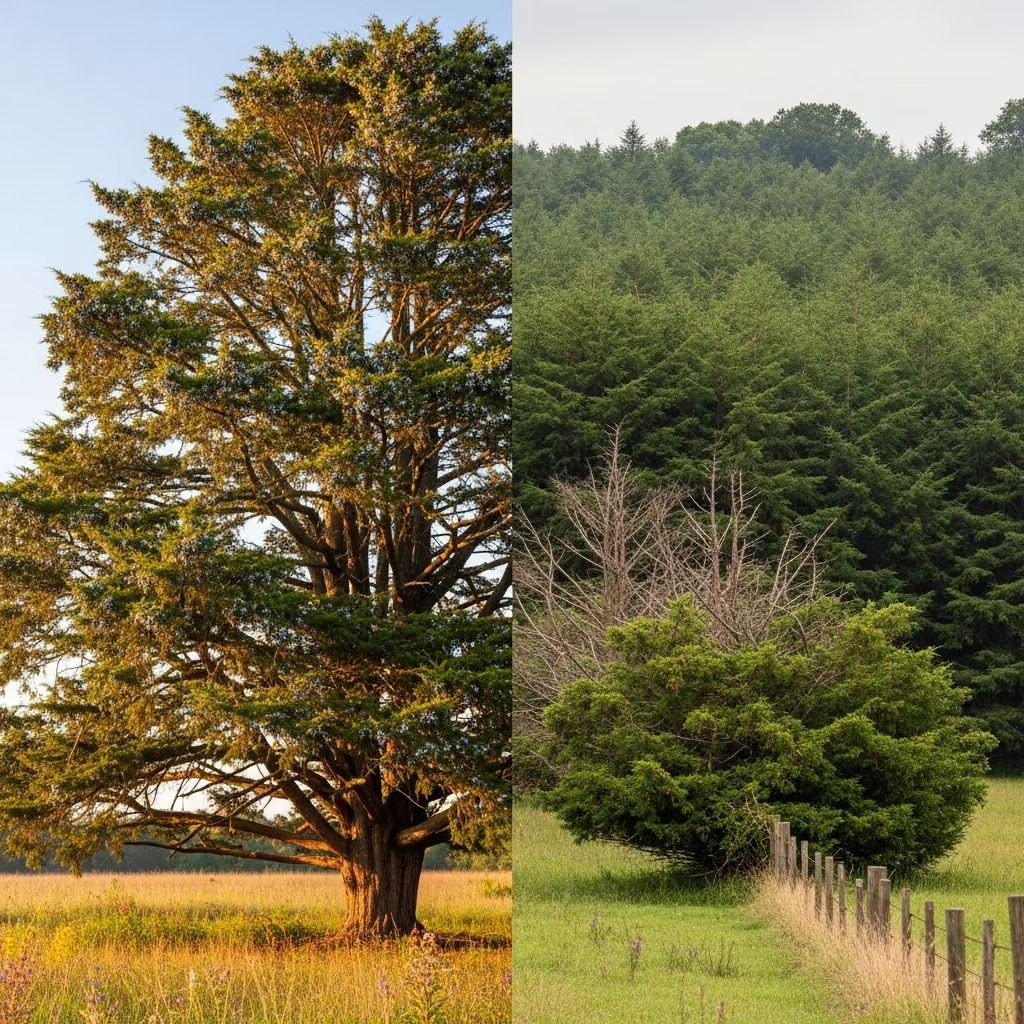
This devastating fungal disease has heavily impacted native elms worldwide. Signs include sudden wilting, browning, and death of leaves and branches, often starting at the crown and moving downward. The disease affects true elms exclusively, which means noticing symptoms can sometimes confirm that a tree in question is in fact an elm.
Major Elm Species: Detailed Profiles
American Elm (Ulmus americana)
Once considered the quintessential street and park tree in North America, the American elm is beloved for its stately, umbrella-shaped form and tolerance of urban conditions—which unfortunately made it exceedingly vulnerable to Dutch elm disease.
- Size: Typically 18–35 m (60–115 ft) tall, with exceptional individuals reaching up to 39 m (128 ft).
- Leaves: 10–15 cm (4–6 in) long, simple, deeply serrated, tapering to a tip, smooth above and slightly hairy below.
- Bark: Ashy gray with thick, flat, spongy ridges and diamond-shaped crevices; younger bark can feel almost spongy to the touch.
- Growth habit: Vase-like with a spreading canopy and branches that arch upward and then ‘weep’ at the ends.
- Seeds: Prolific seed producer. Samaras are small, round, and thin, forming in clusters.
- Native range: Eastern United States, floodplains and wet habitats, but adaptable to a wide range of soils.
- Wildlife value: Provides food for squirrels, mice, possums, and several bird species.
- Life span: Long-lived, commonly reaching 175–200 years; some specimens survive over 300 years.
English Elm (Ulmus procera)
Once iconic in the United Kingdom, English elms formed sweeping avenues and windbreaks. Their numbers have declined drastically due to Dutch elm disease, but some suckers and hybrids persist.
- Size: Medium to large; mature trees can reach 30–35 m (99–115 ft).
- Leaves: About 10 cm (4 in) long, 7 cm (2.5 in) wide; generally rounder, with 10–12 veins per leaf and a less noticeably asymmetrical base compared to American elm.
- Bark: Deeply ridged and furrowed, but not as coarse as American elm.
- Growth habit: Upright and tall when unrestricted, frequently found as suckers from parent stumps due to the species’ propensity for vegetative reproduction.
- Flowers: Red-tinged clusters appear in early spring before the leaves.
European White Elm (Ulmus laevis)
- Size: Up to 30 m (98 ft) tall.
- Leaves: Feature up to 17 parallel veins on the upper surface and 14 beneath, more symmetrical than other elms.
- Bark: Exceptionally smooth, even when mature, distinguishing it from most other elms.
- Seeds: Large, rounder samaras, dispersed by wind and water.
Siberian Elm (Ulmus pumila)
This rugged species, sometimes called Asiatic or Chinese elm, is highly adaptable to harsh and arid environments.
- Size: Smaller than many elms, typically reaching 15–20 m (49–66 ft).
- Leaves: Relatively small, narrow, and smooth, with less obvious serration compared to American or English elms.
- Bark: Often exfoliates, peeling away to reveal green or orange underlayers, helping distinguish it from other elms.
- Native range: Central Asia, China, Siberia, Mongolia, and northern India; now a common street and yard tree in the western U.S., especially the Great Plains, due to drought resistance.
Cedar Elm (Ulmus crassifolia)
- Size: 24–27 m (80–90 ft) when mature.
- Leaves: Thick, small, and rough-textured, contributing to its name.
- Bark: Lighter, purplish-gray compared to other elms.
- Occurrence: Native to southern United States and northern Mexico; prefers limestone soils.
Diagnosing Disease and Environmental Stresses
Elm trees face significant threats from both pests and environmental changes, chief among them Dutch elm disease—a fungal infection disseminated by bark beetles.
- Disease Symptoms: Wilting, yellowing, or browning leaves, particularly at branch tips or upper crown. Rapid dieback, bark discoloration under the surface, and telltale streaks may appear if bark is cut.
- Environmental Stressors: Drought, soil compaction from urban development, and pollution can weaken elms, leaving them susceptible to secondary infections and pests.
Advanced Tips for Confident Elm Identification
- Use digital resources like the Open Elm Project’s phone app to assist identification with crowdsourced images and location data.
- Carefully compare similar-looking species, such as hackberry trees, which can share some bark and leaf traits but lack the classic elm vase shape and samara fruit.
- In winter, pay special attention to the tree’s silhouette, trunk pattern, and bud arrangement.
- Where possible, consult a local extension service or arborist for confirmation—this is especially critical for community or conservation work.
Frequently Asked Questions (FAQs)
Q: What is the best season to identify elms?
A: Spring and late summer are ideal for identification, as leaves and seeds (samaras) are visible. However, winter can highlight branching patterns and bud arrangement.
Q: Which elm species are most resistant to Dutch elm disease?
A: Siberian elm and some resistant hybrids and cultivars have shown strong tolerance. However, many classic native elms, like the American and English, remain highly vulnerable.
Q: How can you distinguish elms from similar trees like hackberries?
A: Hackberry leaves are often more uneven at the base and the tree’s bark is covered in wart-like growths. Elm leaves have a more uniform serration and pronounced venation, and their fruit is a papery, winged samara.
Q: Are all elms large shade trees?
A: While many elms attain large, spreading forms, some species—like the Siberian elm—grow smaller and less symmetrically. Growth size depends on species and local conditions.
Q: Is it worth planting elm trees today?
A: Yes, especially disease-resistant varieties and hybrids. Elms provide excellent shade, wildlife value, and historical beauty, but careful species and cultivar selection is essential due to ongoing disease threats.
Summary Table: Major Elm Species
| Species | Height (m) | Leaf Description | Bark | Disease Resistance |
|---|---|---|---|---|
| American Elm (U. americana) | 18–39 | 4–6 in., long-pointed, serrated, asymmetrical base | Ashy gray, deep ridges | Low |
| English Elm (U. procera) | 30–35 | Rounded, 4 in. long, 10–12 veins | Deeply ridged | Low |
| Siberian Elm (U. pumila) | 15–20 | Small, narrow, less serrated | Exfoliating, green/orange layers | High |
| European White Elm (U. laevis) | Up to 30 | 17 veins up, 14 below, symmetrical | Smooth even when mature | Moderate |
| Cedar Elm (U. crassifolia) | 24–27 | Small, thick, rough | Pale, purplish-gray | Moderate |
Resources and Further Reading
- Use regional tree field guides and digital identification apps (e.g., Open Elm Project) to cross-reference findings.
- Seek help from local cooperative extension offices and dendrology experts for complex cases.
- Consider participating in citizen science monitoring projects to help track elm health and recovery efforts.