Why Communal Roosts Are Vital to Bald Eagles
Bald eagles are synonymous with American wilderness, strength, and majesty. Yet, behind their imposing appearance lies a nuanced social life, underscored by a remarkable phenomenon: communal roosts. These are locations where eagles gather in groups, sometimes numbering in the hundreds, particularly outside of their breeding seasons. Exploring why communal roosts are vital unveils important ecological, social, and conservation insights about the species.
Understanding Communal Roosting in Bald Eagles
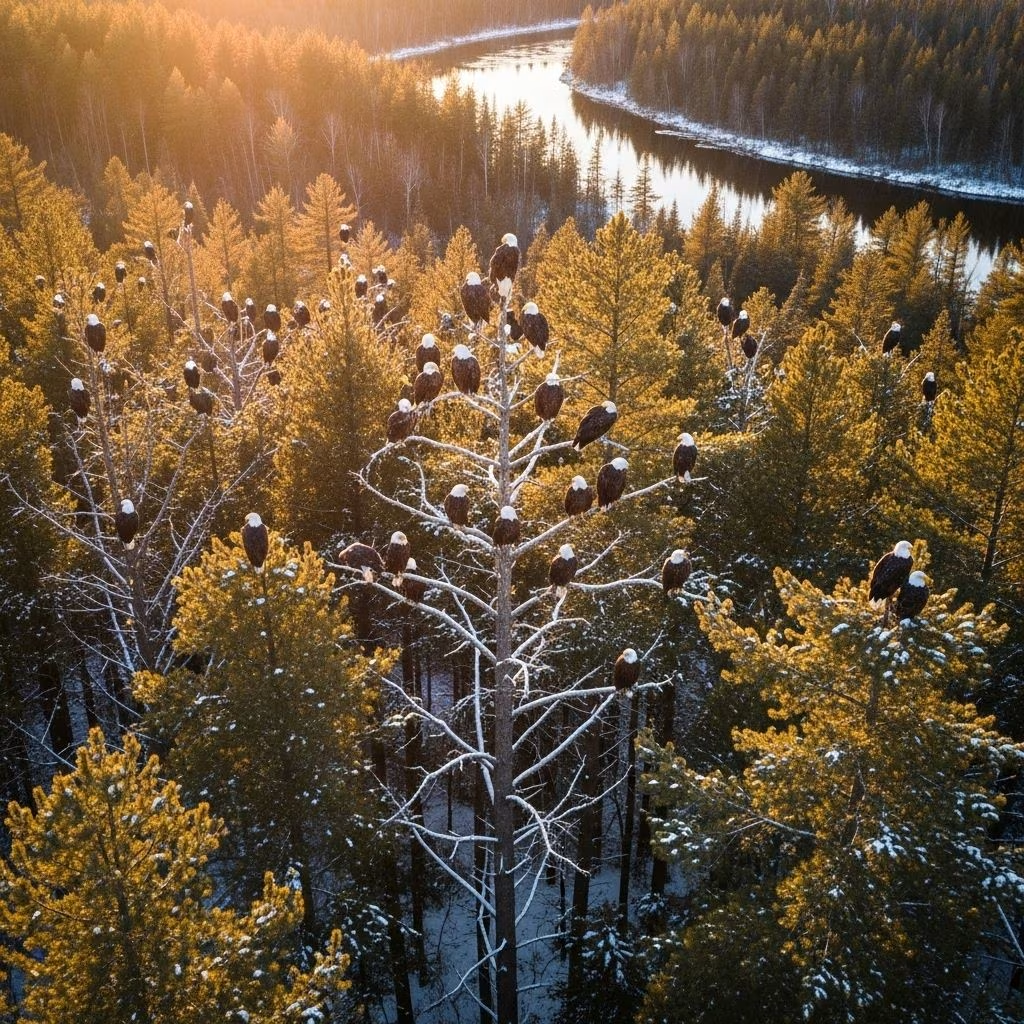
While bald eagles are popularly portrayed as solitary, they display a high degree of social interaction outside of breeding periods. During fall and winter, especially, non-breeding and juvenile eagles congregate at select roosting sites often close to rich food sources such as rivers with abundant fish or open water during freeze-ups. These gatherings can sometimes persist for decades, or form opportunistically wherever food is plentiful.
- Ephemeral vs. Long-term Roosts: Some roosts exist briefly to exploit short-term food bonanzas; others are used for generations.
- Size of Roosts: Group size may range from small clusters (2-3 birds) to large flocks (hundreds), depending on the geography and availability of resources.
- Distribution: Roost locations are dispersed across North America, but are often challenging to find due to remote, rugged, or seasonally variable habitats.
The Importance of Communal Roosts
Communal roosts are not just a convenient place for eagles to sleep. They serve several crucial ecological and social roles:
- Thermoregulation: Gathering in groups in protected locations helps eagles conserve body heat during colder months, reducing energy expenditure needed for thermoregulation.
- Social Learning and Hierarchy: Roosts provide opportunities for social interaction where young and sub-adult eagles can learn behaviors, observe feeding techniques, and establish social hierarchies.
- Feeding Opportunities: By converging near reliable food sources, eagles increase their chances of a successful hunt and can observe which areas are yielding the best returns.
- Survival: Communal roosts are particularly important during adverse weather, providing safety and thermal cover that may significantly reduce juvenile and adult mortality rates.
Adaptive Benefits Hypotheses
| Benefit | Description |
|---|---|
| Aid in Food Finding | Eagles observe each other, learning about prime foraging sites and adjusting hunting strategies accordingly. |
| Thermoregulation | Roosting together in favorable microclimates reduces energy loss in winter. |
| Social Structure | Maintaining group cohesion allows for dominance hierarchies and social learning, noted especially among younger birds. |
Roost Site Characteristics
Communal roosts are carefully selected and are distinguished by particular habitat attributes:
- Mature Trees: Roosts often feature large, old-growth trees that can support several large raptors at once, providing stable and exposed branches for easy takeoff and landing.
- Proximity to Water: Roosts tend to be near rivers, lakes, or reservoirs where fish—the eagle’s primary winter food source—are abundant.
- Protection from Disturbance: Preferred roosts offer some degree of protection from wind, predators, and human activity.
- Microclimate: Locations tend to have climatic advantages, such as less exposure to cold winds and higher humidity, aiding the birds’ energy conservation.
Indicators of a communal roost site may include large sticks under trees, copious feathers, droppings (whitewash), and periodic large aggregations of eagles, especially at dusk and dawn.
Conservation Status and Legal Protections
Given their ecological significance, communal roosts are specifically protected under federal law in the United States:
- Bald and Golden Eagle Protection Act (1940): Both nests and communal roosts are protected under the disturb and sheltering provisions of the Act, prohibiting disturbance or destruction of these critical habitats.
- National Bald Eagle Management Guidelines: These guidelines outline best practices for identifying, monitoring, and protecting both nests and communal roosts on public and private lands.
- Enforcement: Despite legal protection, management focus has historically prioritized nest sites over communal roosts, resulting in gaps in systematic roost identification and monitoring.
Recent advances, including national initiatives to map and monitor roosts with satellite telemetry, seek to correct these oversights and support effective protection measures.
Threats Facing Eagle Communal Roosts
Despite their importance, communal roosts are under threat from various pressures:
- Habitat Loss: Logging, land development, and agricultural expansion reduce the prevalence of old-growth trees and undisturbed riparian forests critical for roosts.
- Human Disturbance: Recreational activities, noise, and encroachment near roost sites can disrupt eagle behavior, leading to abandonment of traditional sites.
- Climate Change: Alterations in hydrology, food availability, and weather patterns may impact the location and stability of roost sites.
Many communal roosts are located in remote areas, making them difficult to identify, monitor, and manage proactively.
The Role of Science and Tracking in Roost Protection
Addressing information gaps remains a key challenge in roost protection. Advances in technology have transformed our understanding:
- Satellite Telemetry: Ongoing projects, such as those managed by the Center for Conservation Biology (CCB), use GPS transmitters to collect detailed nighttime and roosting locations of eagles across their range.
- National Eagle Roost Registry: Launched to systematically collect and aggregate information on roost locations, involving both researchers and citizen scientists in conservation efforts.
- Signs of Roosts: On-the-ground identification relies on traces such as whitewash, molted feathers, and pellets below favored trees.
The accumulation of such data informs conservation priorities and aids in the legal and practical protection of these critical habitats.
Management Recommendations for Roost Protection
- Systematic Identification: Mapping all potential and existing communal roost sites is essential. This includes the use of satellite data and field surveys.
- Habitat Preservation: Protecting large, mature forest stands as old growth (200–400+ years) ensures continued suitable habitat for both nesting and communal roosting.
- Buffer Zones: Establish management zones around key roosts where development and disturbance are minimized.
- Public Awareness: Educating stakeholders—landowners, recreationists, and policymakers—about the significance of communal roosts encourages collaborative stewardship.
- Ongoing Monitoring: Maintaining long-term observation of known roosts to track changes in usage, threats, and population dynamics.
Case Study: Eastern North America Roost Mapping
The CCB, with support from federal and NGO partners, has mapped over 1,000 communal roosts in 17 U.S. states and 5 Canadian provinces, providing an unprecedented dataset for conservation planning. Key learnings include:
- Spatial Diversity: Eagles demonstrate varied roosting patterns, adapting to regional habitat conditions.
- Roost Fidelity: Many individuals show strong preferences for certain roost sites, returning year after year.
- Mixed-age Cohorts: Roosts are used by adults, but particularly by sub-adults and juveniles, reflecting their importance for recruitment and survival.
Why Roost Conservation Matters to Eagle Recovery
After reaching the brink of extinction by the mid-20th century, bald eagle populations have rebounded across North America due to legal protections, banning of harmful chemicals, and targeted conservation programs. Yet, the maintenance and expansion of communal roosts remains integral to sustaining this recovery, especially as eagle populations grow and disperse into new areas.
- Population Health: Secure communal roosts underpin the well-being and recruitment of new individuals.
- Genetic Diversity: Roosts serve as contact zones, promoting gene flow and species resilience.
- Indicator of Ecosystem Health: Because eagle roosts rely on healthy forests and waterways, their presence signals robust ecological function.
Frequently Asked Questions (FAQs)
Q: What defines a communal roost for bald eagles?
A: A communal roost is a site where multiple bald eagles gather to sleep, usually outside the breeding season, often in large, mature trees near food sources and protected from wind and disturbance.
Q: Why don’t most people know where communal roosts are?
A: Many roosts are in remote or inaccessible areas. They are also used mostly at night or in the early morning, making them hard to detect without dedicated effort or satellite tracking.
Q: How can I help protect communal roosts?
A: Support local conservation organizations, respect posted buffer zones near known roost sites, and report observations to registries like the National Eagle Roost Registry, especially if you see large groups of eagles roosting.
Q: Do communal roosts contain both adult and juvenile bald eagles?
A: Yes, though sub-adults and juveniles are most often seen in largest numbers. Adults may also use communal roosts outside their breeding territories, especially in harsh weather.
Q: Are communal roosts used year-round?
A: Communal roosts are most heavily used in winter, especially when food is scarce and weather is harsh. Their use typically declines during the spring and summer breeding season.
Key Takeaways
- Bald eagle communal roosts are essential for species’ survival, health, and recovery.
- Roosts offer protection from cold and disturbance, facilitate learning and social interactions, and reflect ecosystem health.
- Legal protections exist but require stronger enforcement and comprehensive mapping.
- Technology and citizen engagement, through tracking and registry efforts, are advancing conservation of these vital spaces.
Further Reading & Resources
- National Eagle Roost Registry
- Center for Conservation Biology (CCB) Bald Eagle Tracking Project
- U.S. Fish and Wildlife Service – Bald and Golden Eagle Protection Act
References
- https://ccbbirds.org/2014/09/23/national-eagle-roost-registry-launched/
- https://ccbbirds.org/2010/03/02/exploring-eagle-roost-networks/
- https://sitesreservoirproject.riptideweb.com/references/REF23/Volume%202/App10B_WildlifeHabitatModelsMethods/Anthony_et_al_1982_Habitat%20Use%20by%20Nesting%20and%20Roosting%20Bald%20Eagles%20in%20the%20Pacific%20Northwest.pdf
- https://www.nature-track.com/Feb-24-24_Bald_Eagle_Roosts.html
- https://www.fws.gov/Alaska-eagle-nesting
- https://app.leg.wa.gov/wac/default.aspx?cite=220-610-100
- https://avianreport.com/bald-eagle-habitat/