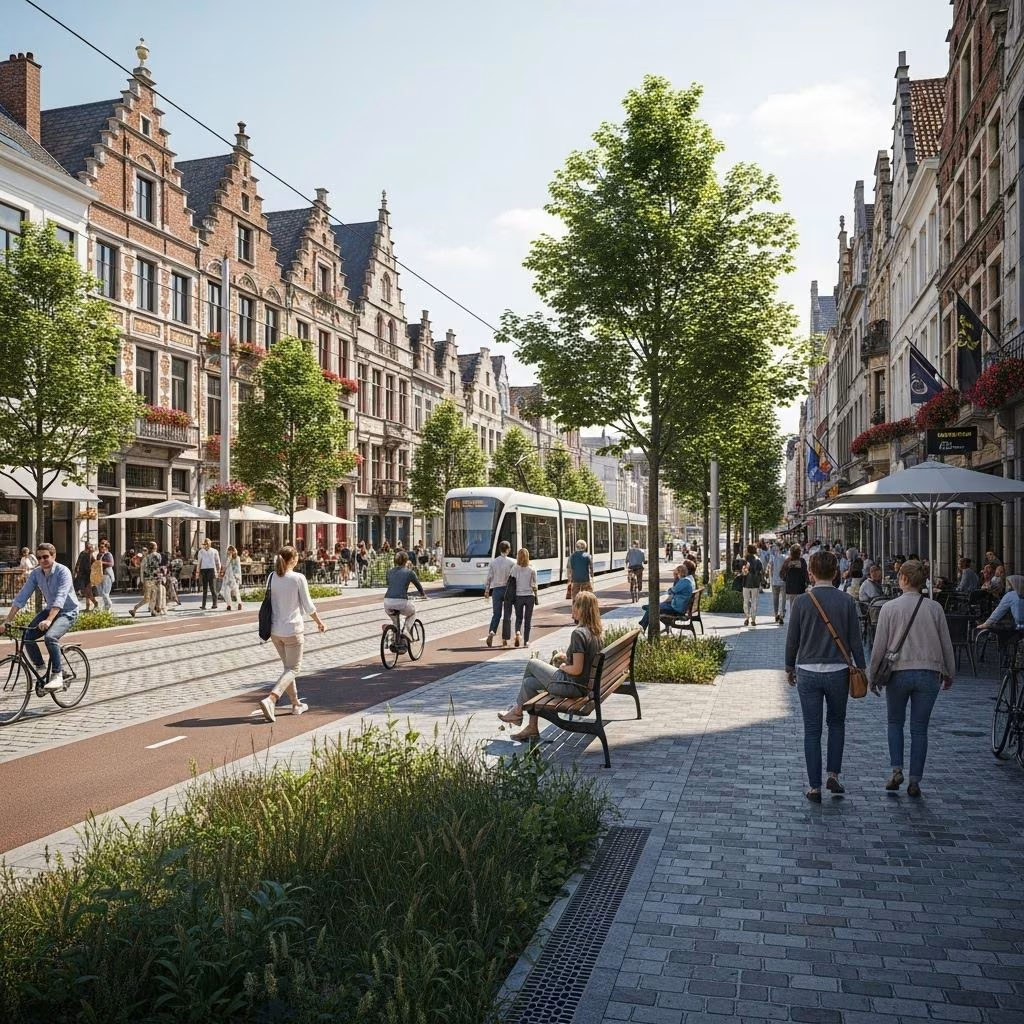
How Ghent Transformed Into a Car-Free City: A Decade of Bold Urban Change
Once struggling under the weight of congestion, noise, and pollution, Ghent—a medieval city in Belgium—has emerged as a European leader in sustainable mobility and urban livability. This transformation was not accidental, but the result of a visionary mobility strategy known as the Circulation Plan. In less than a decade, Ghent radically redesigned its streets, slashed car usage, prioritized biking and walking, and created public spaces for people. This article details how Ghent changed its urban landscape and what other cities can learn from its journey.
Background: Ghent’s Challenges Before the Circulation Plan
By the 1980s, Ghent (population approx. 260,000) faced critical urban problems:
- Chronic traffic congestion impacting the medieval city center
- Rising air pollution and noise, causing residents to leave
- Lack of parking space and unsafe streets for cyclists and pedestrians
- Declining quality of urban life and economic activity
This situation sparked public debate and demand for drastic changes in city mobility and public space management.
Designing the Transformation: The Circulation Plan
Ghent spent two years developing its radical Circulation Plan, introduced in April 2017. The plan focused on:
- Creating a car-free city center
- Improving safety, accessibility, and quality of life
- Aiming for climate neutrality by 2050
The city was divided into seven zones—a mostly car-free core and six surrounding zones.
The Zonal Approach: Cutting Out Through Traffic
- Through traffic prohibited: Motorized vehicles (except emergency, buses, and taxis) cannot travel directly between zones, only via the ring road.
- Physical barriers: Concrete blocks, planters, bollards, benches, and virtual lines enforce boundaries.
- Surveillance: Crossing points are monitored, and violators fined to ensure compliance.
- Speed limits: Most urban areas now restricted to 30 km/h to enhance safety.
Parking Policy: Managing Car Access and Incentives
- Selective parking: Above-ground inner-city parking lots removed, replaced with park-and-ride facilities outside the ring road and underground parking in core zones.
- Price zoning: Proximity to the center determines parking fees—the closer to the city center, the higher the cost.
- Resident engagement: Special short-term and resident parking spaces included to address local concerns.
- Control systems: Only drivers with permitted parking access are allowed entry, enforced through technology and regular patrolling.
Implementation: Tactical Urbanism and Rapid Change
Ghent didn’t wait decades to act. The city adopted tactical urbanism—quick, cost-efficient physical interventions. These included:
- Throwing up barriers and planters to reconfigure traffic overnight
- Rapid deployment of signs, markings, and video surveillance
- Stakeholder meetings and feedback loops with residents, businesses, and local authorities
Vice Mayor Filip Watteeuw cited Dutch cities like Groningen and Utrecht as inspiration but noted Ghent improvised with limited funds and time, achieving immediate results.
Shifting Mobility Modes: From Cars to Bicycles, Walking, and Public Transit
| Mode | 2012 | 2019 | Post-Circulation Plan Gains (%) |
|---|---|---|---|
| Car Journeys | 55% | 27% | -28 |
| Bicycle Trips | 22% | 37% | +15 |
| Public Transport | 9% | 20% | +11 |
| Pedestrian Traffic | 14% | 18% | +4 |
Bike ownership in Ghent averages 2.6 bikes per household, fueling a culture of cycling and active mobility.
- Cycle trips: Now 200,000 daily cycle trips post-plan.
- Pedestrian streets: Reserved for foot traffic between 11am and 6pm, creating safe shopping and leisure hours. Cyclists must walk their bikes or risk fines.
- Public transit: Increased service and ridership fueled by better access and lower car use.
Enforcement: Cameras, Fines, and Public Order
- Surveillance systems: Automatic Number Plate Recognition (ANPR) cameras actively monitor zone entry points.
- Penalty structure: Cyclists riding on pedestrian-only areas and vehicles breaching restrictions face fines (e.g., 55 euros).
- Police involvement: Officers regularly patrol to reinforce rules and assist residents.
Quality of Life and Environmental Impact
- Air quality: Urban air pollution fell by up to 25% in three years.
- Road safety: Fewer traffic accidents reported, especially in the city center.
- Urban space: Transition from traffic corridors to vibrant plazas, social spaces, and green venues.
- Resident satisfaction: City surveys report increased happiness, reduced stress, and more outdoor activity.
- Economic resilience: Businesses benefit from increased foot traffic, and the city’s historic quarter is now Belgium’s largest car-free zone at 70 hectares.
Early Results and Surpassing Long-Term Targets
Originally set for 2030, key mobility and environmental targets were achieved by 2019:
- Car traffic more than halved
- Cycling mode share dramatically increased
- Public transport use surged
- Air quality indicators and accident rates improved
- Residents and visitors enjoy a revitalized cityscape and cleaner environment
Ghent’s example has become a template for similar European cities seeking to rebalance streets for people instead of cars.
Community Engagement: Addressing Resistance and Building Support
- Transparency: Ongoing dialogue with residents, business owners, and restaurateurs to address concerns and questions.
- Adaptive approach: Adjustments to parking, zone boundaries, and enforcement made in response to feedback.
- Inclusion: Special permits and protocols for essential vehicles, deliveries, and emergency services ensure critical access while maintaining restrictions.
- Public information: Continuous updates via signage, public meetings, and information campaigns to maintain awareness and support.
Ghent’s Ongoing Urban Evolution
With a steadfast commitment to climate neutrality by 2050, Ghent is further expanding:
- Innovations in shared transport (carshares, bike shares)
- Extended tram networks and enhanced transit connectivity
- Investment in green spaces and sustainable urban infrastructure
The city’s successes continue to draw international attention, especially as host of major urban planning conferences and cycling events.
What Can Other Cities Learn from Ghent?
- Act quickly: Tactical interventions can spark rapid change.
- Prioritize people: Car restrictions open space for walking, cycling, and gathering.
- Community support is vital: Ongoing engagement builds trust and addresses legitimate worries.
- Enforce consistently: Clear rules, technology, and penalty systems uphold new mobility norms.
- Set measurable targets: Track progress and adapt as results emerge.
Frequently Asked Questions (FAQs)
Q: Can cars still enter Ghent’s city center?
A: Private cars can only enter for essential reasons—such as for permitted parking—otherwise, drivers must use the ring road. Emergency services, buses, and taxis have exceptions.
Q: How does Ghent’s Circulation Plan affect local businesses?
A: Businesses have generally benefited from increased foot and bicycle traffic, though some required flexible solutions for deliveries and parking. Early engagement helped smooth the transition.
Q: Are there penalties for breaking traffic zone rules?
A: Yes. ANPR cameras and police patrols enforce fines for unauthorized vehicles and cycling in pedestrian-only areas.
Q: How did Ghent fund its transformation?
A: The city allocated about 145 million euros for barriers, surveillance, parking infrastructure, and public transit upgrades, supported by regional and EU urban mobility grants.
Q: Did air pollution really improve so quickly?
A: Yes. Air pollution dropped by up to 25% within three years of implementing the plan, with further gains expected as car usage continues to decline.
Key Takeaways
- Decisive urban planning can transform city life and environmental outcomes.
- Restricting cars enables thriving public and active transport.
- Community dialogue and adaptive strategies are essential for success.
- Other cities can replicate Ghent’s blueprint within local contexts to achieve similar results.
Ghent’s story shows it is possible to reclaim streets for people in just a few years—reviving the city, creating economic opportunity, and leading the way to a greener future.
References
- https://www.simagazin.com/en/si-urban-en/topics-urban/cities/gent-the-car-free-city/
- https://www.youtube.com/watch?v=sEOA_Tcq2XA
- https://www.transportxtra.com/publications/parking-review/news/73807/ghent-a-city-plan-that-transformed-transport-and-livability/
- https://eurocities.eu/latest/creating-the-cultural-shift-behind-ghents-mobility-revolution/
- https://www.streetfilms.org/featured/ghentstreetfilms
- https://www.ecf.com/en/news/ghents-history-and-future-with-cycling/