


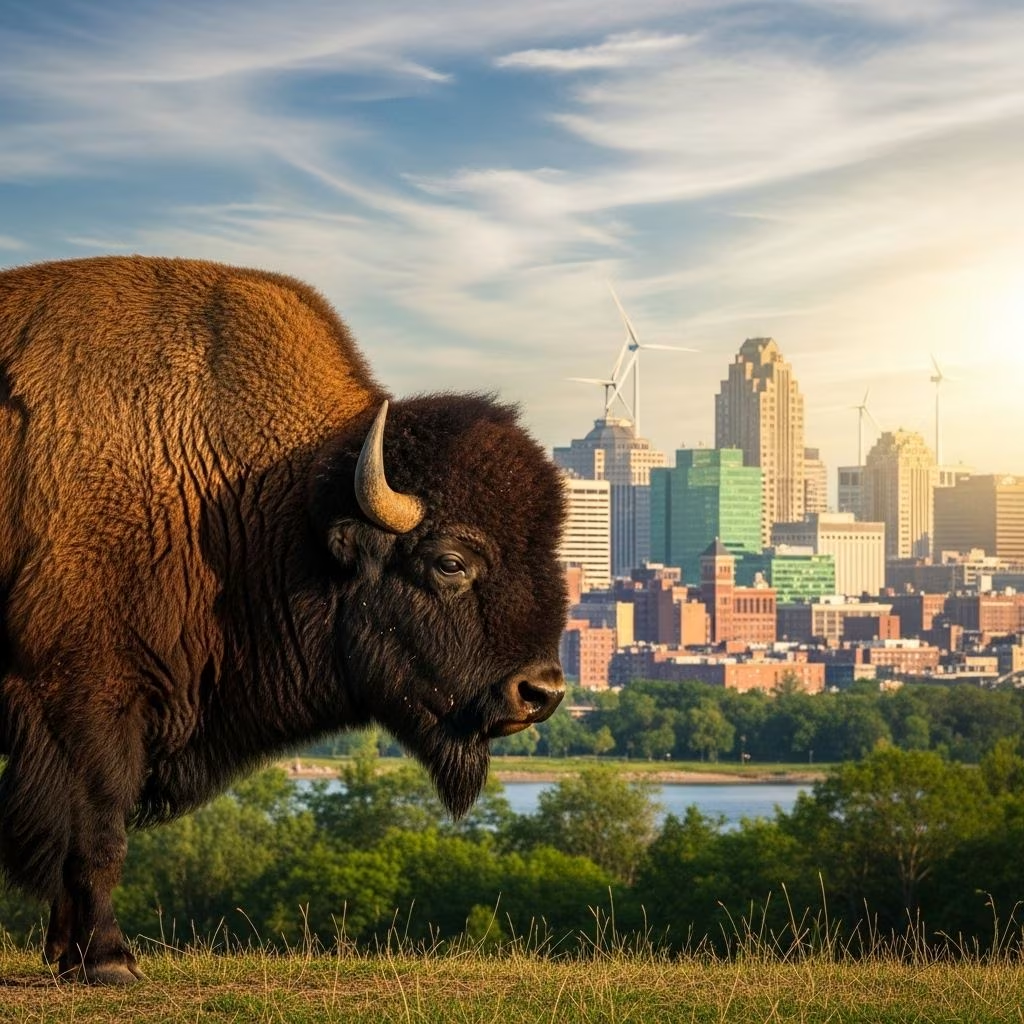
Buffalo’s Bold Gamble: Positioning as a Climate Change Haven
As climate change accelerates, American cities are reckoning with new vulnerabilities: floods, heatwaves, fires, drought, and devastating storms. But in the heart of the Great Lakes region, Buffalo, New York is charting a distinct path—embracing its supposed climate resilience as an economic and social asset. With cold winters and moderate summer heat, a robust water supply, and insulation from coastal threats, city leaders and boosters are branding Buffalo as a potential “climate haven.” The narrative aims to attract migrants fleeing climate disasters elsewhere, drawing new investment, people, and hope for urban renewal.
Understanding the ‘Climate Haven’ Concept
A climate haven refers to a city or region deemed more resilient to the ravages of climate change than most. These locales—often in the northern or interior United States—typically boast:
- Less risk from rising sea levels, hurricanes, and wildfires compared to coastal areas or the Sunbelt.
- Reliable access to fresh water, unlike parts of the West and Southwest facing drought.
- Moderate summer temperatures as global averages rise.
- Fewer acute natural disasters in climate models and historical records.
Buffalo stands with other northern cities like Duluth, Ann Arbor, Madison, and Burlington as part of this emerging push. The promise: “In a world of climate uncertainty, come find safety, community, and opportunity here.” But can any city truly offer sanctuary in the era of global climate disruption?
The Realities Behind the Brand
Experts warn that no place is immune to climate change. “It’s not an oasis; it just sucks less,” observes Stephen Vermette, a professor at Buffalo State University. These cities may face less risk from some hazards, but other vulnerabilities—from winter storms to air quality issues—remain. The “climate haven” mantle is thus a nuanced, and sometimes controversial, marketing tool.
Buffalo’s Climate Profile: Strengths and New Vulnerabilities
Geography plays to Buffalo’s advantage in key ways:
- Summers remain temperate, with average highs in the upper 80s°F, far below cities like Phoenix where summer temperatures can soar to 110°F and beyond.
- Abundant fresh water from Lake Erie guards against drought—a major selling point as many US areas endure water shortages.
- Buffalo sits inland, shielding it from hurricanes and rising sea levels impacting coastal states.
Yet, as the city courts new arrivals, climate risks are changing:
- Western New York’s annual days above 85°F have grown from 15 in 1970 to 23 by 2022.
- Forest fires in Canada have worsened Buffalo’s air quality during summer smokey events.
- Intense winter blizzards, like the 2022 storm that killed 47 people, underline the city’s ongoing exposure to severe weather.
Rather than claiming invulnerability, Buffalo officials acknowledge emerging threats, bolstering emergency response teams and civic infrastructure to cope with both extremes.
Economic Revival: Turning Challenge Into Opportunity
Buffalo is seizing the climate haven narrative to fuel a broader economic revival. As the model of Rust Belt decline begins to shift, city boosters highlight:
- Growth in advanced manufacturing and healthcare sectors, providing jobs and attracting a new workforce.
- Ambitious waterfront redevelopment and the expansion of parks and public transit.
- Efforts to revitalize historic neighborhoods and address housing vacancies.
While Buffalo has not directly branded itself with the phrase “climate haven,” its economic development partners are actively pitching the city as a destination for people escaping harsher conditions elsewhere. The hope is that climate migrants might tip the balance toward growth, similar to the recent influx after Hurricane Maria in Puerto Rico. In fact, the arrival of thousands of Puerto Ricans after the hurricane drove Buffalo’s population growth for the first time in 70 years, according to city planners.
Migration: The Human Factors Driving Buffalo’s Growth
Is climate the main reason people are flocking to Buffalo? The answer is complex:
- Many newcomers cite jobs, affordability, or existing community ties as primary motivations.
- For those escaping disaster-prone regions, Buffalo’s relatively mild climate—at least by future projections—may be a deciding factor when other conditions (such as job opportunities or cost of living) are equal.
- The city’s affordable housing stock offers a significant lure, especially compared to high-priced West and East Coast cities.
However, climate alone does not drive migration. As one local official notes, “I have yet to hear anybody say that they moved to Buffalo based on climate factors, but [it] could be a factor in picking between two otherwise equal cities.” Cohesive narratives and community investment, not just temperature and precipitation maps, shape which people and businesses choose to relocate.
A Closer Look at Buffalo’s Challenges
Buffalo’s evolution requires attention to urgent challenges, especially as growth strains capacity in housing and services. Major obstacles include:
- An expanding need for affordable housing, as over half of renters spend more than 30% of income on rent.
- 7,700 vacant lots scattered across the city, offering potential for infill but also highlighting long-term economic scars.
- The necessity to adapt aging infrastructure to both rising populations and extreme weather.
In response, local policymakers and developers are testing:
- Targeted housing development on vacant land, starting with 12 new single-family homes and plans for 2,000 more, aiming to stabilize neighborhoods and welcome new residents.
- Creation of an Affordable Housing Task Force with recommendations to boost rental fairness, expand the housing supply, and ensure new development remains accessible.
- Partnerships for workforce development to align economic growth with social inclusion as newcomers arrive.
This urgency to “grow responsibly” is heightened by the climate haven vision: as the promise of relative safety draws new people, the city must ensure it does not stumble into traps of inequality or unsustainable sprawl.
Are ‘Climate Havens’ a Myth or Reality?
Rising marketing of cities like Buffalo as refuges from climate disaster has drawn both enthusiasm and skepticism. According to some University at Buffalo researchers, the term risks misleading people into believing in absolute safety: “You’re just switching the type of vulnerability. We’re just vulnerable to different things.” While Buffalo has so far avoided many of climate change’s harshest blows, it faces real risks from heat waves, severe snowstorms, and shifting climate patterns.
Still, the “climate haven” narrative is not without substance. In a world where few winners emerge from the climate crisis, cities with comparative advantages—reliable water, moderate summers, affordable housing, and community resilience—may well attract new opportunities. For Buffalo, such branding is part hope, part strategy, and part recognition of historical and geographic fortune.
Buffalo in Context: Other US Climate Haven Cities
| City | Key Features | Projected Climate Outlook |
|---|---|---|
| Buffalo, NY | Inland, near Lake Erie, cold winters, moderate summers, ample water supply, affordable housing | More heat days, increased rainfall, but insulated from drought and sea-level rise |
| Duluth, MN | Great Lakes region, cooler summers, rebranding as a climate haven, affordable cost of living | Future summers likely to resemble present-day Toledo, Ohio (mid-80s °F highs) |
| Ann Arbor, MI | Proximity to lakes/rivers, robust civic investments, university presence | Projected to remain safe from water scarcity and extreme heat in the coming decades |
| Madison, WI | Inland, high quality of life, strong job market, university town | Increasing diversity in temperature extremes, but lower disaster risk overall |
| Burlington, VT | Northern latitude, cooler climate, strong community assets, abundant water | Likely to experience milder versions of climate impacts than much of the US |
Is Buffalo Ready for Its Refugee Role?
With the climate haven spotlight comes a responsibility—and an opportunity—for deep investment in infrastructure, inclusivity, and forward-looking planning. Buffalo’s recent initiatives show signs of readiness:
- Boosting emergency preparedness with improved snow removal, air quality monitoring, and hazard response teams.
- Expanding and maintaining public transit to ensure equitable access as neighborhoods grow.
- Fostering sustainable development, focusing on housing that matches demographic realities and avoids gentrification.
- Encouraging community input in redevelopment, securing buy-in from both long-term residents and newcomers.
Such efforts signal Buffalo’s pragmatic optimism: confront the risks and seize the chance for a renewed, equitable city. As climate migration becomes a reality nationwide, the actions of so-called haven cities may offer a blueprint—or a warning—for the rest.
Frequently Asked Questions (FAQs)
Q: What qualifies Buffalo as a climate haven?
A: Buffalo’s inland location, proximity to Lake Erie, moderate summers, and relative insulation from sea-level rise and wildfires position it as less vulnerable than many US cities, although it still faces hazards like blizzards and urban heat.
Q: Has Buffalo seen population growth due to climate migration?
A: While few explicitly cite climate as the principal reason for moving, Buffalo attracted thousands of Puerto Rican migrants after Hurricane Maria and has achieved population growth for the first time in decades, suggesting climate resilience is an increasing factor when combined with other opportunities.
Q: What are the key risks for Buffalo in the coming decades?
A: Rising summer temperatures, increased precipitation, air quality events from regional wildfires, and severe winter storms are all emerging threats, demanding comprehensive adaptation efforts.
Q: How is Buffalo addressing affordable housing?
A: The city is building new homes on vacant lots, forming an Affordable Housing Task Force, and seeking ways to increase both the quantity and the quality of affordable housing as population pressure grows.
Q: Can any city become a true climate haven?
A: Experts argue no location is immune from climate change—cities like Buffalo may fare better than many, but must continue innovating and adapting to new and unforeseen challenges.
Key Takeaways for Future Climate Migration
- Check local weather and climate projections before relocating; haven status can change as patterns shift.
- Consider water availability, natural disaster risk, cost of living, and employment market—not just historical weather.
- Stay engaged with local community efforts to foster inclusive, resilient growth.
- Advocate for city plans that center both environmental adaptation and social justice as migration accelerates.
Buffalo’s experiment with the climate haven identity is one watched by planners, policymakers, and migrants nationwide. Its outcome may offer vital clues for how cities anywhere can weather the storm—and potentially thrive—in our warming world.


