


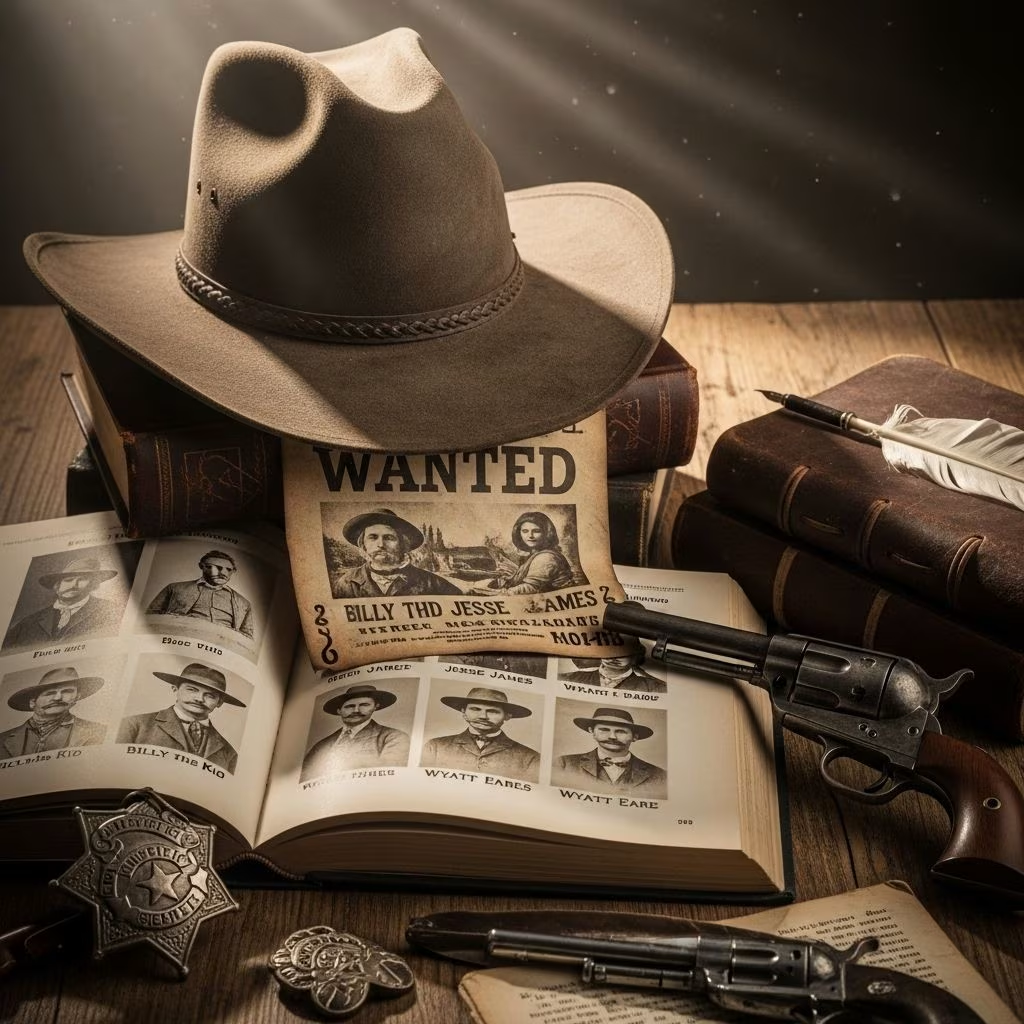
The Real Dirt on America’s Frontier Legends: Separating Fact from Fiction
The lure of the American frontier has spawned countless tales about heroic explorers, battle-hardened scouts, and daring lawmen. Yet, the true stories of many legendary figures often clash with the myths promoted by popular culture, sensationalist journalists, and dime novelists. Jim Motavalli’s exploration of America’s frontier legends aims to uncover the genuine individuals beneath the legends that have captivated generations of Americans.
The Myths That Shaped the West
The Wild West—a phrase that conjures imagery of gunfights, last stands, and rugged individuals—was as much a product of exaggeration and active myth-making as it was of actual history. Characters like Daniel Boone, Davy Crockett, Calamity Jane, Lewis and Clark, Buffalo Bill Cody, and Kit Carson have become fixtures in the American psyche, but the truth is often more nuanced than fiction.
- Sensationalist storytelling in newspapers and dime novels invented or embellished many exploits.
- Wild West shows staged by figures like Buffalo Bill turned real people into living legends, recasting history as entertainment.
- Frontiersmen and women themselves sometimes amplified their own stories to enhance their reputations.
Why We Love Western Legends
The appeal of frontier legends lies in the qualities Americans have traditionally celebrated: self-reliance, bravery, exploration, and the taming of the unknown wilderness. These stories provided ready-made heroes for readers and audiences hungry for adventure, and they were often used to justify westward expansion and concepts like Manifest Destiny. But these same qualities also fueled exaggeration—turning actual events into larger-than-life exploits.
Exploring the Frontier Legends: Fact vs. Fiction
Motavalli’s work takes a deep dive into the biographies of both famous and lesser-known frontier personalities, detailing the disparities between who they were and who popular history tells us they were. The following sections examine several iconic figures, contrasting common myths with the less glamorous, but more fascinating, historical realities.
Daniel Boone: Beyond the Coonskin Cap
- Legend: Boone, clad in coonskin cap, endlessly explored the dangerous wilds and fought off hostile Native Americans, embodying the untamed spirit of the American frontier.
- Reality: The real Daniel Boone was a legislator, land speculator, and businessman as much as a wilderness scout. While he was a skilled woodsman, the image of him as a relentless frontiersman discounts his civic involvement as a Kentucky legislator and his often complicated relationships with both settlers and Native Americans.
- The famous coonskin cap? Boone reportedly disliked it and preferred felt hats.
Davy Crockett: Congressman and Folk Hero
- Legend: Davy Crockett “killed a bear when he was only three,” became a peerless rifleman, and fought to his death at the Alamo in a final blaze of glory.
- Reality: Crockett was indeed a U.S. Congressman and prolific storyteller. The narratives of his backwoods exploits were often manufactured or enhanced, sometimes by Crockett himself for political gain. The details of his death at the Alamo remain contested, with some records suggesting he was killed after the battle, not during a heroic last stand.
Calamity Jane: Between Fact and Self-Invention
- Legend: Jane single-handedly held off attackers, out-drank and out-shot the roughest men of the West, and was constantly embroiled in high adventure.
- Reality: Martha Jane Canary earned her nickname through a mix of self-promotion and actual accomplishment. She did travel with the U.S. Army and worked as a scout, but much of her legend—particularly her relationships with Wild Bill Hickok and her heroic exploits—was magnified by her own tall tales and dime novel writers.
- Some of her most colorful adventures appear to have little or no documentary basis.
Buffalo Bill Cody: Legend by Design
- Legend: Cody built his reputation as an unbeatable hunter and Indian fighter before cementing his fame with his world-famous Wild West shows.
- Reality: Although Cody was a real scout and buffalo hunter, his fame came largely from his own marketing savvy. His Wild West shows attracted enormous crowds across the U.S. and Europe, and he was adept at adapting his persona—and those of others—into marketable myth.
- Cody’s shows blurred the line between entertainment and history, mixing genuine skill with theatrical spectacle.
Lewis and Clark: Adventure, Diplomacy, and the Frontier Reality
- Legend: Lewis and Clark were romantic adventurers who charted unexplored wilderness and overcame all odds on their fabled journey of discovery.
- Reality: The Lewis and Clark expedition (Corps of Discovery) was a federally funded mission marked by painstaking planning and the invaluable assistance of Native American guides, notably Sacagawea. The hardships were real: starvation, illness, in-fighting, and constant negotiation with indigenous nations who were key to their survival. Their story is also one of complex alliances, misunderstandings, and the harsh daily life of moving across uncharted lands.
Kit Carson: From Trapper to National Icon
- Legend: Carson was an unstoppable mountain man with superhuman tracking skills who single-handedly defeated Native American warriors and opened the West to settlement.
- Reality: Kit Carson’s legend was amplified by dime novels and government reports. While he was indeed a competent trapper and guide, Carson also participated in campaigns that led to the forced removal of Native American groups such as the Navajo during the Long Walk, a grim episode often downplayed in folk-telling.
- He was uncomfortable with his fame and viewed much of it as exaggerated.
How Did These Legends Emerge?
The bulk of what we “know” about these figures comes less from their own actions than from the stories told about them—and by them. Many were expert self-promoters, while others had their reputations manufactured by outside forces.
- Dime novels—inexpensive paperbacks flourished in the 19th century, churning out stories of adventure and daring deeds, regardless of fidelity to truth.
- Wild West shows dramatized history, often inviting the real individuals to act out sanitized or inaccurate versions of their lives.
- Sensational journalism and the lure of newspaper sales led to embellishments and, at times, outright invention of key events.
- Those who fit the mold of the day’s ideals of heroism, masculinity, and adventure received the most attention, whether deserved or not.
Table: Frontier Legends — Fact vs. Myth
| Legend | Common Myth | Reality |
|---|---|---|
| Daniel Boone | Fearless woodsman and Indian fighter, always wore coonskin cap. | Legislator and land speculator, preferred felt hats, nuanced relations with Native Americans. |
| Davy Crockett | Killed a bear at age three, glorious last stand at the Alamo. | Storyteller and politician; death at Alamo remains debated. |
| Calamity Jane | Heroic figure, constant adventure, close ties to Hickok. | Some verifiable exploits, but many self-made tales; real role often exaggerated. |
| Buffalo Bill | Greatest Indian fighter, unstoppable scout, built the Wild West alone. | Marketing genius, skilled performer, showman who blended fact and fiction. |
| Kit Carson | Lone mountain man, one-man army. | Talented guide, participant in controversial military actions, fame often uncomfortable for him. |
The Role of Native Americans in Frontier Mythology
The formation of these frontier legends is inextricably linked to perceptions—often misconstrued or vilified—of Native Americans. Myths promoted the image of the West as a lawless battleground, with Native nations cast as obstacles to be overcome, rather than as complex societies with whom settlers engaged in diplomacy, trade, and, at times, conflict. These simplifications served the expansionist narrative but are far from historical reality.
- Figures like Sacagawea and various tribal leaders played key roles that are often overlooked or minimized in popular Western stories.
- The hardships endured by Native nations during westward expansion were immense and are a critical part of the true frontier history.
Women on the Frontier: Myths and Realities
While male figures dominate the popular narratives, frontier women—both settlers and Native Americans—were instrumental in shaping the West. Figures like Calamity Jane are emblematic of how women’s roles have been mythologized, often recast in the mold of male heroes or as mere sidekicks or romantic interests.
- Women ran businesses, managed farms, and sometimes even fought alongside men.
- Native American women played critical diplomatic and survival roles in expeditions like those of Lewis and Clark.
- Myths often ignore or simplify these contributions, but recent scholarship brings their real stories into sharper focus.
What the “Real Dirt” Reveals About America
Peeling back the veneer of myth to explore the real frontier is about more than exposing tall tales. It invites us to understand how national identity and collective memory are shaped. The process of myth-making, whether by self-interested adventurers or opportunistic writers, both reflected and molded American ideals, values, and prejudices.
- Legends helped justify national expansion and cast it as heroic rather than contentious or violent.
- The persistence of these myths shows our deep cultural investment in the idea of the frontier.
- Critically examining these stories helps foster a more nuanced understanding of U.S. history.
Frequently Asked Questions (FAQs) about America’s Frontier Legends
Why were frontier legends so heavily mythologized?
They provided entertainment, inspiration, and national unity in times of transition, and they sold books, tickets, and newspaper subscriptions. Besides, heroes suited to the ideals of the time made for enduring icons that were easy to market.
Were the legends themselves responsible for their larger-than-life stories?
Sometimes. Figures such as Calamity Jane and Buffalo Bill actively shaped their own legends, often blending real exploits with invention or embellishment. Others had myths built around them by journalists, fiction writers, and showmen.
How can we distinguish fact from fiction when it comes to the Wild West?
Relying on contemporary accounts, verified documents, and critical scholarship—rather than sensationalized sources—allows us to arrive closer to the truth. Comparing multiple sources, considering the motivations of storytellers, and recognizing the context of the times are key.
Did dime novels really influence people’s view of the West?
Absolutely. Dime novels, being widely distributed and cheap, reached vast audiences and established the template for Western storytelling—even redefining the images and stories of real figures.
Are any modern retellings of Wild West legends accurate?
Some strive for historical rigor, but entertainment media often continue the tradition of exaggeration. Scholarly biographies and primary documents are the best sources for accuracy.
Conclusion: The Power—and Peril—of the American Frontier Legend
The enduring popularity of Wild West figures attests to the power of myth in American life. Yet, as Motavalli’s work demonstrates, the true stories are often richer, more complex, and more compelling than the tales handed down through popular culture. Understanding the “real dirt” on America’s frontier legends is not just an academic exercise—it’s an invitation to reconsider how we construct our history, honor genuine achievement, and recognize the nuance at the heart of the American experience.
References
- https://www.historynet.com/book-review-the-real-dirt-on-americas-frontier-legends/
- https://www.hamiltonbook.com/the-real-dirt-on-americas-frontier-legends-hardbound
- https://publishing.hardiegrant.com/books/real-dirt-on-americas-frontier-legends-by-jim-motavalli/9781423652601
- https://www.barnesandnoble.com/w/the-real-dirt-on-americas-frontier-legends-jim-motavalli/1133363822
- https://www.goodreads.com/book/show/52721427-the-real-dirt-on-america-s-frontier-legends
- https://mhud.na.iiivega.com/search/card?id=d3bd75c0-2b52-558a-bfb2-85302456093d&entityType=FormatGroup
- https://gibbs-smith.com/products/real-dirt-on-americas-frontier-outlaws


