


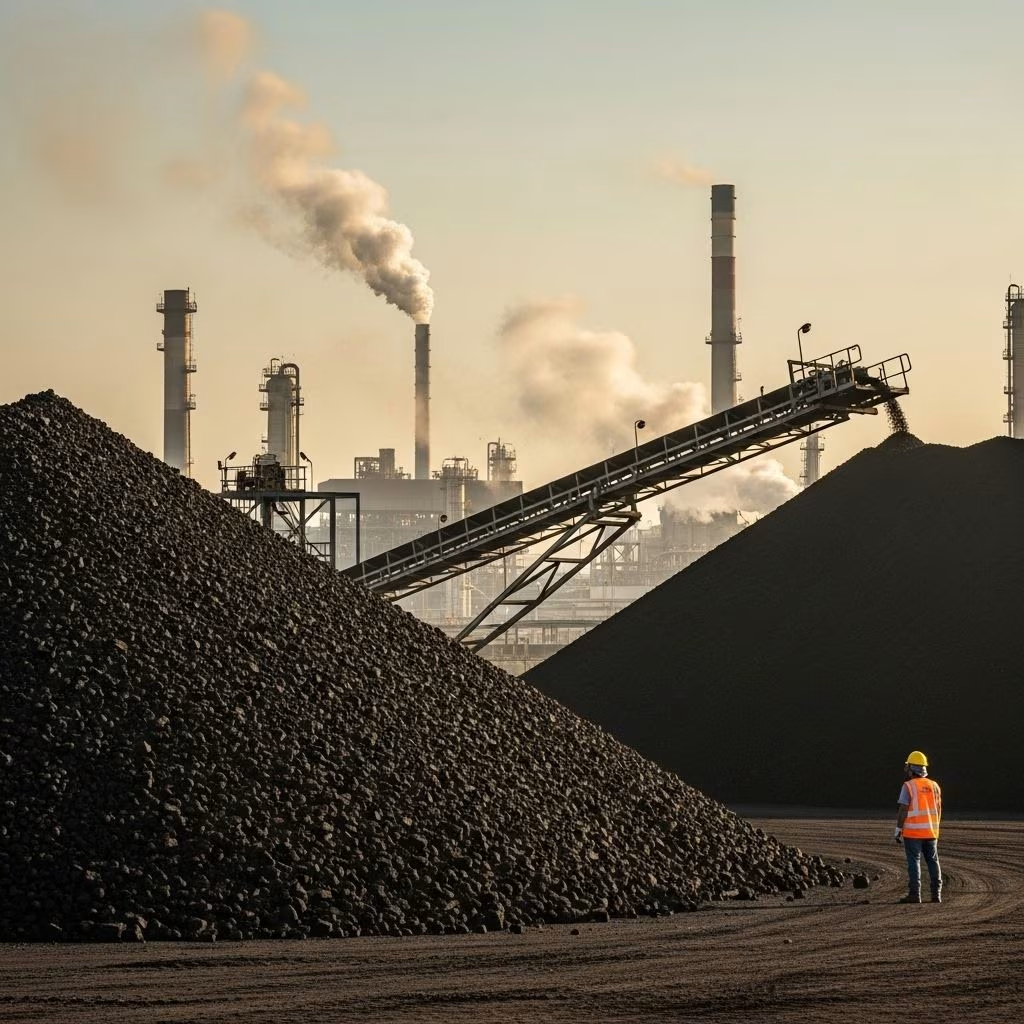
What Is Petcoke?
Petcoke, short for petroleum coke, is a solid, carbon-rich material that remains after the distillation and cracking processes used to extract lighter hydrocarbons (like gasoline and diesel) from crude oil during petroleum refining. Often described as a byproduct or even “waste” of the oil refining industry, its appearance resembles coal: dark, dusty, and granular. Despite its industrial uses, petcoke is controversial due to its environmental and community health impacts.
How Is Petcoke Produced?
During oil refining, heavy residual oils that cannot be transformed into lighter products are processed in units called cokers. Through a process known as thermal cracking, these heavy fractions are subjected to high temperatures (often above 900°F) in the absence of oxygen. This causes the larger hydrocarbon molecules to break apart, leaving behind a solid, carbon-dense residue—petcoke.
- The composition of petcoke is typically about 90% elemental carbon, 3–6% sulfur, and small amounts of hydrogen, nitrogen, oxygen, and trace metals such as vanadium and nickel.
- Petcoke can be produced in various forms: sponge coke (porous, most common), shot coke (hard, marble-sized pellets), and needle coke (used for electrodes).
Where Is Petcoke Made?
Petcoke production is closely tied to major oil refining centers. The United States is one of the leading producers, with large volumes generated in states like Texas, Louisiana, California, and Illinois. Much of this petcoke is exported to countries with less stringent environmental regulations.
Petcoke Uses: Fuel, Industry & More
Petcoke’s primary uses span several energy-intensive and industrial sectors:
- Fuel for Power Generation: Petcoke is combusted in power plants, sometimes as a supplement or alternative to coal due to its high carbon content and relative affordability.
- Metals Manufacturing: In the aluminum and steel industries, petcoke is used as a carbon anode during metal extraction processes. It is “calcined” (heated in special kilns) to produce the purer material needed for these applications.
- Cement Production: Petcoke serves as a kiln fuel in the cement industry, helping to provide the intense heat required for clinker formation.
- Further Chemical Processing: Some high-grade needle coke is transformed into electrodes for electric arc furnaces or batteries.
Globally, the petcoke market is driven by demand for cheap energy and feedstock, especially in countries with growing industrial sectors and limited environmental enforcement.
Chemical and Physical Properties of Petcoke
- High Carbon Content: Over 80–90% of petcoke by weight is elemental carbon.
- Sulfur Content: Varies from low (<1%) to high (>7%), depending on the crude oil source and refining process.
- Trace Elements: Can include toxic metals, notably vanadium and nickel, and organic compounds.
- Energy Density: Petcoke yields more energy per kilogram than coal, but also releases more carbon dioxide and sulfur dioxide when burned.
- Physical Form: From fine dust to large clumps, making handling and storage a dust control challenge.
Environmental Impact of Petcoke
The controversy around petcoke centers on its environmental consequences from production through end use. Major concerns include:
1. Air Pollution from Processing and Combustion
- Calcining plants (where petcoke is “purified” for use in metal production) emit large amounts of sulfur dioxide, hydrochloric acid, and fine particulate matter (PM2.
References
- https://environmentalintegrity.org/news/petroleum-refinery-waste-processed-without-pollution-controls-in-disadvantaged-communities/
- https://news.oilandgaswatch.org/post/oil-refinery-waste-is-a-major-pollution-source-of-air-and-water-pollution
- https://en.wikipedia.org/wiki/Petroleum_coke
- https://archive.epa.gov/epa/petroleum-coke-chicago/health-effects-petroleum-coke.html
- https://www.everycrsreport.com/files/20131029_R43263_817011f032177b4ef6a39f6d9d4665f3c105d151.pdf
- https://pmc.ncbi.nlm.nih.gov/articles/PMC4483697/


