


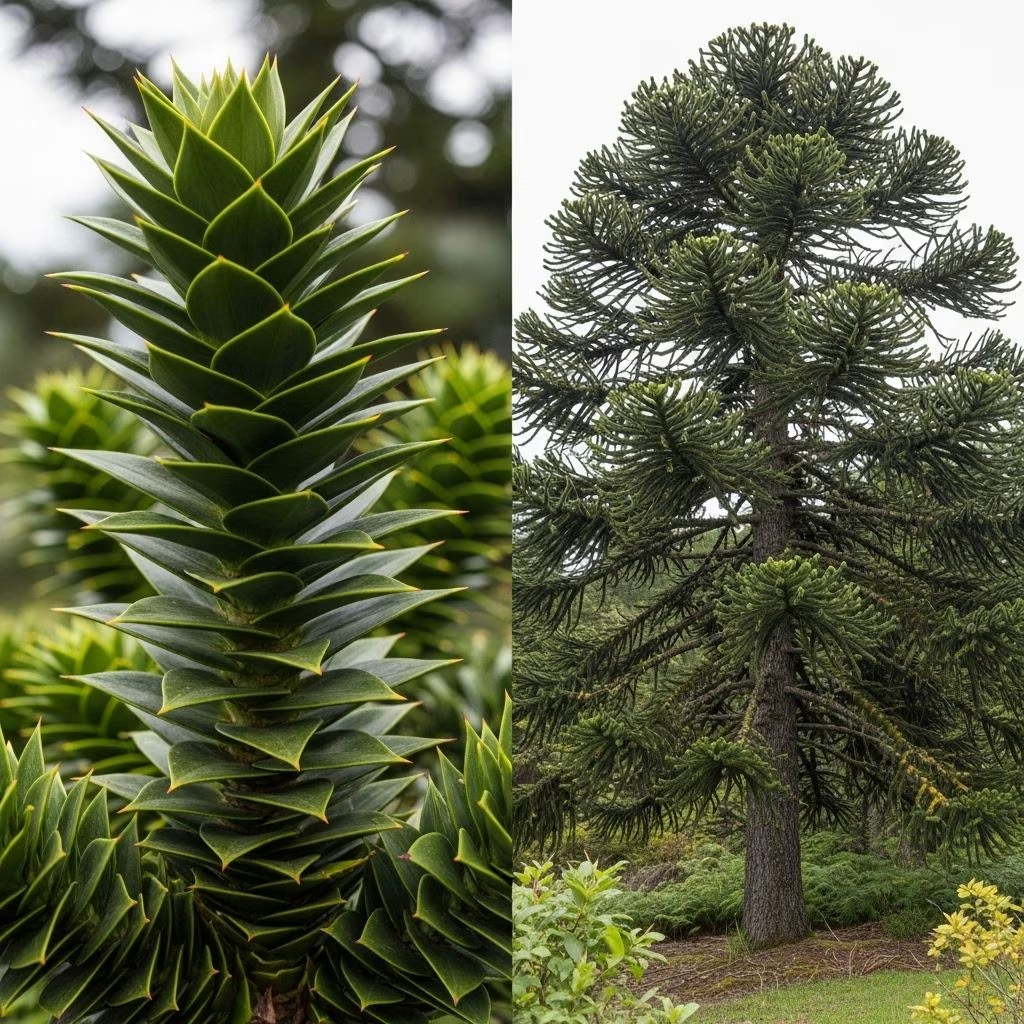
The Monkey Puzzle Tree: A Unique Living Fossil
Monkey puzzle tree (Araucaria araucana) is a striking and ancient conifer recognized for its spiraling, spiky foliage and formal upright shape. Native to the cool, rainy Andes in central and southern Chile and western Argentina, this tree is renowned for its longevity, distinctive appearance, and ecological importance. Often called the ‘Chilean pine,’ it is the national tree of Chile and holds centuries of cultural and botanical significance.
Overview and Habitat
The monkey puzzle tree is naturally restricted to a small range—about 150 square miles—within the Andes mountains. Its preferred environment is cool and rainy, and it has become popular as an ornamental tree worldwide due to its unique silhouette and hardiness. Outside its native lands, the monkey puzzle tree flourishes in regions with similar climates, such as the Pacific Northwest of North America, the U.K., and parts of New Zealand and Europe.
- Native range: Central and southern Chile, western Argentina
- Preferred climate: Cool, moist, mountainous regions
- Natural habitat: Andes forests
How to Identify the Monkey Puzzle Tree
Recognizing a monkey puzzle tree is straightforward when you know what features to look for. Its combination of ancient lineage, architectural form, and curious foliage distinguishes it from other conifers.
Key Identification Traits
- Leaves: Thick, dark green, sharply pointed, and triangular, arranged in a spiral around the branches. The leaves are stiff and leathery, remaining on the tree for up to 15 years.
- Shape: Strongly upright and formal, with straight trunk and evenly spaced branches radiating outward in whorls.
- Bark: Rough, gray, featuring horizontal ridges.
- Cones: Spherical, about 8 inches in diameter; female trees produce cones containing 150–200 large edible seeds. Male cones are smaller and elongated.
- Size: Mature trees reach up to 130–150 feet in height under ideal conditions.
| Feature | Description |
|---|---|
| Leaves | Spiraled, stiff, triangular, spiky, dark green |
| Bark | Rough, gray, horizontally ridged |
| Cones | Large, round, containing edible seeds (female); smaller, oblong (male) |
| Height | Up to 130–150 ft (40–45 m) |
| Shape | Symmetrical, formal, upright |
Origin of the Name “Monkey Puzzle”
The name “monkey puzzle” comes from an anecdote: In 19th-century Britain, Charles Austin reportedly remarked, “It would be a puzzle for a monkey to climb that tree,” referencing the sharp, spiky foliage. The name stuck, although no monkeys inhabit the tree’s natural range in South America.
- The tree’s formal botanical name, Araucaria araucana, reflects the indigenous Araucanian peoples living near its native forests.
Environmental and Cultural Importance
The monkey puzzle tree is not just a horticultural curiosity—it’s vital to the ecosystems and cultures of the Andes.
- National tree of Chile: Symbolizes national heritage and pride.
- Cultural significance: Important to the indigenous Mapuche people, who have relied on its seeds for sustenance.
- Biodiversity: Its cones feed humans, mice, and the austral parakeet, supporting local wildlife and dispersal of seeds.
Planting and Care Guidelines
The monkey puzzle tree has become popular in public parks and gardens around the world, admired for its architectural beauty. If you are considering planting and caring for this tree, here are essential guidelines:
Site Selection
- Choose a location with full sun and well-drained soil. The tree prefers slightly acidic to neutral pH.
- Allow ample space for growth—these trees become very large and should be planted away from buildings and walkways.
- Avoid high traffic areas, as branches and leaves are extremely sharp.
Planting Instructions
- Dig a hole twice the width and depth of the root ball.
- Mix organic compost into the soil to enhance drainage and nutrient content.
- Water thoroughly during the first year to establish deep roots.
Growth and Maintenance
- Young trees grow slowly, but accelerate growth after establishment.
- Pruning is rarely necessary; only remove dead or damaged branches.
- Mulching can help conserve moisture but should be kept clear of the trunk to prevent rot.
Watering and Fertilization
- Monkey puzzle trees require moderate watering—avoid waterlogging, especially in clay soils.
- Fertilize annually in spring with a balanced, slow-release fertilizer if soil is poor.
Tolerance and Pests
- Tolerates temperatures down to -4°F (-20°C).
- Generally resistant to pests and diseases, though seedlings may be vulnerable to root rot.
Threats and Conservation Status
Despite its widespread ornamental use, the monkey puzzle tree is endangered in the wild. Its ancient forests are threatened by industrial logging, agricultural expansion, invasive species, fire, and climate change.
- Deforestation: Logging for its durable wood has dramatically reduced wild populations in the last century.
- Agricultural encroachment: Farming and livestock have fragmented forests and degraded habitat.
- Fire: Increasing fire frequency has destroyed large swaths of trees.
- Climate change: Droughts and heat waves threaten survival and regeneration.
- Invasive species: Non-native species outcompete young seedlings, complicating natural regeneration.
IUCN Status & Conservation Efforts
- The monkey puzzle tree is classified as Endangered on the IUCN Red List.
- Preservation efforts emphasize protection of mature trees and native stands, control of invasive plants, and habitat restoration.
Reproduction and Seed Dispersal
Monkey puzzle trees are dioecious, meaning male and female cones occur on separate trees. Female cones contain large, nutritious seeds that mature in autumn—an important food source for local wildlife and humans.
- Pollinators: Research has demonstrated that the austral parakeet plays a key role in seed dispersal and possibly even pollination, feeding on both seeds and pollen.
- Seed: Each cone may contain up to 200 edible seeds, which are harvested or foraged by animals and people.
How to Grow from Seed
- Harvest mature seeds from female cones in fall.
- Sow seeds in well-draining potting soil, barely covering them.
- Keep soil moist but not waterlogged.
- Seedlings require careful protection from rot and extremes of temperature.
Monkey Puzzle in Ornamental Landscaping
Since its introduction to Europe and North America in the late 1700s and early 1800s, the monkey puzzle tree has been valued for its unusual silhouette and resilience. In gardens, it serves as a specimen tree or a focal point. Its slow growth and longevity make it an enduring, low-maintenance addition to suitable landscapes.
- Landscape uses: Specimen tree for parks, estates, large gardens
- Historical significance: Symbol of prestige and wealth in Victorian Britain
- Popular regions: U.K., Pacific Northwest, New Zealand, continental Europe
Fast Facts: Monkey Puzzle Tree
- Scientific Name: Araucaria araucana
- Common Names: Monkey puzzle, Chilean pine, Pewen
- Lifespan: Over 1,200 years
- Height: Up to 150 feet (45 meters)
- Leaves: Stiff, pointed, arranged in spirals
- Status: Endangered
- Notable wildlife partners: Austral parakeet, native Andean mice
Frequently Asked Questions (FAQs)
Q: Is the monkey puzzle tree difficult to grow?
A: It is relatively easy to grow in cool, temperate climates with sufficient space and well-drained soil. However, slow growth and prickly branches may require patience and careful placement.
Q: Are the seeds of the monkey puzzle tree edible?
A: Yes. The large seeds inside female cones are nutritious and edible, traditionally consumed by indigenous peoples of Chile and Argentina.
Q: How long does the monkey puzzle tree live?
A: In ideal conditions, monkey puzzle trees can live for 1,000 to 1,200 years, making them one of the longest-lived conifers.
Q: Why is the tree endangered?
A: Habitat loss, logging, fire, and climate change have drastically reduced wild populations, especially in their native Andean forests.
Q: Can monkey puzzle trees be pruned?
A: Pruning is seldom necessary. Only dead, damaged, or awkward branches should be carefully removed to preserve natural form.
Conservation: Helping Save the Monkey Puzzle Tree
As a gardener or enthusiast, you can contribute to conservation by supporting sustainable practices, planting trees from reputable sources, and advocating for preservation of native habitats. Botanical gardens and arboreta may participate in global conservation efforts and can be valuable resources for learning more about this remarkable species.
- Support local and international tree conservation organizations.
- Propagate the species responsibly, avoiding disturbance to wild populations.
- Educate others about the importance and threats facing this ancient tree.
Summary Table: Monkey Puzzle Tree Facts
| Attribute | Detail |
|---|---|
| Scientific Name | Araucaria araucana |
| Common Names | Monkey puzzle, Chilean pine, Pewen |
| Native Range | Andes: Chile, Argentina |
| Height | Up to 150 feet |
| Lifespan | Over 1,000 years |
| Key Feature | Spiral, spiky evergreen leaves |
| IUCN Status | Endangered |
Conclusion
The monkey puzzle tree stands out as one of nature’s most extraordinary relics—an ancient, visually striking, and ecologically vital conifer deserving care and attention. With proper cultivation and global conservation efforts, both gardeners and environmental stewards play a role in protecting and celebrating this living fossil for generations to come.


