Few mammals in North America match the gray fox for their blend of mystery, adaptability, and unique behaviors. While many associate foxes with skulking across fields or nesting in quiet burrows, gray foxes are astonishing tree-dwellers who use their remarkable adaptations to claim a literal place above the competition. Recent observations have revealed another astonishing habit: decorating trees with skeletons. This in-depth look uncovers the world of gray foxes, from their physical features to their unusual practices that baffle and fascinate biologists.
Gray Foxes: North America’s Tree-Climbing Canines
The gray fox (Urocyon cinereoargenteus) stands out as the only member of the dog family in North America committed to an arboreal life. Their ancestors roamed the lush prehistoric forests more than 3 million years ago, gradually evolving unique physical features that allowed them to survive and thrive not just on the ground, but also in the trees.
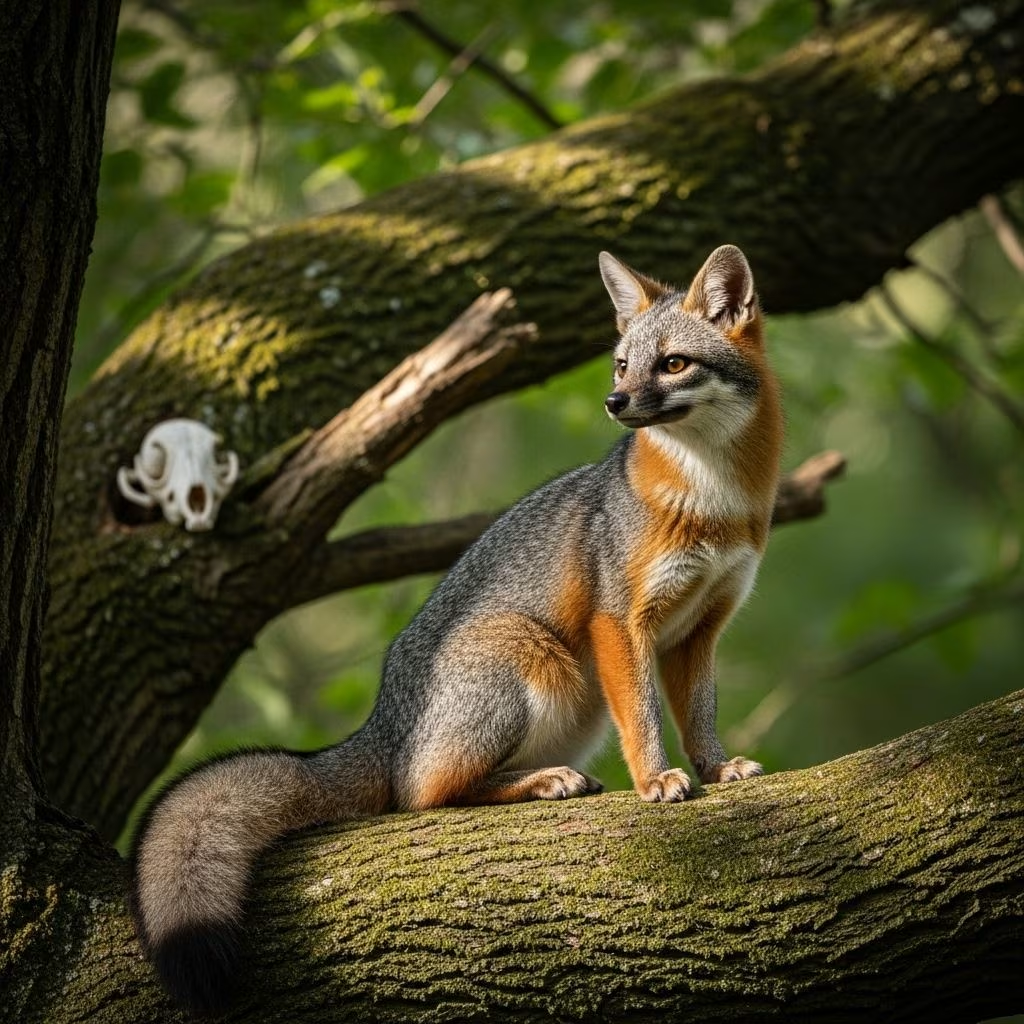
- Adaptations for Climbing: Gray foxes possess long, curved claws and flexible wrists—rare among canines. These features, combined with muscular limbs and cat-like paws, mean they can grip tree trunks and branches with ease, often reaching heights up to 18 meters (about 60 feet).
- Cat-like Stealth: They move with a cat’s stealth, walking quietly and leaping from branch to branch to ambush birds or reach fruits and insects high above the ground.
- Denning in Trees: In areas crowded with predators, gray foxes regularly den in hollow tree trunks, sometimes over 30 feet above the ground, further cementing their reputation as masters of the canopy.
The Physical Distinction: Red Fox vs. Gray Fox
| Feature | Gray Fox | Red Fox |
|---|---|---|
| Coloration | Silver-gray with a black tail stripe and white details | Rusty red with dark ‘stocking’ legs |
| Paws and Claws | Curved, semi-retractable claws for climbing | Straight claws, less adapted for climbing |
| Behavior | Excellent climber, arboreal habits | Primarily ground-dwelling |
The unique features of gray foxes allow easy distinction and grant them access to resources unavailable to other canines.
Skeleton Trees: The Macabre Art of the Gray Fox
Perhaps the most fascinating behavioral adaptation of gray foxes is their practice of dragging skeletons into trees. It is now known that these skeletons are not just trophies or leftovers from meals—they play a vital role in communication between fox pairs and in marking territory. Scientists have dubbed trees decorated with these remains as “skeleton trees.”
- Pungent Scent Posts: By hauling the skeletons of prey such as fawns into the branches, gray foxes create powerful scent posts. After rain, the musky odors become even more intense, wafting on the breeze and signaling the presence (and dominance) of a fox family to would-be rivals in the area.
- Seating and Scent Marking: Sometimes, foxes use skeletons as seats, but the scent appears to be the main attraction. The lingering smell advertises that the territory is already claimed and intensifies after wet weather.
- An Ecological Oddity: Such use of skeletons is virtually unheard of among North American mammals, making the gray fox a true behavioral outlier.
Evolutionary Background: Old Souls of the Forest
Gray foxes have a lineage stretching back at least 3.6 million years, according to fossil records from Arizona. They arose in an era alongside giant ground sloths, prehistoric llamas, and horses, well before the arrival of red foxes on the continent. Fossils from caves in Northern California and Mayan excavation sites in Central America confirm their ancient distribution and continued survival through shifting climates and ice ages.
Lifestyle and Daily Routine Among the Branches
Unlike ground-bound canids, gray foxes spend significant portions of each day above the forest floor. Their tree-dwelling ways influence all aspects of their lives—from finding food to establishing dens and raising young. Their daytime dens are often found in:
- Hollow trees, stumps, and logs high above the ground
- Occasionally burrows, especially in regions where predation risk is lower
At night, the foxes descend to hunt and forage, but their ability to quickly escape threats by climbing means they avoid many of the perils faced by other small predators.
Diet: Omnivores with a Taste for Variety
Gray foxes enjoy a diet as diverse as their habitat. Their omnivorous tendencies help them survive in an array of environments, from dense forests to rocky deserts. Key features of their diet include:
- Small mammals: Cottontail rabbits and rodents form dietary staples.
- Birds: Their arboreal skills make birds a frequent menu item.
- Fruits and berries: Especially in summer and fall, plant matter makes up a significant portion of their consumption.
- Insects: Various insects supplement their protein intake.
- Opportunistic feeding: They will scavenge carrion and cache surplus food for later use.
Reproduction and Social Structure
Gray foxes are usually seen in pairs—rarely in groups larger than a nuclear family.
- Pairs cooperate in raising pups and defending territory.
- They maintain close proximity during breeding season and often share dens.
- Both parents play roles in feeding and teaching pups survival skills.
Communication: More Than Just a Bark
Gray foxes boast a surprisingly expressive vocal range for a canine, including:
- Chirps
- Growls
- Screeches
They supplement these vocalizations with scent marks—through urine, feces, and the use of skeletons. Such complex communication plays a crucial role in both avoiding dangerous conflicts and securing long-term territory.
Physical Characteristics: The Anatomy of an Arboreal Predator
- Weight: Most adult gray foxes weigh between 3.6 and 7 kilograms (8–15 lbs), with the rare specimen reaching 9 kilograms (20 lbs).
- Size: Adults measure up to 112 centimeters (44 inches) in length, a third of which is accounted for by their luxuriant tail.
- Lifespan: In the wild, lifespans average six to eight years, though a few reach ten years or older.
- Unique paws: Their cat-like feet help distinguish their tracks from those of other similar animals.
Gray Fox Tracks and Field Identification
For naturalists and trackers, distinguishing gray fox tracks is an opportunity to read the landscape’s hidden stories. Their semi-retractable claws rarely show in footprints unless the animal is gripping for stability. Their prints are smaller and neater compared to red foxes, with distinct margins and skin-covered pads.
- Claw marks may appear when climbing or gripping, unlike most canine tracks.
- Tracks found near trees with skeletons may indicate an active skeleton tree territory.
Impact on Ecosystems and Interactions with Humans
Gray foxes play important ecological roles:
- Population control: By feeding on rodents and rabbits, they help regulate populations of potential agricultural pests.
- Seed dispersers: Their fondness for fruit assists forest regeneration as seeds pass through their digestive tract and germinate elsewhere.
- Indicator species: Because of their sensitivity to habitat changes, their presence (or absence) can signal ecosystem health or environmental stress.
While usually wary of people, some gray foxes thrive even on the edges of suburbs, especially where mature trees are present. Their adaptability underscores both their evolutionary success and the importance of suitable habitat conservation.
Conservation Status
Gray foxes, though widespread, face threats from habitat loss, vehicle collisions, and disease. Conservation efforts that maintain forested areas, increase awareness of their habits, and reduce road hazards can help sustain healthy populations far into the future.
Frequently Asked Questions (FAQs)
Q: Why do gray foxes climb trees?
A: Climbing trees allows gray foxes to evade predators, search for food such as birds and fruit, create safe dens high above ground, and find secluded places to rest during the day.
Q: What are skeleton trees and why are they important?
A: Skeleton trees are trees where gray foxes haul and leave the skeletons of their prey. These serve as scent posts for marking territory, communicating dominance, and potentially as seats; after rain, the pungent smell helps signal their presence over long distances.
Q: How can you tell a gray fox apart from a red fox?
A: Gray foxes have grizzled silver coats, black stripes on their tails, shorter legs, and cat-like claws. Red foxes, in contrast, are red-orange with dark, nearly black legs and white-tipped tails, and lack the ability to climb trees.
Q: What do gray foxes eat?
A: Gray foxes are omnivores, eating small mammals (rabbits, rodents), birds, insects, fruits, and berries. Their flexible diets allow them to thrive in varied environments.
Q: Are gray foxes endangered?
A: No, gray foxes are not currently endangered, but regional declines do occur due to habitat destruction, car strikes, and diseases like distemper.
Conclusion: The Astonishing Adaptability of Gray Foxes
In an evolutionary lineage stretching back millions of years, gray foxes are a living mosaic of ancient design and modern flexibility. Their ability to climb, to decorate their environment with macabre markers, and to communicate both loudly and subtly mark them as one of North America’s most remarkable mammals. A commitment to conserving mature forests and appreciating these secretive, tree-dwelling skeleton artists will ensure that their stories continue to enrich our understanding of wildness for generations to come.
References
- https://www.biographic.com/skeleton-tree/
- https://lindajspielman.com/tag/gray-fox/
- https://thefactfile.org/facts-about-gray-foxes/
- https://2newthings.com/gray-fox-specializations-optimize-time-spend-trees/
- https://www.nwf.org/Magazines/National-Wildlife/2013/AugSept/PhotoZone/Gray-Fox
- https://study.com/academy/lesson/gray-fox-facts-lesson-for-kids.html
- https://www.psychologytoday.com/ca/blog/animal-emotions/202201/the-social-and-emotional-lives-of-urban-gray-foxes