


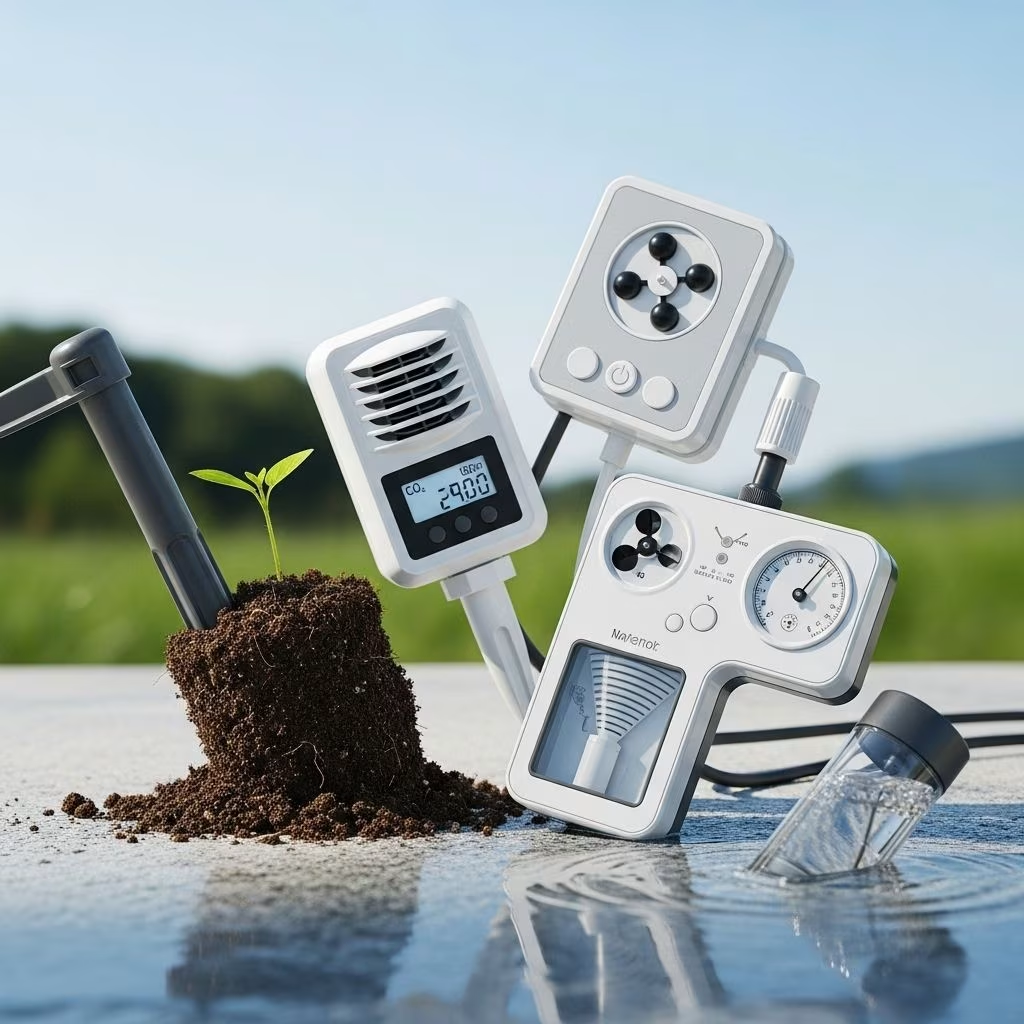
Environmental Sensors: Revolutionizing Monitoring for a Sustainable Future
The advent of environmental sensors has ushered in a new era of precision monitoring, enabling real-time data collection and analysis across air, water, soil, and other vital environmental domains. These sophisticated devices not only improve our response to pollution and climate change but also enhance efficiency in agriculture, urban planning, and industry. In this guide, we explore the many facets of environmental sensors: their types, how they work, where they are used, and why they are essential to a sustainable future.
What are Environmental Sensors?
Environmental sensors are devices engineered to detect and quantify physical, chemical, or biological changes in the environment. By measuring variables such as temperature, humidity, air and water quality, soil characteristics, noise, and light, these sensors provide actionable insights to researchers, policymakers, and businesses. Data from environmental sensors inform solutions ranging from smart urban development to ecological conservation.
Types of Environmental Sensors
The diversity of environmental applications has led to the development of various sensor types, each designed to measure specific parameters. Understanding these categories is essential for selecting the right tools for monitoring and decision-making.
- Temperature and Humidity Sensors
- Air Quality Sensors
- Water Quality Sensors
- Soil Sensors
- Noise and Light Sensors
- Weather Sensors
Temperature and Humidity Sensors
These sensors are foundational in environmental monitoring, measuring ambient temperature and moisture levels. Their applications include:
- Agriculture: Monitoring microclimates to optimize crop growth and irrigation.
- Smart Buildings: Maintaining indoor comfort and energy efficiency.
- Industrial Processes: Ensuring optimal conditions for precision manufacturing and equipment operation.
Indoor environments often utilize wall-mounted sensors for continuous and precise monitoring, while outdoor monitoring favors rugged, weather-resistant units such as solar shield sensors that withstand rain and wind, making them ideal for farm and field deployment.
Air Quality Sensors
Air quality sensors monitor pollutants and provide a snapshot of atmospheric health. These sensors detect:
- Particulate Matter (PM2.5, PM10): Small particles that impact respiratory health.
- Gaseous Pollutants: Including nitrogen dioxide (NO2), ozone (O3), and carbon monoxide (CO).
- Volatile Organic Compounds (VOCs): Harmful compounds emitted from vehicles, industry, and household products.
Air quality data is essential for cities tackling urban pollution, industries assessing workplace safety, and homes aiming for healthier indoor environments.
Water Quality Sensors
Water quality sensors evaluate the health of water bodies through parameters such as:
- pH: Indicates acidity or alkalinity.
- Dissolved Oxygen (DO): Critical for aquatic ecosystem vitality.
- Turbidity: Measures suspended particles and clarity.
- Conductivity and Salinity: Assesses mineral content, vital for agriculture and drinking water.
- Heavy Metals and Organic Pollutants: Key for regulatory compliance and protecting public health.
Applications range from river and lake monitoring to industrial wastewater management and aquaculture.
Soil Sensors
Soil sensors provide data that sustains modern agriculture and helps prevent land degradation. Common metrics include:
- Moisture Content: Optimizes irrigation schedules.
- Nutrient Levels: Guides fertilization with precision around nitrogen, phosphorus, and potassium.
- Salinity: Prevents long-term soil damage.
These sensors bridge the gap between environmental science and practical agricultural management, facilitating resource-efficient food production.
Noise and Light Sensors
- Noise Sensors: Measure sound in decibels, crucial for monitoring urban noise pollution and setting low-noise zones to promote public well-being.
- Light Sensors: Capture light intensity for urban lighting optimization and greenhouse management.
Weather Sensors
Weather sensors gather meteorological data, supporting accurate forecasting and emergency management:
- Wind Speed & Direction
- Barometric Pressure
- Rainfall
Critical for weather stations, disaster warning systems, wind farms, and traffic safety control.
How Environmental Sensors Work
The functioning of environmental sensors relies on a logical sequence, regardless of their particular domain:
- Sensing: The sensor’s core element detects changes in the environment—whether chemical, physical, or biological.
- Conversion: The detected variable is transformed into an electrical signal (usually analog).
- Processing: This signal is calibrated, filtered, and amplified within the sensor’s circuitry, often converting the analog signal to digital for easier analysis.
- Transmission: Sensor data is transmitted via wired or wireless communication protocols (examples: RS485, LoRa, WiFi) to centralized systems.
- Display and Analysis: Data arrives at user interfaces or cloud platforms for visualization, analysis, trend monitoring, and decision support.
Robust IoT integration and cloud connectivity have dramatically expanded the scope and reliability of sensor networks in recent years.
Key Application Scenarios
The versatility of environmental sensors is evident in their widespread adoption across sectors. Detailed below are the major application domains.
1. Environmental Protection
- Real-time air quality sensors enable cities to monitor PM2.5 and NO2, informing emission control and public health interventions.
- Water quality sensors pinpoint pollution in rivers and lakes, assisting in the rapid detection of illegal wastewater discharge.
- Soil sensors guide land restoration by tracking degradation and informing sustainable land use strategies.
Collectively, these sensor networks bolster efforts to combat pollution and safeguard natural habitats.
2. Smart Cities
- Noise sensors facilitate urban planners in designating quiet zones and reducing noise pollution.
- Weather sensors deliver meteorological intelligence for traffic management and emergency response.
- Light sensors enable adaptive urban lighting systems, saving energy and improving safety.
- Trash management: Sensors in bins inform efficient waste collection routes and schedules, lowering operational costs and environmental impact.
Smart cities use sensor data to optimize everything from resource allocation to citizen health.
3. Industrial Production
- Gas sensors detect toxic emissions, securing worker safety and regulatory compliance.
- Temperature and humidity sensors regulate manufacturing environments, boosting efficiency and product quality.
- Water quality sensors ensure industrial effluents meet legal standards, protecting local ecosystems.
4. Modern Agriculture
- Soil sensors and weather sensors enable precision irrigation, fertilization, and pest control.
- Greenhouse sensors maintain controlled environments for optimal plant growth, increasing yields.
Data-driven agriculture reduces waste, conserves resources, and enhances resilience against extreme weather.
5. Scientific Research
- Climate change analysis: Sensor networks at glaciers, oceans, and forests measure long-term environmental shifts.
- Ecology & geology: Sensors help track wildlife movement, monitor active volcanoes, and assess ecosystem health.
Environmental sensors are indispensable in advancing our understanding of nature and human impact.
Global Market Trends and Future Directions
The rapid growth of IoT and AI has redefined the potential for environmental sensors. Leading trends shaping global deployment include:
- Integration into Intelligent Systems: Environmental sensors are increasingly interconnected through IoT, creating seamless networks for continuous data collection and smart analytics.
- Artificial Intelligence and Machine Learning: AI-powered platforms analyze vast sensor datasets, enabling predictive modeling for climate events, optimized resource distribution, and early warning systems.
- Miniaturization and Cost Reduction: Advances in technology make sensors more affordable and accessible, facilitating mass deployment even in remote regions.
- Edge Computing: Processing data close to source reduces latency and bandwidth requirements, streamlining real-time monitoring and rapid response.
- Sustainability and Green Technology: There’s a push towards energy-efficient sensors with longer lifespans, recyclable designs, and low-power wireless communication.
As environmental monitoring systems become more robust and widespread, these trends drive innovation in both technology and institutional practice.
Table: Main Types and Functions of Environmental Sensors
| Sensor Type | Measured Parameters | Key Applications |
|---|---|---|
| Temperature | Heat/cold (°C, °F) | Weather stations, industry, agriculture |
| Humidity | Relative moisture (%) | Agriculture, indoor comfort, manufacturing |
| Air Quality | PM2.5, PM10, NO2, CO, VOCs | Urban air monitoring, workplace safety |
| Water Quality | pH, DO, turbidity, salinity | Water treatment, aquaculture, pollution control |
| Soil | Moisture, nutrients, salinity | Agriculture, land restoration |
| Noise | Decibel level (dB) | Urban planning, public health |
| Light | Luminosity | Lighting systems, greenhouses |
| Weather | Wind, pressure, rainfall | Forecasting, disaster response |
Frequently Asked Questions (FAQ)
What is an environmental sensor?
An environmental sensor is an electronic device that detects and measures physical, chemical, or biological changes in the environment, helping monitor various factors such as air and water quality, temperature, noise, and soil condition.
How do environmental sensors contribute to sustainability?
By providing real-time, accurate environmental data, sensors inform strategies for pollution reduction, resource management, and conservation, enabling governments, industries, and farmers to make environmentally responsible choices.
Where are environmental sensors most commonly used?
- Urban air and noise monitoring
- Agriculture and soil management
- Water quality assessment
- Industrial emission control
- Smart city projects
- Scientific research
What advances are shaping the future of environmental sensors?
- IoT integration enhancing data connectivity and analysis
- AI-driven predictive analytics for climate and resource planning
- Miniaturization for ease of deployment and reduced cost
- Edge computing facilitating real-time responsiveness
Can environmental sensors detect natural disasters?
Yes, specialized sensors monitor earthquakes, floods, and forest fires, providing vital early warning data that can help minimize disaster impact.
Summary: Why Environmental Sensors Matter
Environmental sensors are at the heart of modern sustainability efforts, enabling communities, industries, and governments to measure, understand, and act on environmental data more efficiently than ever before. As technology evolves, these sensors will be pivotal in building resilient, intelligent, and sustainable societies worldwide.
References
- https://neuroject.com/environmental-sensors/
- https://atech-sensor.com/show-2418.html
- https://awaremonitoringsystems.com/types-of-environmental-sensors/
- https://www.renkeer.com/environmental-sensors-list-and-used/
- https://www.sunbirddcim.com/glossary/environmental-sensors
- https://www.unmannedsystemstechnology.com/expo/environmental-sensors/
- https://www.azosensors.com/article.aspx?ArticleID=2863
- https://pmc.ncbi.nlm.nih.gov/articles/PMC3909362/
- https://www.bosch-sensortec.com/products/environmental-sensors/


