How Squirrels Conquered Our Cities: From Forests to Urban Icons
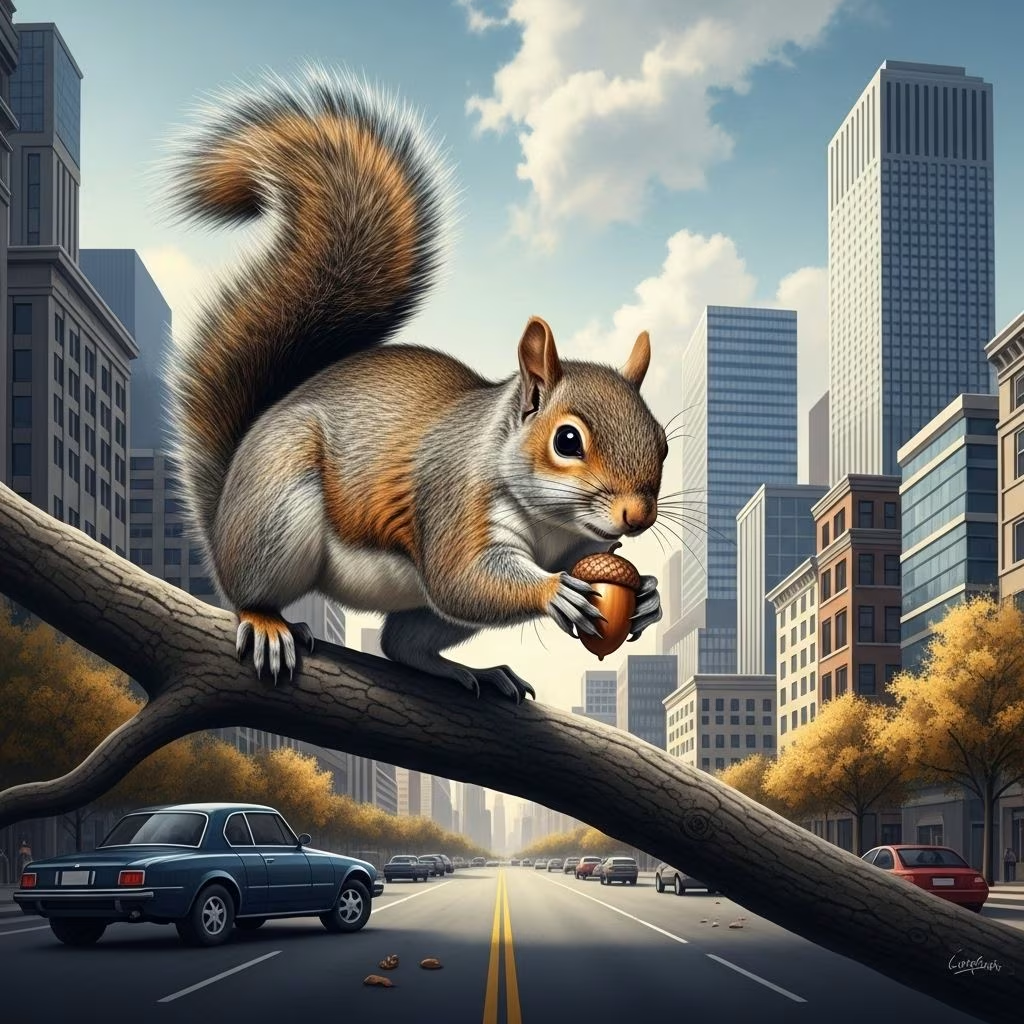
Eastern gray squirrels are now icons of city parks and backyards across North America. Watching one scamper across a leafy boulevard or beg nimbly for a handout is a quintessential part of the urban experience. Yet, their journey from forest-dwellers to city residents is a surprising saga of rewilding, shifting attitudes toward animals, and the creation of public spaces.
Urban Squirrels: A Modern Fixture with Ancient Roots
Squirrels, as a group, have deep evolutionary origins. The oldest fossil ancestors resembling modern squirrels appeared about 50 million years ago during the Eocene epoch in North America and Eurasia. These ancestral tree-dwellers relied on fruits and nuts, developing agility and a suite of behaviors that allowed them to flourish in forests—and, in time, to exploit more open and transformed landscapes as humans reshaped their habitats.
The eastern gray squirrel (Sciurus carolinensis), today’s iconic city squirrel, is native to the woodlands of the eastern United States. For millennia, it thrived in forests, feeding on nuts and seeds, and was revered—sometimes hunted—as a game animal by Indigenous peoples and early European settlers.
The Absent Squirrel: Cities Without Wild Rodents
By the early 19th century, squirrels had largely vanished from American urban environments. Several factors contributed:
- Squirrels were often considered agricultural pests and were heavily hunted for food and fur.
- City-dwellers viewed them as unwelcome rodents, unfit for polite society, and eradicated them from the increasingly treeless landscape.
- A lack of parks meant few spaces with adequate trees or greenery for squirrels to call home.
As a result, wild squirrels were rare sights in cities. Owning a squirrel as a pet was a novelty for the wealthy, and the idea of these bushy-tailed creatures frolicking in urban parks was almost unimaginable.
The Beginning: Squirrels as Deliberate City Immigrants
The modern city squirrel story begins with intentional introductions. As attitudes toward urban wildlife shifted in the mid-1800s, and the ideal of city parks as restorative, natural oases took hold, civic leaders began to wonder: could squirrels, as engaging and harmless creatures, bring vibrancy and a touch of the wild to city landscapes?
First Documented Urban Releases
- 1847, Philadelphia’s Franklin Square: The first noteworthy release of squirrels into an urban U.S. setting.
- Subsequent small-scale introductions took place in Boston and New Haven (1850s), motivated by a desire to ‘beautify’ parks and provide entertainment.
Early experiments often failed—introduced squirrels sometimes died out or were removed due to concerns about harm to bird populations or spreading pests. By the 1860s, skittishness about creating rodent problems saw some cities eliminate their budding squirrel colonies.
Nature by Design: The Role of Parks in Squirrel Proliferation
Any lasting city squirrel population needed more than a few animals—it required transformed, tree-rich habitats. Visionaries like Frederick Law Olmsted and Calvert Vaux, who designed New York’s Central Park and Boston’s Franklin Park, championed city parks as grand, pastoral spaces where wildlife might thrive.
The Park Movement and Squirrel Expansion
- Large urban parks—Central Park (New York), Franklin Park (Boston), Rock Creek Park (Washington, D.C.), Fairmount Park (Philadelphia), among others—created rich, wooded habitats perfect for squirrels.
- Officials began to reintroduce squirrels on a larger scale in the 1870s, consciously making these animals part of the urban fabric.
- Park managers, and later the public, actively fed squirrels, encouraging their tameness and survival.
By the 1880s, reports estimated as many as 1,500 squirrels living in Central Park alone.
Why Did Cities Want Squirrels?
Squirrels weren’t the only animals considered for city rewilding (songbirds, deer, and other species were also discussed), but they became particularly successful and beloved. Why did Americans want squirrels in their midst?
- To cultivate a sense of nature in the city: Victorians believed that seeing, feeding, and interacting with squirrels would strengthen moral character, encourage compassion, and teach kindness to animals.
- To delight children: Newspapers and park commissioners marveled at children’s fascination with tame, playful squirrels bounding through public gardens.
- For aesthetics: Squirrels added vibrancy and movement to leafy parks and promenades, making city life feel a bit less artificial.
This vision reflected the period’s shifting ideas about wildlife, nature, and community. Squirrels symbolized both progress and the human ability to shape urban environments in gentle, uplifting ways.
The Squirrel as a Symbol: Social and Cultural Impact
The presence of squirrels in city parks transformed not only the animals’ fate, but also public behavior and environmental awareness:
- People stopped hunting squirrels in parks, developing a tradition of feeding and befriending them instead.
- Squirrels were celebrated in popular media and family lore, embodying urban connection to the wild.
- Over time, their ubiquity changed attitudes toward all city wildlife, setting a precedent for how nature could coexist with urbanization.
By the early 20th century, the squirrel was regarded as an indispensable part of the cityscape—a living bridge between the built environment and the wilderness beyond.
Westward Bound: Squirrels in New Cities and Parks
The trend of urban squirrel introductions was not limited to older East Coast cities. As urban planning ideals traveled, so did the squirrel:
- Pacific cities such as Seattle, Vancouver, and San Francisco also welcomed the eastern gray squirrel in the late 19th and early 20th centuries.
- Stanley Park in Vancouver, for example, deliberately imported squirrels after park commissioners witnessed Central Park’s popular squirrel population in New York.
- Introductions in western cities were sometimes heralded in the newspaper as signs of modernity and civic improvement.
Glass storefront displays of live squirrels and exchanges between park boards across U.S. and Canadian cities became commonplace as cities strived to recreate the enchanting effect witnessed in eastern parks.
The Ecological Side: Success, Challenges, and Controversy
Squirrels flourished in their new urban homes—but not without unintended effects and ecological controversy:
- Competition with native species: The introduction of the eastern gray squirrel sometimes displaced native squirrels, especially in the Pacific Northwest and parts of Canada.
- Urban adaptability: Squirrels exploited not only park woodlands but also gardens, cemeteries, and any patch of greenery, making them almost impossible to dislodge once established.
- Human-wildlife conflict: Today, squirrels are sometimes reviled as nuisances, blamed for raiding gardens, gnawing wires, or crowding out songbirds.
Nevertheless, most urbanites welcome squirrels as part of city life, emblematic of the unpredictable, playful spirit that makes city parks and neighborhoods feel alive.
Changing Perceptions of Nature in the City
The rise of city squirrels provides a lens through which to view broader transformations in American environmental philosophy. The deliberate invitation of wildlife into urban space reflected growing nostalgia for vanishing wilderness alongside faith in the city’s ability to nurture both people and the natural world.
- Urban parks became laboratories of coexistence, blurring old boundaries between wild and domestic, native and introduced.
- Squirrels, with their gregarious habits and adaptability, thrived as ambassadors between these two worlds.
The story of urban squirrels captures a pivotal chapter in the history of North American city-making—one in which the quest for beauty and meaning prompted profound ecological change.
City Squirrels Beyond North America
While the eastern gray squirrel’s story as urban wildlife is most closely associated with the United States, similar trends have occurred elsewhere:
- In the United Kingdom, gray squirrels were intentionally introduced from North America in the late 19th and early 20th centuries, where they now rival and sometimes displace the native red squirrel.
- Urban squirrel populations are also growing in European and some Asian cities, reflecting global trends in city wildlife management and public appreciation of nature.
Timeline: The Urbanization of Squirrels
| Year | Milestone Event |
|---|---|
| 1847 | First urban squirrel introduction in Philadelphia’s Franklin Square |
| 1850s | Introductions in Boston and New Haven |
| 1870s | Large-scale reintroductions as city parks are developed |
| 1880s | Central Park’s squirrel population estimated at 1,500 |
| Early 1900s | Intentional releases extend to western U.S. and Canadian cities |
| Today | Squirrels are ubiquitous in cities across North America and beyond |
Frequently Asked Questions (FAQs)
Q: Are city squirrels a native species?
A: The eastern gray squirrel is native to eastern North America but was introduced to many urban settings, especially in western U.S. and Canadian cities where it is not native.
Q: Why are squirrels so common in city parks?
A: Deliberate introductions, abundant food sources, and suitable habitats in parks have allowed squirrels to thrive in urban landscapes.
Q: Do squirrels ever cause problems in cities?
A: Yes, city squirrels can damage gardens, infrastructure, and sometimes outcompete native wildlife, but they are also enjoyed by many city residents.
Q: How should people interact with urban squirrels?
A: It’s best to observe and enjoy squirrels from a distance. Feeding them can foster dependence and may disrupt local ecosystems.
Conclusion: Squirrels as Living Urban History
The presence of squirrels in urban parks and neighborhoods is no accident; it is the result of changing attitudes about nature, planned landscape transformations, and a collective desire to weave wildness into the daily fabric of city life. Today, these bushy-tailed residents remain compelling symbols of adaptation and coexistence, reminding us of the evolving boundary between the natural and built worlds.
References
- https://www.sciencedaily.com/releases/2013/12/131206132408.htm
- https://archive.oah.org/special-issues/teaching/2013_12/index.html
- https://aaacwildliferemoval.com/blog/squirrels/where-did-squirrels-originate/
- https://topofmydesk.com/2019/06/14/squirrels-were-once-desired/
- https://www.centralparknyc.org/articles/getting-to-know-central-parks-squirrels
- https://urbanafreelibrary.org/local-history/blog/secret-history-squirrels