


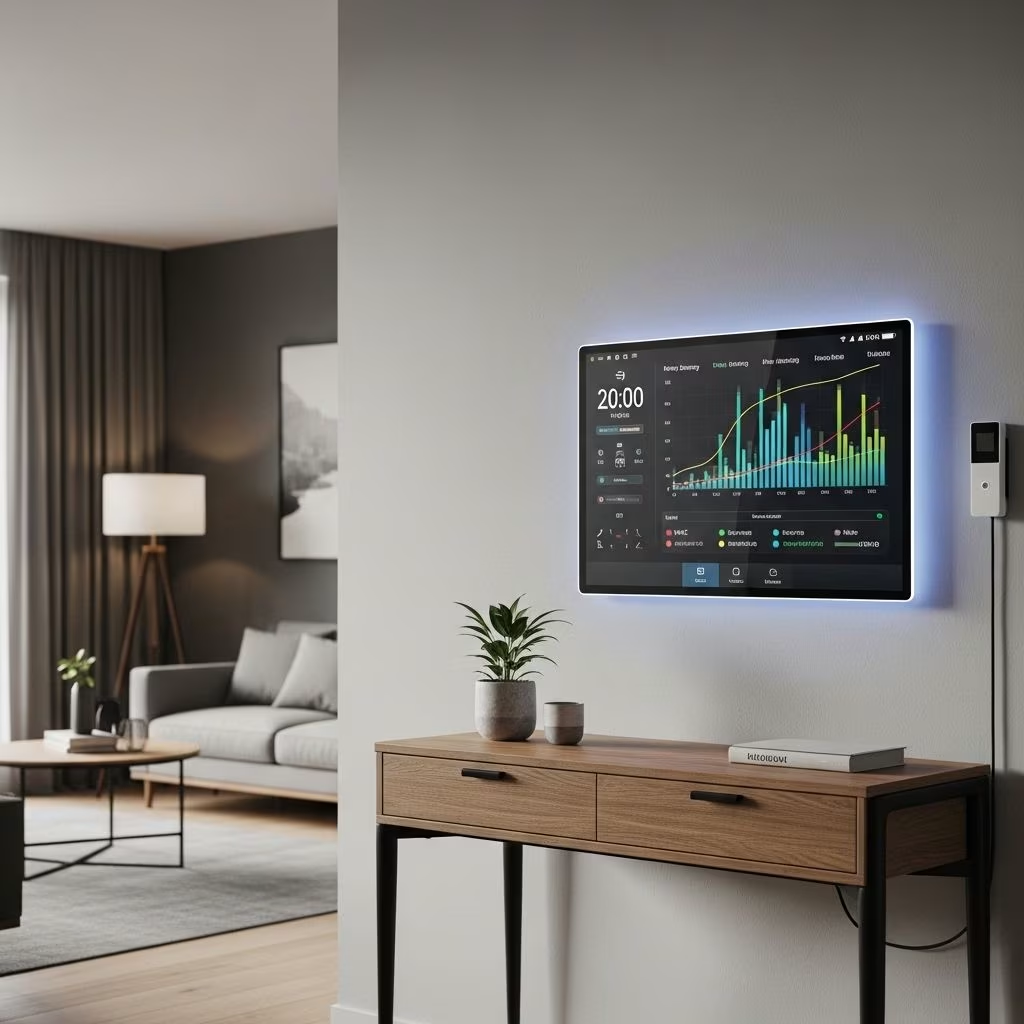
Sense Home Energy Monitor: Unlocking Real-Time Insights for Smarter Homes
As energy prices rise and environmental awareness grows, homeowners are increasingly looking for ways to track and reduce their electricity usage. The Sense Home Energy Monitor stands out as a powerful solution, offering real-time analytics, device-by-device detection, and actionable advice to foster more energy-conscious living. This article provides an in-depth exploration of the Sense system, revealing its capabilities, installation process, technical features, integration options, and its true impact after months of home use.
What Is the Sense Home Energy Monitor?
The Sense Home Energy Monitor is a device installed in your home’s electrical panel that monitors current and voltage at a high frequency—up to 1 million times per second. By analyzing this data, Sense can not only display total power usage but also identify individual appliances based on their unique electrical signatures. This approach sets it apart from more basic home energy monitors or smart plugs, providing detailed breakdowns of where your electricity is going and offering the granularity needed to merge energy management with smart home automation .
- Real-time energy consumption tracking for the entire home
- Device detection using machine learning to identify major appliances
- Mobile app integration for iOS and Android
- Customizable alerts for selected devices
- Solar integration option for homes with solar panels
Technical Specifications and Key Features
| Specification | Details |
|---|---|
| Dimensions | 5.3″ x 2.6″ x 1.25″ (137mm x 66mm x 32mm) |
| Weight | 220g |
| Installation | Inside main electrical panel (professional installation recommended) |
| Connectivity | Wi-Fi (2.4GHz), Bluetooth Smart |
| Sampling Rate | 1 million times per second (1MHz) |
| Processor | 1GHz ARM Processor |
| Power Consumption | <5W, 0.1A |
| Compatibility | Works with iOS and Android; supports 120VAC (90V-130V), 60Hz, 200A split-phase |
| Environmental Ratings | Humidity <90%, 32-122ºF (0-50ºC), Elevation <9842’ |
| Warranty | 1 year |
| Data Storage | Cloud-based, with historical tracking |
| Price | $299 standard, $349 for solar version |
Core Features That Distinguish Sense
- Individual device recognition—Sense uses machine learning algorithms to distinguish devices like refrigerators, washing machines, or microwaves by their power signatures. Over time, more appliances are identified automatically and tracked.
- Real-time power monitoring—Instantaneous display of whole-home electricity consumption, as well as individual device usage once detected.
- Custom alerts—Configure push notifications for specific devices turning on/off, helping detect unusual behavior or potential safety issues.
- Always-on device detection—Sense can profile devices that constantly draw power and identify unnecessary energy vampires.
- Solar compatibility and time-of-use support—For homes with solar panels or variable-rate plans, Sense presents generation vs. consumption data, and enables smarter decisions about when to use certain appliances.
- Historical data and analytics—Users can browse past usage trends to pinpoint long-term inefficiencies or spot patterns tied to daily routines.
Unboxing and Installation Process
Installation of the Sense Home Energy Monitor involves attaching its sensors inside your main electrical panel—a procedure that often requires a licensed electrician for safety and compliance. The setup is meticulously documented, with clear guides and safety certification (ETL/Intertek), ensuring the device is only compatible with homes in the United States or Canada .
- Included components:
- Sense monitor unit
- Current sensors (CT clamps)
- Installation hardware and user guide
- Typically takes less than one hour for installation when performed by a professional.
- Device connects to home Wi-Fi, then begins sampling and transmitting data to the cloud for analysis.
- Mobile app walks users through setup and initial configuration.
Installation Table
| Step | Details |
|---|---|
| Shut off power | Turn off main breaker to electrical panel |
| Mount sensors | Clip current transformers around main power cables |
| Connect wires | Attach monitor to Wi-Fi and panel neutrals |
| Restore power | Turn breaker back on and confirm operation |
| App setup | Follow app instructions for network connection |
Real-World Performance Review: Months of Use
After initial setup, Sense begins its true work: tracking and distinguishing the energy usage of individual devices. Users report that, within weeks, the system identifies several high-wattage appliances automatically—such as washing machines, sump pumps, and refrigerators. As detection algorithms continue to learn, more devices appear in the app’s dashboard.
- Timeline for device detection: Some appliances (especially those with distinctive usage patterns) are detected within days, while others might require weeks or more frequent cycles for reliable identification.
- Accuracy and detail: Most major appliances are recognized with good accuracy. However, some devices with complex signatures, variable speeds, or shared circuits may never be perfectly identified, a limitation common to machine learning-based energy monitors.
- Continuous improvement: Sense regularly updates its cloud algorithms based on user feedback and worldwide device data, slowly enhancing detection precision for a broader set of appliances.
Practical Use Cases
- Find energy hogs: Quickly identify which devices consumer large amounts of electricity and tweak usage patterns accordingly.
- Always-on monitoring: Track which devices drain standby power 24/7 and decide if unplugging or upgrading is warranted.
- Disaster avoidance: Custom notifications for sump pumps or well pumps can prevent household flooding or damage by alerting users to malfunctions.
- Smart home triggers: Integrate with IFTTT, Alexa, and Google Home to automate contextual actions (for example, turning off lights when nobody’s home).
Data Accessibility: Mobile and Web App Experience
All Sense data is accessible via robust mobile apps (iOS and Android) and a web dashboard. The UI is intuitive, dividing its core functions into main trends, device lists, and customizable notifications .
- Power Meter: Visualizes home energy consumption over 24 hours, updating in real time.
- Device List: Each identified appliance is tracked individually, with historical and live data, plus status alerts.
- Settings and Customization: Account setup, integration options, and notification preferences are all handled in the app.
- Cross-platform support: Minor design differences between iOS and Android, but feature sets are functionally identical.
Sample Data Views
- Real-time graph showing total wattage usage
- Timeline display of when key appliances turn on/off
- Alerts configured for specific, critical devices
- Historical trends to analyze seasonal changes or spot unusual spikes
Smart Home Integration
Sense is designed to plug into popular smart home platforms, including Amazon Alexa, Google Home, and IFTTT. This facilitates powerful automation, such as triggering routines when certain appliances activate or monitoring energy events for system-wide alerts. By linking energy data with broader home automation, Sense transforms passive energy tracking into actionable intelligence throughout the household.
- Connects to smart speakers for voice queries (“How much energy did we use today?”)
- Can trigger events or routines based on device usage via IFTTT
- Helps households optimize device schedules for utility time-of-use rates
Pros and Cons of the Sense Monitor After Long-Term Use
| Pros | Cons |
|---|---|
|
|
Frequently Asked Questions (FAQs)
Q: How does Sense identify appliances?
A: Sense uses high-frequency sampling of current and voltage, combined with machine learning analysis in the cloud, to “fingerprint” devices by their on/off patterns and distinctive energy use profiles.
Q: Does Sense work with solar panels?
A: Yes, the solar-compatible edition tracks both energy generated and consumed, providing separate analytics for solar input and grid draw.
Q: Can Sense help me lower my electricity bill?
A: Absolutely. By revealing which devices burn the most power—and flagging unseen energy drainers—it guides users to turn off, replace, or schedule usage more efficiently.
Q: Do I need an electrician to install Sense?
A: Professional installation is strongly recommended, as setup involves direct interaction with high-voltage components inside your electrical panel.
Q: Is my data private and secure?
A: All data is encrypted and stored in Sense’s cloud platform, with user-controlled sharing permissions and regular security updates.
Q: Will every device in my house be detected?
A: The majority of large appliances are typically recognized, but smaller or more complex loads may not be individually identified due to overlapping signals.
Bottom Line: Is Sense Worth It?
If your goal is to gain deep insight, real-time control, and actionable analytics over household electricity usage, the Sense Home Energy Monitor delivers a feature-rich platform. While not every device will be individually tracked and some installation hurdles exist, the power of machine learning-driven energy management makes it a leading option for tech-savvy, sustainability-minded homeowners. With thoughtful use, it can pay for itself in energy savings while helping your home run smarter, greener, and more efficiently.
References
- https://nerdyhometech.com/energy-monitors/sense-home-energy-monitor/
- https://the-gadgeteer.com/2018/10/12/sense-home-energy-monitoring-device-review-part-1/
- https://help.sense.com/hc/en-us/articles/25280811659923-Installation-guide-Technical-Specs-Sense-Home-Energy-Monitor
- https://manuals.plus/sense/sense-12000-energy-monitor
- https://sense.com
- https://www.youtube.com/watch?v=2ALQUS_igPk


