Switching to Green Gas: Why I Made the Change
Like many Canadians trying to minimize their impact on the environment, I’ve spent years seeking practical and meaningful ways to reduce my carbon footprint at home. From upgrading windows to adding insulation, switching to energy-efficient appliances and even monitoring my family’s electricity and water use, the journey has often felt incremental, with the spectre of fossil fuel dependency looming in the background. When I recently decided to make the leap from conventional natural gas to Bullfrog Power’s green natural gas, I realized I was finally taking decisive action towards a cleaner, renewable home energy future.
What Is Green Natural Gas?
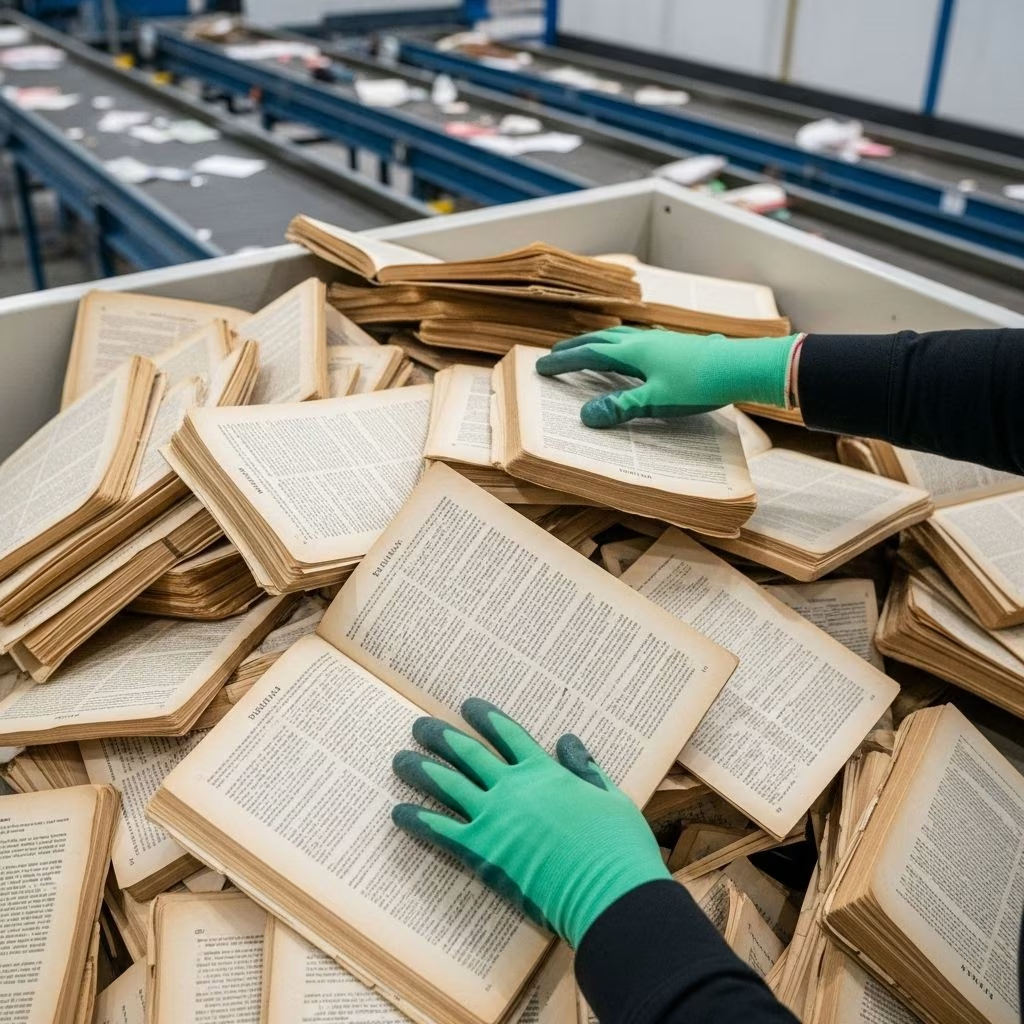
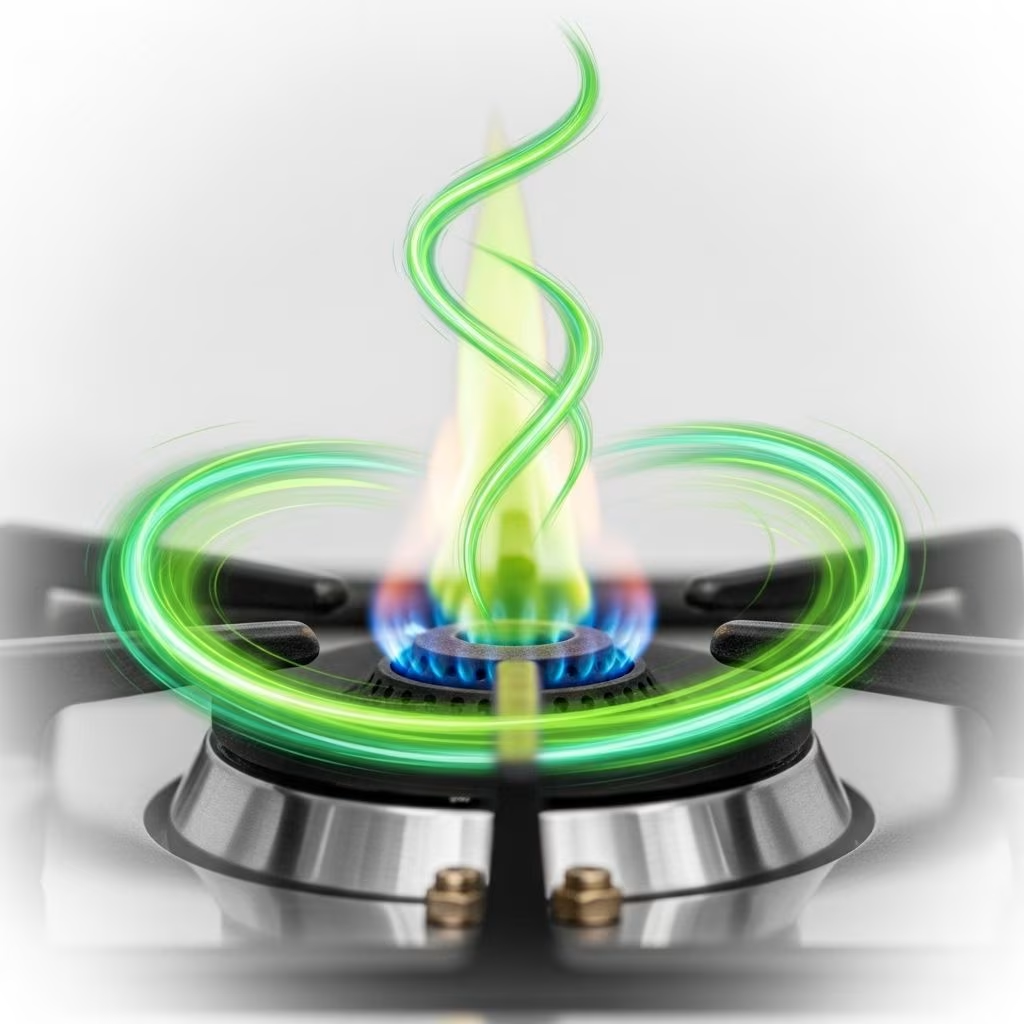
Green natural gas—also known as renewable natural gas (RNG)—is a clean alternative to conventional fossil-based natural gas. Instead of being extracted from underground reserves, green gas is sourced from the decomposition of organic waste (like food, agricultural waste, or wastewater). The resulting methane—biogas—is then cleaned, upgraded, and injected into the conventional natural gas pipeline, displacing an equivalent portion of fossil-derived gas.
- Produced from organic waste: Capturing methane from landfills, wastewater treatment, or agricultural operations prevents its direct emissions to the atmosphere.
- Fully compatible: Green gas can be mixed with standard natural gas in current pipelines, requiring no new infrastructure for homes or businesses.
- Carbon-neutral or negative potential: If sourced from waste that would otherwise release methane (a potent greenhouse gas), burning green gas for energy reduces net emissions compared to fossil gas.
The actual molecules flowing to my home may still be a blend, but my purchase increases the volume of renewable gas in the system, supporting further development of this low-carbon solution.
Why Bullfrog Power?
Bullfrog Power is a Canadian leader in renewable energy, offering consumers and businesses the ability to choose green electricity, green natural gas, and green fuel solutions to reduce their reliance on fossil fuels. Not only does Bullfrog Power source renewable gas from Canadian projects, but they also inject an equivalent volume of RNG into the system for each customer subscription. This ensures that for each cubic metre I use, an equal amount of green gas is supplied to the grid on my behalf, supporting a cleaner provincial or national energy mix.
- Certified and credible: Bullfrog Power sources RNG from high-quality, verifiable projects and is recognized widely for its transparent, third-party audited approach to renewable energy sourcing.
- Support for Canadian innovation: Bullfrog Power’s model provides vital market demand, encouraging the growth of new RNG production in Canada.
- Broad product suite: Beyond green gas, Bullfrog offers green electricity and fuels for businesses and residences, addressing different aspects of energy use.
How the Green Gas System Works
Upon signing up with Bullfrog Power for green natural gas, my existing gas service and utility provider remain unchanged—there’s no interruption to billing, safety, or actual gas delivery. The process, however, is empowering:
- Simple Add-On Subscription: I keep paying my gas utility as usual, but a separate monthly or annual fee is charged by Bullfrog Power, based on my estimated usage.
- Equivalence Model: For every unit of gas I consume, Bullfrog Power ensures an equivalent volume of RNG is produced and injected into the pipeline somewhere in Canada.
- No Home Retrofit Required: Because the green gas enters the shared grid, there’s no need for special appliances, meters, or home refitting. My furnace and water heater function exactly as before.
- Supporting Systemic Change: By choosing green gas, individuals collectively drive investment and expanded production of RNG—critical for decarbonizing Canada’s energy sector.
Reasons for Going Green: Environmental, Practical, and Emotional
For me, the shift away from fossil fuels wasn’t merely a matter of utility bills—it was a statement of values and a way to align my household choices with my commitment to tackling climate change. Here are some of the driving motivations:
- Reducing GHG Emissions: Methane, the main component of natural gas, is far more potent than carbon dioxide as a greenhouse gas. Capturing it from waste and burning it as RNG prevents high-impact landfill or agricultural emissions and replaces fossil-derived gas.
- Encouraging a Circular Economy: Using waste to create energy exemplifies a circular economy, turning liabilities into assets.
- Inspiring Systemic Change: While individual choices alone won’t reverse global warming, they signal and build demand for alternatives that can scale.
- Peace of Mind: Knowing I’m supporting a tangible, local solution relieves some of the climate anxiety associated with everyday fossil fuel use.
What Does It Cost?
Cost is naturally a central question for any homeowner contemplating a green energy upgrade. With Bullfrog Power, the cost of green natural gas is an additional premium based on estimated household usage. For most homes, this might range from $20 to $30 per month on top of standard utility rates, though the figure scales with consumption. It’s a significant investment, but when compared to the climate costs of inaction—and the real value of supporting new, green infrastructure in Canada—it’s one I found justified.
What Happens When You Switch?
Here’s a summary of my experience making the switch to Bullfrog Power’s green gas:
- I signed up online using Bullfrog Power’s quick and transparent portal, entering details about my current gas consumption.
- Bullfrog calculated a monthly premium based on my energy use history. I had the option to adjust if I anticipated seasonal differences.
- The process required no technical changes at my end—my gas utility remained the same; only the origin story of my energy changed.
- Bullfrog Power sent regular updates about the sources of their green gas, details on new RNG production facilities, and certification of impact.
The greatest benefit was knowing my choice created real market signals for the development and integration of clean, renewable gas and helped demonstrate there’s a demand for low-carbon innovation within Canada’s aging energy systems.
The Challenges and Limitations of Green Gas
While switching to Bullfrog Power’s green gas was straightforward for me, there are some bigger-picture concerns worth considering:
- Limited supply: Right now, RNG is a small fraction of overall gas consumed in Canada. Accelerating adoption requires massive investment and supportive policy frameworks.
- Premium cost: While prices are expected to fall with wider uptake, green gas remains more expensive than traditional fossil sources for now, requiring early adopters.
- Emissions tradeoffs: Not all RNG is carbon-negative; the climate benefit depends on the feedstock and life-cycle analysis for each project. Avoiding food-vs-fuel dilemmas is also important.
- Not a complete solution: Fuel switching is only one step. Building efficiency, electrification, and demand reduction are still essential for a low-carbon future.
Bullfrog Power’s Broader Impact
Since launching in the mid-2000s, Bullfrog Power has helped Canadian homes and businesses displace millions of tonnes of greenhouse gas emissions and accelerate the growth of clean energy infrastructure. Their model of matching customer usage with the injection of new, verifiable green energy sources—whether electricity, RNG, or even renewable transportation fuels—has changed what’s possible for those eager to take climate action right away.
High-profile partnerships, such as with Purolator, TD Bank, and Beck Taxi, demonstrate Bullfrog’s solutions working at scale for both residential and commercial adopters. Their transparent reporting, involvement of environmental NGOs, and recognized Certified B Corporation status help assure customers that the impact is real and verifiable.
| Conventional Natural Gas | Bullfrog Power Green Gas |
|---|---|
| Fossil-derived, emits CO₂ | RNG from organic waste, can be carbon-neutral or negative |
| Non-renewable resource | Renewable, circular resource |
| Lower upfront cost | Premium but supports new, clean energy infrastructure |
| Contributes to climate change | Reduces emissions and methane leaks |
Tips and Common Questions About Switching to Bullfrog Power’s Green Gas
- Check with your utility: Green gas via Bullfrog works as an energy offset, not a physical switch, so there is no disruption to your home service.
- Assess your usage: Bullfrog’s calculators let you estimate your costs before committing, so you understand the budgetary impact.
- Stay updated: Bullfrog provides regular communication about the projects your money is supporting—helpful for tracking real-world climate impact.
- Combine efforts: For maximum effect, look at switching as part of a broader decarbonization plan—consider electrifying appliances, improving home efficiency, or also opting for green electricity if possible.
Frequently Asked Questions (FAQs)
Q: Will my furnace or water heater need to be replaced to use green gas?
A: No adjustments are required. Bullfrog Power’s green gas is injected into the same pipeline as fossil gas. Your appliances function as before; the offset occurs at the supply level.
Q: How do I know the green gas is actually being added to the system?
A: Bullfrog Power’s renewable gas is third-party audited and certified. They provide documentation and impact reports showing the equivalent volumes injected for all gas purchased by consumers.
Q: Can I combine Bullfrog Power’s green gas with green electricity?
A: Yes, many households choose both Bullfrog’s green natural gas and renewable electricity options for a comprehensive approach to home energy sustainability.
Q: Is green gas available everywhere in Canada?
A: Because it’s injected into a shared gas grid, you can subscribe almost anywhere the gas utility operates—even though the RNG’s physical point of entry may be in a different province.
Q: What happens if I move?
A: It’s easy to transfer or suspend your Bullfrog Power subscription when moving. Their customer service team will help you update your address and adjust your green gas allocation accordingly.
Final Thoughts: The Power of Individual Action
Switching to Bullfrog Power’s green gas is one of the clearest steps a Canadian household can take to signal their demand for a sustainable, renewable future. While no single decision can fix the climate crisis, a critical mass of individuals embracing cleaner energy options—combined with business and government action—can accelerate Canada’s (and the world’s) transition to a low-carbon society. For me, making this switch was both surprisingly simple and deeply meaningful, providing hope that the small choices we make truly matter.
References
- https://advancedbiofuelsusa.info/bullfrog-power-opens-the-door-to-cleaner-transportation-with-the-launch-of-green-fuel
- https://www.newswire.ca/news-releases/bullfrog-power-and-purolator-team-up-to-deliver-green-energy-where-it-needs-to-go-850791689.html
- https://energybusinessoutlook.com/bullfrog-power/
- https://bullfrogpower.com/blog/
- https://www.cliffsnotes.com/study-notes/23927623
- https://www.youtube.com/watch?v=ggODuyxcFR4
- https://bullfrogpower.com/solutions/green-natural-gas-detached/