


Why Doesn’t America Bury Its Power Lines?
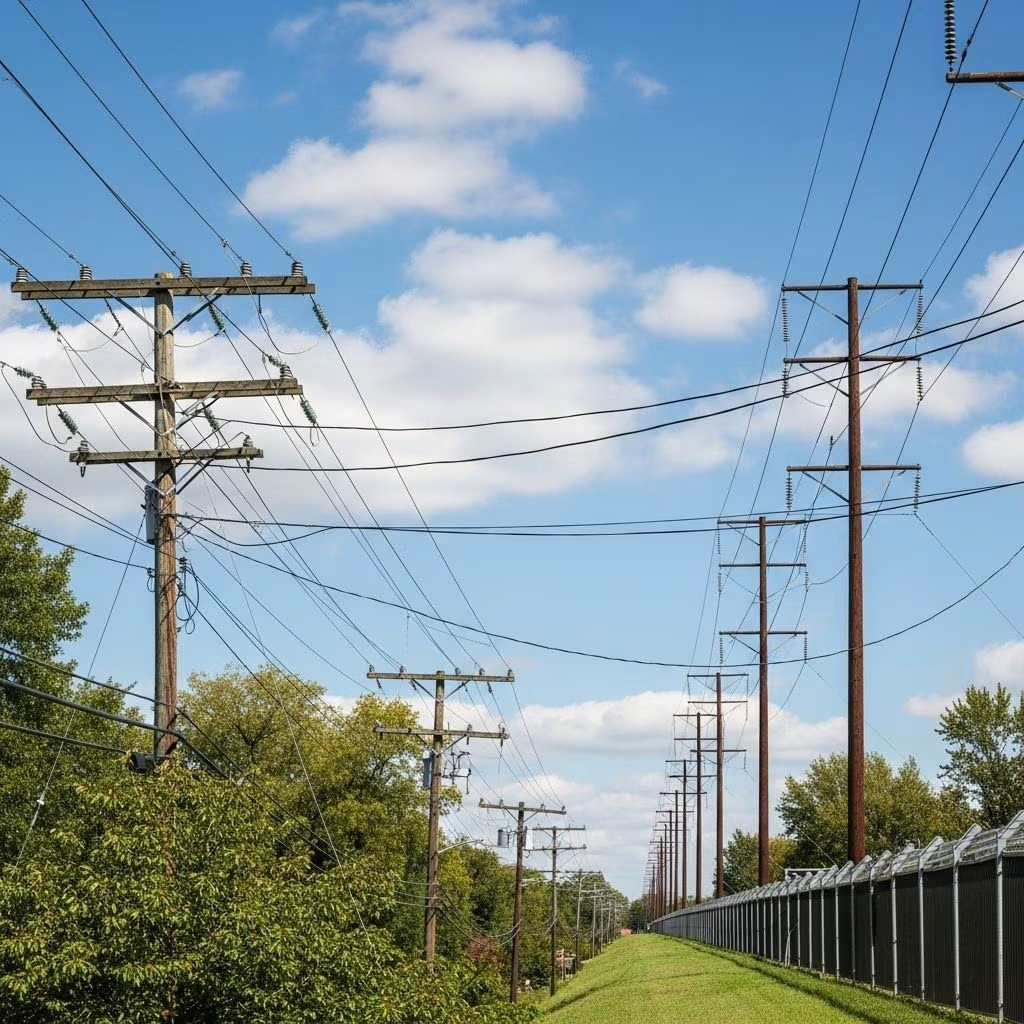
Across the United States, overhead power lines drape urban neighborhoods, line rural highways, and cut through forests and suburbs. The question many Americans ask after large-scale storms, wildfires, or blackouts is: why aren’t America’s power lines buried underground? While placing electrical transmission and distribution lines below ground would undoubtedly mitigate certain hazards and improve aesthetics, the answer isn’t as simple as it seems. This article explores the complex interplay of cost, safety, logistics, regulations, and climate challenges standing in the way of mass undergrounding of power infrastructure in America.
The U.S. Overhead Power Line Landscape
Electricity in the United States is delivered via a vast network of wires that span over 5.5 million miles. The majority of these are overhead lines, suspended from utility poles made of wood, steel, or concrete. Only about 18% of U.S. distribution lines are currently buried underground. The rest form a highly visible part of the nation’s infrastructure—one that is increasingly being scrutinized after extreme weather events and wildfires.
There are two primary categories of power lines in the U.S. grid:
- Transmission lines: Carry high-voltage electricity over long distances from power plants to local substations, typically strung overhead for efficiency and maintenance access.
- Distribution lines: Deliver lower-voltage electricity from substations to homes and businesses. These lines are more often candidates for underground burial, especially in urban or high-risk zones.
Why Bury Power Lines? Benefits Explained
Shifting power lines underground—known in the electricity industry as undergrounding—offers tangible advantages:
- Reduced Outages: Underground lines are far less exposed to wind, falling trees, vehicles, and storms. As a result, they suffer fewer disruptions due to external events like hurricanes, heavy snow, or ice storms.
- Fire Prevention: In wildfire-prone regions, underground lines eliminate the danger of live wires sparking fires—a key lesson from California’s recent catastrophic blazes where overhead lines played a tragic role.
- Aesthetics: Burying lines removes unsightly wires, improving the visual landscape and property values.
- Public Safety: Underground wires remove hazards from downed or exposed lines after storms or accidents.
The Hefty Price Tag of Undergrounding
The main obstacle to widespread undergrounding is cost. Installing new underground distribution lines can be 5 to 10 times more expensive than stringing them overhead. The cost varies greatly depending on terrain, soil conditions, urban density, permitting, and local labor rates. According to industry estimates:
- Overhead distribution lines: $800,000 to $1.5 million per mile.
- Underground distribution lines: $5 million to $10 million per mile in urban areas; $2 million to $5 million per mile in suburban and rural settings.
For example, in California, PG&E’s plan to bury 10,000 miles of lines in high-risk wildfire zones could cost as much as $20 billion to $40 billion—an increase likely to be passed to consumers via utility bills.
Table: Cost Comparison by Deployment Method
| Deployment Method | Estimated Cost per Mile |
|---|---|
| Overhead (new build) | $800,000 – $1,500,000 |
| Underground (rural) | $2,000,000 – $5,000,000 |
| Underground (urban/dense) | $5,000,000 – $10,000,000 |
Transforming the entire U.S. overhead distribution network to underground would cost hundreds of billions of dollars.
Technical and Logistical Barriers
Cost isn’t the only challenge. Burying power lines also involves a host of logistical and technical hurdles:
- Challenging Terrain: Hard rock, wetlands, or areas with a high water table make trenching disruptive and expensive.
- Existing Infrastructure: Urban landscapes are crowded with water, gas, sewer, telecom, and existing electrical lines, increasing the risk and complexity of excavation.
- Repair Delays: While outages may be less frequent, underground faults can take longer and be costlier to diagnose and repair compared to overhead lines, where the fault is visible.
- Flooding Vulnerability: Underground lines are susceptible to damage from flooding and water intrusion, especially in areas with poor drainage or frequent hurricanes.
- Heat Dissipation: Buried cables have different cooling characteristics than overhead wires, necessitating specialized equipment for high-load areas.
Why Overhead Remains the Default
The longevity and ubiquity of overhead lines in America’s grid are the result of several entrenched factors:
- Low Upfront Cost: Overhead wires are cheaper and faster to deploy, making them the standard for utilities seeking to minimize short-term costs and satisfy regulatory oversight.
- Easier Maintenance: Faults on above-ground lines are easier to locate and repair, reducing repair times after storms.
- Historic Norm: The nation’s power grid was built mostly in the early- to mid-20th century, before modern undergrounding techniques were widely available.
- Regulatory Fragmentation: U.S. utility regulation is a patchwork of local, state, and federal jurisdiction, making coordinated system-wide upgrades challenging.
Case Studies: Where Undergrounding Succeeds—and Fails
Some regions have implemented underground lines with positive results, while others have faced major challenges:
- Western Europe: Many countries in Europe have buried a larger share of their distribution lines, motivated by greater urban density, higher public expectations, and a willingness to accept higher rates.
- Florida: After repeated hurricanes, some coastal communities invested in burying utilities. Results show a significant decrease in storm-related outages, but increased vulnerability to flooding remains a concern.
- California: Faced with devastating wildfires, PG&E and other utilities are shifting parts of their network underground as part of a strategy to reduce fire risk.
Climate Change and the New Urgency for Grid Modernization
Severe weather is intensifying because of climate change, with wildfires, hurricanes, and ice storms becoming more frequent and damaging. The consequences are especially vivid in the electric grid:
- Wildfires: Overhead lines are constant ignition sources in drought-ridden areas. Undergrounding is now seen as a system-hardening investment in high-fire-risk zones.
- Storms: Hurricanes and ice storms snap overhead poles, plunging millions into darkness for days or weeks. Underground lines largely escape wind and fall-associated damage.
Yet, modernizing the grid is not just about burying wires: it includes smarter, more distributed systems, microgrids, and resilience planning.
Who Pays for Undergrounding?
The massive cost of undergrounding power lines is a significant policy and socioeconomic challenge:
- Utility Bills: Most utilities recover the cost of infrastructure upgrades by raising rates for all customers, even those who may not directly benefit from undergrounding projects.
- Ratepayers and Equity: This raises issues of fairness, especially as lower-income households may be disproportionately affected by higher electricity bills but see fewer outages fixed in their neighborhoods.
- Government Incentives: Federal and state grants may support specific projects, especially after disasters, but there’s no universal funding mechanism.
Alternative Approaches: Is Undergrounding the Only Solution?
Given the high costs and complexity, utilities and regulators often choose other solutions for grid hardening, such as:
- Vegetation Management: Aggressively trimming and clearing trees from power line corridors, though this is labor-intensive and offers only partial protection.
- Insulated Conductors: Using covered wires instead of bare conductors to reduce risk of arcs and sparks caused by branches or wildlife.
- Rerouting Lines: Moving lines away from high-risk areas (e.g., forests).
- Smart Grid Technologies: Advanced sensors and switches to quickly isolate faults and reduce outage sizes.
Still, in some high-risk or high-value areas, undergrounding may be the only option that offers both safety and reliability.
The Future of America’s Power Lines
The U.S. faces a critical decision point: continue patching and repairing its aging overhead infrastructure or make a generational investment in modernizing the grid, which may mean undergrounding large segments. Several trends are driving change:
- Urban development: New subdivisions increasingly mandate underground lines for safety and aesthetics.
- Disaster recovery: In the wake of natural disasters, communities sometimes choose to invest in undergrounding as part of rebuilding efforts.
- Wildfire and storm risks: The escalation of climate-related threats may shift public opinion and government policy toward more resilient solutions.
However, the scale and cost of such ambitions remain daunting, and progress will likely be incremental and uneven across regions.
Frequently Asked Questions (FAQ)
Q: How much would it cost to bury all U.S. overhead power lines?
A: Estimates suggest it could exceed $1 trillion for the entire U.S. distribution system, or roughly 5-10 times the cost of new overhead installation.
Q: Are underground power lines immune to outages?
A: No. While they suffer fewer outages due to weather, underground cables can fail due to insulation breakdown, flooding, or damage from construction. Repairs often take longer and are more expensive.
Q: Why are so many European lines underground?
A: Many European countries prioritized undergrounding due to higher population densities, stricter urban design, public safety, and a greater acceptance of higher utility rates to fund infrastructure investment.
Q: What percentage of U.S. lines are underground now?
A: Approximately 18% of the nation’s distribution lines are underground, with most buried in new master-planned communities or urban business districts.
Q: Does undergrounding provide environmental benefits?
A: Yes. In addition to reducing visual pollution and the risk of wildfire, undergrounding can preserve tree canopies otherwise subject to aggressive trimming. However, undergrounding can temporarily disrupt soils, habitats, and existing green infrastructure during installation.
Key Takeaways
- Burying power lines can improve reliability, aesthetics, and safety, especially in hazard-prone regions.
- The enormous cost—often several times that of overhead lines—remains a primary barrier.
- Technical factors, maintenance challenges, and regulatory fragmentation further complicate the transition.
- Climate change is putting growing pressure on utilities and policymakers to rethink old infrastructure norms.
- No single solution fits all regions; the future U.S. grid will be a blend of overhead, underground, and advanced technological upgrades.
References
- https://www.canarymedia.com/articles/utilities/californias-biggest-utility-plans-to-bury-10000-miles-of-power-lines
- https://www.youtube.com/watch?v=52iCmSFW2Wk
- https://unitil.com/blog/why-not-just-have-underground-power-lines
- https://www.exponent.com/article/when-should-electric-utilities-go-underground
- https://www.kqed.org/news/11851411/why-doesnt-pge-bury-the-power-lines-to-prevent-wildfires
- https://arpa-e.energy.gov/news-and-events/news-and-insights/us-department-energy-announces-34-million-improve-reliability-resiliency-and-security-americas-power-grid
- https://www.scenic.org/wp-content/uploads/2024/02/ClearSkiesAhead82580.pdf


