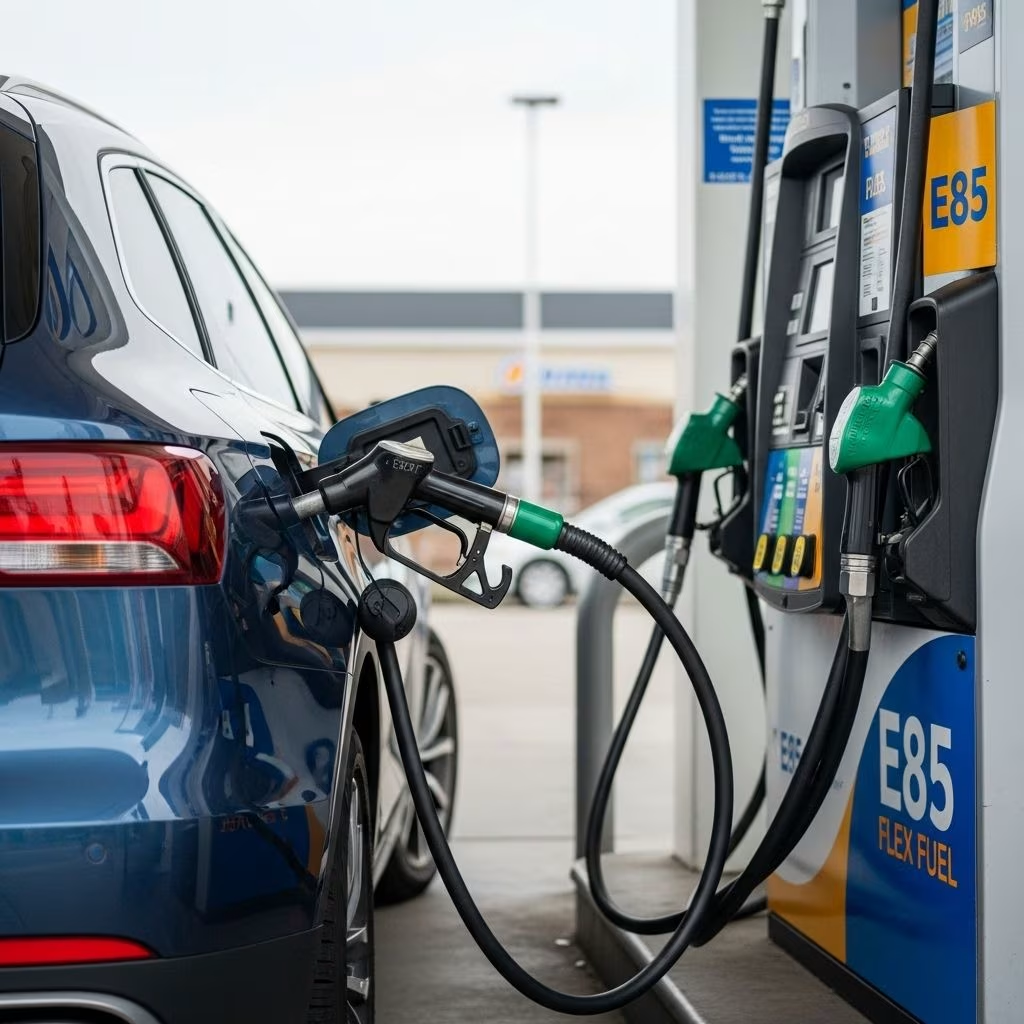
E85-Compatible Vehicles: What to Know About Flex-Fuel Cars
With growing attention on sustainability and environmental impacts, E85-compatible vehicles are becoming a popular alternative for drivers seeking lower emissions and greater fuel flexibility. This guide offers an in-depth exploration of flex-fuel technology, its benefits, key considerations for car owners, and a detailed look at models available from major manufacturers.
What Is E85 and How Does It Work?
E85 is shorthand for a fuel blend of 85% ethanol and 15% gasoline. Ethanol is primarily produced from agricultural resources such as corn or sugarcane, making it a renewable and domestically produced biofuel. Flex-fuel vehicles (FFVs) are engineered to operate on any mixture of ethanol and gasoline—from pure gasoline to E85—and adjust automatically for optimal engine performance.
- Renewable fuel: Ethanol is derived from plant materials, reducing reliance on fossil fuels.
- Lower emissions: E85 typically produces fewer greenhouse gases and less smog-forming pollutants than regular gasoline.
- Engine compatibility: FFVs have modified components such as specialized fuel lines and sensors to handle higher ethanol content.
How E85 Differs from Regular Gasoline
- Energy content: Ethanol contains less energy per gallon than gasoline, so vehicles running on E85 may experience reduced fuel economy.
- Performance: E85 generally has a higher octane rating, supporting higher engine compression and, in some cases, improved performance.
- Availability: E85 is offered at a growing number of fueling stations, especially in the Midwest and select urban areas.
Core Benefits of Driving an E85-Compatible Vehicle
Choosing a flex-fuel vehicle comes with numerous advantages for both drivers and the environment. Key benefits include:
- Reduced Greenhouse Gas Emissions: E85’s high ethanol content can substantially decrease a vehicle’s carbon footprint compared to gasoline.
- Support for Domestic Agriculture: Most ethanol is sourced from U.S. crops, promoting local economies.
- Fuel Flexibility: Drivers enjoy the convenience of refueling with either gasoline, E85, or any mix of both without additional modifications.
- Potential Cost Savings: E85 often costs less per gallon, though efficiency differences may offset some savings.
Identifying If Your Vehicle Is E85-Compatible
If you’re curious whether your vehicle can use E85, there are several straightforward methods to determine compatibility:
- Check Your Owner’s Manual: Flex-fuel capability is clearly listed under fuel recommendations.
- Look for Badges: FFVs often display “FlexFuel” or “E85” badges on the exterior or near the fuel door.
- Inspect the Fuel Cap: E85-capable vehicles usually have a yellow fuel cap labeled “E85/Gasoline” or similar wording.
- Vehicle Identification Number (VIN): Some automakers use specific characters in the VIN (typically the eighth character) to indicate FFV status.
- Emissions Label: Under the vehicle’s hood, the emissions information label may note E85 compatibility.
If in doubt, consult your dealership or vehicle manufacturer for confirmation.
Automakers Producing E85-Compatible Vehicles
Many global automakers have offered flex-fuel vehicles, particularly in regions with strong governmental support for ethanol. The following are prominent manufacturers with E85-compatible models (availability may vary by region and model year):
| Manufacturer | Notable FFV Models | Notes |
|---|---|---|
| Chevrolet | Impala, Silverado, Tahoe, Suburban, HHR | Broad FFV offerings across sedans, SUVs, and trucks |
| Ford | F-150, Explorer, Escape, Taurus, Expedition | Strong commitment to E85 compatibility in trucks and SUVs |
| Chrysler/Dodge/Jeep | Ram 1500, Grand Caravan, Town & Country, Durango, Grand Cherokee | FFVs found across various models and years |
| GMC | Sierra, Yukon, Savana | FFV options in full-size pickups and vans |
| Toyota | Tundra, Sequoia (select trims & years) | Limited E85 models, check specific years |
| Nissan | Armada, Titan, Frontier | FFV versions available in select years |
| Mercedes-Benz | CLA250, GLA250, GLE350 (US); various Thai market models | FFVs sometimes limited to regional releases |
| Saab | 9-3 BioPower, 9-5 BioPower | BioPower line marketed predominantly in Europe and Australia |
| Peugeot, Renault, SEAT, Škoda | BioFlex, MultiFuel, and Flex Fuel variations | Primarily for European markets |
Other Notable Manufacturers
- Kia: Soul, Sorento (Brazilian market)
- Hyundai: HB20 (Brazilian market)
- Mitsubishi: Pajero TR4, Lancer Ex (Regional markets)
Comprehensive List: Popular E85-Compatible Models by Year and Brand
The specific models and years for E85 compatibility can change frequently. Here’s an overview of notable vehicles, although this list is not exhaustive and drivers should confirm based on their own car’s configuration:
- Chevrolet: Silverado and Tahoe (2007–present), HHR (2009), Impala (2009–2019)
- Ford: F-150 (2007–2014), Explorer (select years after 2008), Taurus (2008–2019)
- Chrysler/Dodge/Jeep: Ram 1500 (2012–2020), Durango (2012–2020), Grand Caravan (select trims 2012–2018)
- Toyota: Tundra, Sequoia (5.7L, 2011–2020)
- Nissan: Titan, Armada (2008–2015), Frontier (2012–2015, 4.0L)
- GMC: Yukon, Sierra (similar to Chevrolet badge-engineered siblings)
- Saab: 9-3 and 9-5 BioPower (primarily 2007–2012)
International and Minor-Brand Offerings
- Hyundai/Kia/Mitsubishi: Common in the Brazilian and Thai markets, where flex-fuel engines are standard in many models.
- Peugeot/Renault/SEAT/Škoda: E85 FFVs offered in select European markets under BioFlex, MultiFuel, or Eco2 marketing.
How to Confirm E85 Compatibility for a Specific Model
Because options and labeling can change, the following steps can help you identify if a particular vehicle is E85 compatible:
- Consult the Owner’s Manual: Always the first and most authoritative source for compatible fuels.
- VIN Identification: The eighth character of the Vehicle Identification Number often signals FFV status (varies by automaker).
- Look for Badges & Fuel Cap Indicators: Many vehicles feature a yellow fuel cap or “FlexFuel”/“E85” sticker near the fuel port.
- Check the Emissions Control Label: Under the hood, this label often indicates compatibility with alternative fuels, including E85.
When inspecting older vehicles, always verify with a trusted source to avoid engine damage, as non-compatible engines can be harmed by ethanol-rich blends.
Fuel Economy, Maintenance, and Performance Considerations
Although E85 vehicles provide substantial environmental benefits, drivers should understand the potential variations in performance and maintenance:
- Fuel Economy: Running on E85 generally lowers fuel economy by 15–30% compared to gasoline, due to ethanol’s lower energy density.
- Maintenance: FFVs often require similar maintenance schedules as gasoline-rich cars, but ethanol-resistant components can contribute to greater longevity.
- Cold Weather Performance: E85 is harder to vaporize in low temperatures; some vehicles may start less reliably on high-ethanol blends in cold climates unless fuel blends are seasonally adjusted.
- Availability: While E85 accessibility has expanded, not all fuel stations offer it. Checking coverage in your area before purchasing an FFV is prudent.
Environmental Impact: The E85 Advantage
One of the strongest advantages of E85 and other ethanol-based fuels is their potential to decrease transportation-related greenhouse gas emissions. Ethanol is renewable and absorbs carbon dioxide as feedstock crops grow, partially offsetting emissions released during combustion.
However, the total environmental benefit depends on how ethanol is produced. When sourced from sustainably grown crops and modern processing, E85 offers the following:
- Reduces fossil fuel dependence
- Lowers tailpipe emissions of CO, hydrocarbons, and particulate matter
- Supports rural economies via demand for agricultural products
Potential drawbacks are tied to agricultural practices, land use, and resource inputs—these issues are actively studied to optimize biofuel sustainability.
Frequently Asked Questions (FAQs)
Q: Can I use E85 in any gasoline-powered vehicle?
A: No. Only vehicles specifically designed as flex-fuel (FFV) are engineered and warranted to safely use E85 or high-ethanol blends. Using E85 in a non-compatible car can damage the engine and fuel system.
Q: How can I tell if my car is flex-fuel compatible?
A: Signs include a yellow fuel cap, badges for ‘FlexFuel’ or ‘E85’, specific information in the owner’s manual, emissions label under the hood, or VIN character codes. When in doubt, contact your vehicle’s manufacturer or dealer.
Q: Is E85 cheaper than gasoline?
A: Often, E85 is priced lower per gallon than gasoline, but lower energy content means more frequent fill-ups. The true cost impact depends on current fuel prices and how you drive.
Q: Is E85 always available at gas stations?
A: E85 is widely available in several U.S. regions—especially in the Midwest—but less common elsewhere. Consult fuel station locators online or through vehicle navigation systems.
Q: Will driving an E85 vehicle void my warranty or shorten engine life?
A: No. When used in manufacturer-certified FFVs, E85 use does not void the warranty or adversely affect engine life; these vehicles are engineered for ethanol’s properties.
Key Takeaways on E85 Vehicles
- Flex-fuel vehicles offer flexibility, environmental benefits, and potential cost savings for eco-minded drivers.
- Proper identification and adherence to manufacturer recommendations are crucial for safe and efficient E85 usage.
- The number and variety of E85-compatible vehicles continue to evolve; always verify compatibility before using E85 fuel.
References
- https://en.wikipedia.org/wiki/List_of_flexible-fuel_vehicles_by_car_manufacturer
- https://pearsonfuels.com/flex-fuel-car-check/
- https://afdc.energy.gov/vehicles/search/download.pdf?fuel=e85_gsln
- https://fueleconomy.gov/feg/PowerSearch.do?action=noform&path=3&year1=2023&year2=2025&vtype=E85&srchtyp=newAfv&pageno=1&rowLimit=50
- https://iowarfa.org/ethanol-center/e85/e85-flex-fuel-vehicles/
- https://www.jimclick.com/static/dealer-14511/FEG2025.pdf
- https://www.kbb.com/car-advice/flex-fuel-guide/
- https://www.autoweb.com/e85-compatible-vehicles