


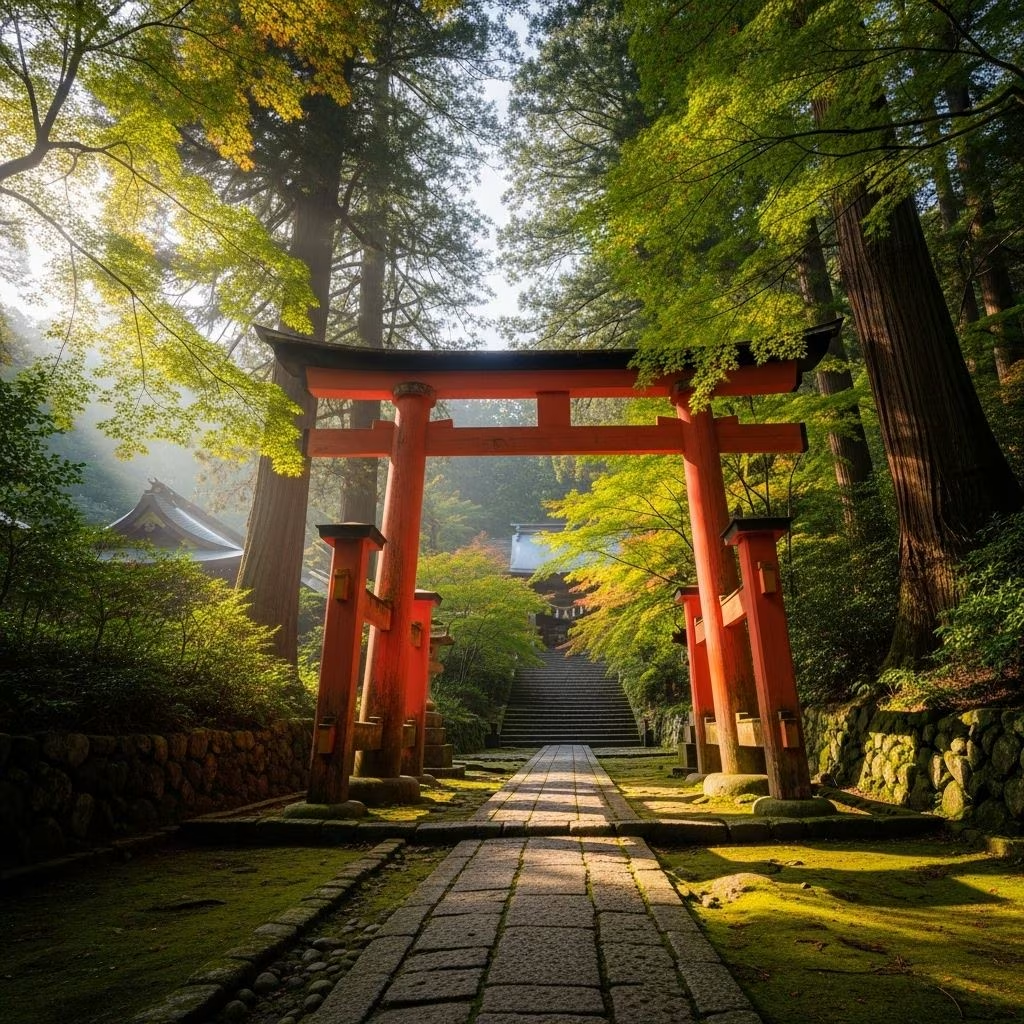
Torii Gates: The Symbolic Markers of Sacred Spaces in Japan
Torii gates—distinctive red, wooden, or stone structures—are the most recognizable landmarks demarcating sacred ground at Japan’s Shinto shrines and some Buddhist temples. More than mere architectural features, torii gates embody the interface between the mundane and the divine, inviting both reverence and curiosity. Let us journey through their origin, meaning, structure, types, and lasting cultural imprint on Japanese society.
Understanding Torii Gates: Definition and Function
A torii (鳥居) is a traditional Japanese gate, found at the entrance or within a Shinto shrine, where it symbolically marks the transition from the secular world to a sacred realm inhabited by kami (divine spirits) and serves as an invitation or threshold for worshippers seeking divine connection. Crossing a torii is regarded as entering the domain of the kami, and returning through it means one crosses back into the human world.
- Shinto Gateways: Most commonly found at Shinto shrines, torii physically and spiritually separate the ordinary from the sanctified.
- Symbolic Identity: On maps and signage, the torii icon universally designates a Shinto shrine’s location across Japan.
Origins: Myth, History, and Cultural Exchange
The origin of the torii gate is layered in myth, religion, and architectural evolution. Although archaeological and textual evidence shows early torii appearing in the Heian era (late 10th century), their ultimate genesis remains enigmatic.
Origin Theories
- Indigenous Japanese Concept: Some scholars believe torii arose from indigenous Japanese practices marking the border of sacred places, reflecting the unique boundary psychology of Shinto.
- Influence from Abroad: Others propose inspiration from the Torana—ancient ritual gateways in Indian Buddhist and Hindu architecture—brought to Japan via Korea and China during the spread of Buddhism.
Mythological Roots: The Legend of Amaterasu
One compelling Shinto legend describes the sun goddess Amaterasu hiding in a cave, plunging the world into darkness. The assembled deities placed roosters on a perch at the cave’s entrance to lure her out with their song. This perch, described phonetically similar to ‘torii’, may explain both the word’s etymology and its original symbolic function.
The Sacred Border: Meaning and Cultural Significance
Crossing a torii gate represents the passage from the ‘present world’ (where humans reside) into the ‘sacred realm’ (home of deities and spirits). This separation is both physical and spiritual:
- Transition Zone: Visitors cleanse themselves before entering, acknowledging the start of a respectful journey.
- Spiritual Safety: In Buddhist tradition, torii align conceptually with the protective field called “kekkai.”
- Respect and Ritual: Japanese tradition discouraged crossing a torii unless one is sure of returning safely, symbolizing one’s preparedness for spiritual transformation.
Structure and Materials: Evolution of Torii Construction
Traditional torii gates were primarily constructed of wood or stone; modern versions incorporate concrete, steel, copper, or stainless steel, illustrating both technological advancement and evolving aesthetics.
- Wood: Classic material, typically left unpainted or painted vibrant vermilion.
- Stone: Durable and often associated with more aged shrines.
- Metal & Concrete: Contemporary torii often utilize these for increased longevity and reduced maintenance.
Vermilion or bright red finishing on torii gates is not just decorative; it serves two roles:
- Practical: Protection against the elements and corrosion.
- Spiritual: Believed to ward off evil spirits.
Iconic Sites: Fushimi Inari-Taisha and Massed Torii
Among thousands of sacred sites, the Fushimi Inari-taisha in Kyoto is globally renowned for its seemingly endless avenues of torii gates. Here, successful businesspeople donate torii in gratitude, creating vivid corridors of spiritual and cultural meaning.
- Each donated gate bears the benefactor’s name.
- Inari shrines feature massed torii due to the connection between fertility, prosperity, and spiritual generosity.
Types of Torii: Variations in Design and Meaning
Torii gates exhibit diversity in form, reflecting regional style, historical context, and the nature of the shrine they protect.
| Type | Description | Distinctive Feature | Example Location |
|---|---|---|---|
| Shinmei Torii | Simple construction, straight lintels. | Unadorned uprights and crossbeams. | Ise Grand Shrine |
| Myōjin Torii | Curved upper lintel, ornate caps. | Graceful arching top beam. | Many shrines nationwide |
| Ryōbu Torii | Supported by two secondary pillars. | Complex structure, increased support. | Kubō Hachiman Shrine, Yamanashi |
| Stone Torii | Durable, classic style. | Stone material, weathered look. | Hachiman Shrine, Yamagata |
Anatomy of a Torii Gate
Despite their visual diversity, torii gates share common architectural elements:
- Hashira: Upright columns.
- Kasaragi: Top lintel beam, often curved.
- Nuki: Lower horizontal tie beam.
- Gakuzuka: Plaque or board displaying the shrine’s name, sometimes present.
The subtle curves and precise geometry of torii denote both spiritual aesthetics and engineering, balancing beauty, meaning, and structural integrity.
Color, Placement, and Symbolism
- Color: Red and vermilion, colors of purification, strength, and protection against evil.
- Placement: Most torii face east, a direction associated with the rising sun and the descent of deities—especially relevant to the mythology of Amaterasu.
- Multiplicity: Multiple torii may line a path, symbolizing deeper prayer and increased sanctity as one approaches the shrine’s inner sanctum.
Cultural Resonance: Torii in Japanese Society
Over centuries, torii gates have become more than religious markers. They serve as national icons, photo hotspots, popular motifs in art and design, and signifiers in everyday Japanese navigation.
- Road Maps: Torii symbols denote shrines on signage, wayfinding, and digital maps.
- Popular Tourism: Gates at major shrines attract millions annually, fusing spiritual experience with travel.
- Art and Literature: Torii appear in countless artworks, woodblock prints, anime, and literature as markers of the sacred and mysterious.
Torii Gates Around the World
International interest in torii gates has led to their inclusion in Japanese gardens and cultural exhibitions worldwide. Their elegant design and symbolic depth continue to inspire cross-cultural study and artistic reinterpretation.
Frequently Asked Questions (FAQs)
Q: What is the purpose of a torii gate?
A: Torii gates mark the boundary between the secular and sacred, signifying entry into a spiritual place and welcoming divine spirits.
Q: Are torii gates exclusive to Shinto shrines?
A: While predominantly associated with Shinto shrines, torii gates may also appear at Buddhist sites, marking spiritually significant ground.
Q: Why are torii gates often painted red?
A: The bright red or vermilion color is believed to ward off evil spirits and provides protection against the elements.
Q: How old is the oldest torii gate in Japan?
A: The oldest stone torii dates to the 12th century (Yamagata), while the oldest wooden example was constructed in 1535 in Yamanashi Prefecture.
Q: What is the connection between torii and Japanese mythology?
A: Legends link the torii to the story of Amaterasu, the sun goddess, where a bird perch was erected to coax her from hiding, later evolving in form and function into the modern torii gate.
Related Topics
- Shinto: Japan’s indigenous spirituality and its rituals.
- Torana: The ritual gateways of ancient India and Buddhist architecture.
- Fushimi Inari-taisha: Kyoto’s shrine with thousands of torii gates.
Conclusion: The Continuing Legacy of Torii Gates
Torii gates stand as timeless guardians and guides at the temples, mountains, and coastlines of Japan. Their vivid form, complex history, and profound spiritual symbolism continue to fascinate visitors, believers, and scholars alike—enduring as an emblem of Japanese identity, sacred space, and the eternal border between worlds.
References
- https://en.wikipedia.org/wiki/Torii
- https://www.japan-activator.com/ja/news/index/sitecomments/id/2407
- https://blog.japanwondertravel.com/what-is-torii-gate-25135
- https://www.yumeiorigin.com/articles-en/exploring-japans-sacred-gateways-the-profound-meaning-of-the-torii
- https://www.japan-experience.com/plan-your-trip/to-know/understanding-japan/torii
- https://www.jrailpass.com/blog/torii-gates-japan
- https://www.wasshoimagazine.org/blog/curiosities-of-the-japanese-culture/the-origins-of-torii-gates
- https://bokksu.com/blogs/news/unlocking-the-meaning-of-japanese-religious-symbols-torii-gates-shrines-and-more


