Tear-Free Onion Cutting: Expert Tips to Avoid Crying in the Kitchen
Cutting onions is a basic kitchen task that nearly every home cook faces, but the stinging, watery eyes it often causes can turn the simple act of chopping into a dreaded chore. If you’ve ever wondered why slicing into an onion brings on tears—or how to avoid it—you’re not alone. This comprehensive guide breaks down the science behind onion-induced tears and offers an arsenal of proven, practical solutions so you can prepare dinner without reaching for a tissue box.
Why Do Onions Make You Cry?
The sting you feel when cutting onions comes from a chemical reaction designed to defend the onion from would-be predators. When you slice into an onion, you break open its cells, triggering a sequence of events that ultimately releases a volatile compound called syn-Propanethial-S-oxide. This airborne chemical quickly wafts into your eyes, where it dissolves into a mild acid that irritates your tear glands.
- Onion enzymes convert amino acid sulfoxides into sulfenic acids.
- Sulfenic acids rearrange to form the volatile syn-Propanethial-S-oxide.
- When this compound reaches your eyes, it irritates nerve endings, making your eyes water in self-defense.
The root end (the fuzzy base) of the onion contains the highest concentration of these compounds, which explains why cutting near the root can seem to trigger even more tears.
Reduce Tears With the Right Tools
While it may not be possible to eliminate onion fumes entirely, using the best equipment can minimize your discomfort.
- Sharp knives: A dull blade crushes more onion cells, releasing more eye-irritating gases. A sharp chef’s knife makes cleaner cuts, helping keep those compounds contained.
- Stable cutting board: Prevents slipping and allows for faster, cleaner slicing.
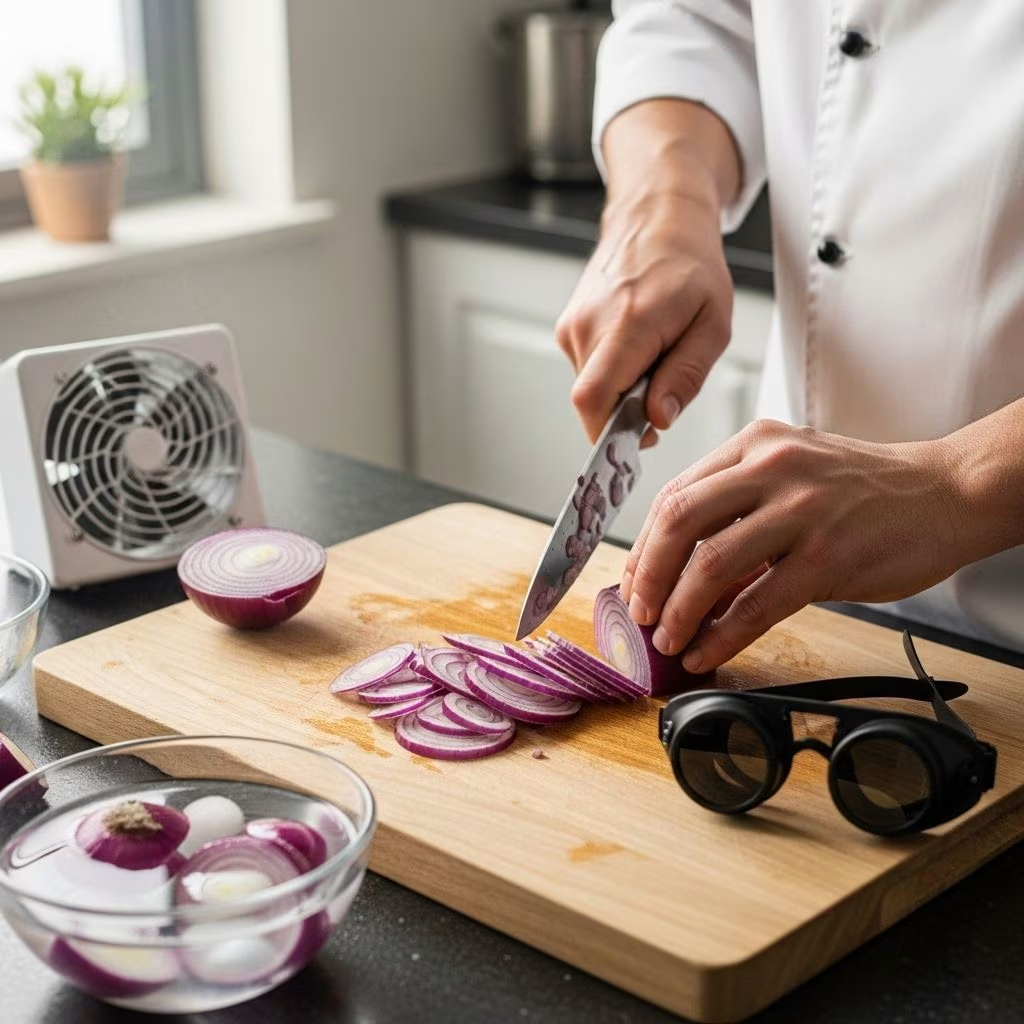
- Kitchen fan or vent: Helps direct fumes away from your face during chopping.
Maintaining clean, properly sharpened knives can make a dramatic difference in tear reduction while also resulting in safer, neater cuts.
Smart Onion-Cutting Techniques
How you cut an onion can determine how many tears you shed. Here are some chef-tested techniques that make a difference:
- Chill your onions: Place onions in the fridge (30–60 minutes) or freezer (10–15 minutes) before cutting. Cold temperatures slow the chemical reaction, reducing the release of tear-inducing gases.
- Work quickly: The less time you spend handling a freshly cut onion, the fewer opportunities there are for the fumes to reach your eyes.
- Trim the root last: Since the root holds the highest concentration of enzymes, slice the top off first, peel, then cut the rest before making the final cut through the root.
- Cut under or near running water: Water can draw the volatile compounds away from the onion and your eyes, reducing irritation.
- Cut near an open flame: The flame (from a gas burner or a candle) can help burn off some of the irritating compounds before they reach your eyes.
Here’s a step-by-step approach used by kitchen pros:
- Slice off the onion’s top and peel the outer skin, keeping the root intact.
- Cut the onion in half from stem to root.
- Place one half cut-side down and make vertical cuts almost to the root, but don’t cut through the base.
- Turn the onion and slice horizontally to finish dicing, leaving the root end for the last cut.
Kitchen Gadgets and Hacks That Work
Beyond knife skills, some clever gadgets and kitchen hacks can reduce or even eliminate onion tears:
- Onion goggles: Specially designed eyewear forms a seal around your eyes, blocking the irritating compounds from reaching them. They may look silly but are surprisingly effective.
- Food processors: Chop or slice onions in a sealed food processor to contain fumes, especially when preparing large quantities.
- Fan or vent hood: Direct a small fan or turn on your stove’s vent blower to carry fumes away before they reach your face.
- Soak onions in water: This can dilute and reduce volatile compounds, though it mellows the flavor.
Some cooks swear by placing a bowl of water next to the cutting board, believing the gases dissolve in the water first, although scientific backing is limited. Still, this trick may be worth trying if nothing else helps.
Common Myths & What Actually Works
Many so-called onion-cutting “hacks” are passed around kitchens and social media. Here’s a look at what works—and what’s wishful thinking:
| Tip/Hack | Evidence | Effectiveness |
|---|---|---|
| Chewing gum while cutting | Largely anecdotal | Unlikely to help much |
| Holding a piece of bread in your mouth | No scientific proof | Minimal effect |
| Wearing contact lenses | Contacts create a barrier over the eyes | Effective |
| Using onion goggles | Physical barrier blocks fumes | Highly effective |
| Chilling onions | Lowers enzymatic activity | Very effective |
| Running water over the cutting board | Dilutes volatile gas | Can help |
| Cutting near a flame | Burns off sulfur compounds | Moderately effective |
| Using a very sharp knife | Cuts cleaner, fewer damaged cells | Very effective |
Tips that rely on blocking gas from directly reaching your eyes (such as goggles) or minimizing cell rupture (using a sharp knife) are the most reliable. Many old wives’ tales, like chewing a piece of bread or sticking out your tongue, may not actually reduce tears, even if they provide some distraction from the task.
Best Practices for Tear-Free Onion Cutting
Whether you’re prepping a single onion or an entire sack, following these best practices can make your cooking experience more pleasant and efficient.
- Start with cold onions and a sharp knife for each session.
- Ventilate your cooking area with a kitchen fan or vent hood if possible.
- Keep the onion’s root end intact until the last possible moment to reduce gas release.
- Consider onion goggles or use a food processor for large quantities.
- Chop quickly yet safely to minimize your exposure time.
- Rinse your knife and the onion in cold water periodically during chopping.
Remember to always wash your hands thoroughly after handling onions, as the sulfurous compounds can linger and transfer to your eyes if you rub them later.
Frequently Asked Questions (FAQs)
Q: Are sweet onions less likely to make you cry than yellow or red onions?
A: Yes, sweet onions (such as Vidalia or Walla Walla) generally contain lower concentrations of sulfuric compounds and are much less likely to cause tears compared to stronger-flavored yellow or red onions.
Q: Will soaking onions in water ruin their flavor for recipes?
A: Soaking onions can slightly mellow their sharpness and reduce crisp texture, which is ideal for salads but may not be desirable for all dishes, especially when a strong onion flavor is needed.
Q: Is there a difference in tear-inducing potential between cooked and raw onions?
A: Yes, raw onions are far more likely to cause tears because the sulfur compounds are only released when the cell walls are broken. Cooking breaks down these compounds, so sautéed or roasted onions are far less likely to irritate your eyes.
Q: How do professional chefs cut dozens of onions without crying?
A: Chefs often use very sharp knives, work extremely quickly, and rely on high-powered kitchen ventilation. Some use onion goggles or delegate large-scale chopping to kitchen machines or prep cooks who rotate through tasks.
Q: Are there any long-term side effects from onion fumes?
A: For most people, the compounds only cause temporary irritation and watery eyes. However, those with eye sensitivities or certain allergies should minimize exposure and use protective equipment.
Key Takeaways for Tear-Free Onion Cutting
- Use a sharp knife and work quickly to minimize cell damage and gas release.
- Keep onions cold and your workspace well-ventilated for best results.
- Consider onion goggles or a food processor for large batches.
- Ignore unproven myths and stick to science-backed strategies for truly tear-free chopping.