


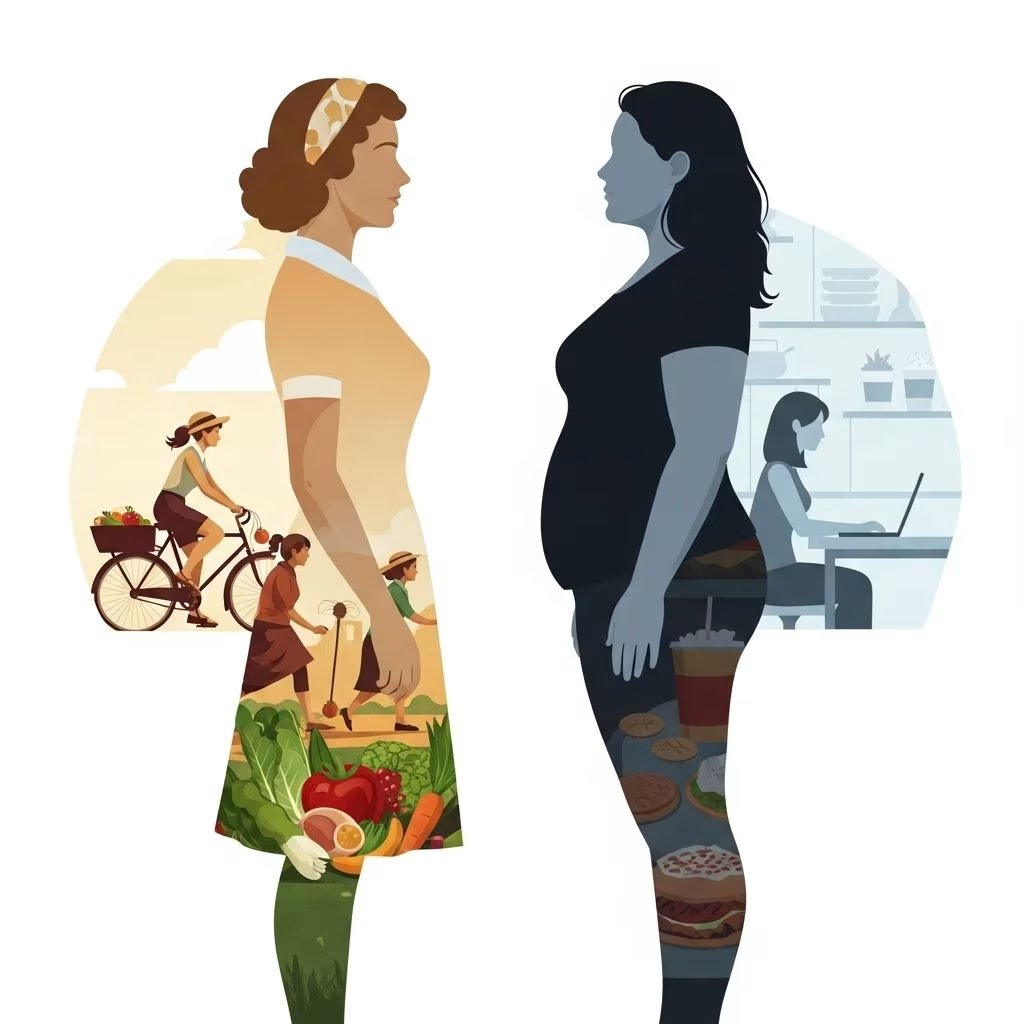
Why Are Women Heavier Today? Investigating Modern Weight Trends and Lifestyle Shifts
Over the past several decades, the average weight of women in developed societies has steadily climbed. While diet and exercise are frequently debated as the root causes, scientific research is increasingly highlighting another crucial factor: the profound decline in everyday movement. This shift—seen in both daily routines and broader lifestyle changes—may be driving modern weight trends among women today.
How Much Have Women’s Average Weights Changed?
Historical data reveals that average body mass indices (BMIs) for women in industrialized countries have risen markedly since the mid-20th century. Researchers attribute this trend to a complex mix of cultural, technological, and economic factors that have reshaped work, family life, and recreation.
- Global obesity rates are still climbing. By 2025, projections show over 21% of women may be classified as obese in developed nations—a number that continues to grow each year.
- Average daily energy expenditure has dropped. Studies point to declining levels of physical activity in tandem with greater energy intake, favoring weight gain over maintenance.
Main Drivers: Decline in Non-Exercise Activity Thermogenesis (NEAT)
When it comes to daily energy burn, intentional exercise (like running or gym workouts) is just one piece of the puzzle. Non-Exercise Activity Thermogenesis (NEAT) encompasses the calories burned by spontaneous, everyday movement—think walking to the store, household chores, and even fidgeting. In modern societies, NEAT has dropped significantly due to both technological advances and societal changes.
- NEAT can vary by up to 2,000 kcal per day between individuals of similar size. This large difference is determined by factors such as occupation, leisure activities, and even individual genetics.
- Technological advances have made everyday life less physically demanding. Home appliances, digital devices, and modern transportation dramatically reduce the effort required for tasks that once consumed significant energy.
Table: Factors Affecting NEAT in Modern Women
| Factor | Effect on NEAT | Impact on Weight |
|---|---|---|
| Sedentary jobs | Major reduction | Promotes weight gain |
| Automated domestic tasks | Major reduction | Promotes weight gain |
| Screen time (TV, computers, phones) | Major reduction | Promotes weight gain |
| Urban living & car reliance | Major reduction | Promotes weight gain |
| Lack of leisure movement (walking, gardening) | Major reduction | Promotes weight gain |
The Dietary Factor: Is Movement or Food More Important?
While the decline in NEAT is substantial, some researchers argue that dietary patterns are more responsible for rising weight than reduced physical activity alone. A recent multicontinental study found that increased energy intake is overwhelmingly the driver of obesity in economically developed countries, with lower activity levels not accounting for much of the difference. Nevertheless, experts agree that both factors interact, meaning the double effect of less movement and more calories amplifies the epidemic.
- Diet is a stronger driver than inactivity for obesity in prosperous societies.
- The combination of high energy intake and low activity is the most significant risk for weight gain.
Women’s Changing Roles: Less Daily Movement in Modern Life
The evolution of women’s roles in society—from primarily labor-intensive domestic work to office-based careers and multitasking digital lifestyles—correlates strongly with less frequent, sustained physical exertion. In previous generations, daily routines required much more walking, lifting, and manual effort.
- Domestic automation: Dishwashers, washing machines, and vacuum cleaners have reduced physical labor at home.
- Professional shifts: The majority of modern jobs are sedentary; working from home and attending virtual meetings further cut the need to move.
- Digital leisure: Socializing and entertainment primarily happen via screens, not in person.
Why Is NEAT So Critical for Weight Management?
Medical studies demonstrate that NEAT plays a vital role in regulating body weight. Even when intentional exercise is added to the routine, declining NEAT due to a sedentary lifestyle can undermine weight loss efforts.
- Caloric deprivation can decrease NEAT further. In weight loss programs relying only on diet, spontaneous activity often drops, making it easier to regain lost weight.
- Exercise preserves NEAT benefits. When women include even moderate aerobic or resistance training in their routines, NEAT levels remain stable compared to diet-only groups.
Key Studies: What the Science Says About Activity and Weight in Women
Evidence from prospective population studies and metabolic research supports the critical link between movement, energy balance, and weight control:
- A study of 140 overweight, premenopausal women found those who only dieted lost NEAT by 27% (about 150 kcal/day), while those combining diet and exercise maintained higher spontaneous activity.
- If individuals regain weight after a dieting phase, NEAT often remains suppressed, creating a biological tendency to regain more weight—a phenomenon called the thrifty phenotype.
- Even small increases in non-exercise movement, such as taking the stairs, walking more, or doing housework, can make a significant difference in total energy expenditure and long-term weight maintenance.
Exercise: More Than Calories Burned—Greater Benefits for Women
Gender differences in exercise outcomes are also notable. Recent studies reveal that women not only benefit more from exercise, but also gain those benefits in shorter time frames compared to men.
- Women require less exercise to achieve longevity and cardiovascular benefits. Studies show that 140 minutes of moderate or 57 minutes of vigorous exercise weekly can reduce women’s risk of premature death by 18–19%, compared to much higher time requirements for men.
- Exercise enhances NEAT, not just burns calories. Moderate activity supports higher spontaneous movement throughout the day, helping women achieve greater overall energy expenditure.
Common Misconceptions About Women’s Weight Gain
- Myth: Only intense exercise helps maintain a healthy weight.
Fact: Everyday movement (NEAT) plays an equally important role—gardening, walking, cleaning, or taking the stairs are highly effective at boosting energy expenditure. - Myth: Women are genetically predisposed to gain more weight than previous generations.
Fact: While genetic factors influence metabolism, shifts in activity patterns and diet are the primary drivers of change. - Myth: Weight loss by dieting alone is sufficient for long-term maintenance.
Fact: Research shows diet-only programs often lead to declines in NEAT and increased risk of weight regain. Sustainable changes require more daily movement.
Ways to Increase Daily Movement Without Formal Exercise
Experts provide practical advice for boosting NEAT and counteracting the effects of sedentary living:
- Walk or bike for errands instead of driving
- Set reminders to stand or walk for a few minutes each hour
- Opt for stairs instead of elevators
- Do household chores throughout the week
- Engage in active hobbies—gardening, dancing, or playing with kids
- Stretch, fidget, or pace during phone calls
Frequently Asked Questions (FAQs)
Q: Is lack of exercise the main reason women are heavier today?
No. While reduced formal exercise matters, the larger contributor is the decline in everyday movement (NEAT) combined with increased calorie intake.
Q: Can increasing small daily movements help with weight loss?
Yes. Even slight increases in non-exercise activity throughout the day have been shown to boost energy expenditure and reduce weight regain risk.
Q: Why does dieting alone often fail for long-term weight control?
Dieting tends to lower NEAT as the body adapts by conserving energy, causing spontaneous movement to decrease. Including exercise, even at low intensity, helps prevent this drop.
Q: Do women benefit differently from exercise than men?
Recent research suggests that women gain greater health benefits from less exercise time compared to men and see reductions in the risk for premature death and cardiovascular events.
Q: What simple lifestyle changes support higher NEAT?
Incorporating more standing, walking, household chores, and active hobbies can significantly raise NEAT, supporting better weight management.
Conclusion: Addressing Modern Weight Trends in Women
The rise in average weight among women today is a multifactorial phenomenon, driven by significant reductions in daily movement, widespread sedentary behaviors, and increasingly calorie-rich diets. Although structured exercise offers outsized health benefits for women, science also makes it clear that prioritizing everyday movement—no matter how small—can help mitigate weight gain and promote better long-term health. Understanding the balance between physical activity, NEAT, and diet remains crucial for anyone seeking meaningful, sustainable lifestyle change.
References
- https://www.ncbi.nlm.nih.gov/books/NBK279077/
- https://www.nature.com/articles/s41598-025-14620-w
- https://www.science.org/content/article/new-study-blames-diet-not-physical-inactivity-obesity-crisis
- https://www.acc.org/Latest-in-Cardiology/Articles/2024/03/14/14/50/exercise-benefits-gained-faster-by-women-than-men-with-greater-overall-benefit
- https://www.who.int/news-room/fact-sheets/detail/physical-activity


