


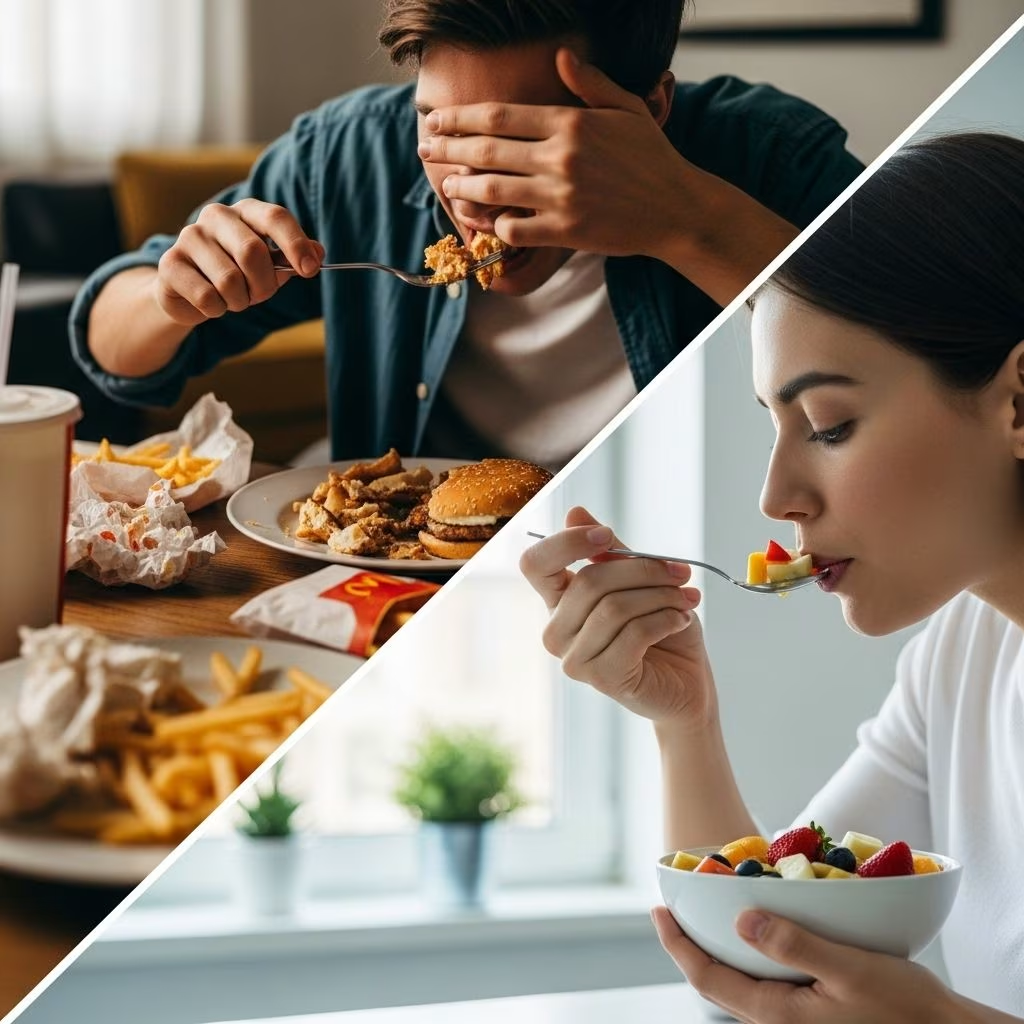
Your food choices and total calorie intake aren’t just about what you eat—they’re deeply influenced by how you eat. Scientists and nutritionists are uncovering why mindful habits, environmental cues, and eating speed may be just as important as your food selection. This article reveals the science behind eating behaviors and offers practical techniques for managing your appetite and making healthier choices every time you eat.
The Science of Eating Behavior: Not Just What, But How
Modern nutritional science no longer focuses solely on nutrients or food groups—it asks how we eat. From eating in a hurry to cleaning your plate without hunger, eating patterns are shaped by psychology, habit, and surroundings. The way you consume your meals profoundly influences your body’s hunger, fullness perception, and calorie intake.
Key discoveries in behavioral nutrition show that the context of eating—such as speed, mental focus, and the eating environment—affects hormonal and sensory signals that regulate satiety and appetite. By understanding these influences, you can take practical steps to eat less, enjoy food more, and better manage your weight.
How Mindless Eating Stealthily Drives Overconsumption
Mindless eating refers to eating without paying attention to your body’s hunger and fullness cues. This often happens when you’re distracted, multitasking, or emotional, leading to unintentional overeating.
- People eat more food when watching TV, scrolling on their phones, or working at a computer because distractions override internal cues of fullness.
- Research shows that distracted eaters consume up to 25% more calories than those who focus solely on their meal.
- Habitual mindless eating is associated with weight gain over time.
To combat mindless eating, experts recommend the practice of mindful eating: being present, eating slowly, and savoring each bite. This approach helps you respond to true hunger and stop when you’re satisfied—often long before you reach ‘full.’
The Crucial Role of Eating Speed in Appetite and Satiety
How quickly you eat strongly influences how much you consume. Studies repeatedly find that speeding through a meal bypasses satiety signals, causing overconsumption before your brain registers fullness.
- It takes around 20 minutes for satiety hormones (such as leptin and cholecystokinin) to signal your brain that you’re full.
- Fast eaters are far more likely to eat larger portions and feel less satisfied afterward, increasing the risk for weight gain and metabolic issues.
- Slower eating supports digestion, allows greater enjoyment of flavor, and can reduce total calorie intake by up to 10–20% per meal.
The bottom line: Pause between bites, chew thoroughly, and put down your fork between mouthfuls. These simple tricks encourage you to eat more slowly, giving your body the time it needs to register fullness and satisfaction.
How Distracted Eating Silently Boosts Your Intake
Distractions aren’t just the background noise of modern life—they are potent drivers of overeating.
- Eating while driving, watching TV, or working makes you less conscious of portion size and taste.
- Studies show that people engaged in other activities during a meal consume bigger portions and feel less satiated afterward.
- Multitasking during meals leads to less vivid memories of eating, which increases hunger and food intake at subsequent meals.
Consciously separating meals from screens, reading, or work helps you appreciate flavors and body signals, reducing the risk of accidental overeating.
Environmental Cues: Why Where and With Whom You Eat Matters
Your eating environment—from lighting to company—powerfully shapes your eating behavior.
- Eating with friends or in groups often makes people linger longer, chat more, and eat more without realizing it. Social facilitation can drive calorie intake up by 30–50% compared to eating alone.
- Restaurant portions, lighting, music, and table arrangements all influence how much you eat—sometimes without your awareness.
- At home, family style serving or leaving food on the table encourages second helpings, while pre-plating meals in the kitchen helps limit intake.
| Environmental Factor | Effect on Eating |
|---|---|
| Groups (3+ people) | Usually increases food intake |
| Soft lighting, music | Encourages longer meals, more eating |
| TV or Screens | Distracts, promotes overeating |
| Food visible and accessible | Promotes impulse snacking and second helpings |
| Cluttered eating areas | Less mindful eating, increased intake |
Portion Perception: How Plates, Packages, and Portions Shape Your Choices
Visual cues powerfully influence how much you serve and consume. ‘Portion distortion’—the normalization of oversized food servings—means people frequently underestimate how much they’re eating.
- Studies show that larger plates, bowls, and even utensils encourage bigger servings and greater consumption.
- Pre-packaged snacks or restaurant entrees almost always exceed recommended serving sizes.
- We eat more when food is served in bulk, as with buffet-style eating, versus pre-portioned plates.
Switching to smaller plates, bowls, and cups can effortlessly cut hundreds of calories per day without feelings of deprivation.
The Power of Meal Timing and Frequency
It’s not just what you eat, but when you eat that affects appetite, metabolism, and even weight loss outcomes.
- Eating most calories early in the day (such as a large, high-protein breakfast) has been shown to improve blood sugar control, help curb appetite, and support weight management.
- Eating late at night, especially close to bedtime, is linked with higher body fat and disrupted blood sugar levels.
- Irregular meal patterns—eating at inconsistent times, skipping meals, or snacking erratically—are associated with increased weight gain and poorer metabolic health.
Practicing regular meal times and prioritizing early-in-the-day eating fits with our natural circadian rhythms, making appetite regulation easier and promoting metabolic health.
Simple, Science-Backed Strategies to Eat Less Without Dieting
Instead of restrictive diets, use these powerful behavioral strategies to naturally manage your appetite and portion size:
- Eat slowly: Set a timer for 20 minutes and make the meal last until it rings. Chew thoroughly and deliberately put utensils down between bites.
- Use smaller dishes: Replace large plates and bowls with smaller ones to visually downsize your portions, helping you eat less while still feeling satisfied.
- Remove distractions: Turn off TVs, put down devices, and focus solely on your meal. This boosts enjoyment and reduces overeating.
- Pre-portion snacks and main meals: Serve single portions instead of eating directly from large packages or family-style dishes.
- Fill half your plate with vegetables: High-fiber foods promote satiety and displace higher-calorie options, making healthy eating effortless.
- Pay attention to hunger signs: Rate your hunger before and after eating. Aim to eat when you’re moderately hungry and stop at comfortable satisfaction, not fullness.
- Practice mindful eating: Notice flavors, aromas, and textures of food. Eating with intention fosters greater satisfaction and portion awareness.
- Keep tempting, calorie-dense foods out of sight: Store treats in opaque containers and keep fruit visible for healthier choices.
Frequently Asked Questions (FAQs)
Q: Why is eating slowly recommended?
A: Eating slowly gives your body time to release satiety hormones, accurately gauge fullness, and enjoy your food, all of which reduce calorie intake and support healthy digestion.
Q: How much do distractions (like TV or smartphones) affect eating?
A: Distractions make you less aware of how much you’re eating, easily adding hundreds of extra calories per meal and often leading to less satisfaction after eating.
Q: Does it really matter when I eat my calories?
A: Yes, research shows that eating more calories earlier in the day helps regulate metabolism and appetite, while late-night eating promotes weight gain and metabolic issues.
Q: Can using smaller plates and bowls actually lead to weight loss?
A: Yes, studies consistently show that smaller dishware leads to automatic portion and calorie reductions, often without affecting meal satisfaction.
Q: What’s the best way to make mealtimes more mindful?
A: Remove screens and distractions, sit at a table, eat slowly, and focus on the flavor, aroma, and texture of your food. These habits help you listen to hunger and fullness cues.
Q: Are there any benefits to eating with family or friends?
A: Social meals can foster happiness and connection, but eating in groups often increases intake. To avoid overeating, set serving sizes and pay attention to fullness during group meals.
Takeaway: Make How You Eat Matter
Your eating rituals—speed, attention, setting, and environmental cues—are powerful tools for appetite and weight control. By eating slowly, mindfully, and in a distraction-free environment, you can naturally reduce your intake, make healthier choices, and enhance your satisfaction at every meal—no willpower or restrictive dieting necessary.
References
- https://pmc.ncbi.nlm.nih.gov/articles/PMC9416646/
- https://pmc.ncbi.nlm.nih.gov/articles/PMC7213043/
- https://odphp.health.gov/healthypeople/priority-areas/social-determinants-health/literature-summaries/access-foods-support-healthy-dietary-patterns
- https://www.nature.com/articles/s41598-025-94439-7
- https://globalnutritionreport.org/reports/2021-global-nutrition-report/health-and-environmental-impacts-of-diets-worldwide/
- https://www.uab.edu/inquiro/issues/past-issues/volume-9/the-effects-of-an-american-diet-on-health
- https://medicine.yale.edu/news-article/how-the-standard-american-diet-affects-your-brain/


