


Small Pieces, Big Impact: How Size, Packaging, and Method Influence Eating Habits
Is it possible that how you eat is just as important as what you eat when it comes to controlling portions, feeling satisfied, and achieving sustainable weight loss? Recent research points to several surprising strategies—from cutting food into smaller pieces and chewing more thoroughly, to increasing meal frequency and even considering packaging—that may play a major role in appetite regulation and weight management. This in-depth article synthesizes current findings, exploring how psychological cues and behavioral tweaks can help you eat less without feeling deprived.
Why Smaller Food Pieces Lead to Eating Less
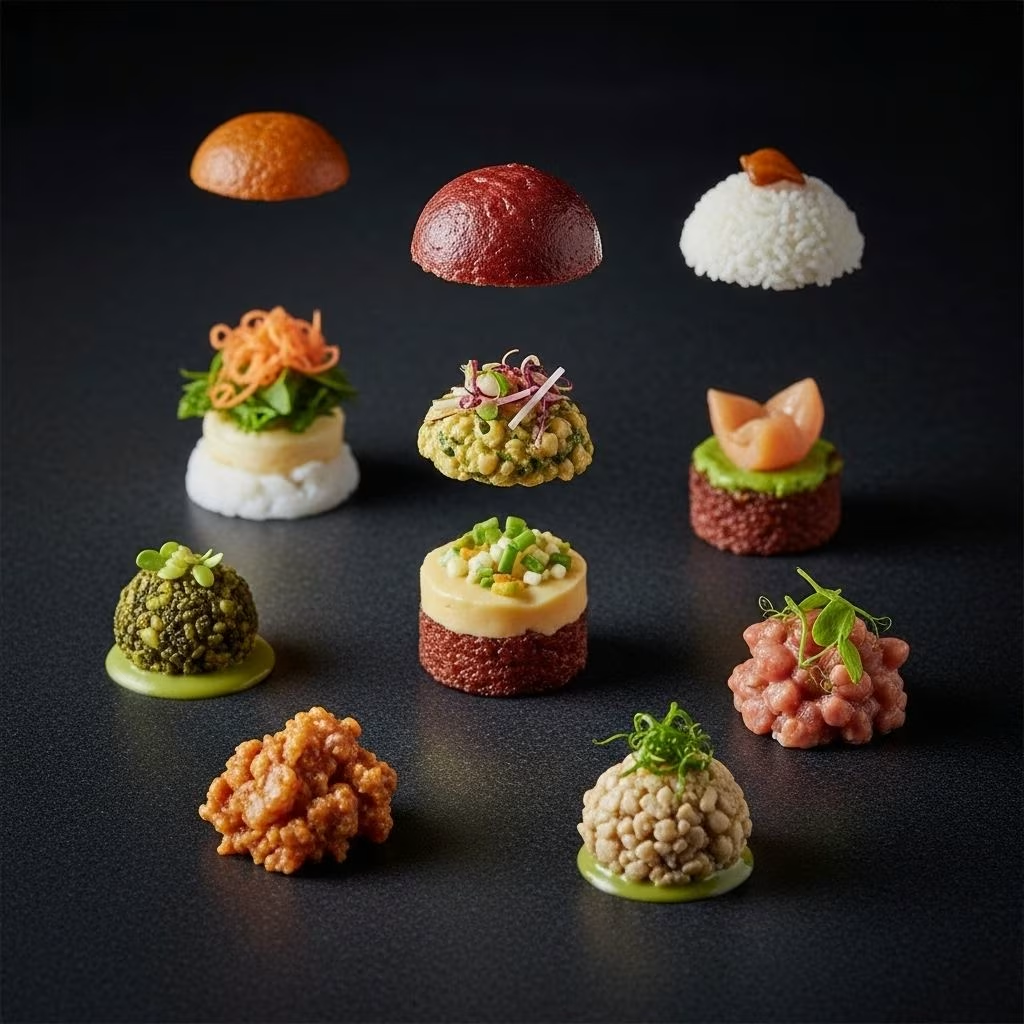
Recent studies from Arizona State University reveal that cutting food into bite-sized pieces can trick your brain into believing you are eating more than you actually are, resulting in reduced calorie intake and greater satisfaction. The psychology is simple: when meals appear larger and more segmented, people and even animals perceive their portion as more rewarding—even when the actual amount of food remains unchanged.
- Researchers gave rats a choice between a single 300 mg pellet or ten 30 mg pellets. The rats consistently preferred the meal with more individual pieces, despite both meals being equal in total volume.
- This pattern was replicated in humans: college students given a bagel that had been sliced into four pieces ate less of the bagel—and less of a subsequent lunch—compared to those who received a whole, uncut bagel.
- “Meals in pieces appear larger and more rewarding due to visual and numerical cues, even without calorie differences,” explains Devina Wadhera, graduate researcher and study lead.
Practical tip: Breaking up foods such as sandwiches, omelets, and meats before eating may help you feel fuller with less.
Numbers, Illusion, and the Plate: The Role of Perception
The studies suggest that our brains use visual cues and quantity to estimate satiety. More pieces can cover more plate space, creating an illusion of abundance. This illusion translates to increased meal satisfaction and is one of the reasons why portion-controlled diets that value presentation can help with weight regulation.
| Food Format | Perceived Quantity | Actual Quantity | Satiety Impact |
|---|---|---|---|
| Whole Item (e.g., uncut bagel) | Low | Same as sliced | Lower |
| Sliced/Segmented (e.g., bagel cut in quarters) | High | Same as whole | Higher |
This perceptual trick not only helps with portion control, but also creates a psychological buffer against overeating.
The Science of Chewing: Why More ‘Mouth Time’ Means Reduced Intake
Expanding upon the concept of eating less by re-thinking consumption, Dutch researchers demonstrated that chewing food for longer periods significantly reduces subsequent intake, regardless of actual stomach fullness.
- Participants chewed a piece of food for either one or eight minutes without swallowing, while food was simultaneously pumped into their stomachs via a tube.
- Those who chewed for eight minutes ended up eating 19% less food at the next meal than those who chewed for just one minute.
How does it work? Increased ‘oral-sensory stimulation’ sends signals to the brain that fullness and satisfaction are achieved before nutrients are even absorbed. According to Dr. Alfrun Erkner, “Chewing triggers physiological responses telling your body to feel full long before absorption.”
- Chewing longer means slower eating, more time for satiety hormones to activate, and less risk of overeating.
- Gum chewing and choosing crunchy foods may provide similar appetite-curbing effects.
Meal Frequency: Why Grazing May Be Better Than Restricting
Large meals may tempt you to eat more than you need. Alternatively, eating smaller, more frequent meals appears to encourage better nutrition, suppress appetite, and lead to lower BMIs according to data published in the Journal of the Academy of Nutrition and Dietetics.
- Individuals who consumed six mini-meals per day reported eating more nutrient-dense foods and maintained lower body mass indices compared to those who ate three or fewer meals daily.
- Frequent eating triggers hormonal and nutritional signals that suppress appetite and delay stomach emptying, which further decreases feelings of hunger and leads to lower calorie consumption.
This approach may be particularly helpful for ‘natural grazers’ and those with difficulty recognizing fullness on restrictive schedules.
Benefits of Small Frequent Meals
- Steadier blood sugar levels.
- Suppressed appetite due to continuous satiety signals.
- Greater control over cravings and snacking urges.
The Hidden Influence of Food Packaging on Willpower
Portion size and presentation aren’t limited to the plate—packaging materials play a powerful role in how much we eat. Clear packaging, which showcases food, can override willpower by amplifying the attractiveness of snacks and triggering cravings.
- In experimental studies, participants ate 69% more Fruit Loops, 58% more M&Ms, but 38% fewer cookies and 78% fewer pretzels depending on whether packaging was clear or opaque.
- For highly tempting foods, clear packaging tends to provoke greater consumption, while less desirable foods may benefit from heightened visibility as a deterrent.
Takeaway: If you want to keep consumption in check, use opaque packaging for treats and clear containers for healthy foods. Presentation cues can strongly impact impulse eating and self-control.
The Ultra-Processed Food Trap: How Quality Impacts Satiety and Health
Recent research on ultra-processed foods has shown that they can undermine satiety, disrupt metabolism, and hamper weight loss efforts, even when calories and nutrients are controlled.
- A controlled 8-week study demonstrated that participants on minimally processed diets lost twice as much weight, experienced more fat loss, and reported fewer cravings than those consuming ultra-processed foods—even when macronutrient profiles were matched.
- Crucially, the minimally processed diet led to improved appetite regulation, enhanced control, and fewer unpleasant symptoms like constipation, fatigue, and reflux.
According to Madison Reeder, R.D., “Minimally processed foods are higher in protein and fiber, encourage mindful eating, and support satiety without caloric restriction.” This supports natural calorie reduction and sustains weight loss more efficiently than simply cutting calories from processed food.
- Ultra-processed foods are engineered to be highly palatable, which overrides natural hunger cues and leads to chronic overeating.
- They are often loaded with added sugars, unhealthy fats, and additives that promote inflammation and disrupt gut health.
Potential Long-Term Risks
- Elevated risk for cardiovascular disease.
- Greater likelihood of type 2 diabetes.
- Higher rates of depression and chronic inflammation.
These health risks persist even when weight is stable, suggesting that food composition matters as much—if not more—than calorie counts alone.
Simple Strategies to Eat Less Without Deprivation
- Cut foods into smaller, more numerous pieces before eating.
- Chew thoroughly and savor each bite to leverage oral-sensory inhibition of hunger.
- Eat 5-6 small meals throughout the day to stabilize appetite and energy levels.
- Leverage packaging: store treats in opaque containers, healthy food in clear ones.
- Prioritize minimally processed, whole foods to boost satiety and support metabolic health.
| Strategy | How It Works | Practical Tip |
|---|---|---|
| Cutting Food Into Pieces | Enhances perceived quantity and satisfaction | Slice sandwiches, meats, bagels before serving |
| Extra Chewing | Triggers satiety hormones before nutrient absorption | Chew each bite 20+ times, savor crunchy foods |
| Frequent Small Meals | Keeps appetite in check, stabilizes blood sugar | Plan 5-6 mini-meals evenly spaced through day |
| Smart Packaging | Visual cues influence willpower and cravings | Use opaque containers for treats, clear ones for produce |
| Favor Whole Foods | Boosts satiety, supports gut health, reduces cravings | Base meals around fresh vegetables, proteins, grains |
Frequently Asked Questions (FAQ)
Q: Should I cut every food I eat into small pieces?
A: While dividing food into pieces can help, it’s most effective for items where presentation and portion control influence satisfaction—like meats, bagels, sandwiches, or omelets. Chopping fruits or bars may help, but it’s not always necessary.
Q: How many times should I chew each bite for optimal fullness?
A: There’s no magic number, but research suggests prolonged chewing—consider 20-30 chews per bite—triggers satiety signals more reliably, helping reduce intake before nutrients are absorbed.
Q: Is eating frequent small meals better for weight loss than three large meals?
A: Studies indicate that eating 5-6 small, balanced meals may aid in appetite suppression, prevent energy dips, and support more nutritious choices, leading to lower BMIs and better weight control.
Q: How can I use packaging to improve my eating habits?
A: Store tempting, high-calorie snacks in opaque containers to reduce visible triggers, while displaying healthy foods in clear packaging to encourage eating them first.
Q: Are ultra-processed foods safe if eaten in moderation?
A: While occasional consumption is generally fine, regular reliance on ultra-processed foods has been linked to weight gain, poor satiety, and higher risk for chronic conditions—even if calories are controlled.
Conclusion: Harnessing the Power of Perception for Lasting Change
Controlling how food is presented, consumed, and packaged can have dramatic effects on appetite, fullness, and overall weight management. By leveraging simple psychological tricks—such as increased segmentation, thorough chewing, mindful meal frequency, and strategic packaging—you can harness the science of perception to support healthier choices and sustainable results. Choose minimally processed, whole foods whenever possible to optimize satiety and long-term health.
References
- https://www.prevention.com/weight-loss/a20433185/cutting-up-food-can-help-you-eat-less/
- https://www.prevention.com/weight-loss/a20465804/small-frequent-meals-aid-weight-loss/
- https://www.prevention.com/weight-loss/a20436800/how-more-chewing-leads-to-eating-less/
- https://www.prevention.com/food-nutrition/healthy-eating/a65664887/ultra-processed-foods-weight-loss-gut-health-study/
- https://www.prevention.com/weight-loss/a20458116/how-food-packaging-affects-your-willpower/
- https://www.prevention.com/weight-loss/a20447989/health-news-roundup-smaller-pieces-of-food-leads-to-eating-less/
- https://www.prevention.com/weight-loss/a20451781/10-science-backed-ways-to-eat-less/
- https://www.prevention.com/weight-loss/a20430250/healthy-eating-mini-meals-that-help-curb-your-appetite/
- https://www.prevention.com/weight-loss/a20451989/mindless-eating-0/
- https://www.prevention.com/food-nutrition/healthy-eating/a20443857/food-packaging-tricks/


