


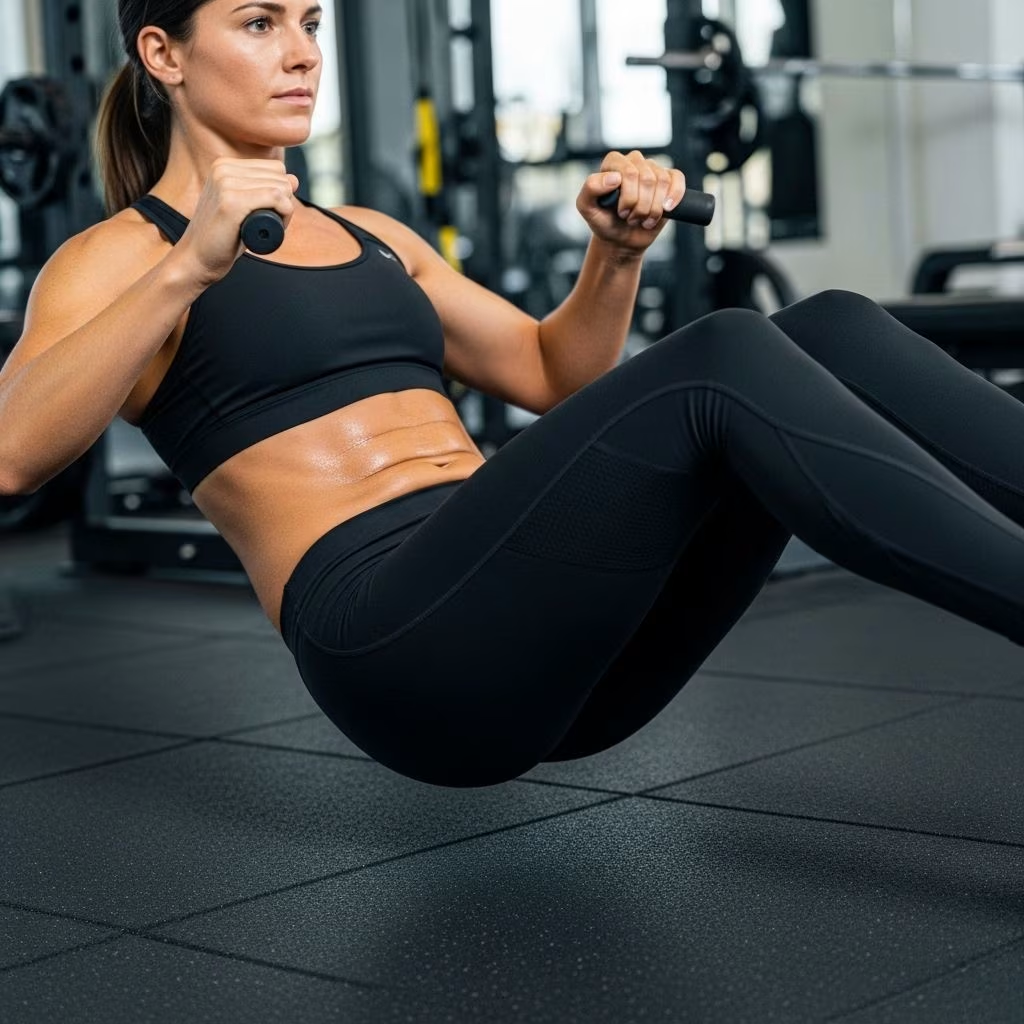
Strength Training for a Flat Belly at Any Age
As we age, achieving a flat belly and maintaining a strong core becomes more challenging—but it remains entirely possible with the right approach. Strength training is not just for professional athletes or younger adults; it is a transformative tool that can help anyone reduce belly fat, build lean muscle, and improve overall health. This comprehensive guide covers why strength training is superior for belly fat loss, how to implement it at any age, the best exercises, and practical lifestyle tips for lasting results.
Why Strength Training Is Essential for Belly Fat Loss at Any Age
If you find that endless cardio and restrictive diets aren’t delivering a slimmer waistline, you are not alone. Many people mistakenly believe that spot-reducing belly fat with crunches or purely aerobic exercise will flatten their stomach. In reality, strength training addresses both the aesthetic and metabolic aspects of belly fat:
- Raises metabolic rate—helping you burn more calories even at rest.
- Preserves and builds muscle mass, counteracting age-related muscle loss.
- Triggers the afterburn effect (EPOC), increasing calorie expenditure for hours after exercise.
- Tightens and tones the core, reducing abdominal flab and improving posture.
Age, hormones, and lifestyle changes can make it harder to lose belly fat, but the principles underpinning strength training work across the lifespan.
The Science: How Strength Training Targets Belly Fat
Strength training—through free weights, resistance bands, machines, or bodyweight movements—initiates a series of physiological changes that make it exceptionally effective for fat loss:
| Benefit | Description |
|---|---|
| Increases Muscle Mass | Muscle tissue needs more energy to maintain than fat, so increasing muscle automatically raises your daily calorie burn—even when you’re not working out. |
| Boosts Resting Metabolic Rate (RMR) | A higher RMR means your body burns more calories all day, making it easier to maintain or lose weight. |
| Triggers the Afterburn Effect (EPOC) | After strength workouts, your body consumes extra oxygen and burns calories for recovery, sometimes for up to 24–48 hours after exercise. |
| Lowers Visceral Fat | Strength training, especially when combined with cardiovascular exercise, reduces visceral fat—the most harmful fat that accumulates around your organs. |
| Preserves Lean Muscle While Dieting | When you reduce calories, strength training helps prevent muscle loss, keeping your metabolism higher. |
By increasing muscle mass and metabolic activity, your body is primed to burn more fat, including stubborn abdominal fat.
Core Conditioning: Beyond Crunches
Traditional ab exercises alone won’t flatten your belly, but core conditioning remains vital. Your core includes not just the abdominal muscles, but the muscles in your back, sides, hips, and pelvis. Strengthening this region:
- Improves posture, lending a slimmer and more confident appearance.
- Reduces risk of injury—especially to the lower back, which is increasingly vulnerable with age.
- Makes daily movement easier, from lifting groceries to playing with grandchildren.
A strong core acts as a foundation for all other movements, amplifying the effects of your entire workout program.
Key Strength Exercises for a Flatter Belly
While no exercise can target belly fat exclusively, certain full-body and core-focused movements are proven to build muscle, boost metabolic rate, and firm your waistline. Integrate these exercises into your routine two to four times per week:
- Planks: Engage the entire core while also activating the shoulders, glutes, and legs. Start with 10–30 seconds and increase over time.
- Standing Overhead Press: A compound movement that strengthens the upper body and core as you stabilize your body while pressing weights overhead.
- Squats: Work the glutes, thighs, and core for a metabolism-boosting, powerhouse exercise. Try bodyweight squats, goblet squats, or barbell squats depending on skill level.
- Deadlifts: One of the most effective total-body moves for increasing lean muscle and improving posture. Always use proper form to protect the lower back.
- Russian Twists: Strengthen obliques and train rotational core stability. Can be done with or without weights.
- Push-Ups: Develop the chest, shoulders, arms, and core, improving upper body and trunk strength.
- Bicycle Crunches: A dynamic ab exercise targeting the rectus abdominis and obliques.
Remember, consistency and progression (gradually increasing intensity or resistance) are keys to progress at any age.
Training Tips for Every Age
Whether you are starting your fitness journey in your 30s, 40s, 50s, or beyond, strength training can be customized for your unique needs. Here are age-specific strategies for optimal results:
- In Your 30s: Focus on building a solid foundation of strength and adopting consistent workout habits. Experiment with different modalities—free weights, resistance bands, and bodyweight movements.
- In Your 40s: Bone density and metabolism begin to drop. Prioritize multi-joint strength moves and include balance and flexibility exercises to support joint health.
- In Your 50s and Beyond: Combat muscle loss (sarcopenia) by prioritizing regular, full-body strength training. Start with lighter weights and higher repetitions to master form, gradually increasing resistance.
At all ages, allow adequate rest and recovery, listen to your body, and consult your physician if you have underlying health conditions.
Cardio vs. Strength Training: Which Is Best for Belly Fat?
Both cardio and strength training play a role in weight loss, but when it comes to belly fat reduction, strength training offers unique advantages:
- Cardio burns more calories during the session, but has little effect on muscle building or post-workout metabolic rate.
- Strength training not only burns calories during exercise, but also increases muscle mass, resulting in ongoing calorie burn (afterburn effect) for hours—and sometimes days—after your workout.
- The optimal approach combines both: at least two days per week of strength workouts paired with regular cardiovascular activity, such as brisk walking, cycling, or swimming.
Healthy Eating and Lifestyle Habits for a Flatter Belly
Exercise alone will not flatten your belly if your diet, stress levels, or sleep hygiene are working against you. Combine strength training with these evidence-based habits for maximum effect:
- Eat a balanced diet rich in lean protein, whole grains, fruits, vegetables, and healthy fats.
- Avoid excessive sugar and refined carbs, which promote belly fat storage.
- Stay well-hydrated to support metabolism and recovery.
- Prioritize sleep; aim for 7–9 hours per night to regulate hormones that influence fat storage.
- Manage stress through meditation, hobbies, or social support. Chronic stress elevates cortisol, a hormone linked to increased abdominal fat.
Common Myths About Strength Training and Belly Fat
- Myth: Spot reduction is possible. Reality: You can’t target fat loss in a specific area—your body decides where to lose fat first.
- Myth: Strength training will make you bulky. Reality: Building bulky muscles—especially for women—requires a specific diet and extreme training. For most people, strength training leads to a firmer, leaner physique.
- Myth: Only heavy weights work. Reality: Moderate weights, resistance bands, and even bodyweight can be effective, especially for beginners.
- Myth: Working out is enough. Reality: Exercise is one pillar; nutrition, sleep, and stress management are just as crucial.
Simple Sample Strength Routine for Every Age
Here is a basic total-body routine you can perform 2–3 times per week. Warm up before starting and cool down after:
- Bodyweight squats: 2–3 sets of 10–15 reps
- Push-ups (modify on knees if needed): 2–3 sets of 8–12 reps
- Standing overhead dumbbell press: 2–3 sets of 10 reps
- Plank: 2–3 holds of 10–30 seconds
- Russian twists: 2–3 sets of 10–15 reps per side
- Glute bridges: 2–3 sets of 12–15 reps
Start with your bodyweight or very light resistance, especially if you are new to exercise. Gradually increase intensity as you get stronger.
Frequently Asked Questions
Can you really lose belly fat with strength training?
Yes, strength training is a powerful tool for reducing abdominal fat. It works by boosting your overall metabolism, increasing muscle mass, and triggering post-exercise calorie burn. However, for best results, combine it with a healthy diet and cardio exercise.
How long will it take to see results?
Visible changes in belly fat can take several weeks to a few months, depending on your consistency, what you eat, and your overall lifestyle. Most people notice increased strength and muscle tone in as little as 2–4 weeks, but significant fat loss requires persistent effort and patience.
Is it ever too late to start strength training?
It’s never too late! Older adults can improve muscle mass, bone health, and metabolic rate through regular strength workouts. Just start at an appropriate intensity, focus on proper form, and consult with a medical professional if you have health concerns or chronic conditions.
Do I need a gym membership or expensive equipment?
No. Many of the most effective strength exercises (such as bodyweight squats, planks, push-ups, and lunges) require little to no equipment. You can get great results using household items or affordable resistance bands.
How does strength training compare to cardio for belly fat?
Cardio burns more calories during a workout session, but strength training excels at building muscle and increasing your baseline metabolic rate, leading to greater fat loss over time. Combining both modalities gives the best results for overall and belly fat reduction.
Final Thoughts: Your Path to a Flatter, Stronger Belly
Strength training is accessible, safe, and effective for adults of any age or fitness level who aim to achieve a flatter belly and a healthier body. With consistency, progressive challenge, proper nutrition, and good sleep, you can sculpt a midsection that functions and looks better—with long-lasting results that support your wellness journey for years to come.
References
- https://toneopfit.com/blogs/strength-training-for-belly-fat
- https://hydrow.com/blog/does-lifting-weights-burn-belly-fat/
- https://www.health.harvard.edu/healthbeat/core-conditioning-its-not-just-about-abs
- https://www.medicalnewstoday.com/articles/flat-stomach-workout
- https://www.webmd.com/fitness-exercise/top-exercises-belly-fat
- https://www.healthline.com/nutrition/do-ab-exercises-burn-belly-fat
- https://pubmed.ncbi.nlm.nih.gov/21804427/
- https://www.healthline.com/nutrition/get-a-flat-stomach
- https://www.loseit.com/articles/can-i-lose-belly-fat-by-lifting-weights/


