


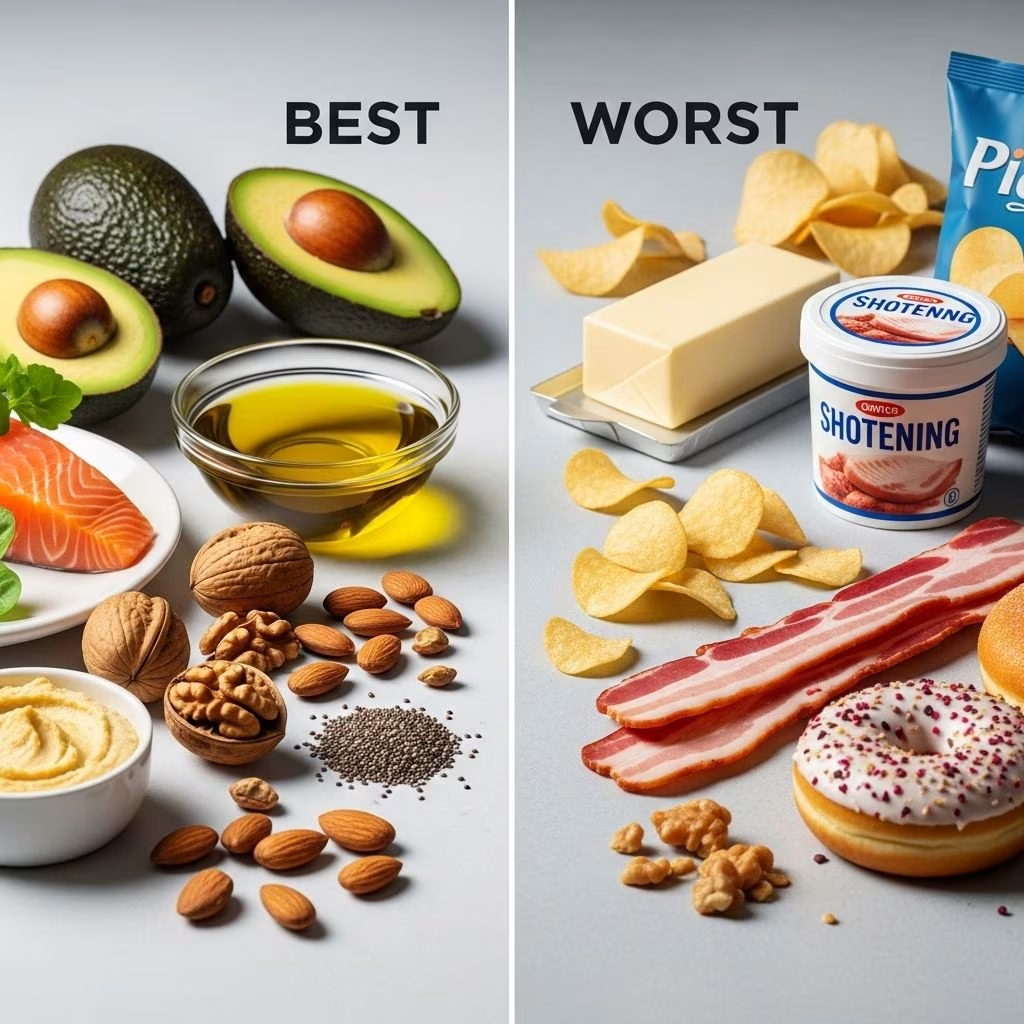
For years, dietary fat was demonized, pushing millions toward low-fat foods and carb-heavy alternatives. Today, decades of research have unraveled deep complexities about fat, revealing that while some fats support health, others increase risks for obesity and chronic diseases. Understanding which fats nourish and which ones harm is crucial for making informed food choices, improving your weight, heart, and overall health.
What’s Really Going On With Fat?
The word fat evokes anxiety for many, but the truth is, dietary fat is essential. It provides energy, enables your body to absorb vital vitamins, supports cell function, and is crucial for hormone production and brain health. The confusion arises because not all fats impact the body the same way.
- Good fats can protect your heart, boost Metabolism, and even aid weight control.
- Bad fats can increase the risk of heart disease, diabetes, obesity, and more.
The science-backed truth is nuanced—but isn’t that always the case with nutrition? Let’s cut through the myths and explore which fats you should embrace, and which to avoid.
The Three Main Categories of Dietary Fat
- Unsaturated fats: Includes both monounsaturated and polyunsaturated fats. Often found in plants, nuts, seeds, and fish. Known as heart-healthy fats.
- Saturated fats: Mostly found in animal products and some tropical oils. Long implicated in raising cholesterol and CVD risk, but the latest evidence is complex.
- Trans fats: Artificially created during food processing; now widely recognized as dangerous for health.
Three New Fat Facts That Changed Everything
1. Going Low-Fat Backfired—More Than Anyone Expected
In the ’80s and ’90s, massive dietary guidelines promoted low-fat eating. Food producers responded by releasing countless fat-free and low-fat products, often loaded with sugar and refined starches to maintain palatability.
- Results: Instead of better health, Americans saw rising rates of obesity and diabetes, largely attributed to replacing fat with sugar and refined carbohydrates.
- Eating some fat is better than eating none—your body needs it for energy, nutrient absorption (notably vitamins A, D, E, and K), cell structure, and hormone production.
2. Not All Fats Are Created Equal—Some Fats Help, Some Harm
Fats vary by structure, source, and impact on health. Monounsaturated and polyunsaturated fats (found in olive oil, avocados, nuts, fish) are strongly linked to lower risk of heart disease and improved weight regulation.
- Newer research also suggests polyunsaturated fats can help build more muscle mass vs. saturated fats when overeating, and prevent abdominal fat accumulation.
- In contrast, saturated fats and, especially, trans fats promote fat storage, increase LDL (‘bad’) cholesterol, and heighten cardiovascular risk.
The key is replacing harmful fats with beneficial ones—not eliminating fat altogether.
3. Some Plant-Based Fats Aren’t as Healthy as You Think
Simply being plant-derived doesn’t make fat healthy. Tropical oils like coconut, palm, and palm kernel oil are high in saturated fats, which research links to higher LDL cholesterol and, over time, greater heart disease risk.
In-Depth: Types of Dietary Fats
1. Trans Fats: The Worst of the Worst
Trans fats (especially artificially produced trans fats, or partially hydrogenated oils) are now almost universally condemned:
- Raise LDL cholesterol and lower HDL cholesterol
- Increase body-wide inflammation
- Contribute to insulin resistance and type 2 diabetes
- Boost risk of heart disease and stroke dramatically
No known safe level exists for artificial trans fats, and they have been banned in the United States and many countries. Still, always check food labels—small amounts may lurk in baked goods, fried foods, and snack products.
2. Saturated Fats: Proceed With Caution
Saturated fat is found in red meat, whole milk, cheese, butter, lard, and tropical oils.
- Raises both LDL (bad) and HDL (good) cholesterol
- Excess intake increases risk for heart disease—though the debate continues
- Recommended: Limit to less than 10% of daily calories
- Recent studies show saturated fat promotes more body fat—particularly dangerous abdominal and liver fat—versus polyunsaturated fat, which aids muscle gain and reduces fat storage.
There’s now strong evidence that replacing saturated fats with polyunsaturated fats (not sugar or refined carbs) is beneficial for cardiovascular health.
3. Unsaturated Fats: The Best Choice
- Monounsaturated fats: Found in olive oil, canola oil, avocados, nuts, and seeds.
- Polyunsaturated fats: Includes omega-3 (found in fatty fish, walnuts, flaxseed) and omega-6 (found in vegetable oils, but best consumed in moderation and balance).
Benefits of unsaturated fats:
- Lower LDL cholesterol
- Improve heart health
- Protect against inflammation
- Linked to better memory and reduced obesity risk
Replacing saturated and trans fats with monounsaturated and polyunsaturated fats is one of the most beneficial dietary strategies for prevention of heart disease and metabolic disorders.
The Fat Storage Paradox: Why Type of Fat Matters for Body Composition
One groundbreaking study illustrated the impact of fat type not just on weight gain, but *where* that weight goes:
- Participants who ate excess calories from saturated fat stored more dangerous visceral fat (fat around internal organs).
- Those consuming polyunsaturated fat built more lean muscle and gained less abdominal fat—even with the same calorie surplus.
This means that two people eating identical excess calories could experience vastly different health outcomes based solely on the types of fat consumed.
Fat Myths and Misconceptions: Debunked
- Myth: Eating fat makes you fat.
Truth: Excess calories make you fat. Healthy fats help with satiety and may reduce overeating, making it easier to manage weight. - Myth: All fats are bad for your heart.
Truth: Unsaturated fats support heart health. It’s trans fats, and too much saturated fat, that cause problems. - Myth: Low-fat and fat-free processed foods are always healthier.
Truth: These products often add sugar and refined carbohydrates to replace flavor, which can damage metabolic health. - Myth: All plant-based fats are healthy.
Truth: Tropical oils like coconut and palm oil are plant-based but very high in saturated fat; moderation is crucial.
Summary Table: Best and Worst Dietary Fats
| Fat Type | Main Sources | Effects on Health | Recommendation |
|---|---|---|---|
| Trans Fats | Processed foods, margarine, fried snacks | Raises bad cholesterol; increases inflammation and disease risk | Avoid entirely |
| Saturated Fats | Red meat, butter, cheese, coconut oil | Raises bad cholesterol; increases heart disease risk | Limit to <10% daily calories; choose leaner sources |
| Monounsaturated Fats | Olive oil, avocado, nuts | Lowers risk of heart disease; anti-inflammatory | Enjoy regularly |
| Polyunsaturated Fats (Omega-3, -6) | Fish, flaxseed, walnuts, some oils | Supports heart, brain, and cell health | Enjoy regularly (focus on Omega-3s) |
| Tropical Oils | Coconut oil, palm oil | High in saturated fat; may raise cholesterol | Limit/Use sparingly |
Smart Tips for Choosing and Using Fats
- Read food labels and avoid products containing “partially hydrogenated oils.”
- Choose unsaturated fats for daily cooking, such as olive, avocado, or canola oil.
- Prioritize omega-3 fats (wild salmon, sardines, flaxseed, walnuts) for additional anti-inflammatory and brain-supporting benefits.
- Swap animal fats (butter, lard) for plant-based oils in recipes whenever possible.
- Limit intake of processed/packaged foods—many still contain hidden unhealthy fats even after trans fat bans.
- Combine fats with plant-based foods (vegetables, whole grains) to maximize nutritional benefits.
Frequently Asked Questions (FAQs) About Dietary Fats
Which fats are healthiest to eat daily?
Monounsaturated and polyunsaturated fats—found in olive oil, nuts, seeds, fatty fish, and avocados—are best for daily consumption and benefit heart, brain, and metabolic health.
Is coconut oil actually good for you?
Despite its popularity, coconut oil is high in saturated fat. Regular use may raise LDL cholesterol; use sparingly and prioritize other plant oils (like olive) for most cooking.
Are any fats “off limits”?
Artificial (industrial) trans fats are best avoided entirely; even small amounts increase heart disease risk. Always check product labels to be certain.
Do low-fat or fat-free foods help with weight loss?
Not necessarily. Many low-fat or nonfat processed foods are high in sugar and starch, which can contribute to weight gain and disrupt metabolic health. Focus on whole foods with naturally healthy fats instead.
How much saturated fat is safe?
Current guidelines recommend keeping saturated fat below 10% of daily calories. Replace with unsaturated fats rather than refined carbs for the greatest health benefits.
Takeaway: Your Fat Strategy for Life
Bringing dietary fat back into your meals—wisely—can be one of the best decisions for your health. Focus on eliminating trans fats, limiting saturated fats, and embracing healthy unsaturated fats as part of a diverse, plant-rich diet. Remember, it’s not about fearing fat, but about choosing the right ones for energy, vitality, and long-term wellbeing.
References
- https://www.health.harvard.edu/staying-healthy/the-truth-about-fats-bad-and-good
- https://www.prevention.com/weight-loss/a20461396/science-identifies-the-best-and-worst-fats-to-eat/
- https://www.prevention.com/food-nutrition/healthy-eating/a44131564/myths-about-eating-fat/
- https://www.prevention.com/food-nutrition/a20480908/guide-to-saturated-fat/
- https://www.prevention.com/health/a20468475/should-i-eliminate-saturated-fat/
- https://www.prevention.com/food-nutrition/a44518192/healthy-foods-lower-heart-disease-risk-help-heart-health-study/
- https://www.prevention.com/food-nutrition/a65477044/best-foods-to-eat-for-cholesterol/
- https://www.prevention.com/weight-loss/g20494587/25-worst-diet-tips-ever/
- https://www.prevention.com/health/health-conditions/g26221895/worst-foods-heart-health/
- https://www.prevention.com/weight-loss/a36065492/rethinking-body-weight/


