


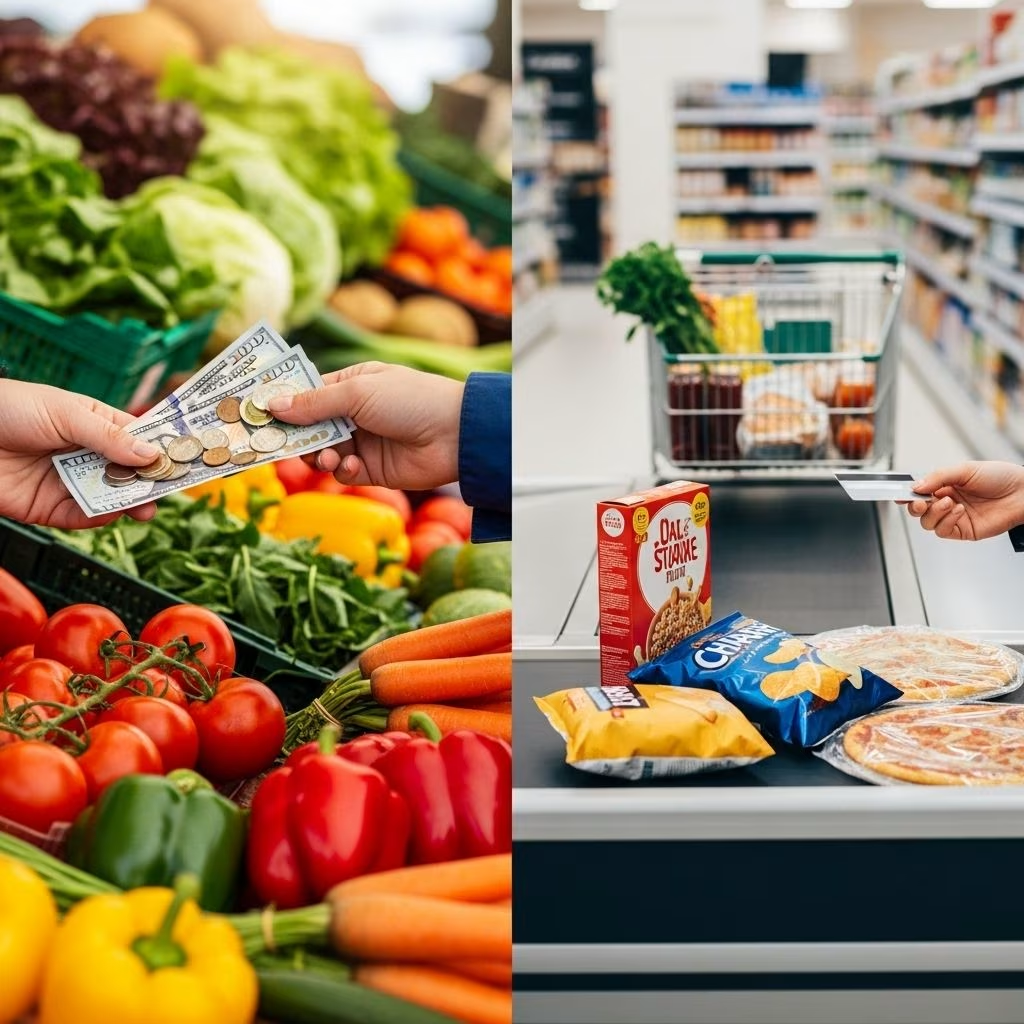
Does Paying in Cash Help You Make Healthier Food Choices?
Most people spend little time pondering how their payment method could affect what lands in their shopping cart. Yet, emerging research suggests that whether you swipe a card or hand over cash could have significant consequences for the types of food you buy — and, consequently, your health.
Understanding the Link Between Payment Method and Food Choice
Can something as mundane as pulling out your wallet nudge you to a healthier lifestyle? According to intriguing findings from a Journal of Consumer Research study, the answer may be yes. The study examined the shopping behavior of over 1,000 households over six months, focusing on the types of foods people bought depending on how they paid for them.
- People using credit or debit cards were more likely to buy unhealthy, impulsive food items. These are typically high-calorie snacks, sweets, and processed foods.
- Shoppers paying in cash showed greater restraint, making healthier choices and resisting tempting but nutritionally poor options.
So, what explains this difference? The study’s authors propose there are two main reasons:
- Impulsiveness Triggers: Unhealthy foods tend to elicit impulsive buys more than nutritious options.
- The ‘Pain’ of Paying: Physically handing over cash feels more ‘real’ and emotionally impactful than swiping a card. This small spike of discomfort can help curb impulsive, unhealthy purchases.
The Psychology of ‘Pain’ in Paying
Why is cash payment more effective at limiting impulse buys? It comes down to the concept known as the ‘pain of paying’. When you pay with cash, you are keenly aware you are giving up something tangible — your hard-earned money. This sensation is lessened when you use a credit or debit card, making it easier to justify pricey, indulgent foods. In essence:
- Paying with cash activates parts of the brain linked to self-control, encouraging shoppers to stick to healthier choices.
- The ease and speed of swiping a card bypass the emotional checkpoint that comes with handing over physical money.
- Individuals already sensitive to spending money experience an even stronger effect when paying with cash, further dampening impulsive purchases.
Card Payments, Convenience, and Modern Diets
With credit and debit cards accounting for nearly 40% of purchases by the mid-2000s, and cash becoming less common with the rise of online shopping and mobile payment apps, our modern convenience-focused culture may be inadvertently encouraging poorer food choices.
Combine this with trends in rising obesity — over a third of adults in the U.S. are classified as obese — and you begin to see why something as simple as payment method could play an outsized role in public health.
Table: Impulse Buying and Payment Type
| Payment Method | Likelihood of Buying Unhealthy/Impulsive Foods | Effect on Shopper Self-Control |
|---|---|---|
| Cash | Lower | Higher (pain of paying enforces restraint) |
| Credit/Debit Card | Higher | Lower (payment feels less impactful) |
Implications for Weight Loss and Obesity
Impulse buying is a major barrier for those attempting to lose weight or maintain a healthy diet. According to behavioral economists, our ability to self-regulate in moments of temptation is fragile and can be disrupted by seemingly unrelated contextual cues—like payment method.
- The psychological separation created by card payments reduces the emotional cost of indulging in unhealthy foods.
- When card payments dominate, there might be a subtle but powerful push toward overconsumption, contributing to widespread health issues like obesity.
What Does This Mean for Your Shopping Trips?
If you tend to fill your cart with chips, soda, cookies, and candy, it might be time to change more than your grocery list. The next time you shop:
- Bring a set amount of cash to the store for paying for groceries. This physical limit encourages thoughtful, premeditated purchases.
- Make a written shopping list and stick to it, using cash as a reinforcement tool for resisting last-minute temptations.
- Pay special attention to the placement of unhealthy items in stores — retailers know these are likely impulse buys and position them accordingly. Paying with cash creates a mental checkpoint that can help override this effect.
Are Financial Incentives the Answer?
Some researchers and policymakers have begun to experiment with financial incentives to nudge dietary behaviors. These can range from direct cash payments for healthier choices, to vouchers and discounts for nutritious food options. Studies show:
- Financial incentives can produce short-term improvements in diet and food purchases.
- The beneficial effects tend to fade when incentives are removed; most people revert to their original habits.
- Larger monetary incentives produce better short-term results, but do not guarantee long-term habit formation or weight loss.
Some programs, like providing fruit-and-vegetable vouchers to low-income families, have shown promise for encouraging healthy eating in the short run, especially when not contingent on long-term behavior change. However, sustaining these results remains a challenge that the field is still working to address.
Healthy Eating Is About More Than Behavior
Payment method is only one of many influences on our food choices. Other factors include cultural background, access to nutritious foods, education, stress, habits, and even how foods are marketed and packaged. But as the research underscores, even seemingly insignificant factors like how we pay at the store can create or remove the friction needed to halt unhealthy behavior in its tracks.
Expert Tips for Curbing Impulse Buys
- Set a Budget: Decide how much to spend before shopping and bring only that amount in cash if practical.
- Eat Before Shopping: Shopping hungry increases the chance of impulse buying.
- Shop With a List: Sticking to a planned list limits room for unhealthy add-ons.
- Avoid Trigger Aisles: Steer clear of high-calorie snack sections and end-of-aisle displays packed with sweets.
- Practice Mindful Spending: Think carefully about each item—Do you truly want and need it, or is it an impulse?
Putting Payment Psychology Into Practice
While not all shopping environments allow for cash purchases—think online shopping and many convenience stores—the core principle applies broadly: Add friction between yourself and impulsive decisions, whether through payment method, budgeting, or mindful planning.
- Consider prepaid grocery cards: These work like cash and create spending limits on shopping trips.
- Use digital envelopes or budget-tracking apps that simulate cash spending for online grocery orders.
- Delay Non-Essential Purchases: If tempted by a treat, wait 10 minutes or until your next trip. Often, the urge will pass.
Broader Social and Public Health Implications
On a wider scale, the increase in card-based payments may be intersecting with society’s weight challenges in ways that policy-makers are only just beginning to understand.
- Retailers and Card Companies: Promotions tied to card use—such as loyalty points or cashback—can inadvertently intensify temptation for buying unhealthy items.
- Policy Approaches: Some policymakers are considering taxes on sugary foods and drinks, or enhancing access to healthy foods through discounts and subsidies.
Whatever the intervention, recognizing how everyday habits intertwine with health could help design smarter, more effective campaigns for combating obesity and poor dietary choices.
Frequently Asked Questions
Q: Why does paying with a card make it easier to buy junk food?
A: Swiping a card doesn’t trigger the same mental discomfort as parting with cash, so it’s easier to make impulsive, unhealthy food purchases without feeling the immediate impact.
Q: Is paying with cash a sustainable way to eat healthier?
A: While effective for adding a layer of self-control, relying solely on payment method is a helpful but limited strategy. For lasting dietary change, combine this tactic with mindful planning and a focus on overall eating habits.
Q: Can using cash really help with weight loss?
A: By curbing impulse buys of high-calorie foods, cash can help reduce unnecessary calorie intake, which supports better weight management, especially when paired with other healthy behaviors.
Q: Are there other ways to add ‘pain of paying’ without using cash?
A: Yes. Budgeting apps, prepaid grocery cards, or even setting spending alerts on your debit card can simulate the psychological effect and provide spending awareness that reduces impulsive purchases.
Q: Does this effect apply outside grocery stores?
A: Absolutely. The psychology of spending applies in restaurants, coffee shops, vending machines, and online shopping. Any scenario where you can make quick, frictionless payments may heighten impulsive choices.
References
- https://www.sciencedaily.com/releases/2010/10/101018174345.htm
- https://pmc.ncbi.nlm.nih.gov/articles/PMC4114984/
- https://www.prevention.com/weight-loss/a20459399/money-for-weight-loss/
- https://www.prevention.com/food-nutrition/a64501989/ozempic-reshapes-the-food-people-eat-study/
- https://www.heart.org/en/news/2020/03/27/eating-well-can-benefit-both-your-health-and-your-bank-account
- https://www.prevention.com/food-nutrition/healthy-eating/a43468445/intuitive-eating/
- https://www.prevention.com/food-nutrition/a20452058/unhealthy-diet/
- https://www.ajc.com/lifestyles/health/cash-helps-people-make-healthy-lifestyle-changes/GOkd0BcZ16JcG8tSzPCIOP/


