


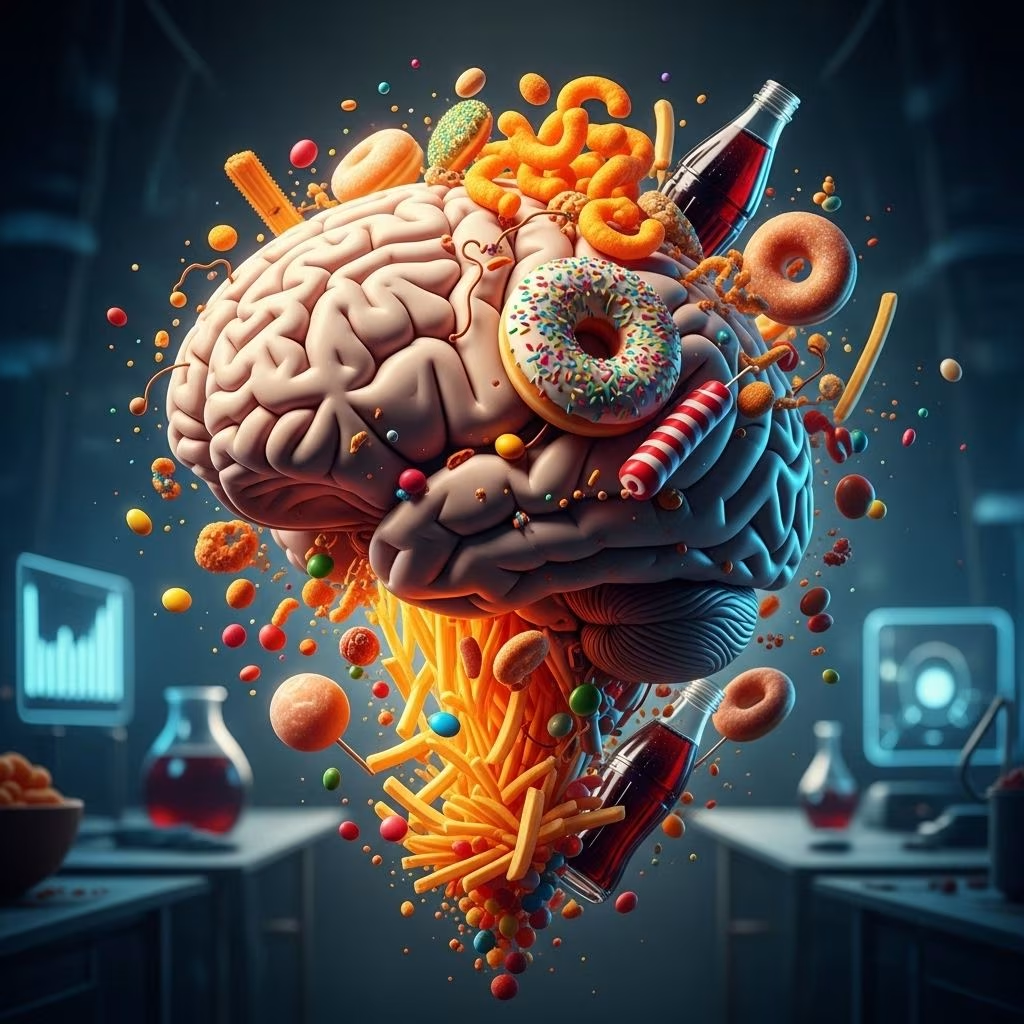
Modern life is filled with tempting foods, eye-catching advertisements, and giant portion sizes. But our struggles with overeating are not purely a matter of willpower. Instead, decades of research have shown that the food industry employs a variety of scientific and psychological tactics to make us consume more than we intend. From engineering irresistible processed foods to designing supermarkets for impulse buys, companies are maximizing profit at the expense of our health.
The Rise of Engineered Foods
The last half-century has seen a dramatic shift in what—and how—we eat. While home cooking and whole foods were once the norm, today’s supermarket shelves are dominated by highly processed foods rich in sugar, salt, and fat. These so-called “hyperpalatable foods” are not accidents; they’re the result of intense food science designed to override our natural hunger cues and activate reward circuits in the brain.
- Salt, sugar, and fat: These three ingredients are carefully calibrated to create pleasurable tastes and textures, stimulating our brains in ways that natural foods rarely do.
- Texture modification: Foods are made crunchy, creamy, or melt-in-your-mouth to encourage faster and more frequent eating.
- Additives and flavor enhancers: Chemicals are added to intensify flavors and aromas, further triggering cravings.
These engineered products can disrupt appetite regulation, making us more likely to eat past fullness and less likely to respond to normal signals of satiety.
The Science of Overeating: How Our Brains Are Hijacked
Eating used to be about survival. Now, it’s about pleasure, habit, and environment. Food companies have zeroed in on the neural pathways that govern our desire for food, leveraging the brain’s reward system to make us crave more.
- Dopamine release: When we eat foods rich in sugar and fat, our brains release dopamine, which is associated with pleasure and reinforcement. Over time, we require more to achieve the same effect.
- Conditioned hypereating: Repeated exposures to rewarding foods can train our brains to crave them even when we’re not hungry.
- Cue-triggered cravings: Packaging, smells, and marketing cues can prompt eating behaviors, regardless of real physical hunger.
These neural mechanisms are particularly disruptive for children, who are still developing self-regulation and are highly susceptible to cues and high-reward foods.
Marketing Magic: How the Food Industry Sells Us More Than We Need
Beyond engineering the products themselves, food manufacturers deploy aggressive marketing strategies designed to encourage overeating.
- Bright packaging and branding targets kids and adults alike, making foods look more appealing than their taste alone would suggest.
- Placement of products at eye-level and near checkouts stimulates impulse buying.
- Portion distortion describes how over-sized servings have become the new normal, tricking customers into eating more by default.
- Misleading health claims (like “all natural” or “low-fat”) create a health halo, even when the food is far from nutritious.
These strategies have effectively re-shaped the modern “food environment,” making overeating the default outcome, not the exception.
Portion Sizes: When “Normal” Became Huge
Today’s portion sizes are dramatically larger than those from just a few decades ago. Food industry research shows that people often eat what’s in front of them, regardless of hunger, and that bigger packages and plates directly correlate to increased calorie intake.
Key facts about portion inflation:
- Restaurant portions are often two to three times the size of those recommended by nutritionists.
- Supersizing in fast food began in the 1970s and continues today, with combo deals making it cheaper to “upgrade.”
- Food packaging at home—whether bags, bottles, or ready meals—has also grown, subtly nudging us to eat more per sitting.
Attempts to combat this, such as labeling regulations and public health campaigns, have had limited success. Changing what feels “normal” at the table remains a major hurdle.
Processed Foods and Addictive Properties
Processed foods, especially those high in refined carbs, sugars, and fats, have been directly linked to both overeating and the rise of eating disorders. These foods can:
- Disturb self-regulation of appetite, especially in children, leading to “loss of control” eating patterns.
- Trigger binge eating through their intense flavor profiles and texture combinations.
- Be marketed in ways similar to addictive substances, drawing debate about whether some foods should be treated as addictive.
Over time, this could lead to changes in set points for hunger and increase the risk for both obesity and certain eating disorders.
Environment and Opportunity: The Food Landscape We Live In
Our physical environment plays a considerable role in what, when, and how much we eat. The abundance of ultra-processed snacks and the ubiquity of food advertising mean that we’re constantly surrounded by eating cues.
- Food everywhere: Gas stations, bookstores, and even pharmacies now sell snacks and soft drinks.
- Convenience culture: Pre-packaged, grab-and-go foods are prioritized over whole, fresh food, making unhealthy eating the easier choice.
- Social influence: Parties, work meetings, and family gatherings commonly revolve around calorie-rich foods and “treats.”
The Global Reach: How Multinational Food Giants Expand Their Empire
The tactics used in the United States have rapidly spread worldwide. Global food conglomerates now set up supply chains, marketing campaigns, and product launches in developing countries, often with little oversight or public health infrastructure.
- Traditional diets are displaced by processed foods and sugary drinks.
- Obesity and noncommunicable diseases (like diabetes) have increased sharply in countries newly targeted by global food marketers.
- Where supermarkets and convenience stores go, rates of overeating and associated health conditions quickly follow.
Who Is Most at Risk?
Certain populations are more vulnerable to the effects of the food industry’s aggressive tactics, including:
- Children and adolescents, for whom food preferences and behaviors are still forming.
- Communities with limited access to healthy, affordable foods (“food deserts”).
- Individuals struggling with weight, eating disorders, or who have a family history of compulsive eating.
Being mindful of these risks is a first step toward mitigating their effects and developing effective prevention strategies.
Taking Back Control: What Can Individuals Do?
Recognizing the forces at play is the first step to resisting overeating. While the food environment is tough to fight, there are actions you can take to protect yourself and your family:
- Familiarize yourself with recommended portion sizes: Use measuring cups and food scales at home until you get a sense for appropriate servings.
- Increase fiber and whole foods: These foods promote fullness and slow digestion, helping to regulate appetite naturally.
- Practice mindful eating: Chew slowly, avoid distractions (like screens) during meals, and tune into your body’s hunger and fullness cues.
- Read food labels critically: Watch for hidden sugars, fats, and unfamiliar additives. Remember that “low-fat” and “natural” don’t always mean healthy.
- Limit processed and packaged foods: Prioritize fresh produce, lean proteins, and whole grains whenever possible.
Ultimately, repeated small choices add up to big changes over time. Building new habits around food can counteract some of the most insidious industry strategies.
Policy and Prevention: What Needs to Change?
On a larger scale, addressing overeating requires structural change and stronger regulation of food industry practices. Policies that have been proposed or tested include:
- Clearer food labeling (including realistic portion sizes and added sugars)
- Regulating advertising to children, especially for high-sugar and high-fat foods
- Portion size limitations in restaurants and fast food
- Taxes and incentives to encourage healthier choices and reduce the appeal of sugary drinks and snacks
- Education initiatives that teach nutrition and media literacy in schools
Experts emphasize the need for multidisciplinary cooperation—including input from public health officials, nutrition scientists, educators, and even those with experience of eating disorders—to craft regulations that support health without unintended consequences.
Table: Contrast Between Whole and Processed Foods
| Aspect | Whole Foods | Processed Foods |
|---|---|---|
| Typical Ingredients | Single, natural (e.g., broccoli, eggs) | Multiple, engineered (e.g., sugars, preservatives, colorings) |
| Satiety Effect | High, encourages fullness | Low, encourages overeating |
| Preparation | Minimal | Often ready-to-eat |
| Marketing Approach | Minimal, relies on freshness | Aggressive branding and advertising |
| Long-Term Health Impact | Supports healthy weight | Linked to obesity and eating disorders |
Frequently Asked Questions (FAQs)
Q: Why do I crave junk food even when I’m not hungry?
A: Engineered foods are designed to stimulate brain reward pathways, triggering cravings through taste, smell, and marketing cues—even when caloric needs are met.
Q: Can processed foods really be addictive?
A: Some researchers argue that the combination of sugar, fat, and salt in processed foods can trigger brain responses much like addictive substances, leading to cycles of craving and consumption.
Q: What are realistic first steps to reduce overeating?
A: Try using smaller plates, increasing dietary fiber, reading food labels, and avoiding multitasking during meals. Small, mindful changes can gradually shift eating habits.
Q: Is it just willpower, or are some people more at risk for overeating?
A: While personal choices matter, environment, brain chemistry, and targeted marketing all play significant roles. Children, those exposed regularly to highly rewarding foods, and people with a family history are more at risk.
Q: What role should governments and schools play?
A: Policies that regulate portion sizes, restrict aggressive marketing to children, and ensure clear, honest labeling can create healthier food environments for everyone. Education in media literacy and nutrition is also vital.
Final Thoughts
The food industry’s power over what we eat is profound, affecting everything from how much we consume to how we view food itself. By understanding these tactics—and advocating for smarter policies and personal habits—we can reclaim our health, starting one meal at a time.
References
- https://pmc.ncbi.nlm.nih.gov/articles/PMC6357161/
- https://www.houstonmethodist.org/blog/articles/2022/jan/how-to-stop-overeating-10-tips-to-avoid-eating-too-much/
- https://www.tandfonline.com/doi/full/10.1111/ajpy.12169
- https://www.jci.org/articles/view/40983
- https://www.ncbi.nlm.nih.gov/books/NBK83190/
- https://www.teladochealth.com/library/article/managing-triggers-to-avoid-overeating


