ThunderShirts for Dogs: Do They Really Work?
For many dog owners, witnessing their pets struggle with anxiety can be as stressful for them as it is for the dog. ThunderShirts and other pressure wraps promise a drug-free solution to canine anxiety, but do they really deliver on that promise? This comprehensive guide examines the science, expert opinions, and practical considerations to help you decide if a ThunderShirt is right for your pup.
What Is a ThunderShirt?
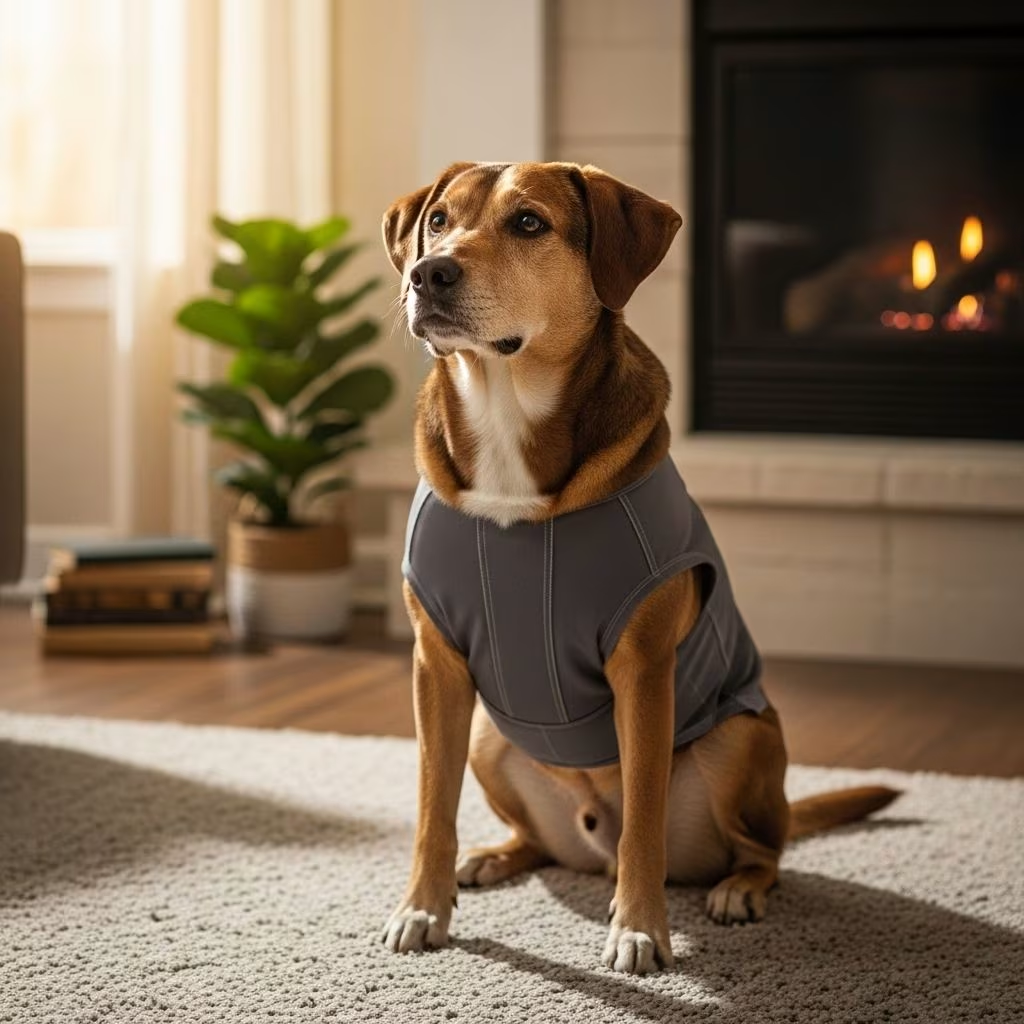
The ThunderShirt is a form-fitting vest designed for dogs. It applies gentle, constant pressure around the torso—similar to swaddling an infant—to create a calming effect. The idea originated when inventor Phil Blizzard noticed his own dog’s anxiety during thunderstorms and improvised a wrap using an old T-shirt and duct tape. Today, purpose-built ThunderShirts achieve the same effect in a more convenient and comfortable form.
- Material: Lightweight, breathable fabric that uses Velcro for a customizable fit
- Concept: Applies pressure across the dog’s chest and abdomen, mimicking the comfort of a snug hug
- Use cases: Designed to help with situational anxieties including thunderstorms, fireworks, travel, and separation anxiety
Do ThunderShirts Work? The Science Behind Pressure Wraps
The principle behind ThunderShirts is not new. Swaddling is a recognized calming technique for infants, and similar pressure-based approaches have proven beneficial for certain animals. Notably, animal scientist Temple Grandin documented that gentle pressure helps calm livestock undergoing stressful events. But what about dogs?
Summary of Scientific Research
- One 2014 Journal of Veterinary Behavior study observed that anxious dogs fitted with a ThunderShirt, worn correctly (snugly, as directed), experienced a lower increase in heart rate and displayed fewer signs of acute stress, such as frequent yawning and excessive orientation toward exit points, compared to dogs with loose wraps or no wraps at all.
- A review published in Animals (Basel) (2024) highlighted that 89% of dog owners regarded anxiety wraps like the ThunderShirt as at least partially effective for phobias like thunderstorms, with most improvements noted when the garment was fitted as intended by the manufacturer.
- Further evidence suggests the benefits rely on proper fit and introduction. Dogs who wore the wrap loosely did not experience the same calming effects.
- Studies generally cover short-term exposure to anxiety triggers (ranging from several minutes to about 15 minutes), which may or may not reflect how the product performs over longer periods or in a real home environment.
Overall, pressure wraps may help reduce some anxiety-related behaviors and physiological responses, though individual results vary.
Which Types of Dog Anxiety Are ThunderShirts Meant to Help?
According to manufacturers and independent experts, ThunderShirts and similar pressure wraps can be effective for several common canine anxieties, specifically those that are situational or acute. Here are some situations where a ThunderShirt may help:
- Thunderstorm phobia: Sudden, intense weather-related anxiety is a key target
- Fireworks: Similar triggers and intensity as thunderstorm fear
- Car rides or travel: Dogs who become anxious while driving or flying
- Separation anxiety: When dogs become distressed by being left alone
- Generalized anxiety: Dogs with persistent, broad-spectrum nervousness
Each dog’s triggers and coping mechanisms are unique, so a ThunderShirt isn’t automatically a cure-all but can be one tool in a broader anxiety management toolkit.
How ThunderShirts Work: The Theory of Gentle Pressure
ThunderShirts apply gentle, constant pressure to a dog’s torso, which is thought to release calming hormones such as oxytocin and reduce levels of stress hormones like cortisol. This effect is analogous to:
- Swaddling an infant to mimic the comfort of the womb
- The use of weighted blankets for anxiety, ADHD, or insomnia in humans
- Temple Grandin’s squeeze machine for calming livestock and people on the autism spectrum
Physiologically, the pressure may stimulate the autonomic nervous system, promoting a sense of safety and security for the animal.
What the Research and Experts Say
Numerous experts and researchers have weighed in, citing both scientific findings and clinical experience. Here are the key takeaways:
- Effectiveness may be moderate, not miraculous: Several studies and reviews agree that most dogs experience some benefit, but the improvement is often partial, not complete elimination of anxiety.
- Proper fit is essential: The calming effect depends on the ThunderShirt being snug (but not too tight), as a loose wrap does not provide adequate pressure.
- No notable adverse effects: Most reports and studies did not identify side effects, though care is advised for elderly dogs, dogs with certain health conditions, or in warm weather.
- Owner feedback is overwhelmingly positive: Anecdotally, up to 80-89% of surveyed owners found ThunderShirts at least occasionally effective, though not always in every situation.
How to Use a ThunderShirt Properly
To maximize benefits, follow these expert-backed steps:
- Introduce Gradually: Before your dog encounters an anxiety trigger, let them explore the ThunderShirt in a calm, positive setting.
- Fitting: Place the ThunderShirt on your dog and adjust the Velcro closures to create gentle, even pressure across the chest and torso. It should be snug but not constricting; you should be able to slip two fingers under the fabric comfortably.
- Trial Run: Have your dog wear the ThunderShirt briefly for the first few sessions (5–10 minutes), paired with positive experiences like treats or playtime.
- Use During Stressful Events: Put the ThunderShirt on your dog 10–15 minutes before an anticipated stressor (e.g., before a thunderstorm or fireworks show). If the event is lengthy, check for signs of overheating or discomfort periodically.
- Monitor Response: Watch for any immediate or delayed reactions. Not all dogs respond the same way, and improper fit or association with a negative event may reduce effectiveness.
Potential Downsides and Considerations
ThunderShirts are generally safe, but there are a few scenarios to consider before use:
- Excess Heat: Avoid prolonged use in hot weather, as overheating can be a serious risk.
- Health Restrictions: Consult your veterinarian before using with elderly dogs, puppies, or dogs with medical conditions affecting skin, mobility, breathing, or cardiac health.
- Temporary Solution: ThunderShirts are most effective as part of a larger anxiety management plan, not as a standalone cure for severe or chronic anxiety.
How Do ThunderShirts Compare to Other Anxiety Treatments?
| Treatment | Pros | Cons |
|---|---|---|
| ThunderShirt | Drug-free, simple to use, few side effects | Requires snug fit, variable effectiveness, not suitable for every dog |
| Behavioral training | Often addresses root causes, long-term improvement | Can be time-intensive, requires consistency |
| Medications (e.g., SSRIs, benzodiazepines) | Strong efficacy for severe anxiety | Potential side effects, requires veterinary supervision |
| Supplements/pheromones | Easy to use, generally safe | Varied results, may not address severe cases |
| Environmental changes | Free/low cost, complements other interventions | Not always feasible for all triggers |
Expert Tips for Getting the Most from Your ThunderShirt
- Pair with positive reinforcement: Treats and praise help your dog associate the ThunderShirt with calm and comfort, not just anxiety-inducing events.
- Plan ahead: Whenever possible, introduce the ThunderShirt before your dog is anxious—prevention is more powerful than reaction.
- Use as part of a holistic plan: Combine ThunderShirts with behavioral conditioning, environmental management, or medication for best results, especially with severe anxiety cases.
- Monitor comfort: Check regularly for signs of rubbing, overheating, or agitation while your dog wears the ThunderShirt.
- Consult your vet or a behaviorist: For persistent anxiety, always seek professional guidance on a comprehensive treatment plan.
ThunderShirt Alternatives for Anxious Dogs
- Other pressure wraps: Several brands offer similar products; effectiveness varies mainly by fit and build quality.
- Pheromone diffusers/sprays: Products containing dog-appeasing pheromone (DAP) may have mild calming effects for some dogs.
- Natural supplements: Some owners try calming chews or herbal supplements, but research on their efficacy is limited.
- Training techniques: Desensitization and counterconditioning with the help of a professional dog trainer or behaviorist can result in long-lasting improvements.
- Prescription medications: For severe or chronic cases, your veterinarian might prescribe anti-anxiety medications.
Frequently Asked Questions (FAQs)
How long can a dog safely wear a ThunderShirt?
Most manufacturers recommend not leaving the ThunderShirt on for more than a few hours at a stretch. Regularly check for signs of discomfort.
Will a ThunderShirt work for all types of dog anxiety?
No, effectiveness varies. ThunderShirts tend to work best for situational or acute anxieties (e.g., thunderstorms, travel, fireworks), and are less effective for chronic or deep-rooted fears without additional intervention.
Can I use a ThunderShirt together with other anxiety treatments?
Yes, ThunderShirts are often most effective when part of a broader anxiety management plan including training, environmental changes, or medication.
Are there any health risks?
ThunderShirts are generally safe with minimal side effects, but caution is advised for senior dogs, dogs with medical issues, or in warm weather. Always consult a veterinarian if unsure.
How soon should I expect results?
Some owners report immediate improvement, while others observe gradual benefits over several uses. If there’s no effect after a few sessions, consider other interventions.
Conclusion: Should You Try a ThunderShirt for Your Dog?
For many dogs, ThunderShirts and similar pressure wraps are a safe, drug-free method to reduce situational anxiety. While scientific research and anecdotal owner reports suggest partial effectiveness for most dogs, results are not universal, and proper fit and introduction are key to seeing benefits. For recurring or severe anxiety, consult your veterinarian or a veterinary behaviorist to develop a multi-faceted treatment strategy.
References
- https://vethelpdirect.com/vetblog/2022/09/21/do-thundershirts-work-for-dogs/
- https://www.rover.com/blog/thundershirts-for-dogs-do-they-really-work/
- https://pmc.ncbi.nlm.nih.gov/articles/PMC5517327/
- https://pmc.ncbi.nlm.nih.gov/articles/PMC11639916/
- https://veterinaryevidence.org/index.php/ve/article/download/152/226?inline=1