


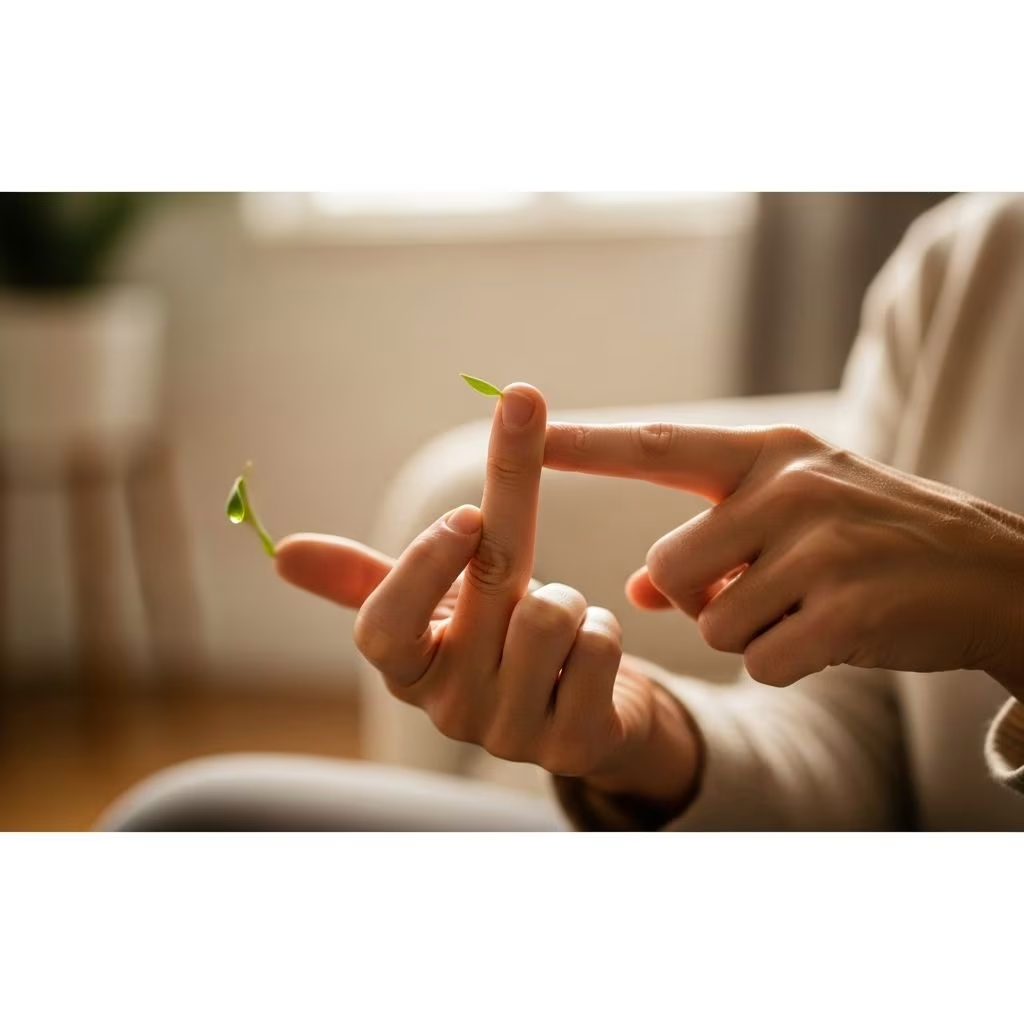
How to Reduce Food Cravings with Your Finger: Practical Strategies for Lasting Control
Food cravings can derail even the most dedicated efforts at weight loss or healthy eating. Fortunately, simple physical and mental techniques—some requiring nothing more than your finger—can offer instant relief and lasting change. This article will explore:
- The science behind food cravings and why they happen
- Finger tapping and other physical distraction techniques
- Powerful mindful strategies to rewire your response to cravings
- Additional research-backed tips and practical advice
- Frequently asked questions about food cravings and their control
Understanding Food Cravings: What Happens in Your Brain?
A food craving is a strong urge to eat a specific food—often something indulgent or high in sugar, fat, or salt. These cravings are influenced by brain chemistry, emotional cues, and learned habits. Visual, sensory, and social triggers can all make cravings stronger, making it vital to understand what’s really driving your urge.
Science-Backed Physical Distraction Techniques
Recent research demonstrates that physical distractions can significantly reduce the intensity of food cravings. Three 30-second distraction tasks were studied for their ability to curb desire for favorite foods:
- Tapping your forehead with your index finger
- Tapping your ear
- Tapping your toe on the floor
- Staring at a blank wall (control)
Of these, forehead tapping proved most effective. Participants who performed this technique reported significantly less desire for tempting foods compared to the other groups.
Why Does Forehead Tapping Work?
Tapping your forehead engages the same neural circuits responsible for craving formation. By “overloading” or interrupting this pathway, the craving signal is disrupted. This simple mechanical action acts as a mental switch, shifting your attention away from the urge to eat.
How to Use Finger Tapping
- When a craving hits, pause and gently tap your forehead with your index finger for 30 seconds.
- Focus on the motion and sensation. Breathe slowly.
- Repeat as needed if the craving returns.
Distraction Techniques: Divert Your Mind to Break the Urge
- Play a computer game or app. Research shows even a quick round of Tetris or another game can redirect your thoughts and reduce both the intensity and vividness of cravings.
- Keep your hands busy with chores, a creative project, or a phone call. Activities that involve motion and focus are particularly effective.
- Brush your teeth, take a bath, or go for a walk to engage your senses in a new way and distance yourself from food images.
Break Routine: Overcome Habitual Triggers
Cravings are often tied to environmental and behavioral cues: walking past a favorite bakery, snacking while watching TV, or grazing from the pantry after work. Research shows the brain creates powerful associations with these routines and locations, making cravings harder to control.
- Avoid your craving hot spots. Take a different path through the mall, plan dinner away from the kitchen, or move evening entertainment out of snack-heavy zones.
- Eliminate sensory cues. Watch TV in a room far from snacks. Remove tempting foods from visible kitchen counters.
Mindfulness and Cognitive Strategies: Rethink How You Respond to Cravings
Changing the way you think about cravings can powerfully reduce their hold. Try these mindful techniques:
- Focus on long-term impact. Consider how indulging in your craving affects your health, energy, and goals in the future—not just immediate pleasure.
- Picture yourself healthy. Each time a craving pops into your mind, visualize a healthier, vibrant version of yourself, reinforcing motivation.
- Use the “stop technique.” When a food image intrudes, say “Stop!” mentally, then redirect your mind to another visual—such as happy memories, a compliment you received, or an image of your fitness goal.
A 2014 study using functional MRI revealed that participants who contemplated the long-term consequences of eating unhealthy foods showed reduced appetite and weaker brain activation for those cravings.
Frequently Overlooked Factors Influencing Cravings
| Factor | Impact on Cravings | Action Steps |
|---|---|---|
| Sleep | Lack of sleep lowers leptin (satiety hormone) & raises ghrelin (hunger hormone), increasing cravings for starchy foods by up to 45%. | Prioritize 7-8 hours nightly. Use caffeine or portion control as short-term fixes if sleep deprived. |
| Routine | Habitual patterns create powerful cravings and fear responses if altered. | Break routines, eliminate cues, and build healthier habit loops. |
| Boredom/Stress | Cravings often emerge from emotional states rather than true hunger. | Distract with activities, mindfulness, or social connection. Practice stress reduction. |
Smart Nutrition Tricks to Prevent Cravings Before They Start
- Start your day with oats. Healthy fats in oats help release satiety hormones, controlling appetite for up to 7 hours. People eating oatmeal for breakfast consumed 31% fewer calories at lunch versus those who skipped breakfast or chose corn flakes.
- Eat regular, balanced meals. Skipping meals or erratic eating patterns heighten cravings and increase the likelihood of overeating.
Additional Tips and Mental Hacks to Defeat Cravings
- Confront the craving directly. Pause and ask yourself: “Do I really want this right now?” Making a conscious choice can weaken automated responses.
- Replace food images with positive ones. Think about compliments you’ve received, exciting goals, or even look at cute animal pictures as alternative mental rewards.
- Portion control. If you do indulge, plate a small serving, put the rest away, and eat mindfully. This can reduce overconsumption and guilt.
- Shift your focus. Visually engaging tasks—like typing an email or cleaning—help your brain forget the food and move on.
Frequently Asked Questions About Food Cravings and Finger Techniques
Q: Is finger tapping safe and effective for everyone?
A: Yes, forehead tapping is a simple, safe distraction technique, validated in multiple studies for reducing momentary cravings. However, it may take practice to notice its effects, and works best alongside other mindful strategies.
Q: How fast do these techniques work?
A: Physical distractions like finger tapping or computer games produce noticeable reduction in cravings within 30 seconds to several minutes. Mindfulness strategies may require repeated practice and can take several days or weeks to retrain your mind.
Q: Can I use finger tapping for any type of craving?
A: Yes. While studies primarily tested cravings for high-calorie foods, finger and other distraction techniques can be applied to cravings for sweets, starches, or salty snacks.
Q: Why do my cravings come back even after using these methods?
A: Some cravings may persist due to emotional, hormonal, or environmental cycles. Repeating distraction and mindfulness techniques consistently can reduce both their frequency and intensity over time.
Q: If I’m struggling with controlling cravings, what else should I consider?
A: Check factors like sleep quality, stress, overall eating habits, and environment. A combination of approaches usually yields the best results. Don’t hesitate to consult a nutrition expert or therapist for personalized support.
Summary Table of Craving-Busting Techniques
| Technique | How It Works | Best Used When |
|---|---|---|
| Finger tapping (forehead) | Interrupts craving pathways in the brain | Immediately upon noticing a craving |
| Playing a game (Tetris or mobile app) | Visually and mentally distracts from food cravings | When cravings arise due to boredom or stress |
| Changing location/routine | Removes habitual triggers | During routine activities linked to cravings |
| Mindful visualization (stop technique) | Replaces food images with healthy, motivating ones | When cravings are persistent and mentally driven |
| Balanced nutrition (oatmeal breakfast) | Increases satiety hormones, preventing hunger triggers | Preventative—at start of day |
Conclusion: Building Lasting Craving Control
Food cravings are natural, but you are not powerless against them. Combining finger tapping, distraction methods, mindful visualization, and smart environmental changes can help you regain control and support long-term weight loss success. Practice these strategies regularly, experiment to find what works best for you, and remember that building new habits takes patience and persistence.
Additional Frequently Asked Questions
Q: What should I do if cravings are very frequent?
A: Evaluate your meal pattern, stress levels, and sleep habits. Underlying issues in these areas can intensify cravings. Consider seeking support from a healthcare provider for persistent problems.
Q: Are there foods that can naturally suppress cravings?
A: High-fiber foods, protein-rich meals, and foods containing healthy fats (like oats or nuts) increase feelings of fullness and suppress cravings.
Q: Could hydration affect cravings?
A: Yes. Sometimes thirst is mistaken for hunger. Drink a glass of water when a craving arises before reaching for food.
Q: How can I support a loved one struggling with cravings?
A: Share these techniques, offer encouragement, and avoid keeping tempting foods visible. Remind them that cravings are manageable with practice and patience.
Q: Do these strategies work for emotional eating?
A: Many techniques for controlling food cravings—such as mindfulness, distraction, and routine breaks—can help manage emotional eating. Professional support may be helpful for deeper issues.
References
- https://www.sciencedaily.com/releases/2014/11/141104121118.htm
- https://www.prevention.com/weight-loss/a20448548/5-ways-to-stop-food-cravings/
- https://www.prevention.com/weight-loss/a20466650/how-to-stop-food-cravings-and-overeating/
- https://www.prevention.com/weight-loss/g20508005/7-ways-to-control-cravings/
- https://www.scripps.org/news_items/6147-7-tips-to-control-your-food-cravings
- https://www.prevention.com/weight-loss/g20512093/12-surprisingly-effective-ways-to-halt-your-hunger/
- https://www.prevention.com/weight-loss/a20439714/how-to-stop-sugar-cravings/
- https://pmc.ncbi.nlm.nih.gov/articles/PMC7321886/
- https://www.heart.org/en/news/2024/07/26/where-do-food-cravings-come-from-and-can-we-stop-them


