


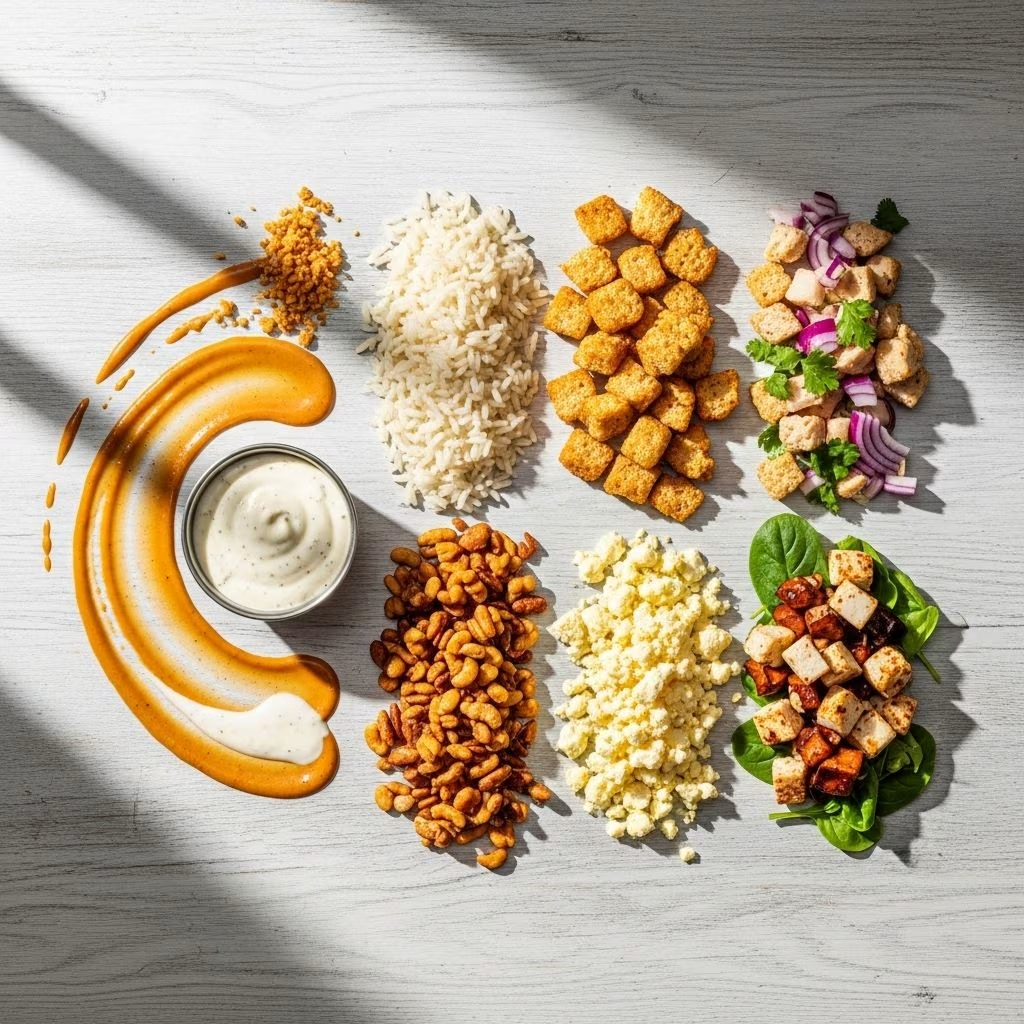
Are Your Power Bowls Making You Gain Weight? 4 Surprising Pitfalls
Power bowls—brimming with grains, vegetables, protein, and vibrant toppings—have taken center stage at eateries and in home kitchens alike. Known for their variety, beautiful presentation, and promise of balanced nutrition, they seem to tick every box for a healthy meal. But even seemingly wholesome power bowls can sabotage weight loss or maintenance goals if not composed carefully. Recent dietitians’ findings and menu analyses reveal that certain common missteps in building these bowls can quietly turn them into high-calorie feasts.
In this article, we’ll break down the four most common power bowl mistakes and provide actionable solutions so you can continue enjoying your favorite bowls—guilt-free and with results to match.
Why Power Bowls Became So Popular
Power bowls offer a convenient and visually appealing way to incorporate a variety of food groups in one dish. Typically, these bowls feature a grain or green base, an assortment of vegetables, a source of protein, and a medley of garnishes ranging from seeds to sauces.
This composition makes bowls an easy answer to meal prep and a reliable go-to in fast casual eateries. They line up with nutrition guidelines by providing whole grains, fiber, micronutrients, and lean proteins. But as their popularity has grown, so too has the portion size—and, too often, the calorie count.
How a Healthy Power Bowl Can Backfire
The inherent flexibility and abundance of a power bowl is also its biggest risk. A well-constructed power bowl can fuel your body, but piling on ingredients and failing to monitor portion sizes can quickly tip the balance from healthful to excessive.
Here’s a closer look at the four leading mistakes that could make your power bowl a hidden source of weight gain—and the strategies to avoid them.
1. Doubling Down on Carbs
Mistake: Most power bowls start with a base of grains—brown rice, quinoa, farro, or similar. While whole grains are a nutritious choice, they’re also calorie-dense. A standard portion of cooked quinoa or rice is about 1/3 cup, equivalent to the carbohydrates in a single slice of bread. Yet, it’s common for both restaurants and home cooks to fill bowls with up to 2 cups of grain base—equaling the carbs in six slices of bread!
- Extra carb sources like sweet potatoes, corn, or black beans add up quickly.
- Many diners don’t account for these additional starches, resulting in a much higher calorie load than intended.
The Fix: Registered dietitians recommend halving your grain portion and doubling your veggie portion. For example, stick to about 1/2 cup of cooked grains and fill the rest of your bowl with leafy greens, roasted broccoli, or cauliflower.
This approach increases your fiber and micronutrient intake while slashing excess calories and keeping you full longer.
2. Going to Town on Toppings
Mistake: Part of what makes power bowls appealing is the finishing touch—a selection of toppings such as avocado, shredded cheese, seeds, nuts, crispy onions, or dried fruit. While these are flavorful and often packed with nutrition, piling them on can turn a balanced meal into a calorie-dense treat.
- One tablespoon of sunflower seeds adds around 50 calories.
- Half an avocado contains about 120 calories.
- Two tablespoons of feta cheese contribute roughly 60–80 calories more.
- Doubling or tripling these in a single bowl happens easily and quickly.
The Fix: Choose just one or two high-calorie toppings per bowl and keep the rest of your flavor enhancers low in calories, like fresh herbs, salsa, and citrus juice.
Pay special attention to measure out toppings rather than sprinkling them with a free hand. This small shift makes a substantial difference in your bowl’s nutrition profile.
3. Spooning on the Special Sauce
Mistake: That delicious creamy tahini, spicy aioli, or ginger-kissed dressing is often the flavor highlight of your power bowl. But concentrated, oil-based or creamy sauces can add significant calories and fat—sometimes over 200 calories per serving—especially if liberally poured.
- Restaurant bowls may feature more than one type of sauce.
- It’s easy to add several tablespoons without noticing.
- Oil-based dressings are particularly calorie-dense, packing about 120 calories per tablespoon.
The Fix: Request sauces and dressings on the side when ordering out. At home, measure your sauce (aim for 1 tablespoon) and choose options that are lower in calories, like vinaigrettes, salsa, or yogurt-based dressings.
Try drizzling rather than smothering, or swirl your bowl with a squeeze of fresh lemon, lime, or a splash of vinegar for flavor without the excess calories.
4. Turning a Salad Into a Full-Course Meal
Mistake: The beauty of power bowls is in the abundance of variety, but that can tempt even the healthiest eater to pile on a little bit of everything. If you start with a grain base, throw on roasted sweet potatoes, add a scoop of beans, chicken, cheese, pepitas, avocado, and two sauces—your portion size and calorie intake may double or triple.
- Some restaurant bowls can top 900 calories or more—even before you add a side or drink.
- Extra choices often mean extra bites you don’t consciously account for.
- Overeating healthy food is still overeating.
The Fix: Focus your meal. Pick a primary protein, one grain or starch, and two or three colorful vegetables. Treat high-calorie toppings and sauces as extras, not essentials.
Follow the principle of a healthy plate: half vegetables, one quarter lean protein, one quarter whole grains or starchy veg. Use a regular-sized bowl or plate to keep portions moderate.
How to Build a Balanced Power Bowl
Crafting the perfect power bowl is all about balance—of flavors, textures, and nutrients. Follow this chef- and dietitian-approved template:
- Start with a moderate portion of whole grains (1/2 cup) like brown rice, farro, or quinoa, or use leafy greens as the base.
- Layer in lots of fresh or roasted veggies (at least 1 cup), choosing several colors for maximum antioxidants.
- Add a lean protein source such as grilled chicken, edamame, tofu, hard-boiled eggs, or beans (3–4 oz per bowl).
- Include 1–2 small servings of healthy fat—like avocado slices, a sprinkle of seeds, or a few chopped nuts.
- Finish with a flavorful topping: fresh salsa, herbs, or a drizzle of a light dressing or vinaigrette.
Pro Tip: When eating out, beware how restaurant portions compare to these guidelines. Don’t hesitate to ask for to-go containers and pre-portion your meal to save half for later.
Table: Portion Size Guide for Power Bowl Components
| Component | Recommended Portion | Calorie Range | Notes |
|---|---|---|---|
| Grains (rice, quinoa, farro) | 1/3 to 1/2 cup cooked | 70–110 | Equals 1 slice of bread in carbs |
| Leafy greens/veggies | 1–2 cups | 25–80 | Go heavy for fiber and micronutrients |
| Protein (meat, tofu, beans) | 3–4 oz | 100–200 | Pick lean, minimally processed sources |
| Healthy fats (avocado, nuts, seeds) | 1–2 Tbsp (nuts/seeds), 1/4–1/2 avocado | 40–120 | Calorie-dense, so measure carefully |
| Sauces & dressings | 1 Tbsp | 30–120 | Use oil-based sauces in small amounts |
Frequently Asked Questions (FAQs)
Q: Are power bowls always healthy?
A: Power bowls have the potential to be very healthy—they’re naturally rich in nutrient-dense vegetables, lean proteins, and whole grains. However, if portions aren’t managed and high-calorie toppings and sauces are added liberally, they can quickly become calorie-dense and less supportive of weight goals.
Q: How can I estimate portions when I don’t have measuring cups?
A: Use your hands as a guide: a cupped palm is about 1/2 cup (for grains), your fist equals about 1 cup (for vegetables), and your palm is roughly the size of a 3–4 oz portion of protein.
Q: What’s one ingredient I should always include for satiety?
A: Fiber-rich foods, like leafy greens, beans, or whole grains, and protein sources. Both are proven to increase satiety and help regulate overall calorie intake.
Q: Are there benefits to making my own power bowls instead of buying them?
A: Absolutely! DIY bowls allow full control over portions, ingredients, and calorie counts. You can tailor flavor profiles to your preferences and avoid hidden oils, sugars, or high-calorie sauces that are common in restaurant versions.
Q: How often should I eat power bowls?
A: Power bowls can be a staple part of your weekly meal planning. Just remember to balance ingredients, vary your protein and vegetable choices, and stick to recommended portions to keep your meals energizing and goal-supportive.
Key Takeaways for Power Bowl Success
- Mind your grain and carb portions—more is not always better.
- Be selective about high-calorie toppings and sauces. Measure, don’t guess.
- Emphasize greens, non-starchy veggies, and lean protein to maximize nutrition and satiety.
- Build your bowls at home when possible for greater control.
- Remember: eating healthy foods in excessive quantities can undermine your goals—portion wisdom is key!
By recognizing and avoiding these four pitfalls, you can keep power bowls a satisfying, effective, and sustaining part of your healthy eating repertoire.
References
- https://leaf.nutrisystem.com/power-bowl-guide/
- https://www.prevention.com/weight-loss/g20507450/4-ways-your-power-bowl-is-making-you-gain-weight/
- https://pmc.ncbi.nlm.nih.gov/articles/PMC8874720/
- https://pmc.ncbi.nlm.nih.gov/articles/PMC5015032/
- https://www.levels.com/blog/dr-caseys-metabolic-power-bowls
- https://www.nature.com/articles/ijo201482
- https://nutritionsource.hsph.harvard.edu/obesity/preventing-obesity/
- https://www.prevention.com/weight-loss/a20471164/mistakes-made-after-weight-gain/


