


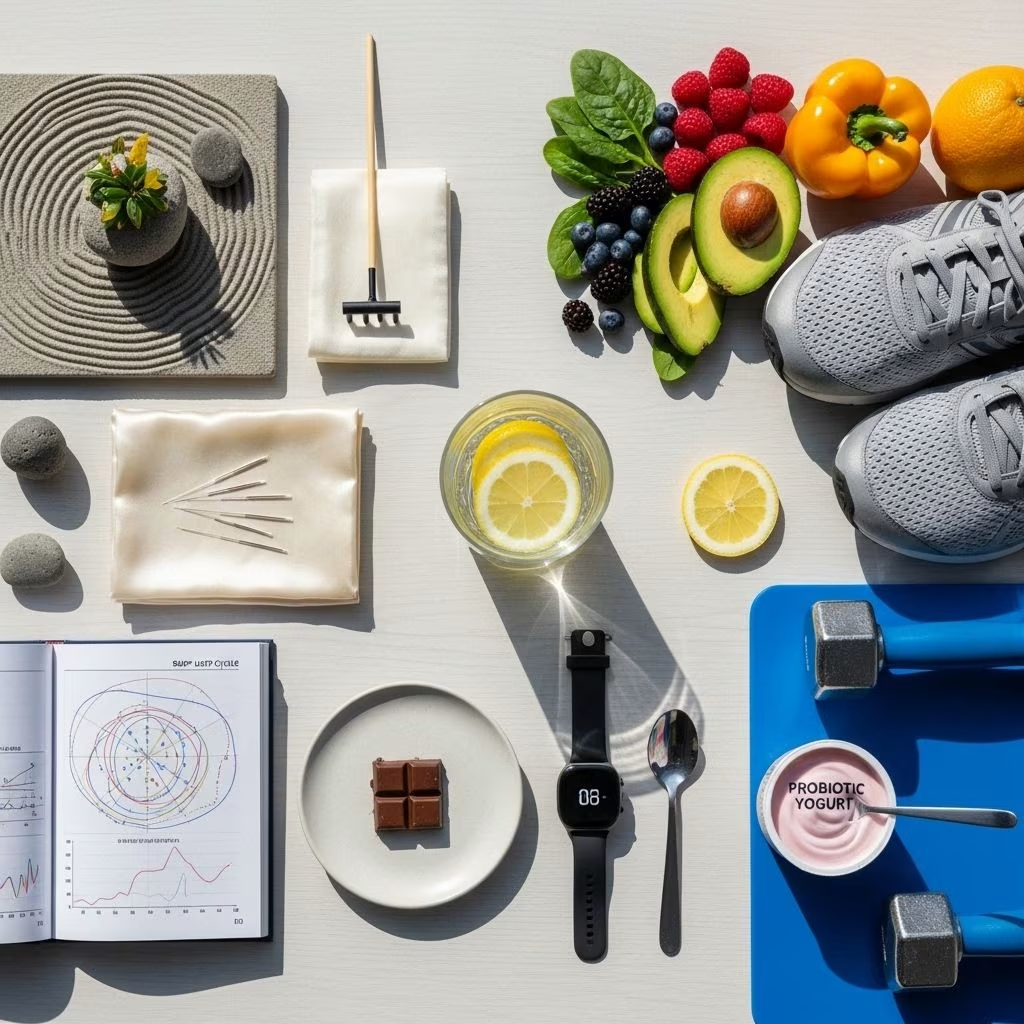
Losing weight doesn’t always mean following rigid diet plans or sweating for hours at the gym. In fact, a wealth of research points to surprisingly simple, everyday tweaks that can help you curb cravings, eat less, and shed pounds—sometimes with hardly any extra effort. Here are ten odd yet effective weight-loss strategies supported by solid science.
1. Eat in Front of a Mirror
It may sound strange, but placing a mirror in your dining area can have a measurable impact on your eating habits. Studies show that people who eat unhealthy foods in front of a mirror rate those foods as less satisfying and eat significantly less of them. The act of seeing yourself as you eat can reinforce self-awareness and accountability, making you more mindful of your choices and encouraging healthier habits.
- Research highlights: When people see their reflection, they eat smaller portions of junk food and report higher satisfaction with healthier meals.
- Mirrors boost dietary self-control, particularly when the food is perceived as unhealthy.
2. Clean and Declutter Your Kitchen
Your environment can greatly influence your food choices. According to behavioral studies, spending time in a cluttered or disorganized kitchen increases the likelihood of grabbing high-calorie snacks.
- Clutter equals cravings: Just ten minutes in a messy kitchen can lead to eating 100 extra calories, mostly from unhealthy snacks.
- Organize your kitchen and leave healthy options within easy reach—like fruit on the counter or cut veggies in eye-level fridge space.
- Tip: Take a minute to tidy up before prepping or serving meals.
3. Dim the Lights While You Dine
Ambiance isn’t just for romantic meals—it can powerfully affect how much you eat. Research has shown that people consume 18% fewer calories when dining in softer, dimmer lighting versus bright, harsh lights.
- Softer lighting tends to slow eating pace, increasing mindfulness and satisfaction.
- Taking more time to eat gives your body’s fullness signals a chance to catch up, reducing the urge for seconds.
- Try using candles or lower-watt bulbs at mealtime.
4. Pay Cash for Junk Food (or Skip the Snack Cart)
The way you pay for food affects your food choices. Behavioral economists have discovered that people are less likely to buy impulsive snacks or junk food when they have to use cash instead of cards.
- Paying with cash adds a minor “pain of payment” that encourages a moment of reflection before buying treats.
- Similarly, opting for smaller grocery carts can reduce unnecessary purchases—large carts often tempt people to buy more, especially calorie-dense and processed snacks.
5. Spend More Time Sleeping
It may sound counterintuitive, but getting more sleep can actually help you eat less and make better choices. Lack of sleep disrupts key appetite hormones and boosts cravings for high-calorie snacks.
- Experiments show that after a night of sleep deprivation, desire for sweets and high-fat foods increases significantly.
- Well-rested minds are better able to make healthy decisions and resist temptation.
- Aim for 7-8 hours of quality sleep each night to support healthy metabolism and appetite control.
6. Use the Power of Peppermint
No, you don’t have to eat it—just smelling peppermint has been shown to help curb hunger and reduce cravings. Studies suggest that peppermint aroma can lower appetite and the urge to snack unnecessarily.
- Inhaling peppermint essential oil or keeping a peppermint-scented stick at your desk may help control emotional eating.
- The scent appears to dampen brain signals responsible for appetite, especially during stressful moments.
7. Slow Down and Chew More Thoroughly
How fast you eat is just as important as what you eat. Research consistently finds that eating slowly and chewing each bite more thoroughly increases feelings of fullness and can lead to a significantly lower calorie intake at each meal.
- Extension of mealtime (even by a few minutes) helps natural satiety hormones do their job.
- Slower eating leads to greater satisfaction, even with smaller portions.
- Put down your fork between bites and aim for at least 20 minutes per meal.
8. Write Down What You Eat—But Don’t Overdo It
Keeping a food diary is a classic weight-loss tip, but it doesn’t need to be an all-or-nothing habit. Many people abandon food tracking because it gets tedious. Studies indicate that simply writing down what you eat 3 days per week produces substantial weight loss without overwhelming you.
- Food journaling increases awareness and accountability.
- Consider tracking your meals just a few times per week, or pick especially challenging periods, such as weekends and holidays.
- The act of reflection matters more than perfection—consistency is key.
9. Snack Smart: Choose Filling and Nutritious Foods
Strategic snacking prevents overeating later in the day. Research supports the use of high-protein, high-fiber snacks to increase satiety. Here are some research-backed snack ideas:
- Kale chips: Packed with fiber and antioxidants, support fat loss and keep blood sugar stable.
- Cottage cheese: A serving delivers around 25g protein and conjugated linoleic acid, linked to fat loss. Top with berries for extra fiber.
- Roasted chickpeas: Eating legumes like chickpeas can help you lose weight over time, even without other dietary changes.
- Almonds with pomegranate seeds: Nuts paired with fiber-rich fruit help control appetite and satisfy sweet cravings.
- Hummus and carrots: Combines healthy fats, fiber, and polyphenols that assist with insulin sensitivity and waistline control.
- Chia pudding: Chia seeds absorb water and expand in your stomach, helping you feel fuller for longer.
10. Eat a Little More (the Right Way)
This may sound backward, but slightly increasing your food intake with clean, whole foods can keep your metabolism active. Drastic dieting slows metabolism and lowers energy, making it harder to lose weight over time.
- Gradually add back about 100 healthy calories per day—think an extra ounce of chicken breast, a tablespoon of nut butter, or an extra serving of vegetables.
- Your body burns calories through digestion, and a moderate increase can boost your metabolic rate without increasing fat storage.
- Prioritize lean proteins, fruits, and other nutrient-dense foods.
Behavioral & Environmental Tweaks Table
| Odd Tip | Science-Backed Benefit | How to Implement |
|---|---|---|
| Mirror at the Table | Reduces unhealthy food intake by increasing self-awareness | Place a small mirror where you eat main meals |
| Clean Kitchen | Decreases snacking on junk food | Spend 5-10 min decluttering counters before cooking |
| Dim Lighting | Lowers calorie consumption | Dine with softer lights or candles |
| Pay with Cash | Reduces impulse junk food buys | Avoid cards for vending machines/snack runs |
| Peppermint Aroma | Curbs appetite and cravings | Keep a peppermint stick or oil on hand |
| Journaling (Limited) | Increases mindful eating without burnout | Track food 3 non-consecutive days/week |
Frequently Asked Questions (FAQs)
Q: Will these tips work for everyone?
A: Individual results vary, but research shows that even small tweaks to environment and behavior can lower calorie intake and increase satisfaction for most people.
Q: Can I combine these strategies for better results?
A: Absolutely! Many readers find the greatest benefit by layering several changes, such as cleaning their kitchen, snacking on fiber-rich foods, and tracking meals periodically.
Q: Is it really okay to eat a little more while trying to lose weight?
A: Yes—so long as the extra calories come from whole, minimally processed foods. Slightly increasing food intake helps maintain metabolic activity, which can otherwise slow down with restrictive diets.
Q: How soon do results typically appear?
A: Some effects, like greater satiety from slow eating or strategic snacking, can be immediate. For more sustained weight loss, expect results over several weeks as new habits take root.
Takeaway
Sometimes the most effective solutions are the simplest—like slowing down, sleeping more, or changing your environment. Try these 10 science-supported, unconventional weight-loss tips to make healthy changes that stick. Remember, lasting change is built on small, sustainable steps.
References
- https://www.prevention.com/weight-loss/a20468954/how-to-lose-weight-with-less-effort/
- https://www.prevention.com/weight-loss/a20480956/lose-the-last-10-pounds/
- https://www.prevention.com/weight-loss/g19576831/healthy-snack-ideas-weight-loss/
- https://www.menshealth.com/weight-loss/g19522000/oddly-effective-weight-loss-tips-backed-by-science/
- https://www.prevention.com/author/209197/jordan-davidson/
- https://www.prevention.com/weight-loss/g20441544/losing-weight-without-trying/
- https://www.youtube.com/watch?v=RAw6qibVL20
- https://www.cdc.gov/healthy-weight-growth/losing-weight/keeping-it-off.html
- https://www.prevention.com/weight-loss/g20497249/14-ways-to-lose-10-pounds/


