


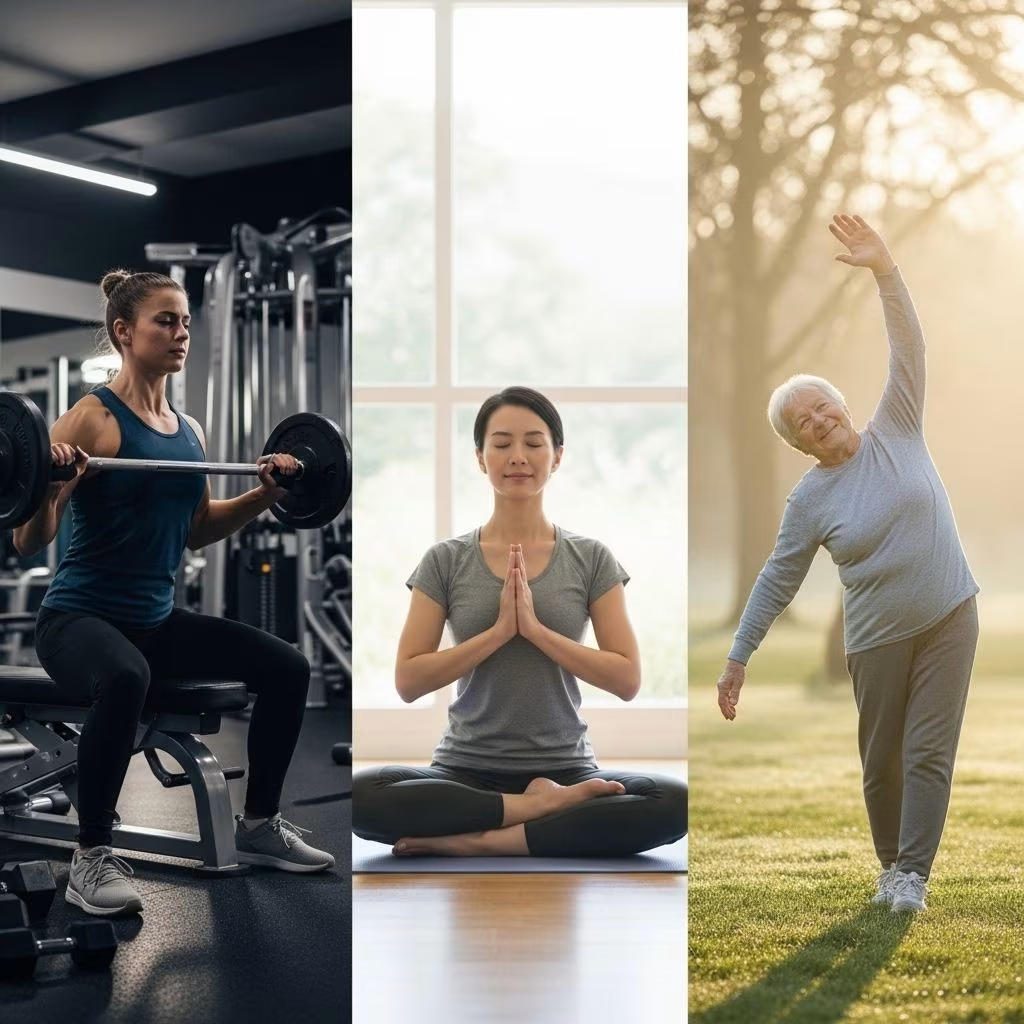
How Exercise Programs Should Change as You Age
Staying active is vital for maintaining health, strength, and a healthy weight. However, as we age, our bodies require different types of exercise, intensity, and recovery periods. Understanding how to adapt your exercise program with each decade of life is essential to maximizing benefits, avoiding injury, and enjoying lifelong movement and vitality.
Why Exercise Plans Should Evolve
Physiological changes—including shifts in muscle mass, metabolism, hormone levels, and connective tissue—mean that what works for you at age 25 may not be optimal at 45 or 65. A program that’s tailored to your age can help you:
- Minimize risk of injury and burnout
- Preserve muscle mass and bone density
- Control weight and metabolic health
- Enhance cardiovascular and cognitive function
- Maintain independence and quality of life
Exercise in Your 20s: Build a Strong Foundation
Your 20s are often the peak years for physical performance. This is the time to establish healthy habits and push for gains in endurance, strength, and skill.
- Emphasize variety: Mix strength training, high-intensity interval training (HIIT), and cardio. Experiment with different sports and movement styles.
- Build bone and muscle mass: Your bone density peaks by your late 20s. Regular resistance training ensures you enter your 30s with a strong musculoskeletal system.
- Focus on skill development: Establish proper technique in key lifts and movements to reduce injury risk later on.
- Recovery still matters: While you may recover quickly, listen to your body and incorporate stretching, rest days, and mobility routines.
Sample Weekly Routine: 2-3 days of resistance training, 2-3 days of cardio (running, swimming, cycling), and 1-2 days of flexibility or recreational activity.
Exercise in Your 30s: Prioritize Consistency and Stress Management
Entering your 30s often comes with new stressors—career, family, and tighter schedules. Physiologically, metabolism can begin to slow, and muscle mass may start to decline without regular training.
- Consistency matters more than intensity: Fit shorter, more frequent workouts into your schedule if time is scarce.
- Weight training remains crucial: Aim for at least two sessions a week to maintain muscle and metabolic rate.
- Cardio for heart and mood: Regular aerobic workouts help offset the effects of a more sedentary lifestyle and reduce stress.
- Incorporate functional training: Exercises that mimic daily movements build core strength and prevent injury.
Tip: If you’re pressed for time, try HIIT or circuit workouts that combine strength and cardio efficiently.
Exercise in Your 40s: Focus on Strength, Flexibility, and Injury Prevention
In your 40s, shifts in hormones can affect body composition—more fat gain, less muscle and bone. Joints may feel stiffer, and injuries may occur more easily.
- Preserve muscle and bone with regular strength training: Use free weights, resistance bands, or bodyweight exercises at least twice a week to fend off muscle loss and support bone density.
- Challenge your flexibility: Regular stretching or yoga can reduce stiffness and improve mobility.
- Be proactive about injury prevention: Warm up thoroughly before exercising, and don’t skip rest and recovery days.
- Re-evaluate your goals: Instead of pursuing personal records, focus on maintaining health, mobility, and energy.
Did you know? Even moderate activity—like brisk walking or cycling—can counter the metabolic slowdown often seen in this decade.
Exercise in Your 50s: Combine Strength, Balance, and Aerobic Fitness
After 50, the decline in estrogen levels—especially for women—accelerates bone loss and increases the risk of osteoporosis and fractures. Preserving both muscle and bone is paramount, as is prioritizing heart health.
- Emphasize strength training: Target all major muscle groups at least twice per week – it’s the most effective non-pharmacological intervention to combat muscle and bone loss.
- Build balance and coordination: Add moves that improve stability, such as single-leg exercises, to reduce fall risk and maintain agility.
- Don’t skip the cardio: Aerobic exercise is vital for cardiovascular health, weight management, and cognitive sharpness.
- Consider lower-impact activities: Swimming, cycling, and walking protect joints while delivering substantial fitness gains.
- Listen to your body: Recovery takes longer—make time for adequate rest, stretching, and manage old injuries carefully.
Pro tip: It’s wise to consult your doctor before starting or intensifying an exercise program, especially if you have chronic conditions.
Exercise in Your 60s and Beyond: Maintain Mobility, Independence, and Enjoyment
The focus in your 60s and older should be on preserving independence, preventing falls, and keeping the body mobile and functional. Aging accelerates loss of muscle mass (sarcopenia), decreases aerobic capacity, and increases the risk of chronic illnesses.
- Pursue functional strength: Exercises that mimic daily movements—like squats, step-ups, and push-pull motions—help you stay self-sufficient.
- Enhance balance and core stability: Include exercises to prevent falls, such as heel-to-toe walking, standing on one leg, or Tai Chi.
- Stay social and consistent: Exercising in group classes or with friends boosts adherence and provides social stimulation.
- Prioritize flexibility and range of motion: Stretch major muscle groups daily to reduce stiffness and pain.
- Choose enjoyable activities: Walking, swimming, gardening, or dancing can all help you stay active and happy.
Functional Fitness Example: A 20-minute routine with chair sit-to-stands, wall push-ups, and light dumbbell work keeps a 62-year-old nurse thriving at work and home.
Strength Training: The Lifelong Secret Weapon
Recent research highlights strength training as one of the most powerful strategies for extending lifespan and improving quality of life.
- Strength training for 90 minutes per week may slow biological aging by almost four years.
- It preserves muscle mass and bone density, supports metabolism, and enables independence as you age.
- It also boosts mood, cognition, and sleep quality.
- The CDC recommends two sessions per week for all adults.
Beginner tips:
- Start with bodyweight moves (squats, push-ups, planks), then add resistance gradually
- Seek guidance or attend beginner-friendly classes to learn correct form
- Consistency, not intensity, is key: 15–20 minutes, twice a week, offers real benefits
Aerobic (Cardio) Exercise: Heart, Brain, and Beyond
Aerobic exercise—walking, jogging, cycling, swimming—remains critical at every stage. It not only supports weight loss and heart health but also protects against cognitive decline and manages systemic inflammation.
- Regular aerobic exercise mitigates risks like cardiovascular disease and bone density loss
- It’s particularly vital after menopause, when heart disease risk grows as estrogen declines
- Experts recommend at least 150 minutes of moderate-intensity aerobic activity each week
Best practices for 50+: Combine moderate-intensity cardio (brisk walking, dancing) with some vigorous activities if your health allows.
Functional Training: Move Better, Live Better
Functional strength exercises train your body for real-life tasks. As aging progresses, priorities shift from sculpting muscles to sustaining the strength to enjoy hobbies, manage household chores, and maintain independence.
- Mimic daily movements: squats, lifts, reaching, and pulling actions
- Build coordination, balance, and fall resistance
- Adapt intensity and complexity to your fitness level and existing conditions
- Try simple equipment: use chairs, walls, or light dumbbells
Common Mistakes to Avoid at Any Age
- Ignoring recovery: Overtraining or skipping rest can backfire, especially as you get older.
- Neglecting strength work: Relying only on cardio undermines muscle and bone preservation.
- Skipping flexibility and balance: This can increase joint pain and fall risk.
- Not adapting to your body’s changes: Adjust workouts for injuries, medical conditions, and energy levels.
- Failing to seek guidance: Professional trainers or physical therapists can help tailor programs safely and effectively.
Sample Age-Appropriate Weekly Exercise Plan
| Decade | Strength Training | Cardio | Flexibility/Balance |
|---|---|---|---|
| 20s | 2-3x/week | 2-3x/week, variety | 1-2x/week |
| 30s | 2x/week | 2-3x/week, HIIT/circuit | 1-2x/week |
| 40s | 2-3x/week | 2x/week | 2-3x/week |
| 50s | 2x/week, all muscle groups | 2-4x/week | 2x/week |
| 60s+ | 2x/week, functional focus | 2-3x/week, low impact | 3x/week, balance exercises |
Frequently Asked Questions (FAQs)
Q: How much exercise do I really need as I get older?
A: Adults of all ages should aim for at least 150 minutes of moderate-intensity aerobic activity weekly and two days of muscle-strengthening activities. Tailor to personal health and mobility needs.
Q: Is it ever too late to start exercising?
A: No. Starting an exercise program at any age provides benefits—improved strength, mobility, mood, and independence. Progress slowly and consult your doctor if you have chronic conditions.
Q: Do I need to lift heavy weights to see benefits?
A: Not necessarily. Bodyweight exercises, resistance bands, and light dumbbells can all be effective. Focus on proper form, consistency, and gradually increasing resistance over time.
Q: What kinds of activities count as cardio?
A: Brisk walking, cycling, swimming, dancing, and even active gardening are considered aerobic exercise. Choose activities you enjoy for the greatest long-term benefits.
Q: How can I maintain motivation?
A: Set small, achievable goals. Exercise with friends or in community classes, track your progress, and choose activities you find rewarding and fun.
Expert Insights
- “Strength-training workouts are great at any age, but they’re especially beneficial as we grow older.”
—Juliana (Jewel) Kling, M.D. - “Regular aerobic activity helps mitigate risks like cardiovascular disease and bone density loss by improving heart health and reducing systemic inflammation.”
—Mark Kovacs, Ph.D., C.S.C.S. - “Strength training not only adds years to your life, it improves the quality of those years.”
—Smith, Fitness Expert.
Key Takeaways
- Adapt your workouts as you age—focus shifts from peak performance to preservation and enjoyment
- Strength training is critical for every decade to prevent muscle and bone loss, boost mood, and extend healthy years
- Aerobic exercise should never be ignored for heart, brain, and overall metabolic health
- Flexibility, balance, and functional movement become more important with every passing decade
- Start slow, be patient, and consult professionals for guidance when needed. The most effective program is the one you’ll stick with for life
References
- https://www.prevention.com/fitness/a63238499/strength-training-adds-years-to-your-life-study/
- https://www.prevention.com/fitness/fitness-tips/a65540648/aerobic-exercise-tips-50-plus/
- https://www.prevention.com/fitness/a64156215/pain-free-workout-exercises-for-seniors/
- https://www.prevention.com/fitness/a64958944/strength-training-workouts-50-plus/
- https://www.prevention.com/fitness/a65819320/how-to-do-a-pull-up-age-50-plus/
- https://www.prevention.com/fitness/fitness-tips/a61161933/building-muscle-after-50/
- https://www.prevention.com/fitness/a62135013/denise-austin-staying-active-embracing-aging/
- https://www.prevention.com/health/memory/a64432106/exercise-boosts-brain-health-study/
- https://www.prevention.com/health/g26115957/healthy-aging/
- https://www.prevention.com/health/a20470611/are-aging-muscles-why-youre-tired-all-the-time-and-gaining-weight/


