Tragedy at Yellowstone: The Dangers of Hot Spring ‘Hot Potting’
On a seemingly ordinary summer day, a fatal misjudgment at Yellowstone National Park served as a chilling reminder of the hidden perils lurking beneath its breathtaking landscapes. The story of Colin Scott, a young park visitor who lost his life while attempting to enter a forbidden hot spring, underscores the critical importance of respecting nature’s boundaries—and the tragic consequences of ignoring them.
A Tour Through Danger: Yellowstone’s Geothermal Landscape
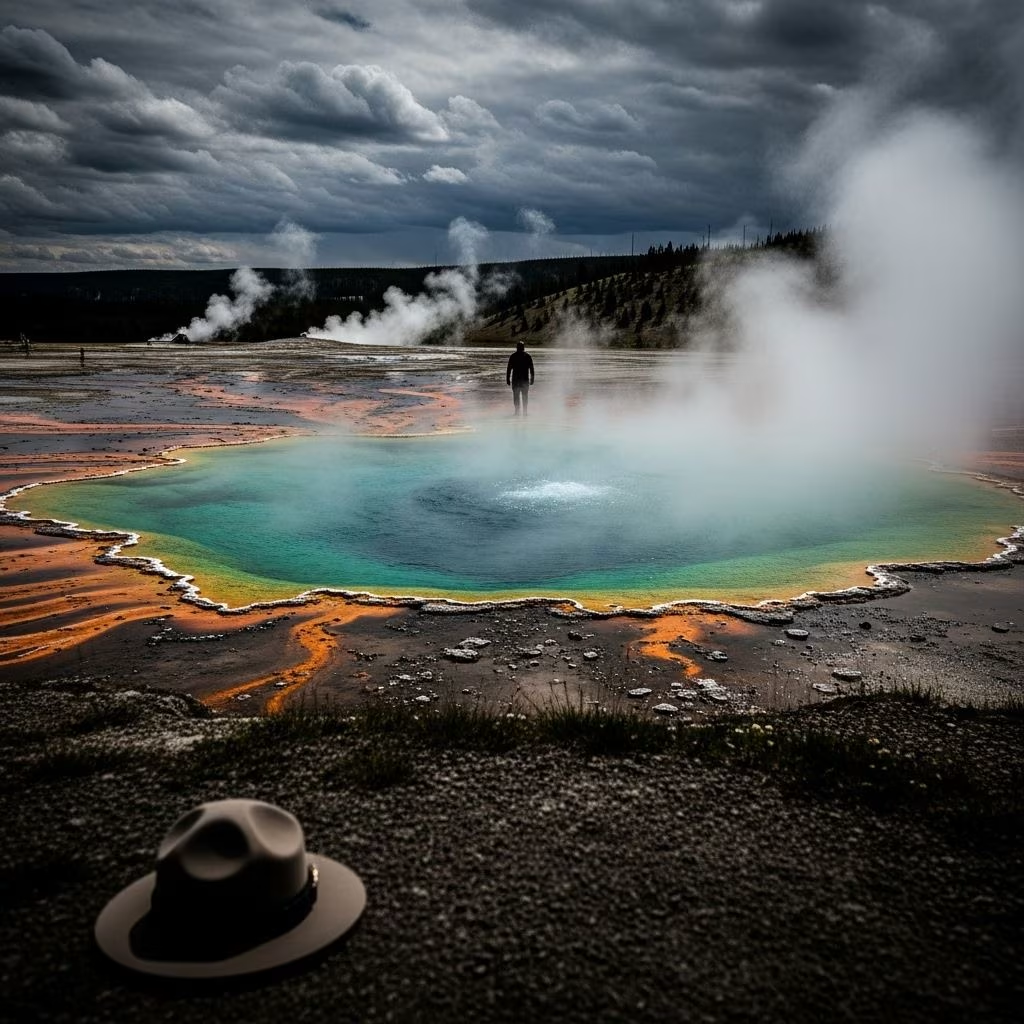
Yellowstone National Park is renowned for its spectacular geothermal features. The park contains over 10,000 geothermal elements, including geysers, bubbling mudpots, fumaroles, and hot springs. While these features attract millions of visitors annually, their beauty disguises an omnipresent danger.
- Hot springs can reach temperatures of 199°F (93°C) or higher, easily causing fatal burns within moments.
- The ground near geothermal features often has a thin crust, with scalding water or acidic mud just below the surface.
- Yellowstone has experienced more than 20 fatalities from hot spring-related incidents since the late 19th century.
Visitors are constantly reminded through signage, maps, and rangers that all trails and boardwalks are in place for their safety, as well as for the preservation of the park’s fragile features.
A Young Man’s Fatal Mistake
On June 7, 2016, Colin Nathaniel Scott, a 23-year-old recent college graduate from Oregon, visited Yellowstone’s Norris Geyser Basin with his sister, Sable Scott. This region, in particular, is famed for its unpredictable and volatile geothermal activity—including acidic hot springs heated by the Earth’s magma.
The Lure of Forbidden ‘Hot Potting’
Ignoring multiple posted warnings, the siblings left the safety of the boardwalk and ventured roughly 225 feet into a restricted area. Their intention, as later revealed in park reports and video footage captured by Sable, was to indulge in “hot potting”—the prohibited act of bathing in a hot spring. Not only is this practice against park regulations, but it poses a deadly hazard due to unpredictable temperatures and highly acidic waters.
The Incident
After approaching an inviting-looking thermal pool, Colin knelt down to test the water temperature. Tragedy struck when he suddenly slipped and fell headlong into the steaming pool. Despite his sister’s attempts to rescue him, the boiling water proved fatal within seconds. Lacking cell service, Sable ran to the nearest ranger station for help, but the situation was already beyond saving.
The Recovery Effort
Rangers responded quickly but faced insurmountable challenges. The intense heat, acidity, and an impending lightning storm made immediate recovery impossible. By the following day, Colin’s remains had been almost entirely dissolved by the caustic, boiling water. Only a wallet and a pair of flip-flops were recovered, a sobering testament to the spring’s destructive power.
Understanding Yellowstone’s “Hot Potting” Phenomenon
The term “hot potting” refers to the act of soaking or bathing in natural geothermal pools. While this activity is allowed in certain controlled environments elsewhere, it is strictly forbidden in Yellowstone due to the unpredictable and hazardous nature of its hot springs and geothermal features.
- Temperature variability: Even adjacent pools can have radically different temperatures, and individual pools can change quickly.
- Acidity: Many pools are acidic enough to dissolve skin and body tissue rapidly.
- Crust instability: The ground surrounding pools often appears solid but can collapse under minimal weight.
Despite these dangers and repeated public warnings, some visitors are tempted to ignore posted rules—often with devastating consequences.
A Grim History: Accidents and Fatalities in Yellowstone’s Hot Springs
Colin Scott’s tragedy is one of the most harrowing examples, but Yellowstone’s archives reveal a chilling history of hot spring-related injuries and deaths. According to the National Park Service and historical records:
- More than 20 deaths from hot springs and geysers have occurred since 1890.
- In addition to fatalities, hundreds have suffered severe burns after falling into or breaking through the thin crust near geothermal features.
- Victims include young children, teens, adults, and even park employees.
- Other animals, such as bison and elk, have perished in hot springs, attesting to the universality of the danger.
| Year | Victim | Location | Description |
|---|---|---|---|
| 2016 | Colin Scott | Norris Geyser Basin | Slipped into acidic hot spring while off boardwalk; fatal. |
| 2022 | Il Hun Ro | West Thumb Geyser Basin | Drowned in Abyss Pool; only foot and shoe recovered weeks later. |
| 2016 | 13-year-old boy & father | Old Faithful area | Severe burns after falling off designated trail into hot water; both survived. |
| 2000 | Sara Hulphers | Cavern Spring | Fell into a 10-foot boiling pool at night; fatal. |
The Science Behind the Dangers
Geothermal Chemistry and Physics
Yellowstone’s hot springs harness extreme geological forces. Water is heated deep underground by the Yellowstone Caldera’s enormous thermal reservoir, then rises to the surface through cracks, forming pools with temperatures ranging from lukewarm to well above boiling.
- Superheated water: At high altitudes, water boils at lower temperatures, but superheated subsurface water can still exceed 400°F (204°C) before erupting.
- Acidic conditions: Certain pools, especially in Norris Geyser Basin, contain sulfuric and hydrochloric acids that are corrosive enough to dissolve flesh rapidly.
Together, these forces render the environment immediately fatal to humans and animals that come into direct contact.
Yellowstone Safety Regulations: Why the Rules Exist
Park management has long recognized the inherent dangers of its geothermal features. To protect both visitors and the delicate ecosystem, strict regulations have been put in place:
- No leaving designated trails or boardwalks. Signs are posted in thermal areas, and maps warn of the dangers of off-trail travel.
- Hot potting is explicitly forbidden. Bathing in or entering thermal pools is illegal and punishable by fines or expulsion from the park.
- Immediate reporting of accidents is required, and the park is equipped with rangers trained in emergency response for burns and related injuries.
Rangers emphasize these rules during visitor orientation and through continual public awareness campaigns. Unfortunately, the temptation of a forbidden hot soak or a closer look at stunning features still leads a small minority to tragic error each year.
Lessons from Tragedy: Preventing Future Accidents
Colin Scott’s accident reignited national conversation about visitor safety in national parks. Experts and park officials recommend several essential precautions when traveling in geyser basins and geothermal regions:
- Stay on designated walkways and trails at all times.
- Closely supervise children and pets; keep them within arm’s reach in thermal areas.
- Heed all posted warnings and guidance from rangers or park staff.
- Resist the temptation to enter restricted areas for any reason, including for photographs or swimming.
Technological Aids and Park Management
With increasing numbers of visitors, Yellowstone has invested in clear signage, improved trail barriers, educational materials, and ranger patrols. Still, individual responsibility remains the final safeguard against tragedy.
Frequently Asked Questions (FAQ)
Q: How hot are Yellowstone’s hot springs?
A: Many of the park’s hot springs have temperatures above 199°F (93°C), and some can exceed 250°F (121°C), making them instantly and fatally dangerous to humans and animals.
Q: Has anyone survived falling into a hot spring?
A: While some individuals have survived after falling into shallow hot waters with severe burns, most direct falls into pools of boiling or acidic water result in death, either from burns or the water’s caustic effects.
Q: Why can’t people enter the hot springs for bathing?
A: Even though some springs may appear calm or inviting, their temperatures and chemical content can change rapidly, and the surrounding crust is unpredictable and unstable. Entering is illegal and highly dangerous.
Q: What happens to organic matter in hot springs like that in the Colin Scott incident?
A: Extreme heat and acidity dissolve organic matter rapidly. In Scott’s case, only a few personal belongings were recoverable by the time rangers could attempt a recovery.
Q: Are animals also at risk?
A: Yes. Bison, elk, and smaller mammals have died after falling into hot springs. Scientists occasionally find animal remains in geothermal pools, especially in backcountry areas.
Final Thoughts: The Price of Disregarding Nature’s Warnings
The allure of Yellowstone’s geothermal features is undeniable, but so is the need for caution and respect. Colin Scott’s story serves not only as a warning but as a call to stewardship over these otherworldly, dangerous wonders. Ensuring your own safety—and that of your companions—means adhering to the rules, trusting expert guidance, and never underestimating the hidden powers beneath Yellowstone’s serene surface.
Remember: In places of such raw geological force, a single misstep can have irreversible consequences. Every visitor’s caution is a tribute to the past and a safeguard for future generations.
References
- https://en.wikipedia.org/wiki/Death_of_Colin_Scott
- https://www.yellowstonepark.com/things-to-do/geysers-hot-springs/cautionary-tale/
- https://www.cbsnews.com/news/yellowstone-national-park-bison-hot-spring-grand-prismatic-spring/
- https://abcnews.go.com/US/17-year-suffers-significant-thermal-burns-geyser-close/story?id=124233484