America’s Most Beautiful Historic Grist Mills You Can Visit
Throughout American history, grist mills have stood as symbols of industriousness, rural charm, and ingenious engineering. Dotted across picturesque countrysides, nestled along rivers, or surrounded by woodlands and waterfalls, these mills once ground the grains that fueled both communities and local economies. Today, many of these historic structures have been lovingly preserved or restored, offering visitors an opportunity to step back in time, learn about early American enterprise, and enjoy breathtaking scenery. Whether you’re a history enthusiast, an avid photographer, or someone seeking a unique weekend adventure, this comprehensive guide spotlights some of the most beautiful historic grist mills in the United States that are open for exploration and enjoyment.
What Is a Grist Mill?
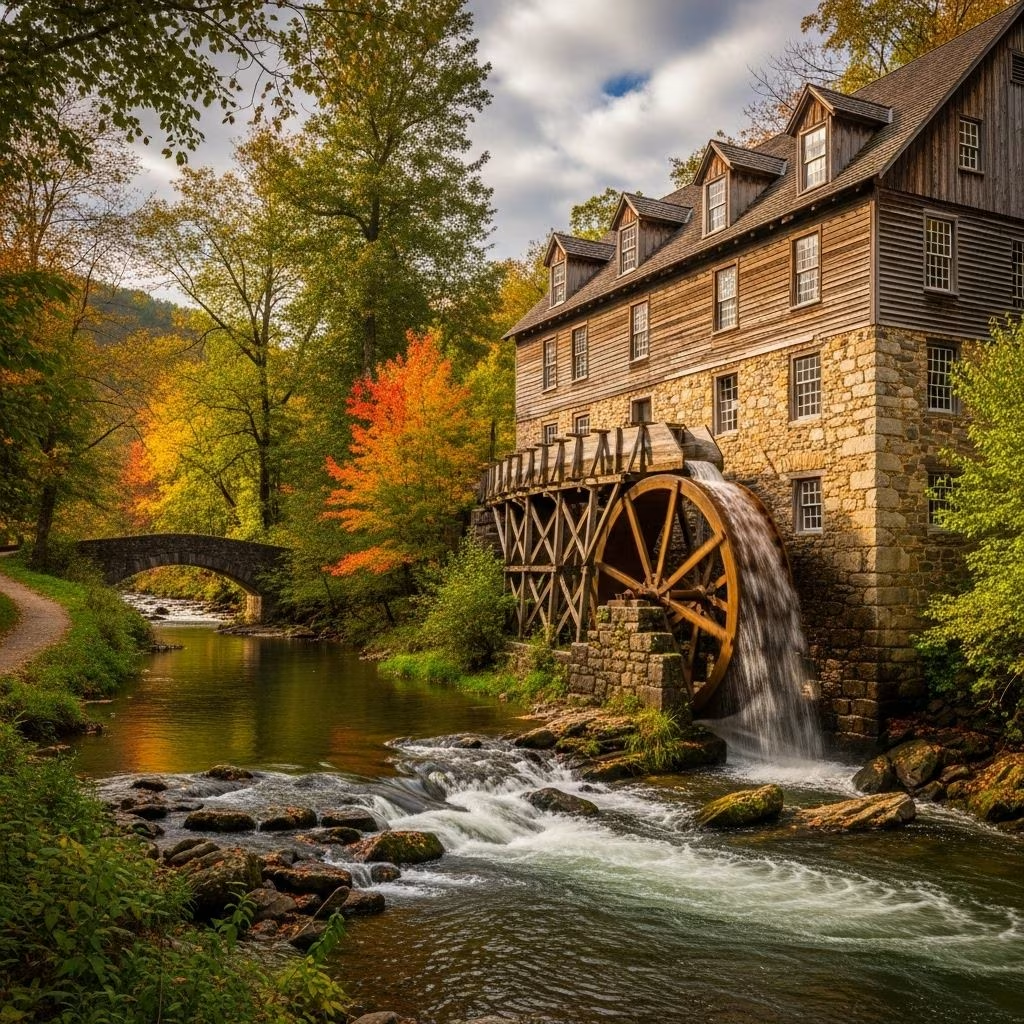
A grist mill is a structure that uses water, wind, or animal power to grind grain into flour or meal. These mills played a crucial role in rural economies from colonial America through the early 20th century, with many remaining as testament to American ingenuity. Often powered by a waterwheel or turbine, the buildings themselves were hubs of community life, serving not just as production sites but also as gathering spots.
The Lasting Significance of Grist Mills
- Architectural Heritage: Many mills feature classic wooden frames, weathered stone, or dramatic red-painted exteriors, reflecting regional styles.
- Cultural Gatherings: Mills often hosted markets and community events, making them vibrant local gathering spots.
- Natural Beauty: Their typical riverside locations offer scenic views, waterfalls, and vibrant foliage displays—especially in autumn.
- Living History: Some mills still operate, using original machinery to grind grain and offer fresh product to visitors.
Picturesque Grist Mills Across America
Across the United States, you can find historic grist mills that have been transformed into museums, working mills, or simply preserved scenic landmarks. The following destinations represent some of the most iconic and photogenic examples.
1. Mabry Mill – Blue Ridge Parkway, Virginia
Arguably the most photographed grist mill in the United States, Mabry Mill sits beside a mirrored mountain pond along the Blue Ridge Parkway. Originally built in 1903, the mill (once run by E.B. Mabry) now serves as an educational center, bringing to life demonstrations of milling, blacksmithing, and old-time crafts for visitors from spring through fall.
- Highlights: Restored working waterwheel, scenic reflections, traditional demonstrations, on-site restaurant.
- When to Visit: Especially beautiful during the fall foliage season.
2. Old Mill – North Little Rock, Arkansas
The Old Mill in Arkansas is not only a historical structure but a bona fide Hollywood star: its stone-and-mortar beauty graced the opening credits of Gone with the Wind. Now set in T.R. Pugh Memorial Park, the Old Mill remains a beloved attraction for picnics, photo shoots, and quiet walks along winding garden paths.
- Highlights: Lush gardens, elaborate footbridges, and heritage events throughout the year.
- Unique Feature: Movie history and intricate Spanish Revival landscaping.
3. Cedar Creek Grist Mill – Woodland, Washington
Perched above a rushing creek, the Cedar Creek Grist Mill is an immaculately restored timber-frame mill that dates to 1876. Visitors can tour the inside, see the original water-powered machinery in motion, and sample stone-ground flour produced on-site—an immersive living history experience surrounded by Pacific Northwest beauty.
- Highlights: Operating waterwheel, wooden bridge views, regular community baking days.
- Best Time: Autumn when maples and firs explode in color.
4. Yates Mill – Raleigh, North Carolina
Located in the heart of Yates Mill County Park, Yates Mill is Wake County’s last remaining operable, water-powered grist mill. Built around 1756, this historic site offers guided mill tours, nature trails, and educational programming along the edge of a tranquil pond. The mill’s pale clapboards, wide dam, and reflected water make it a photographer’s favorite.
- Highlights: Guided tours, wildlife viewing, adjacent museum, and picnic spots.
- Visiting Tip: Check for grinding-day events when the waterwheel is in action.
5. Glade Creek Grist Mill – Babcock State Park, West Virginia
Glade Creek Grist Mill combines elements salvaged from several historic West Virginia mills, creating a working reproduction that operates within one of the state’s most beloved parks. Set above a rocky mountain stream, it’s the centerpiece of the park and a major fall foliage destination.
- Highlights: Dramatic mountain backdrop, hiking trails, live milling demonstrations on select days.
- Photographer’s Dream: Misty mornings and autumn color create unforgettable images.
6. Suber’s Corn Mill – Greer, South Carolina
Family-run Suber’s Corn Mill has been grinding fresh cornmeal on the banks of a South Carolina stream since 1908. The bright red mill, charming waterwheel, and relaxed atmosphere offer a taste of rural tradition. You can purchase fresh-milled cornmeal straight from the source.
- Highlights: Historic equipment still in use, on-site grain shop, classic southern hospitality.
- Open: Weekends in the fall for the best experience.
7. Mingus Mill – Great Smoky Mountains National Park, North Carolina
Tucked in a forest hollow near Cherokee, the Mingus Mill has provided fresh-milled grain for more than 140 years. This unique turbine-powered mill features a distinctive sluice and flume system, guiding water from a nearby creek directly to the mill’s system. Knowledgeable volunteers operate historic machinery and offer flour for sale during the tourist season.
- Highlights: Rare turbine design, historic millrace, and proximity to Smoky Mountains trails.
- Bonus: Well-marked interpretive exhibits next door.
8. Newlin Grist Mill – Concordville, Pennsylvania
Built in 1704, the Newlin Grist Mill is among the oldest continuously operating water-powered grist mills in the nation. Surrounded by parklands and walking trails, this lovely stone mill hosts hands-on history programs, nature walks, and special seasonal events. The wheel turns during regular demonstrations, and fresh-ground flour can often be purchased in the museum shop.
- Highlights: Stone architecture, educational workshops, working waterwheel.
- Insider Tip: Visit during harvest season for the liveliest activity.
9. Wayside Inn Grist Mill – Sudbury, Massachusetts
Commissioned in 1929 by industrialist Henry Ford and designed as a reproduction of an 18th-century mill, the Wayside Inn Grist Mill graces the grounds of Longfellow’s Wayside Inn. Open to visitors seasonally, it still uses water-powered stones to produce flour for local bakeries—and the inn’s famous bread.
- Highlights: Colonial New England landscape, guided tours, and the chance to sample mill-baked bread.
- Special Note: Often booked for wedding photoshoot backdrops.
10. War Eagle Mill – Rogers, Arkansas
Perched beside a sweeping wooden bridge, War Eagle Mill is carefully reconstructed on the site of mills that have operated in this location since the 1830s. It features a working undershot waterwheel, frequent craft fairs, a country store, and even a popular café. War Eagle’s bucolic Ozark setting draws visitors throughout the year, especially for its spectacular fall color.
- Highlights: Functional waterwheel, local crafts, organic grains, riverside dining.
- Best Time: During the annual War Eagle Craft Fair each October.
How to Visit and Appreciate Historic Grist Mills
Planning a trip to a grist mill can be both a step back in time and an adventure in Americana. While each site is unique, many offer:
- Guided tours explaining the technology and history of the mill.
- Working demonstrations where you can see grain being ground just as it was centuries ago.
- Picnic areas, scenic walks, and photo opportunities around millponds and waterfalls.
- A chance to purchase fresh-milled flour or cornmeal—great for baking and as a souvenir.
Tips for the Best Experience:
- Check open hours and demonstration schedules in advance. Some mills are seasonal or close for restoration.
- Wear sturdy shoes for creekside or woodland exploration.
- Bring a camera for classic Americana scenes and family portraits.
- Respect the historic property—support preservation by shopping in site stores or making a donation.
The Artistry and Engineering of Grist Mills
Grist mills combine practical engineering with striking design. Their mechanisms showcase clever solutions:
- Waterwheels: From overshot to undershot, wheels transfer the force of moving water into mechanical rotation for grinding.
- Turbines: Later designs replaced wheels with internal turbines, increasing efficiency.
- Stone and Burr Mills: Early mills used locally quarried stone; later ones incorporated imported French buhrstone or hardened steel burrs for finer flour.
- Milling Sheds and Barns: Mill buildings are often as architecturally interesting as the gears inside, with exposed timber joinery and picturesque profiles.
Frequently Asked Questions (FAQs) About Grist Mills
Q: What is the difference between a grist mill and a flour mill?
A: Generally, “grist mill” refers to mills that grind various grains (corn, wheat, rye, etc.), while “flour mill” is often used for mills that produce flour specifically for baking.
Q: Are any historic grist mills still operational?
A: Yes. Many mills listed above still operate with restored, original equipment, producing flour or cornmeal for visitors and local sale.
Q: What time of year is best to visit a grist mill?
A: While most mills are attractive year-round, autumn stands out for vibrant foliage and mild weather. Some offer special events in spring or during the harvest season.
Q: Can you buy flour or grain at these sites?
A: Absolutely. Many working grist mills sell their stone-ground products in on-site gift shops—a perfect culinary souvenir.
Q: What makes grist mills so popular with photographers?
A: Their reflective millponds, rustic exteriors, rolling landscapes, and historical ambiance offer endless visual inspiration, especially in early morning light or at sunset.
Experience America’s Heritage: Plan Your Trip
America’s historic grist mills stand as living monuments to the nation’s practical artistry, entrepreneurship, and community spirit. Each visit offers a memorable blend of nature, history, and tradition—perfect for families, history buffs, and anyone seeking the tranquility of a bygone era. Plan your adventure and witness firsthand the enduring beauty and ingenuity of these treasured landmarks.
References
- https://pleasanthillgrain.com/detail/84d9ee44e457ddef7f2c4f25dc8fa865
- https://tacda.org/product/country-living-grain-mill/
- https://www.youtube.com/watch?v=R1o4DJbxukE
- https://www.countrylivinggrainmills.com
- https://www.everythingkitchens.com/country-living-grain-mill.html
- https://www.countrylivinggrainmills.com/product/grain-mill/
- https://www.preparedirect.com/Country_Living_Grain_Mill_p/101.htm
- https://foodassets.com/country-living-grinders/country-living-grinder-grain-mill.html
- https://www.lehmans.com/product/country-living-grain-mill/